
- admin
- No Comments
- December 21, 2025
How Long Does Tarmac Surfacing Last in the UK Climate?
Tarmac surfacing is one of the most widely used surface solutions across the UK for roads, driveways, car parks, industrial access routes, and commercial areas. It is chosen for its durability, flexibility, cost efficiency, and relatively fast installation time. However, due to the UK’s unpredictable weather conditions, many property owners and site managers ask an important question: how long does tarmac surfacing really last in the UK climate?
The answer depends on several factors, including weather exposure, traffic levels, installation quality, and maintenance practices. While tarmac is designed to perform well in British conditions, understanding what affects its lifespan helps ensure better long-term performance and value.
This article explains how long tarmac surfacing typically lasts in the UK, how the climate influences its durability, and what can be done to extend its lifespan.
Average Lifespan of Tarmac Surfacing in the UK
In most UK environments, professionally installed tarmac surfacing lasts between fifteen and twenty-five years. In some cases, surfaces remain serviceable beyond this range when they are well maintained and correctly designed for their intended use.
Residential driveways often sit at the upper end of this lifespan range because they experience lighter traffic and lower stress. Commercial and industrial surfaces usually face greater demands from frequent vehicle movements, heavier loads, and continuous use, which can shorten their lifespan if not properly constructed.
The climate alone does not determine how long tarmac lasts. The way it is installed and maintained often plays a larger role than the weather itself.
The Impact of the UK Climate on Tarmac Surfacing
The UK climate presents several challenges for surfacing materials. Frequent rainfall, temperature fluctuations, and occasional freezing conditions all affect how tarmac behaves over time.
Rainfall is one of the most significant factors. Although tarmac is water resistant, it is not fully waterproof. Over time, water can enter through small cracks or poorly sealed edges. If drainage is inadequate, trapped moisture weakens the underlying layers and accelerates surface deterioration.
Cold weather introduces another issue. During winter, water that enters cracks can freeze and expand. When temperatures rise, the ice melts and leaves the surface slightly weakened. Repeated freeze-thaw cycles gradually widen cracks and can lead to surface failure if repairs are delayed.
Warmer periods also affect tarmac. High summer temperatures soften the surface slightly, making it more susceptible to deformation under heavy loads or slow-moving vehicles. Over many years, ultraviolet exposure can also contribute to surface ageing, causing tarmac to lose some flexibility.
Why Installation Quality Matters More Than Weather
Even in difficult weather conditions, tarmac can perform exceptionally well when installed correctly. Poor workmanship is one of the most common reasons surfaces fail earlier than expected.
Correct installation begins with proper ground preparation. This includes excavation to the correct depth, a well-compacted sub-base, accurate levels, and effective drainage design. Without these elements, even high-quality materials will struggle to deliver long-term performance.
This is especially true for access routes and shared traffic areas. Projects such as this tarmac access road and external surfacing upgrade demonstrate how careful preparation and structural design allow tarmac surfaces to cope with regular use and the demands of the UK climate.
Traffic Type and Load Considerations
The type and volume of traffic using a surface significantly affect how long it lasts. Not all tarmac surfaces experience the same stresses.
Light domestic use places minimal strain on the surface, while commercial car parks introduce higher turning forces and more frequent vehicle movements. Industrial access roads face the greatest demands, often carrying delivery vehicles, heavy goods traffic, and repeated loading activity.
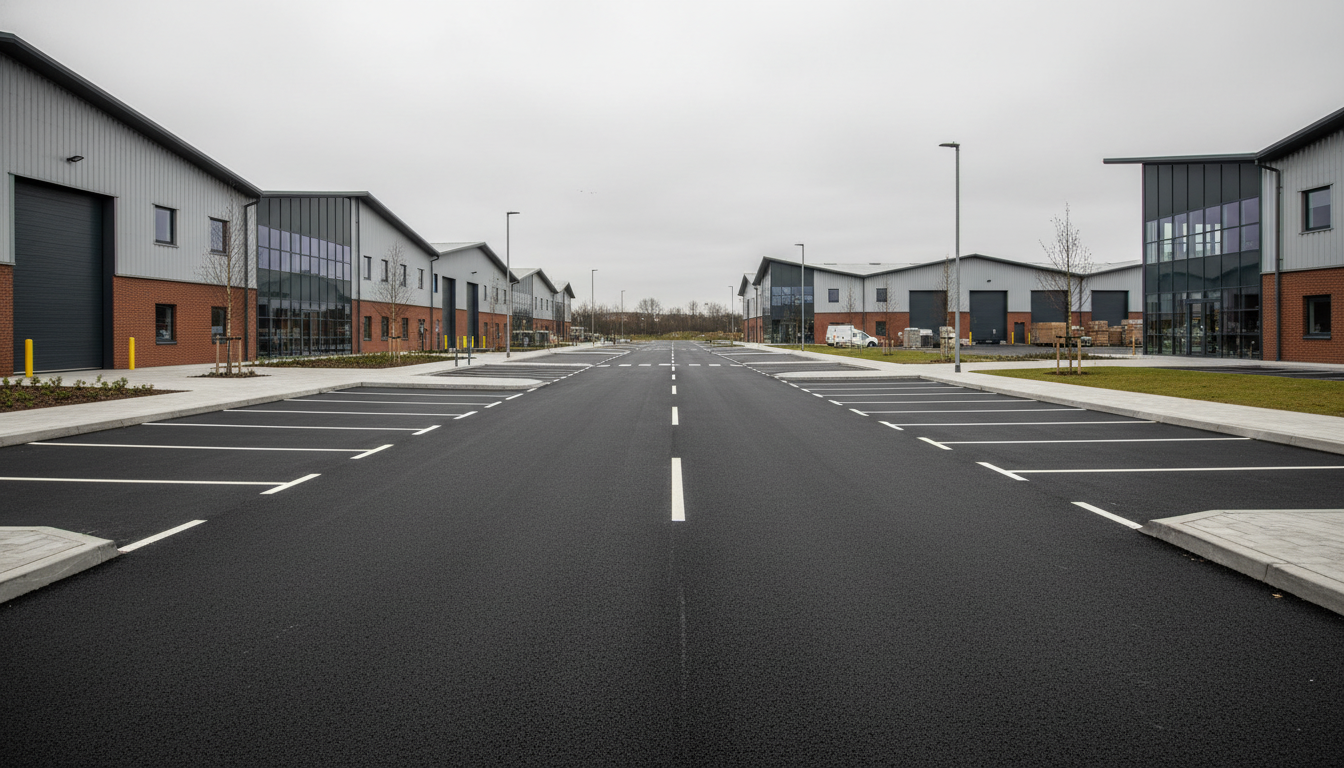
Surfaces designed for industrial use require thicker tarmac layers and stronger foundations. Well-engineered schemes like this industrial access road tarmac surfacing project highlight the importance of matching construction standards to traffic demands in order to achieve long-term durability.
Maintenance and Its Role in Extending Lifespan
Regular maintenance plays a critical role in how long tarmac surfacing lasts. Small issues left untreated often develop into larger, more expensive problems.
Early crack repairs help prevent water ingress. Keeping drainage systems clear reduces standing water, which is one of the main causes of surface deterioration. Cleaning oil and fuel spills also helps protect the surface from softening and breakdown.
Surfaces that receive routine inspections and timely repairs often outlast neglected areas by many years, even under similar weather and traffic conditions.
Repair Versus Full Resurfacing
Tarmac does not always require complete replacement when signs of wear appear. In many situations, localised repairs or reinstatement works are enough to restore performance and safety.
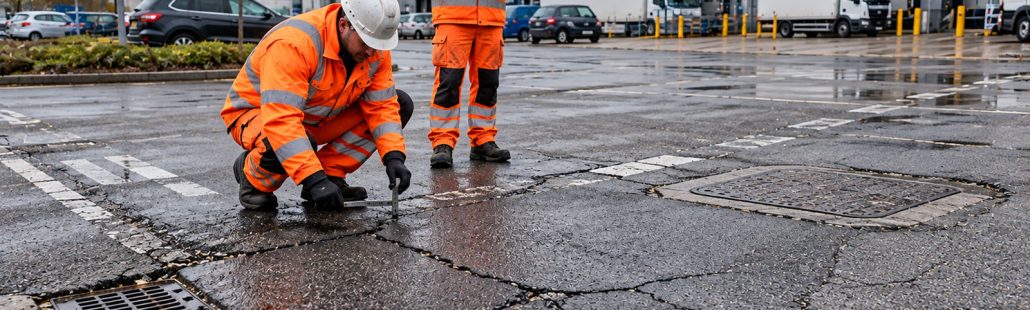
This approach is particularly effective where damage is limited to specific sections, such as service trenches or worn traffic paths. Professional solutions like road surfacing reinstatement works allow damaged areas to be repaired efficiently while maintaining continuity with the existing surface.
Timely repairs reduce disruption, control costs, and extend the overall lifespan of the surfacing.
Signs That Tarmac Is Reaching the End of Its Life
While tarmac is a durable material, it does eventually wear out. Recognising when a surface is approaching the end of its usable life helps prevent safety risks and unplanned downtime.
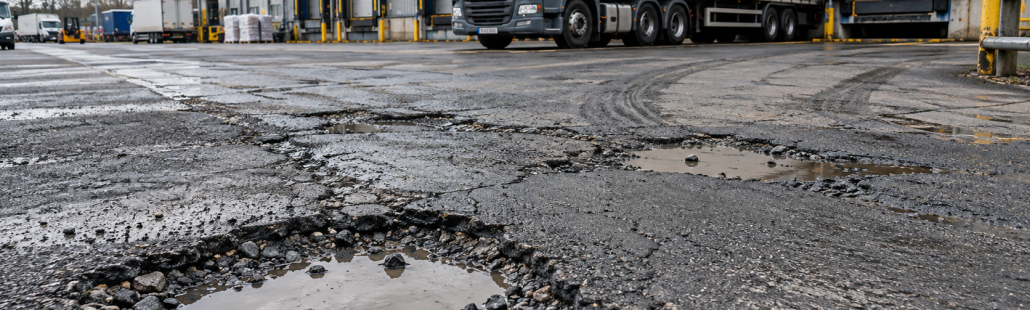
Common signs include widespread cracking rather than isolated defects, repeated pothole formation, surface rutting under vehicle loads, and persistent standing water after rainfall. When multiple issues appear together, resurfacing is often the most practical and cost-effective long-term solution.
How to Maximise Tarmac Performance in the UK
Although the UK climate cannot be controlled, several measures help ensure tarmac performs reliably for as long as possible. Choosing experienced contractors who understand drainage, traffic loading, and structural design is essential from the outset.
Ongoing maintenance, prompt repairs, and regular inspections further protect the surface from weather-related damage. In commercial and industrial environments, proactive surface management supports safety, operational efficiency, and asset value.
Is Tarmac Still a Good Choice for UK Conditions?
Despite the challenges posed by British weather, tarmac remains one of the most suitable surfacing materials for the UK. Its flexibility allows it to adapt to temperature changes better than many rigid alternatives, and its repairability makes long-term ownership more manageable.
When designed, installed, and maintained correctly, tarmac delivers dependable performance across residential, commercial, and industrial settings.
Conclusion
So, how long does tarmac surfacing last in the UK climate? In most cases, you can expect between fifteen and twenty-five years of reliable service, with many surfaces lasting longer when properly cared for.
The key influences are not just weather conditions, but installation quality, traffic demands, and maintenance practices. By addressing these factors early and consistently, tarmac surfacing continues to be a durable, cost-effective solution well suited to UK conditions.