
Driveway Drainage UK – Common Issues & Fixes Explained
Driveway drainage is often overlooked during installation, yet it is one of the most important factors in determining how long a driveway will last. Many homeowners choose a material they like, approve the design, and assume the surface will perform well for years. However, in the UK’s consistently wet climate, poor drainage can lead to surface damage, safety hazards, and long-term structural issues. A driveway may look beautiful on the day it is installed, but if it cannot move water away efficiently, deterioration begins almost immediately.
This guide explains the most common driveway drainage issues in the UK, why they happen so frequently, how to recognise them early, and what solutions are available to restore proper water flow. Whether your driveway is made of tarmac, resin, concrete or block paving, understanding drainage is essential for protecting your investment.
The Impact of UK Weather on Driveway Drainage
The UK experiences frequent rainfall throughout the year, which means driveways are constantly exposed to moisture. Unlike warmer climates where water evaporates quickly, UK surfaces remain damp for longer periods. This extended exposure encourages the growth of moss and algae, reduces surface grip, and creates slippery patches that can become dangerous in winter.
Cold conditions also create freeze–thaw cycles. Water seeps into small cracks or pores in the driveway, freezes overnight, expands as it turns into ice, and widens the cracks. Over time, this process breaks down the structure of the surface and accelerates wear. Driveways with poor drainage suffer the most, as water is unable to escape before temperatures fall.
Pooling and Standing Water: The Most Common Drainage Failure
One of the clearest signs of drainage problems is standing water. After rain, a properly designed driveway should shed water quickly. When puddles form in certain spots and linger for several hours, it usually indicates an uneven surface or incorrect gradient. Even new driveways can develop dips if the installer failed to compact the sub-base properly.
As water sits in these depressions, it gradually weakens the surface. Tarmac softens and loses structure, resin-bound surfaces begin to lose aggregate, and block paving can shift or develop moss in damp areas. If left unresolved, these problems worsen over time, eventually leading to cracking or subsidence.
Incorrect Gradients and Falls
A driveway must be built with an intentional slope, known as a fall, to direct water to the correct drainage point. In many UK homes, driveways are either too flat or sloped in the wrong direction. This means water flows toward the house, garage, or garden instead of toward the street, drainage channel, or soakaway.
When the fall is too shallow, water moves slowly and begins to settle in the middle of the driveway. When the fall slopes toward the property, it can cause damp issues, structural risks, and damage to exterior walls. A correctly built driveway usually has a subtle but effective gradient, barely noticeable to the eye but essential for proper water movement.
Blocked or Insufficient Drainage Channels
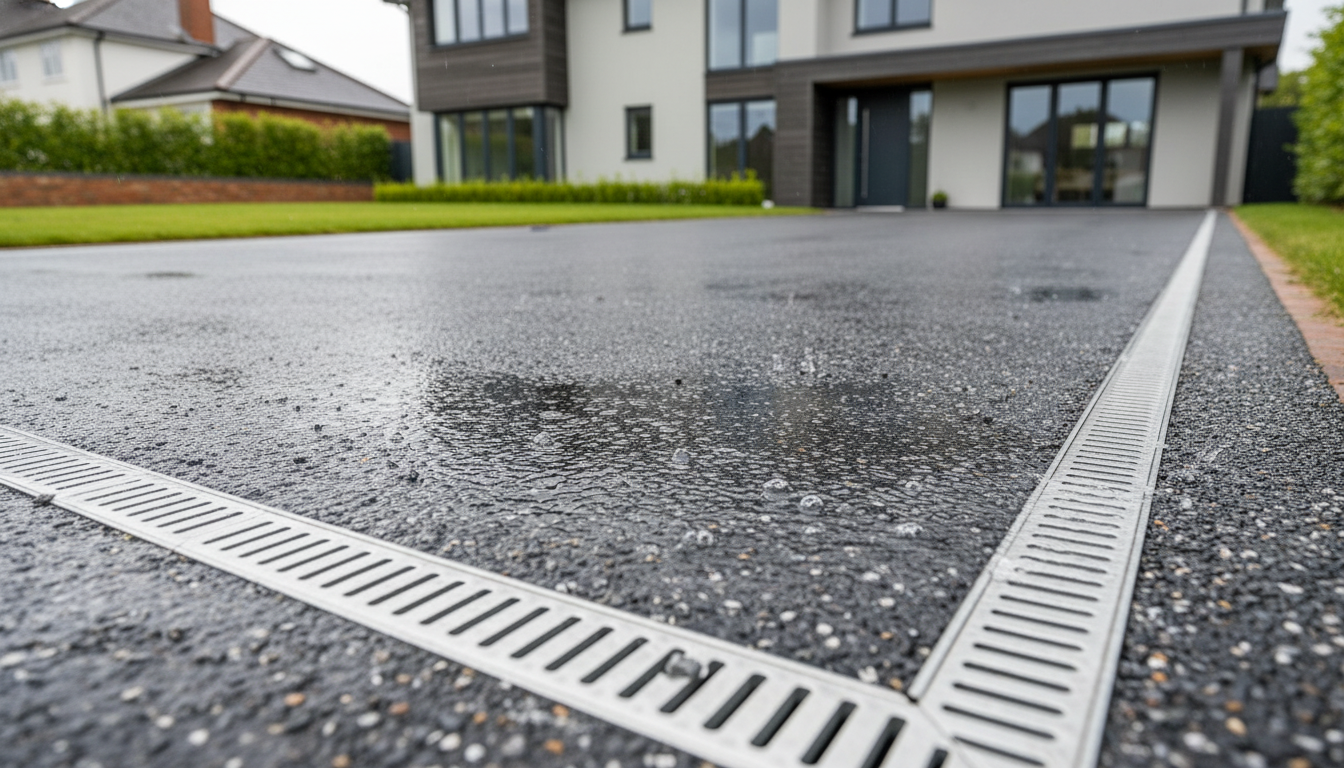
Block paving and resin driveways often rely on ACO channels or other drainage systems to collect water. These channels can become blocked by leaves, mud, moss, and general debris. Once blocked, they no longer carry water away effectively. Instead, water backs up onto the driveway, causing the same issues as standing water.
Some older driveways may not have drainage channels at all, leaving water with no controlled exit path. Without a system in place, water will find its own direction, often flowing into areas where it causes damage.
Non-Permeable Surfaces Without Additional Drainage
Not all driveway materials are permeable. Traditional tarmac, concrete, and certain block paving systems do not allow water to pass through the surface. When these materials are used, the installer must implement alternative drainage solutions. If they fail to do so, surface water accumulates quickly.
Permeable surfaces, such as resin-bound systems or specially designed block paving, offer better natural drainage. However, even permeable driveways require a properly constructed sub-base to ensure water drains downward rather than pooling beneath the surface.
Drainage Problems Caused by a Weak Sub-Base
The sub-base is the foundation layer beneath the driveway. If the sub-base is weak, poorly compacted, or made from unsuitable materials, it may hold water or shift over time. As the base becomes saturated, the driveway surface begins to sink in certain areas. These dips then form puddles, which further damage the surface.
When drainage problems begin at the sub-base level, they cannot be corrected by surface treatments alone. A full rebuild may be necessary to restore stability and ensure proper water movement.
Solutions for Fixing Driveway Drainage Problems
Repairing drainage issues depends on their cause and severity. For small surface dips, resurfacing or regrading can restore proper water flow. This involves levelling the surface so that the slope directs water toward the correct area.
For driveways lacking drainage channels, installing ACO drains is often the most effective solution. These channels collect water at the surface and direct it into a soakaway or a designated drainage system. A soakaway may also be required if the property has limited space or if water cannot flow into the road due to council restrictions.
For non-permeable surfaces, improving permeability may involve upgrading to a resin-bound system or using permeable block paving. Alternatively, improving the sub-base or adding gravel borders can help create pathways for water to escape.
Where the sub-base has collapsed or become waterlogged, a full reconstruction may be necessary. This ensures the driveway has a solid foundation and prevents future drainage failures.
Recognising Drainage Issues Early
The best time to inspect your driveway for drainage issues is immediately after rainfall. Water that remains on the surface for more than an hour is a strong indication of a problem. Moss or algae appearing in the same locations repeatedly suggests that moisture is consistently present in those areas. Damp spots near the house can indicate that the driveway slope is incorrect.
Cracks forming in wet areas are another warning sign, often caused by water penetrating beneath the surface and weakening the foundation. Addressing these issues early prevents more severe structural damage and reduces repair costs.
When to Consult a Specialist
Some drainage problems are simple to identify, but the underlying causes are not always obvious. A specialist can assess the slope, check for sub-base issues, examine existing drainage systems, and recommend the appropriate long-term solution. If you notice recurring water issues, sinking areas, or safety hazards, professional help is advised.
You can arrange advice or a site visit here:
Final Thoughts
Effective driveway drainage in the UK is essential for maintaining durability, safety, and long-term performance. A well-designed drainage system protects your driveway from moss growth, frost damage, erosion, and structural problems. By understanding how water behaves and ensuring the right solutions are in place, homeowners can significantly extend the lifespan of their driveway and avoid costly repairs in the future.