
- admin
- No Comments
- January 26, 2026
Understanding Load Ratings for Commercial Access Roads
Commercial access roads are expected to carry far more stress than standard residential driveways or lightly trafficked estate roads. Delivery lorries, refuse vehicles, plant machinery and service vehicles all impose repeated loading on the surface and the structure beneath it. Road load ratings UK are used to assess whether a road has been designed and built to cope with these demands without premature failure.
When load ratings are overlooked at the design stage, the surface may look adequate when new but can deteriorate rapidly once regular heavy traffic begins. Cracking, rutting and edge collapse often follow, leading to unplanned repairs and disruption to site operations. Understanding how load ratings work allows property owners and site managers to make informed decisions that protect long-term performance.
What Is a Road Load Rating?
A road load rating is an assessment of how much weight a road can safely carry over time without structural damage. In the UK, this concept is tied closely to axle loads rather than just total vehicle weight. A single heavily loaded axle can cause more damage than a lighter vehicle with evenly distributed weight.
Load ratings consider several interacting factors, including surface material, total pavement thickness, sub-base strength and ground conditions. They are not arbitrary figures but are based on engineering principles and real-world traffic patterns. For commercial sites, this ensures access roads are suited to the types of vehicles using them daily rather than occasional peak loads.
Typical Vehicles and Their Impact on Load Ratings
Understanding the vehicles using your site is central to applying road load ratings UK correctly. Light vans and cars exert relatively low stress and are unlikely to cause damage on properly constructed surfaces. However, delivery vehicles, rigid lorries and articulated HGVs introduce much higher loads, especially during slow manoeuvring or turning.
Forklifts and site plant can also be problematic. Despite lower overall weights, they often have solid tyres and high point loading, which concentrates stress on small surface areas. Repeated movements of these vehicles can quickly expose weaknesses in poorly specified access roads.
How Load Ratings Influence Road Design
Load ratings directly influence the design specification of a commercial access road. Higher expected loads require increased pavement thickness and stronger materials throughout the construction layers. This includes the surface course, base course and the sub-base beneath.
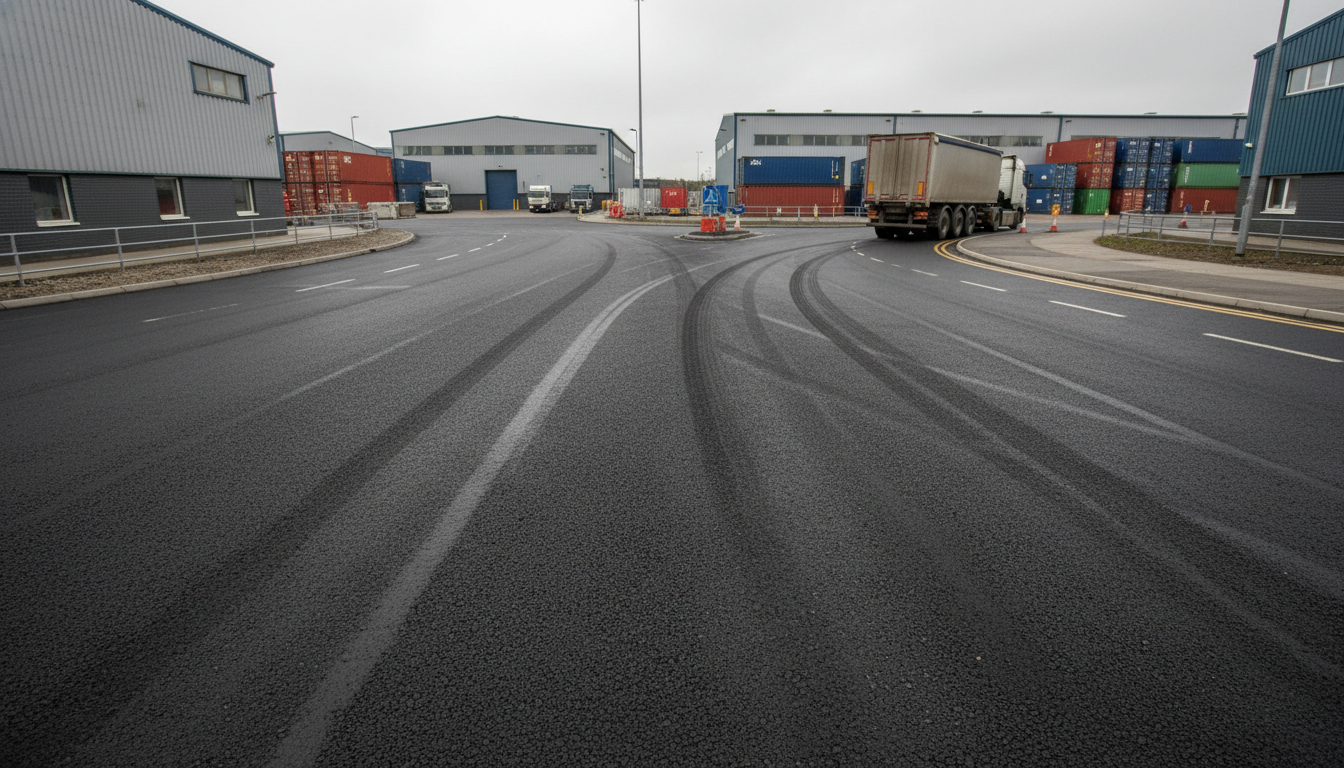
For example, a lightly trafficked service road may perform well with a thinner asphalt construction, while a road serving a logistics yard will need a significantly thicker structure to cope with frequent HGV movements. Failing to match design strength to traffic load is one of the most common causes of early road failure on commercial sites.
The Role of the Sub-Base in Load Bearing
While the surface is the most visible element, the sub-base plays a critical role in achieving the required load rating. It distributes vehicle loads across a wider area and prevents excessive stress being transferred to the underlying ground.
A well-constructed sub-base uses properly graded aggregate, compacted to the correct density. If this layer is weak, uneven or contaminated, even the best surface material will struggle to perform. This is why professional contractors place such emphasis on preparation and groundworks before any surfacing begins.
Load Ratings and Surface Materials
Different surfacing materials respond differently to loading. Tarmac and asphalt are flexible surfaces that can accommodate some movement, making them suitable for most commercial access roads when designed correctly. However, flexibility does not compensate for inadequate thickness or poor foundations.
Concrete and block paving may offer higher resistance to static loads but can still fail if the underlying structure is not designed for traffic stress. Selecting the right surface is not just about appearance or initial cost but about how it performs under repeated loading over many years.
If you are considering upgrades or new construction, reviewing professional commercial surfacing options can help ensure specifications align with your site’s operational demands.
Signs an Access Road Is Overloaded
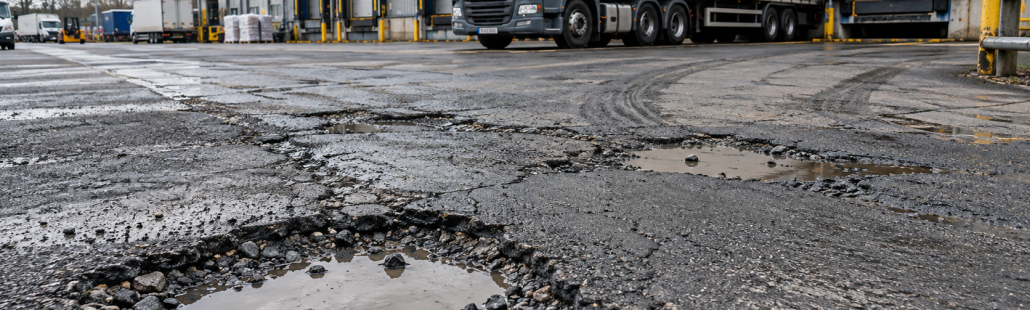
Access roads that are operating beyond their intended load rating often show predictable warning signs. Rutting in wheel paths indicates repeated heavy loading on a surface that lacks sufficient structural depth. Longitudinal cracking may suggest flexing under weight, while edge breakdown often points to vehicles overrunning areas not designed to carry loads.
Potholes forming in the same locations repeatedly can also indicate base failure rather than surface wear. In such cases, patch repairs alone are unlikely to provide a lasting solution, as the underlying structure continues to deform under traffic stress.
Why Load Ratings Affect Maintenance Costs
Road load ratings UK have a direct impact on long-term maintenance budgets. Roads designed with adequate load capacity tend to require less frequent intervention and suffer fewer disruptive failures. While higher specifications may involve greater initial investment, they often reduce whole-life costs significantly.
Conversely, under-designed access roads can become a recurring expense. Temporary repairs may keep surfaces usable in the short term, but without addressing load capacity, deterioration will continue. Understanding this relationship helps property owners justify appropriate investment at the planning stage.
Planning for Future Traffic Changes
One of the most overlooked aspects of load ratings is future traffic growth. A site that currently handles light deliveries may later accommodate heavier vehicles as operations expand or tenants change. Designing access roads with a margin for increased loading can prevent costly upgrades later.
This forward-thinking approach is particularly important for industrial estates and commercial developments where usage patterns evolve over time. Early planning reduces the risk of access limitations becoming a barrier to business growth.
Load Ratings and Compliance Considerations
While many load rating decisions are driven by practical performance, there are also compliance considerations. Inadequate access roads can raise health and safety concerns, particularly where surface failure creates hazards for vehicles and pedestrians.
Professional contractors assess load requirements as part of a broader design and risk management process. This ensures that access roads meet operational needs while aligning with industry standards and best practice.
When to Seek Professional Assessment
If you are unsure whether your access road is suitable for current or planned traffic, a professional assessment can provide clarity. Contractors experienced in tarmac installation and commercial road construction can evaluate existing conditions and recommend appropriate solutions.
This may involve core sampling, traffic analysis and a review of ground conditions. The result is a clear understanding of whether strengthening, resurfacing or full reconstruction is required to meet load demands reliably.
Designing for Durability Rather Than Short-Term Use
Ultimately, road load ratings UK are about designing for durability rather than minimum compliance. Commercial access roads are critical infrastructure, supporting daily operations and ensuring safe, reliable access for all vehicles.
By prioritising load ratings from the outset, property owners and site managers can avoid common pitfalls that lead to early failure. Roads that are properly designed for their traffic environment tend to perform consistently, reduce disruption and offer better value over their service life.