

- admin
- No Comments
- February 2, 2026
Preparing Roads for Heavy Spring Traffic in the UK
Spring is one of the most demanding periods for UK roads, particularly on commercial and mixed-use sites. After months of cold weather, moisture, frost and limited daylight maintenance, road surfaces are often left weakened beneath the surface. At the same time, traffic levels increase as construction projects restart, deliveries become more frequent and outdoor operations resume.
Spring road preparation UK is not simply about cosmetic improvements. It is about identifying winter-related damage early and ensuring that access roads are structurally capable of handling heavier and more consistent use. Sites that overlook this seasonal transition often experience rapid surface deterioration just as activity levels rise.
How Winter Damage Becomes a Spring Problem
Winter weather creates conditions that allow water to penetrate the road surface. Freezing temperatures cause this moisture to expand, weakening the asphalt and the layers beneath. Although damage may not always be obvious at the end of winter, the underlying structure is often compromised.
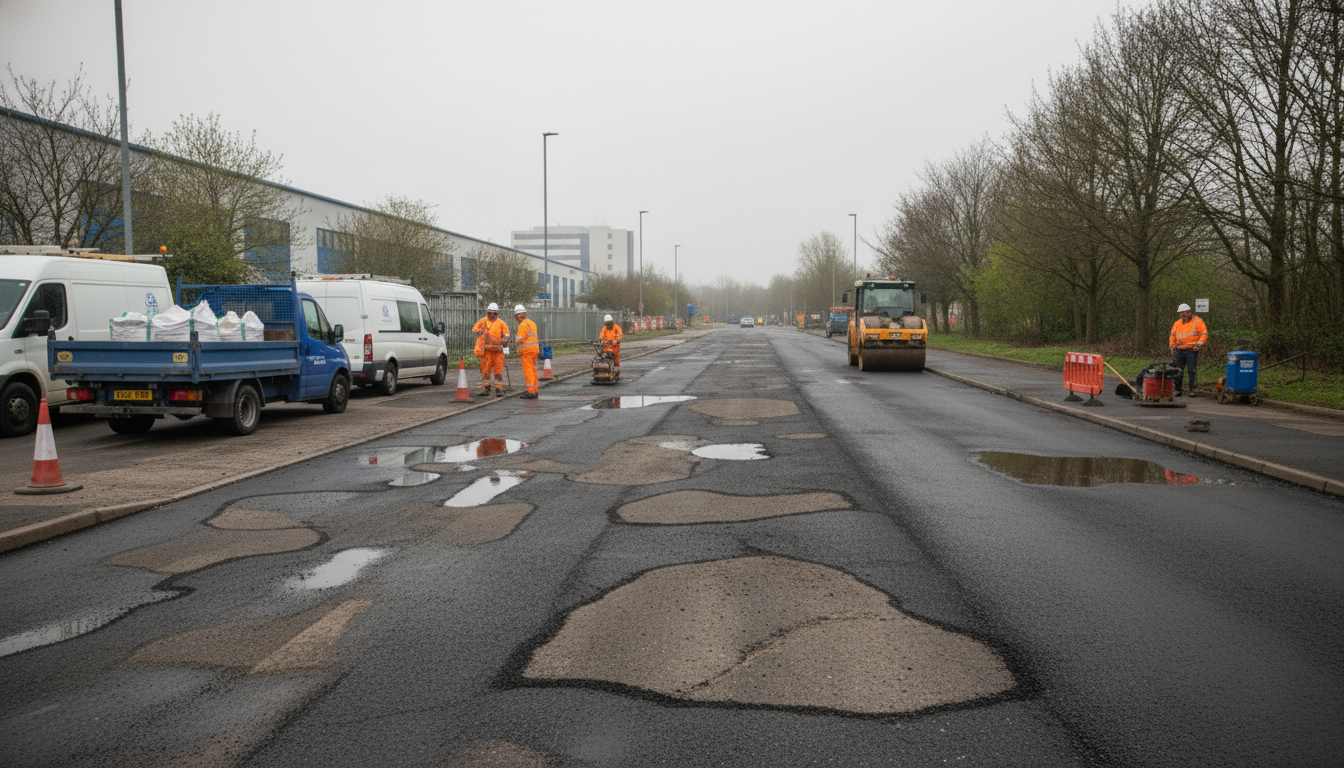
As temperatures rise in spring, traffic loads increase and the weakened surface begins to fail. Small cracks open up, potholes reappear and soft areas develop under repeated loading. Without early intervention, these minor defects can escalate into larger failures that disrupt access and increase repair costs.
Increased Traffic Demands in Spring
Spring brings a noticeable change in traffic patterns on many commercial sites. Construction traffic returns, delivery schedules intensify and visitor numbers increase. Access roads that coped during quieter winter months may struggle under this renewed demand.
Heavier vehicles travelling more frequently place stress on surfaces that may already be fatigued. Slow-moving traffic, turning movements and stationary loading all concentrate load in specific areas, increasing the risk of deformation and cracking. Effective spring road preparation UK planning takes these usage changes into account rather than relying solely on surface appearance.
The Importance of Early Road Inspections
One of the most effective ways to prepare for spring traffic is to carry out a thorough inspection as winter ends. This allows defects to be identified before they worsen under increased use. Cracks, drainage issues and edge breakdown should all be assessed carefully.
Early inspections provide an opportunity to address problems while they are still manageable. Minor repairs carried out at this stage are far more cost-effective than emergency works later in the season. For site managers, this proactive approach helps maintain safe access and reduces the risk of unplanned disruption.
Addressing Drainage Before Traffic Increases
Drainage is a critical factor in spring road performance. Winter rainfall often exposes weaknesses in surface water management, with blocked channels, damaged gullies or standing water indicating deeper issues. If drainage problems are not resolved, spring traffic accelerates deterioration by forcing water deeper into the road structure.
Effective spring road preparation UK works should include a review of drainage performance. Ensuring water is directed away from the surface and base layers helps preserve structural strength and reduces the likelihood of potholes and surface deformation.
Repairing Localised Defects Early
Small defects rarely remain small once spring traffic increases. Cracks widen under load, potholes deepen and edges continue to unravel. Addressing these issues early prevents them from spreading across the surface.
Targeted pothole repairs can stabilise damaged areas and restore surface integrity when carried out promptly. However, repeated failures in the same locations may indicate deeper structural problems that require more comprehensive intervention.
When Resurfacing Becomes the Smarter Option
In some cases, winter damage highlights that a road surface is nearing the end of its service life. Multiple defects, widespread cracking or uneven surfaces often signal that patch repairs will only provide temporary relief. For sites expecting heavy spring and summer use, this can lead to ongoing maintenance and operational disruption.
Full resurfacing creates a new, uniform surface capable of handling increased traffic loads more effectively. Professional tarmac installation ensures that the surface and supporting layers are designed to cope with real-world usage rather than short-term fixes.
Preparing Commercial Sites for Operational Demands
Commercial sites face unique challenges during spring. Loading bays, access routes and turning areas experience concentrated stress as activity levels rise. These areas often show signs of wear first and should be prioritised during preparation works.
Investing in professional commercial surfacing solutions allows site managers to address high-stress zones effectively. Strengthening these areas before peak usage reduces the risk of surface failure during busy periods.
Safety Considerations During Spring Preparation
Road condition has a direct impact on safety, particularly as pedestrian and vehicle activity increases in spring. Uneven surfaces, loose material and standing water create hazards for staff, visitors and drivers. Addressing these risks early supports compliance with health and safety responsibilities.
Clear, well-maintained access routes also improve site efficiency. Vehicles can manoeuvre safely, deliveries proceed without delay and emergency access remains unobstructed. Spring preparation is therefore as much about risk management as it is about surface longevity.
Planning Works to Minimise Disruption
Spring is a busy period for many sites, making careful planning essential. Road works should be scheduled to minimise disruption to operations while still addressing critical issues. Phased repairs or targeted resurfacing can often achieve this balance.
Working with experienced contractors ensures that preparation works are planned around site usage patterns. This approach reduces downtime and allows essential maintenance to be completed without unnecessary impact on daily activities.
Long-Term Benefits of Spring Road Preparation
Spring road preparation UK delivers benefits that extend well beyond the immediate season. Roads that are properly repaired and strengthened at this stage are better equipped to handle summer traffic and are less likely to suffer rapid deterioration.
By addressing winter damage early, property owners and site managers can extend surface lifespan, reduce maintenance costs and maintain reliable access throughout the year. This proactive approach supports both operational efficiency and long-term asset value.
Making Spring Preparation Part of Ongoing Maintenance
Rather than treating spring preparation as a one-off task, it should form part of a broader maintenance strategy. Regular inspections, timely repairs and planned resurfacing help ensure that roads remain fit for purpose as usage patterns change.
Understanding how seasonal conditions affect road performance allows informed decisions to be made at the right time. Spring is a key opportunity to reset road condition after winter and prepare confidently for the demands ahead.