
- min min
- No Comments
- March 13, 2026
Why Access Roads Deteriorate Faster Than Main Roads
Access roads are often assumed to perform in the same way as public highways. Both are surfaced with asphalt or tarmac, both carry vehicles daily and both appear structurally similar. However, in practice, access roads frequently deteriorate faster than main roads.
For UK property owners and commercial site managers, this can be frustrating. A surface that looks new at installation may show signs of cracking, rutting or potholes far sooner than expected. Understanding why this happens is key to preventing premature failure and controlling maintenance costs.
Lower Construction Standards on Private Roads
One of the primary reasons access roads deteriorate faster is differences in construction standards. Public highways are typically built to strict specifications that account for heavy traffic, long design life and continuous monitoring. These standards often require greater structural depth, reinforced layers and robust drainage systems.
By contrast, some private access roads are constructed to lighter specifications, particularly on residential developments or smaller commercial sites. While this may reduce initial costs, it can limit the road’s ability to cope with increased traffic over time.
Ensuring that access roads are designed to reflect actual usage is essential for long-term durability.
Concentrated Traffic Patterns
Access roads often experience more concentrated traffic stress than main roads. On a public highway, traffic is generally spread across multiple lanes and longer stretches of carriageway. On private roads, vehicles frequently use the same narrow sections repeatedly.
Delivery vehicles, refuse trucks and staff vehicles often follow identical routes each day. This repeated loading on the same wheel paths accelerates wear. Turning points, entrances and loading bays experience even greater stress, leading to faster surface breakdown.
Professional commercial surfacing accounts for these concentrated stress points during design.
Heavy Vehicles in Limited Spaces
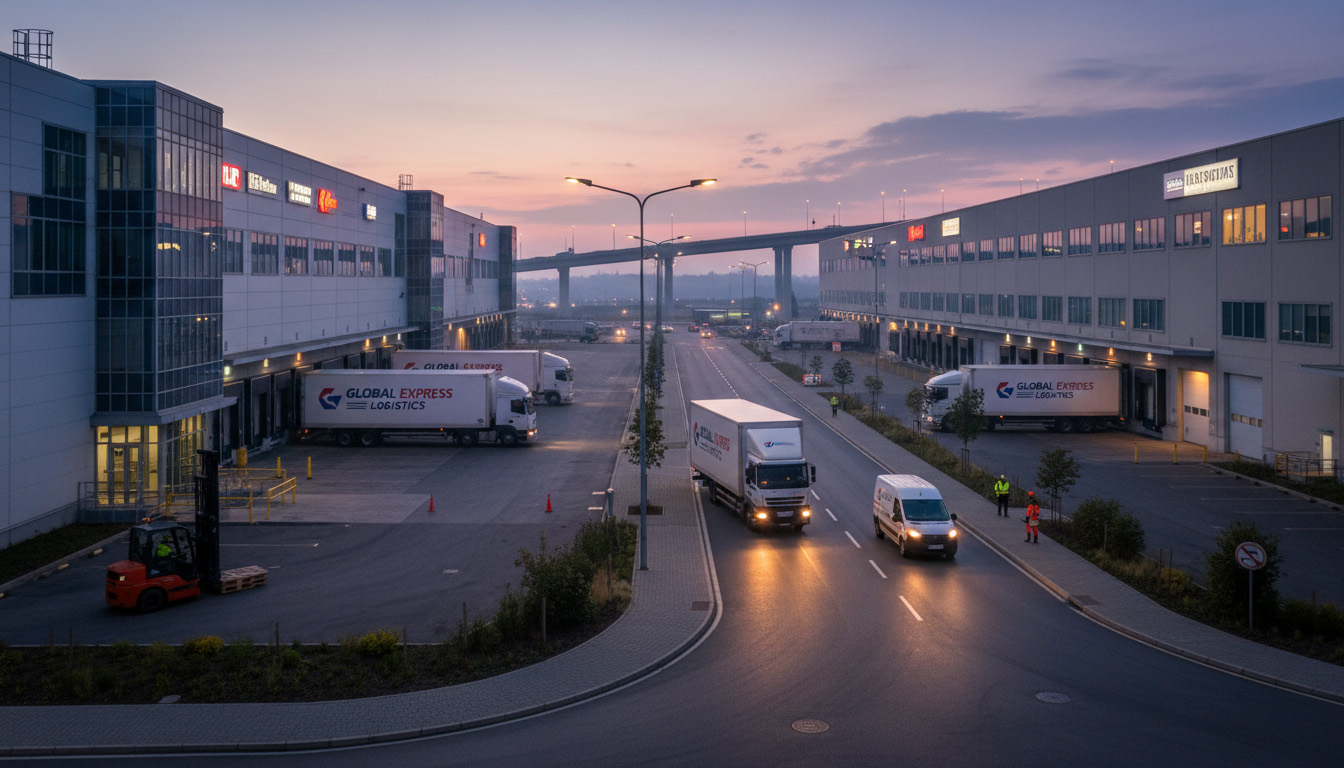
Access roads serving warehouses, retail parks or industrial units may accommodate heavy vehicles within confined areas. Slow-moving lorries exert greater pressure on the surface, especially during braking and turning manoeuvres.
Unlike main roads, where traffic flows at steady speeds, access routes often involve frequent stopping, reversing and tight turning. These movements introduce additional lateral forces that increase the likelihood of cracking and deformation.
Reinforcing high-stress areas during tarmac installation significantly improves resistance to this type of damage.
Drainage Challenges on Private Sites
Drainage is another factor contributing to faster deterioration. Public highways typically incorporate carefully engineered drainage systems that are maintained by local authorities. Private access roads may not receive the same level of attention.
Blocked gullies, inadequate falls or poorly designed drainage channels allow water to collect on the surface. Over time, water penetrates the structure, weakening the sub-base and accelerating surface failure.
Effective water management is crucial in extending the life of any access road.
Limited Maintenance and Inspection
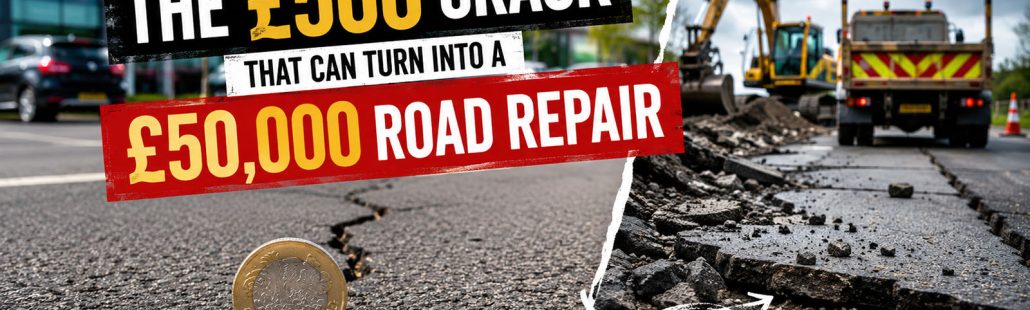
Public roads are inspected regularly and maintained according to scheduled programmes. Private roads, however, may only receive attention when visible defects appear. This reactive approach allows minor issues to develop into larger structural problems.
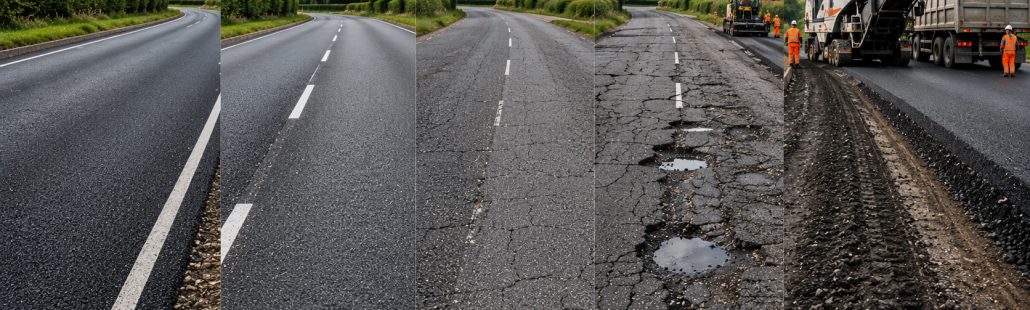
Small cracks permit water ingress, and early rutting may go unnoticed until it becomes significant. Without routine inspection, deterioration progresses more quickly.
Prompt attention to emerging issues, including professional pothole repairs, can prevent minor defects from escalating.
Ground Conditions and Development Pressures
Access roads are often constructed as part of new developments built on reclaimed or previously undeveloped land. Ground conditions may be variable, with made-up soil or inconsistent fill material beneath the surface.
If ground preparation is insufficient, settlement can occur unevenly. This movement transfers stress to the surface, resulting in cracking and distortion.
Main roads typically undergo more extensive ground investigation and preparation, reducing the likelihood of such problems.
Seasonal Impacts on Access Roads
UK weather affects all road surfaces, but access roads may be more vulnerable due to lighter construction and limited drainage. Freeze-thaw cycles during winter expand existing cracks, while heavy rainfall softens underlying layers.
Without robust structural support, these seasonal stresses accelerate deterioration. Access roads that appear serviceable in summer may show rapid decline following harsh winter conditions.
The Financial Impact of Premature Deterioration
Faster deterioration leads to more frequent maintenance and higher long-term costs. Reactive repairs disrupt site operations and may require temporary closures or traffic management measures.
Investing in stronger initial design and preventative maintenance reduces these long-term financial pressures. Access roads are essential infrastructure for many commercial properties, and their reliability directly affects daily operations.
Designing Access Roads for Longevity
Although access roads often face challenging conditions, their lifespan can be extended through thoughtful design and proactive management. Increasing structural depth in high-traffic areas, improving drainage and ensuring proper compaction all contribute to improved durability.
Regular inspections and early intervention also play a critical role. Addressing defects before they become widespread maintains surface integrity and reduces overall maintenance expenditure.
By recognising the unique demands placed on access roads, property owners can make informed decisions that support longer-lasting, more resilient surfaces.