
- admin
- No Comments
- March 19, 2026
The Difference Between Binder Course and Wearing Course Explained
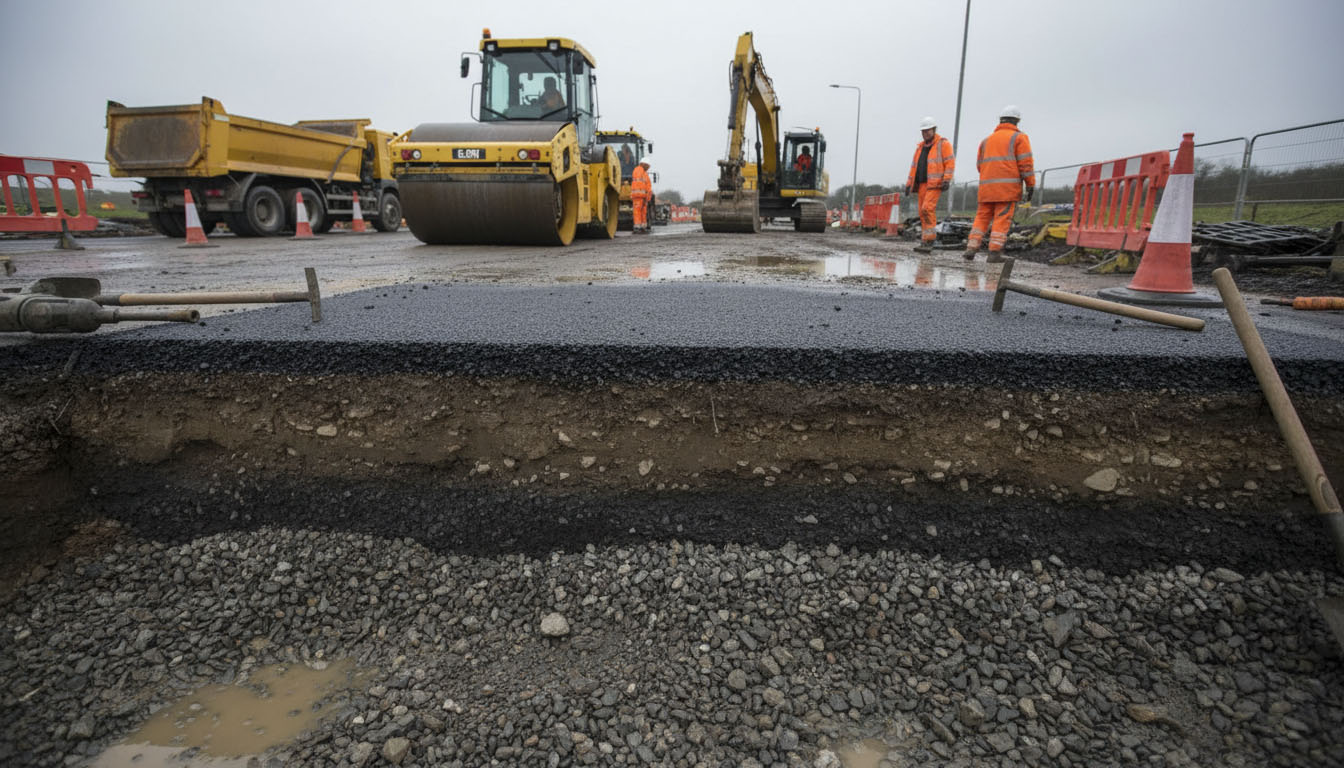
Modern asphalt roads are built in layers, with each layer performing a specific structural function. While most people focus on the visible surface, the strength and durability of a road depend heavily on what lies beneath. Two of the most important asphalt layers are the binder course and the wearing course.
Understanding the difference between these layers helps property owners and commercial site managers make informed decisions when planning resurfacing or new installations. Although both are made from asphalt, they serve distinct purposes within the overall road structure.
What Is the Binder Course?
The binder course sits directly beneath the top surface layer. It forms an intermediate structural layer between the base and the wearing course. Its primary role is to provide strength and load distribution, helping the road withstand repeated vehicle traffic.
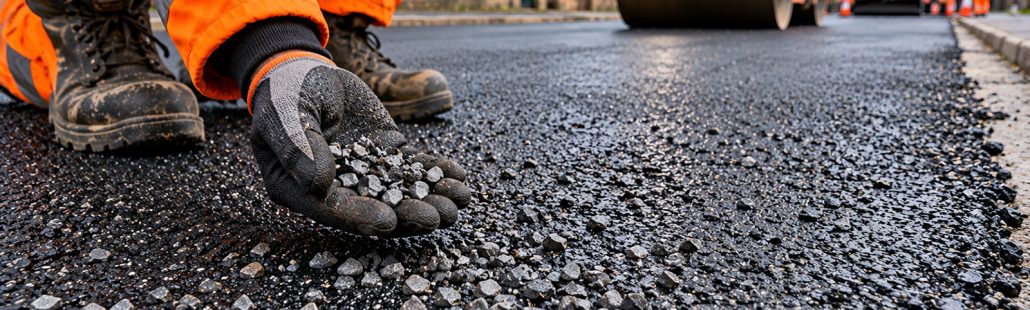
Binder course material typically contains larger aggregate than the wearing course. This creates a strong internal structure capable of supporting heavy loads. It also helps create a stable platform for the final surface layer.
In commercial environments where roads must accommodate delivery vehicles or heavy plant, the binder course plays a crucial role in preventing deformation and structural fatigue.
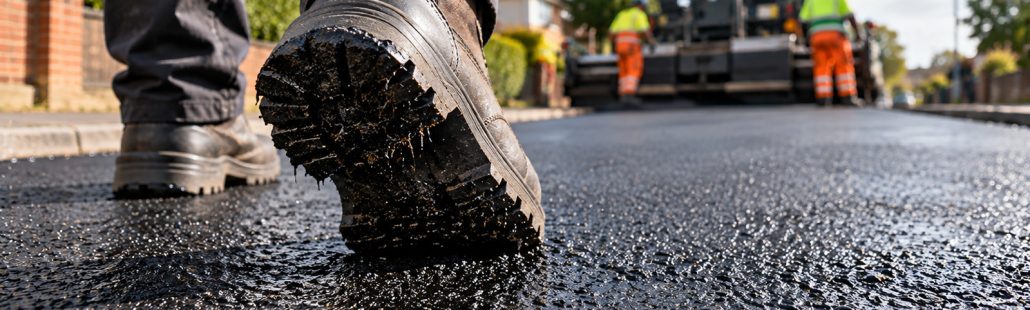
Professional tarmac installation ensures the binder layer is installed at the correct thickness and compacted properly to achieve long-term performance.
What Is the Wearing Course?
The wearing course is the top layer of the road surface. It is the part directly exposed to traffic and weather. Its primary functions are to provide a smooth driving surface, ensure adequate skid resistance and protect the underlying layers from water ingress.
Wearing course material typically uses smaller aggregate to produce a finer, more uniform finish. This improves ride quality and surface appearance while still delivering durability.
Although thinner than the binder course, the wearing course is critical for surface performance. It resists wear from tyres, braking forces and environmental exposure.
Structural Role Differences
The key difference between binder course and wearing course lies in structural responsibility. The binder course provides the main structural support within the asphalt layers. It absorbs and distributes traffic loads before they reach the sub-base.
The wearing course, by contrast, acts as a protective and functional surface. While it contributes to strength, its primary role is to shield the binder and lower layers from water and direct wear.
If either layer is under-specified or poorly installed, road performance is compromised.
Aggregate Size and Material Composition
Binder course asphalt uses larger aggregate particles, creating a more open internal structure designed for strength. Wearing course mixes use smaller aggregate, which results in a tighter surface texture and improved smoothness.
The difference in composition reflects the different roles each layer performs. Strength and load-bearing capacity are prioritised in the binder layer, while surface durability and skid resistance are prioritised in the wearing layer.
Correct mix selection is particularly important for high-traffic commercial areas.
Thickness Considerations
Binder course layers are typically thicker than wearing course layers. This additional depth provides structural integrity and helps distribute heavy loads evenly across the road foundation.
The wearing course is generally thinner, as its main role is surface protection and finish. However, even small reductions in thickness can affect durability. Ensuring correct specification prevents premature cracking and surface breakdown.
High-quality commercial surfacing projects carefully calculate layer thickness based on traffic demands and ground conditions.
How Failures Occur in Each Layer
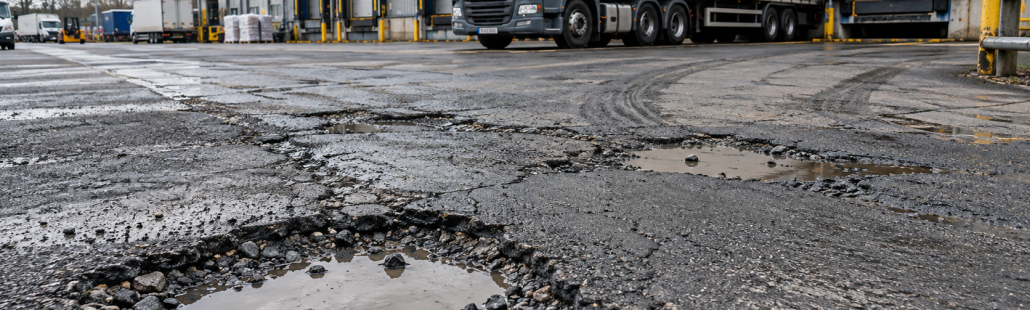
Failure in the wearing course often presents as surface cracking, fretting or loss of texture. These defects may appear cosmetic initially but can allow water to penetrate deeper layers.
Binder course failure is more serious, as it compromises structural strength. Signs include rutting, widespread cracking or surface deformation under load. When binder failure occurs, surface repairs alone are unlikely to provide lasting results.
Where damage is isolated, professional pothole repairs can restore localised defects. However, widespread structural issues may require more extensive intervention.
Why Both Layers Must Work Together
The binder and wearing courses function as a system. The binder provides the structural backbone, while the wearing course protects and completes the surface. If one layer fails, the other cannot compensate indefinitely.
A strong binder layer without adequate surface protection will deteriorate due to water ingress. Conversely, a high-quality wearing course placed over a weak binder will crack and deform under load.
Effective road construction relies on correct installation of both layers.
Planning Resurfacing Works
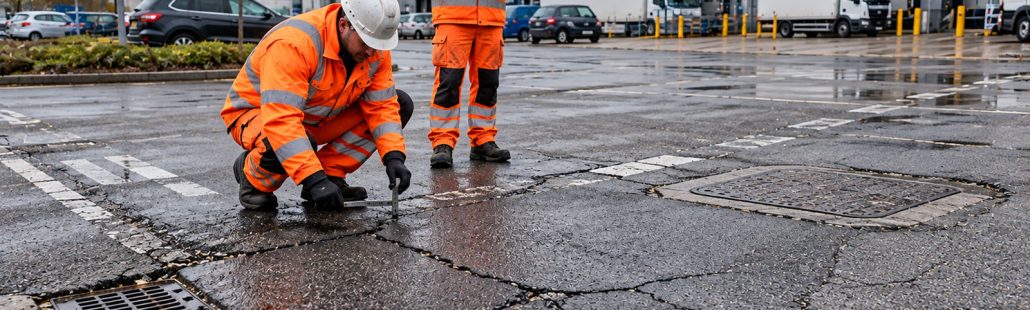
When resurfacing is required, contractors assess whether the binder course remains structurally sound. If the binder layer is intact, replacing only the wearing course may be sufficient. However, if structural fatigue is evident, both layers may need replacement.
Accurate assessment ensures cost-effective intervention without compromising durability.
Building Roads for Long-Term Performance
Understanding the difference between binder course and wearing course helps clarify why layered construction is essential in road design. Each layer performs a distinct function that contributes to strength, durability and safety.
For commercial sites and private roads alike, ensuring that both binder and wearing courses are specified and installed correctly supports long-term performance and reduces maintenance costs.