
- admin
- No Comments
- March 25, 2026
The Role of Road Thickness in Preventing Premature Failure
When planning new road construction or resurfacing works, attention is frequently directed towards surface finish and cost per square metre. However, one of the most important structural factors in long-term durability is total road thickness. Insufficient thickness is a leading cause of premature failure across commercial and private roads in the UK.
Road thickness determines how effectively traffic loads are distributed through the pavement structure and into the ground below. If the combined depth of surface, binder and sub-base layers is inadequate, stress becomes concentrated rather than dispersed. Over time, this leads to cracking, rutting and structural fatigue.
Understanding the role of road thickness allows property owners and site managers to make informed decisions that reduce long-term maintenance costs.
How Road Structures Distribute Load
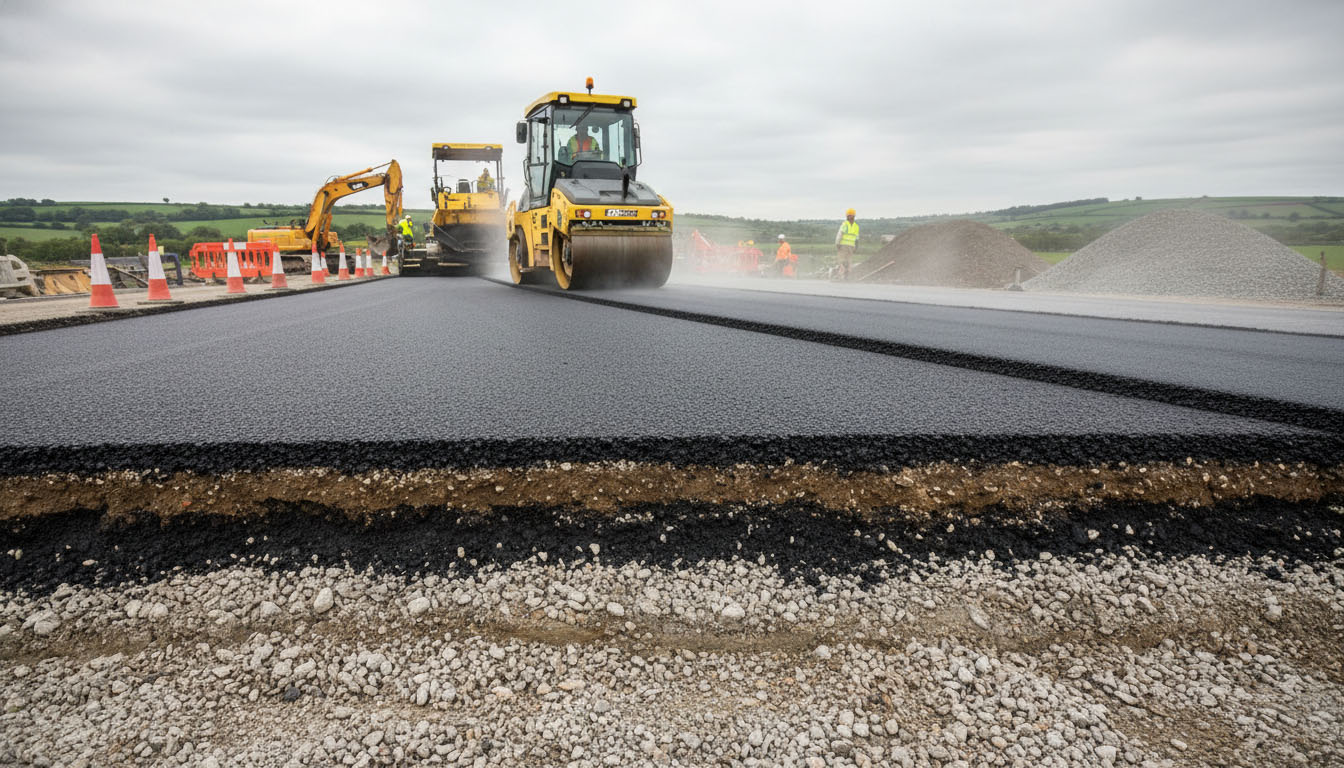
A road is designed to spread vehicle loads across a wide area so that the underlying soil does not become overstressed. This is achieved through a layered system, typically consisting of a wearing course, binder course and sub-base resting on the subgrade.
Each layer contributes to load distribution. The thicker the combined structure, the more evenly pressure is spread. When thickness is reduced, loads are transferred more directly to the ground beneath. If the subgrade cannot withstand this stress, settlement and deformation occur.
Professional tarmac installation ensures that structural depth is calculated according to expected traffic and ground conditions rather than minimum standards alone.
The Link Between Thickness and Traffic Volume
Traffic type and frequency are central to determining appropriate road thickness. Light vehicle use places relatively modest stress on a surface, whereas heavy goods vehicles exert significantly greater pressure, especially at slow speeds or during turning manoeuvres.
Commercial access roads, industrial estates and yard areas often experience concentrated loading. If these roads are constructed to residential specifications, they are unlikely to withstand sustained heavy use. Increasing thickness in high-stress areas significantly improves structural resilience.
Accurate assessment of traffic patterns is therefore essential before finalising design.
What Happens When Roads Are Too Thin
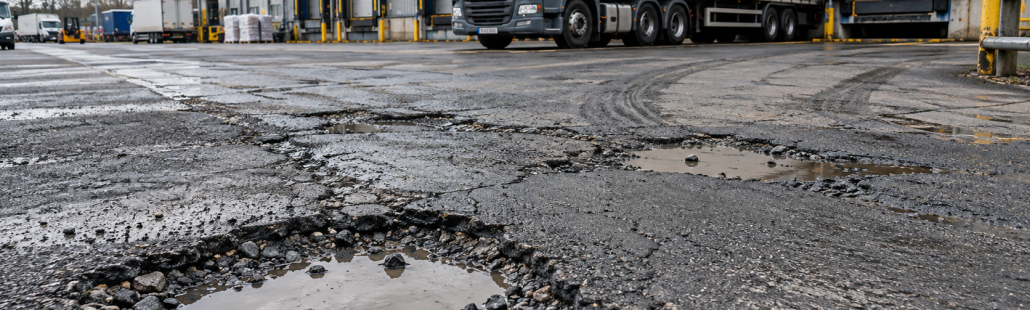
Under-specified thickness often results in early cracking and rutting. Thin surfaces flex excessively under load, leading to fatigue cracking that spreads over time. Once cracks appear, water enters the structure, weakening the sub-base and accelerating failure.
Rutting is another common outcome. Repeated loading compresses weak or thin layers, forming depressions along wheel paths. These depressions trap water and further reduce structural integrity.
While professional pothole repairs can temporarily address localised defects, they do not resolve structural inadequacy caused by insufficient thickness.
The Importance of Sub-Base Depth
While surface and binder layers are visible components, sub-base depth is equally important. The sub-base provides foundational strength and supports load distribution into the subgrade.
If sub-base thickness is inadequate, even a high-quality surface layer will fail prematurely. Increasing sub-base depth improves stability and reduces stress transfer to weaker soils. This is particularly important on sites with soft or variable ground conditions.
Professional commercial surfacing projects typically account for both asphalt thickness and sub-base requirements to ensure durability.
Cost Versus Longevity
Reducing thickness may lower initial installation costs, but it often increases long-term expenditure. Roads built with minimal structural depth require more frequent repairs and resurfacing, leading to cumulative costs that exceed the savings made at installation.
Investing in appropriate thickness from the outset extends service life and reduces the likelihood of early structural intervention. For commercial sites, this approach minimises disruption and protects operational continuity.
The Role of Compaction in Structural Performance
Thickness alone is not sufficient if layers are poorly compacted. Even a thick pavement structure can fail if air voids remain within the material. Proper compaction ensures density and maximises load-bearing capacity.
Combining adequate thickness with professional compaction practices creates a road structure capable of withstanding sustained stress.
Designing for Future Traffic Growth
Many commercial sites evolve over time. Increased deliveries, tenant changes or operational expansion may introduce heavier vehicles than originally anticipated. Designing roads with a margin of additional thickness allows for future growth without immediate reconstruction.
This forward-thinking approach prevents premature structural fatigue and reduces the need for costly upgrades later.
Long-Term Structural Stability
Adequate road thickness protects against both traffic loading and environmental stress. Seasonal temperature changes, moisture ingress and freeze-thaw cycles all place pressure on the pavement structure. Greater thickness improves resistance to these factors by maintaining stability under varying conditions.
Roads that are properly specified and constructed with sufficient depth perform more consistently across seasonal fluctuations.
Building Roads That Last
Road thickness is a fundamental component of durable construction. While it may not be visible once installation is complete, it directly determines how well a road performs under real-world conditions.
For property owners and commercial site managers, prioritising structural depth during planning and resurfacing projects reduces the risk of premature failure. Investing in adequate thickness from the outset supports safety, reliability and long-term cost efficiency.