
- admin
- No Comments
- March 27, 2026
The Hidden Operational Costs of Uneven Yard Surfaces
Uneven yard surfaces are often dismissed as minor defects. Small dips, shallow rutting or slight settlement may not seem urgent when compared to major potholes or structural cracking. However, on commercial and industrial sites, uneven ground carries operational consequences that extend far beyond appearance.
For property owners and site managers, the true cost of surface irregularities is rarely limited to repair invoices. Productivity, safety, vehicle maintenance and long-term infrastructure integrity are all affected. Understanding these hidden operational costs is essential for making informed maintenance decisions.
Increased Vehicle Wear and Maintenance
Commercial yards frequently accommodate heavy goods vehicles, forklifts and delivery vans. When these vehicles repeatedly travel over uneven surfaces, suspension systems, tyres and wheel alignments experience additional strain.
Even minor surface depressions create repeated impact loading. Over time, this accelerates wear on vehicle components. Businesses operating their own fleets may notice rising maintenance costs, while contractors and suppliers may become frustrated by repeated vehicle damage.
Maintaining a stable, well-constructed surface reduces mechanical stress and supports smoother vehicle movement across the site.
Slower Vehicle Movements and Reduced Efficiency
Uneven surfaces naturally slow traffic. Drivers navigating dips, ruts or rough patches reduce speed to protect vehicles and maintain control. While this may appear insignificant, cumulative delays across multiple daily vehicle movements can affect operational efficiency.
On busy sites with frequent deliveries, even minor delays can disrupt schedules. Queuing near loading bays or entrance points often worsens when vehicles must manoeuvre carefully around surface defects.
Professional commercial surfacing ensures yard areas are designed and maintained to support efficient vehicle flow without unnecessary obstruction.
Increased Risk of Accidents and Liability
Surface irregularities increase the likelihood of incidents involving both vehicles and pedestrians. Uneven ground may cause load instability on delivery vehicles or forklift imbalance in warehouse yards. For pedestrians, small changes in level create trip hazards, particularly in poor weather conditions.
Where accidents occur, site owners may face liability concerns. Insurance claims and reputational damage can follow incidents linked to preventable infrastructure defects.
Maintaining consistent surface levels demonstrates proactive risk management and supports safer site operations.
Water Pooling and Drainage Complications
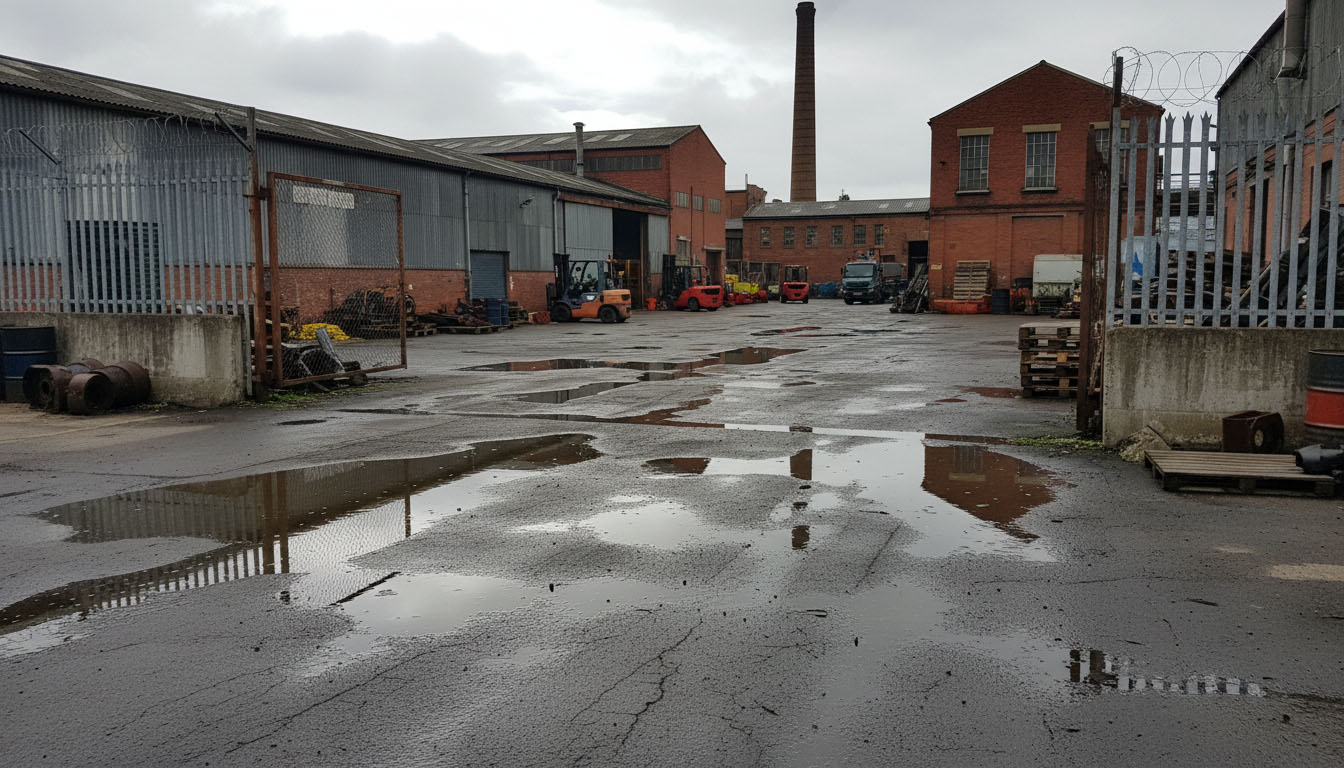
One of the most common consequences of uneven yard surfaces is water pooling. Depressions allow rainwater to collect rather than drain naturally. Standing water weakens asphalt, accelerates material breakdown and increases the risk of freeze-thaw damage during colder months.
Water pooling also creates operational inconvenience. Vehicles driving through puddles can reduce visibility and spread debris. Persistent moisture softens underlying layers, leading to further settlement and deepening of uneven areas.
Addressing structural irregularities before drainage performance declines prevents escalating repair costs.
Escalating Maintenance Cycles
Uneven surfaces rarely stabilise on their own. Minor settlement often leads to progressive structural movement, particularly under heavy traffic. Without intervention, shallow depressions deepen and widen.
Reactive measures such as repeated patching may provide temporary relief, but if the underlying cause is structural weakness, defects will reappear. Targeted pothole repairs can restore isolated damage, yet persistent unevenness often signals the need for broader structural correction.
A proactive maintenance strategy is generally more cost-effective than ongoing reactive intervention.
Impact on Equipment and Load Stability
Industrial sites frequently rely on forklifts, pallet trucks and other handling equipment. Uneven surfaces increase vibration and instability, potentially affecting load security. This can lead to product damage or reduced operational efficiency inside loading zones.
Smooth, stable yard surfaces support safer material handling and reduce strain on equipment. Over time, this contributes to lower maintenance costs and improved operational reliability.
Perception and Professional Standards
The condition of yard surfaces contributes to overall site presentation. Clients, tenants and suppliers form impressions quickly. Visible unevenness, rutting or standing water can suggest a lack of proactive maintenance.
Maintaining high infrastructure standards reinforces professional credibility and demonstrates attention to operational detail. For multi-tenant commercial properties, this can influence retention and overall asset value.
Structural Weakness Beneath the Surface
Unevenness often indicates deeper issues within the pavement structure. Sub-base settlement, inadequate compaction or insufficient thickness may all contribute to surface irregularities. Ignoring these warning signs increases the likelihood of widespread structural failure.
High-quality tarmac installation ensures that yard surfaces are constructed with sufficient structural depth and compaction to resist long-term deformation.
Identifying and correcting structural weaknesses early prevents significant reconstruction costs later.
Long-Term Financial Consequences
While uneven yard surfaces may appear manageable in the short term, the cumulative operational costs can be substantial. Increased vehicle wear, slower traffic flow, higher accident risk and recurring maintenance all impact business performance.
Investing in corrective works at the appropriate stage stabilises infrastructure and reduces hidden expenses. For commercial sites dependent on reliable access and efficient logistics, stable surfaces are fundamental to operational continuity.
Protecting Operational Performance Through Surface Integrity
Uneven yard surfaces are not merely aesthetic concerns. They influence safety, efficiency and long-term financial performance. Recognising the broader impact of surface irregularities enables property owners and site managers to take proactive action.
By maintaining consistent levels, improving drainage and addressing structural weaknesses, commercial sites can minimise hidden operational costs and support smoother daily operations.