
- admin
- No Comments
- March 29, 2026
The Business Case for Upgrading Ageing Site Roads
Many commercial and industrial sites across the UK continue operating with road infrastructure installed decades ago. While these surfaces may still be functional, visible wear, recurring defects and structural fatigue often signal deeper problems beneath.
Ageing site roads gradually shift from being stable assets to operational risks. Cracking, rutting and drainage failures increase over time, leading to reactive repairs and rising maintenance costs. For property owners and site managers, the decision to upgrade should not be viewed purely as a maintenance expense. It is a strategic investment that protects operations, safety and long-term asset value.
Understanding the business case for upgrading ageing site roads requires looking beyond surface appearance and considering operational performance, risk exposure and lifecycle cost.
Rising Maintenance Costs and Diminishing Returns
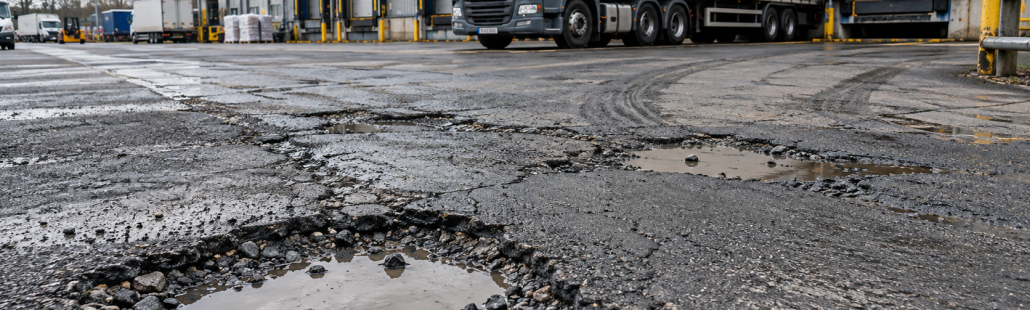
Older road surfaces frequently enter a cycle of repeated patching. Isolated repairs may restore short-term usability, but if the underlying structure is weakened, defects tend to reappear in the same locations.
Each repair adds labour costs, materials and potential operational disruption. Over time, these incremental expenses can exceed the cost of structured resurfacing or reconstruction. Continued reactive intervention rarely delivers long-term stability.
Professional pothole repairs are effective for isolated defects, but when damage becomes widespread, upgrading the entire surface may be the more economical solution.
Operational Efficiency and Productivity
Road condition directly affects vehicle movement. Uneven surfaces slow traffic, particularly heavy goods vehicles manoeuvring near loading bays or tight access points. Drivers may adjust speed to navigate depressions or avoid damaged sections.
Even minor delays accumulate across daily operations. For busy sites with frequent deliveries, smoother, upgraded roads improve traffic flow and reduce friction in logistics processes.
Investing in durable commercial surfacing ensures that infrastructure supports efficient vehicle movement rather than hindering it.
Reducing Health and Safety Exposure
Ageing roads introduce safety concerns for both vehicles and pedestrians. Surface defects increase the risk of trips, vehicle instability and load shifting. Water pooling in depressions reduces traction and may lead to slip hazards during colder months.
Upgrading ageing roads demonstrates proactive risk management. A structurally sound surface with effective drainage and clear markings reduces accident likelihood and strengthens compliance with health and safety responsibilities.
Mitigating safety risks also reduces potential insurance claims and reputational impact.
Protecting Property and Asset Value
Commercial properties are long-term investments. The condition of access roads influences both perceived value and tenant satisfaction. Prospective tenants and visitors often form impressions before entering a building.
Upgrading ageing site roads enhances presentation and reinforces professional standards. Well-maintained infrastructure signals effective management and long-term commitment to quality.
In competitive commercial markets, infrastructure condition can influence tenant retention and overall asset attractiveness.
Managing Structural Fatigue Before Failure
As asphalt ages, bitumen hardens and flexibility decreases. Thermal cracking, fatigue cracking and edge breakdown become more frequent. Once structural layers begin to fail, surface repairs alone cannot prevent continued deterioration.
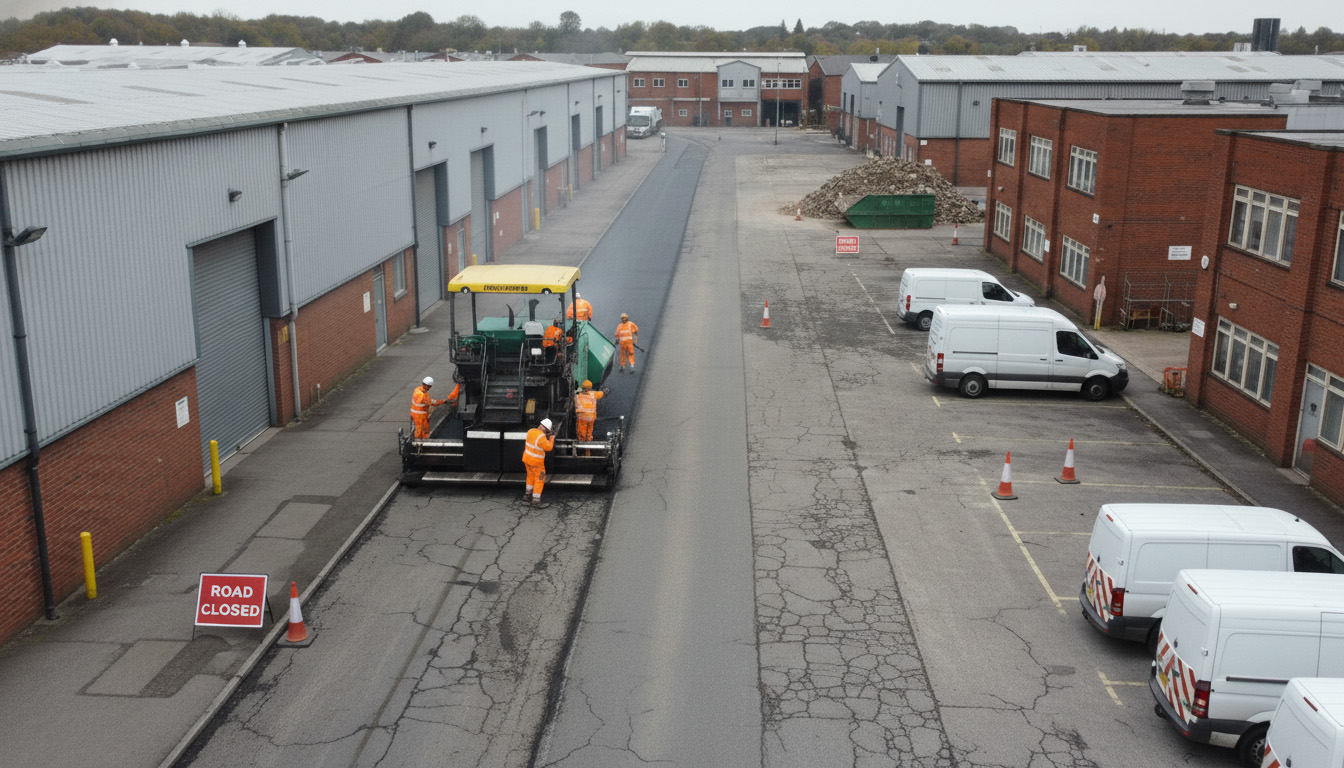
High-quality tarmac installation provides an opportunity to strengthen underlying layers and correct structural weaknesses rather than simply covering visible damage.
Addressing structural fatigue proactively prevents sudden large-scale failures that require extensive reconstruction.
Planning Works Around Operational Needs
Upgrading ageing site roads allows works to be scheduled strategically. Planned resurfacing can be phased to minimise disruption and maintain access. Emergency repairs, by contrast, often occur at inconvenient times and may require urgent closures.
A structured upgrade programme provides greater control over timing and budgeting. Businesses can coordinate works during quieter periods or alongside other site improvements.
Supporting Long-Term Cost Predictability
Infrastructure upgrades provide financial predictability. A newly resurfaced or reconstructed road typically requires minimal intervention for several years. This stabilises maintenance budgets and reduces the uncertainty associated with recurring reactive repairs.
Viewing road upgrades as capital investment rather than expense shifts focus toward lifecycle value. Stronger construction and appropriate thickness reduce the likelihood of recurring defects.
Preparing for Future Operational Demands
Many commercial sites evolve over time. Increased delivery volumes, larger vehicles or tenant expansion can place additional strain on ageing infrastructure. Roads originally designed for lighter use may struggle to cope.
Upgrading site roads provides an opportunity to strengthen surfaces in line with future operational requirements. This forward-looking approach supports growth and prevents infrastructure from becoming a limiting factor.
A Strategic Approach to Infrastructure Management
The business case for upgrading ageing site roads extends beyond aesthetics. It encompasses operational efficiency, risk reduction, asset protection and long-term cost control. While reactive maintenance may appear less expensive in the short term, it rarely delivers sustainable results.
For property owners and site managers, proactive upgrading protects both infrastructure and operational continuity. By investing in durable construction and thoughtful design, commercial sites can transform ageing roads from ongoing liabilities into long-term assets.