
- admin
- No Comments
- March 31, 2026
How to Prioritise Road Works Across Large Commercial Sites
Managing road infrastructure across a large commercial site presents unique challenges. Industrial estates, logistics hubs, retail parks and multi-unit business parks often contain extensive internal road networks, yard areas and access routes. Over time, wear and deterioration develop at different rates across these zones.
Attempting to address every defect at once is rarely practical or financially viable. Budget constraints, operational demands and access requirements mean that road works must be carefully prioritised. A structured approach ensures that investment is directed where it delivers the greatest operational and financial benefit.
Understanding how to prioritise road works effectively reduces disruption, controls costs and protects long-term infrastructure performance.
Start With a Comprehensive Condition Survey
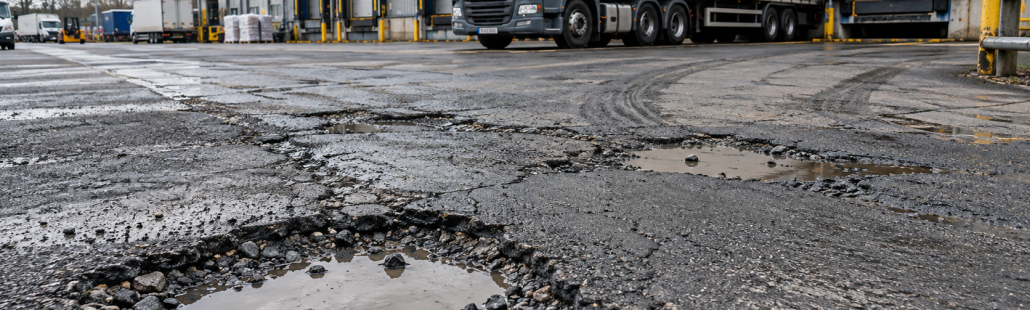
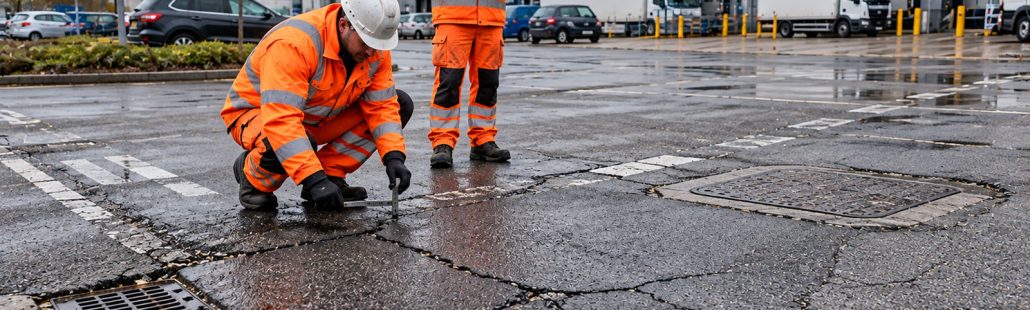
The first step in prioritisation is accurate assessment. A visual walkover is rarely sufficient for large sites. Instead, a structured condition survey should evaluate cracking, rutting, potholes, edge breakdown and drainage performance across all areas.
Mapping defects allows site managers to identify patterns rather than isolated issues. For example, repeated failures in loading zones may indicate structural weakness, while widespread cracking across multiple roads could signal ageing surfaces nearing the end of their lifecycle.
Professional input during this stage ensures that both surface defects and underlying structural concerns are identified before decisions are made.
Classify Roads by Operational Importance
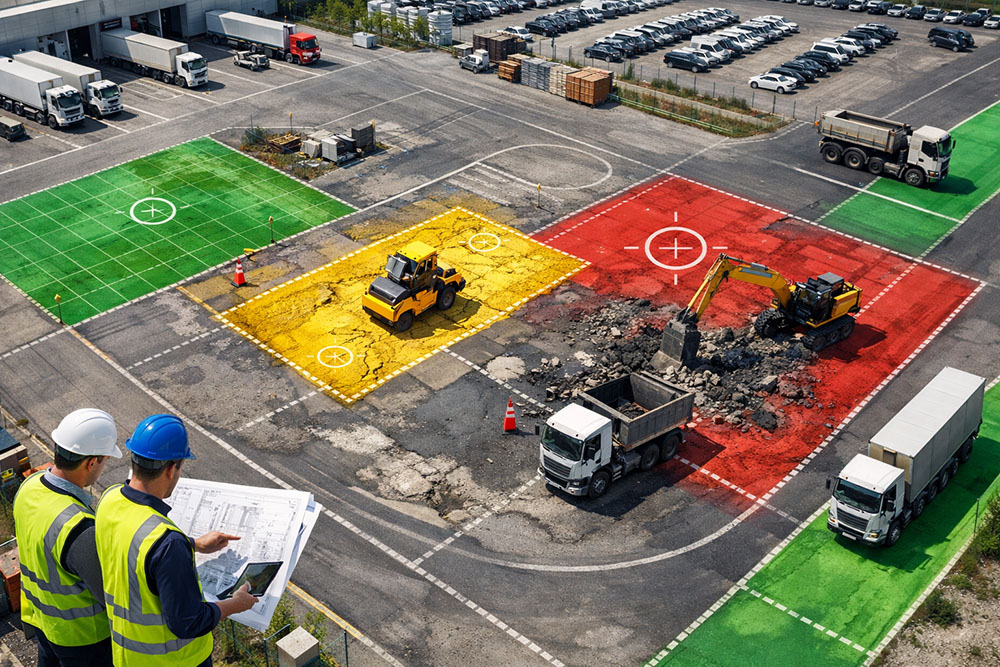
Not all roads within a commercial site carry equal importance. Main access routes, emergency vehicle paths and primary delivery corridors typically have the greatest operational impact. Secondary roads or lightly trafficked areas may tolerate minor defects for longer periods without significant disruption.
Prioritising high-traffic and high-risk zones first ensures that essential operations remain uninterrupted. Roads serving key tenants or critical logistics functions should receive earlier attention than peripheral areas.
Engaging experienced providers of commercial surfacing helps align structural upgrades with operational priorities.
Assess Safety Risk and Liability Exposure
Safety should be a central consideration in prioritisation. Surface defects that present trip hazards, vehicle instability or water pooling should be addressed promptly. Areas with pedestrian traffic near loading bays or entrances often require urgent attention.
Ignoring safety-related defects increases liability exposure and may lead to insurance implications. Prioritising repairs in high-risk zones protects both site users and asset owners.
Where defects are isolated, targeted pothole repairs can provide interim stability while larger works are scheduled.
Identify Structural Versus Cosmetic Issues
Some defects are largely cosmetic, while others indicate deeper structural failure. Surface fretting or minor cracking may be monitored temporarily, whereas rutting or repeated settlement often signals sub-base weakness.
Prioritisation should focus on structural integrity first. Addressing cosmetic issues without stabilising the underlying cause results in recurring problems and wasted expenditure.
High-quality tarmac installation offers the opportunity to strengthen vulnerable areas rather than simply improving appearance.
Evaluate Drainage Performance
Drainage problems often accelerate road deterioration. Standing water, blocked channels or ineffective falls weaken the pavement structure and increase the risk of freeze-thaw damage.
Areas where drainage failure is contributing to surface breakdown should move higher on the priority list. Correcting water management issues early prevents wider structural decline and reduces long-term repair costs.
Consider Traffic Growth and Future Use
Large commercial sites frequently evolve. Increased deliveries, tenant expansion or changes in vehicle type can place additional stress on roads that were originally designed for lighter use.
Prioritisation planning should account not only for current condition but also for anticipated future demand. Strengthening key routes in advance prevents premature failure as traffic volumes increase.
This forward-looking approach transforms road maintenance from reactive management into strategic asset planning.
Phase Works to Minimise Disruption
On active commercial sites, operational continuity is critical. Prioritisation should therefore consider how works can be phased logically. Addressing one section at a time allows traffic to be diverted and operations to continue with minimal interruption.
Phased planning also supports budget control by spreading investment across financial periods while still addressing high-risk areas promptly.
Careful scheduling reduces the risk of emergency closures and improves coordination with tenants and logistics providers.
Balance Short-Term Repairs With Long-Term Strategy
In some cases, temporary repairs may be necessary to maintain safety while larger resurfacing projects are planned. However, reliance on repeated patching without long-term planning often increases total expenditure.
Effective prioritisation balances immediate stabilisation with structured upgrade programmes. Allocating resources to structural renewal in key areas reduces reliance on reactive maintenance.
Develop a Rolling Infrastructure Plan
Rather than approaching road works as isolated projects, large commercial sites benefit from a rolling infrastructure plan. This involves forecasting resurfacing cycles, budgeting for phased upgrades and scheduling routine inspections.
A structured plan improves financial predictability and ensures that road condition does not decline unexpectedly. It also supports transparent communication with stakeholders and tenants.
Turning Prioritisation Into Long-Term Value
Prioritising road works across large commercial sites requires strategic thinking. By assessing condition accurately, focusing on operational importance and addressing structural risks first, property owners can maximise return on investment.
A planned, phased approach protects safety, maintains operational efficiency and extends infrastructure lifespan. When managed proactively, road works become part of a long-term asset strategy rather than reactive expense.