
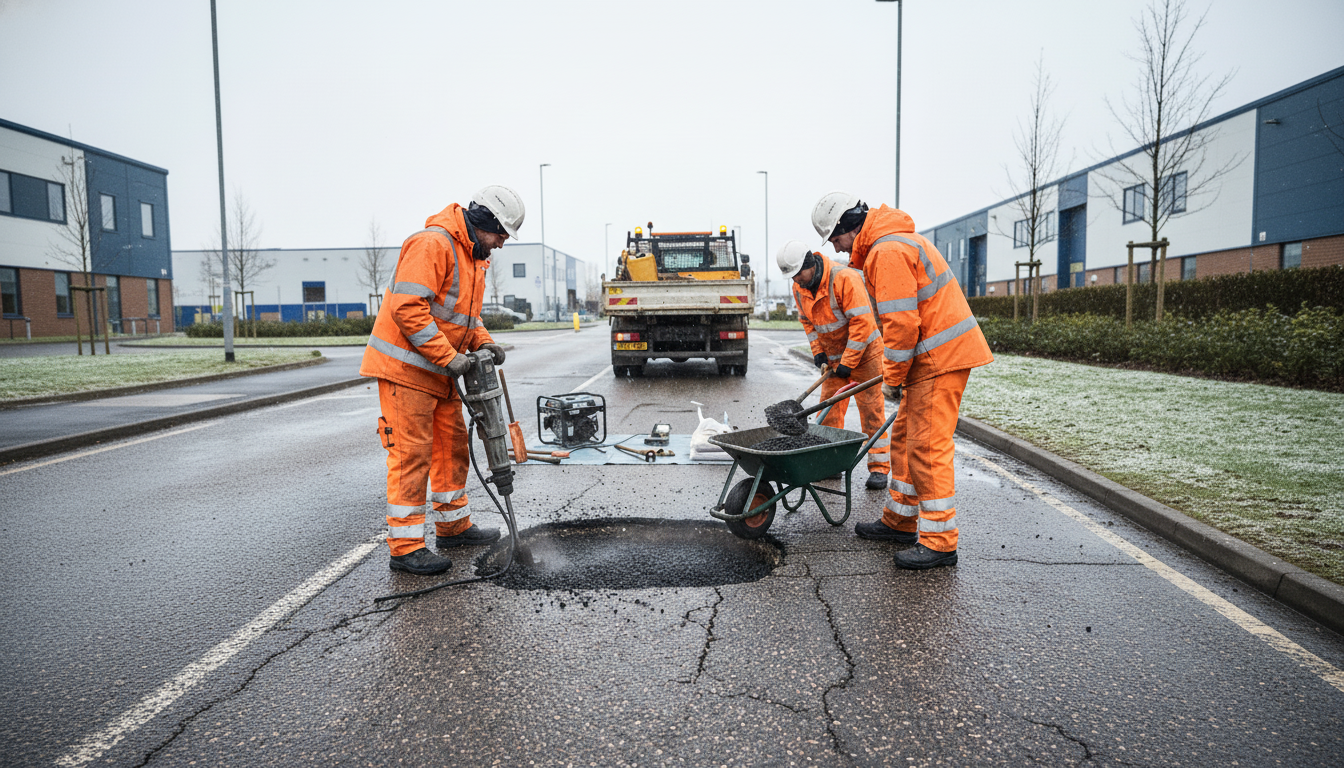
Emergency Pothole Repairs During the UK Winter Months
Winter consistently exposes weaknesses in road surfaces across the UK. Increased rainfall, falling temperatures, and reduced daylight combine to create conditions where minor defects rapidly turn into serious potholes. For property owners and commercial site managers, this often results in urgent repair requirements with little warning.
Water penetration is the primary trigger. As rain enters small cracks and joints, it reaches the underlying layers of the road. When temperatures drop overnight, this trapped moisture freezes and expands, forcing the surrounding material apart. Once the ice thaws, it leaves behind voids that weaken the surface from within. Repeated freeze-thaw cycles accelerate deterioration, particularly on access roads that carry regular vehicle traffic.
Traffic loading during winter further worsens the issue. Delivery vehicles, refuse collection lorries, and service traffic place additional stress on compromised surfaces. Even roads that performed well during warmer months can fail suddenly once winter conditions set in, making winter pothole repairs UK an unavoidable requirement for many sites.
When Emergency Pothole Repairs Become Unavoidable
Emergency repairs are triggered when surface damage presents an immediate safety risk. Deep potholes, breaking edges, and loose debris can damage vehicles, create trip hazards, and allow water to pool and freeze overnight. On commercial premises, this creates liability risks and operational disruption.
Emergency winter pothole repairs UK focus on restoring safety rather than delivering a permanent finish. The aim is to stabilise the damaged area, prevent further water ingress, and maintain access until weather conditions allow for more durable works.
On residential developments and private estates, untreated potholes can spread rapidly across shared access roads. Early intervention reduces repair scope and limits long-term costs.
How Cold Weather Limits Repair Options
Cold temperatures restrict traditional repair methods. Hot asphalt relies on adequate ambient warmth to compact correctly and bond to the existing surface. In winter, damp substrates and low temperatures increase the risk of early failure.
As a result, many winter pothole repairs UK use cold-lay asphalt materials. These products remain workable in low temperatures and allow repairs to be completed quickly. While they do not provide the same lifespan as hot-laid surfacing, they are effective at sealing defects and restoring surface safety.
Professional contractors assess traffic levels, defect depth, and drainage conditions before selecting the appropriate repair approach.
Temporary Repairs and Their Role in Winter Maintenance
Temporary repairs are a practical necessity during winter, but they must be understood for what they are. Cold-lay patches are designed to protect the structure until permanent repairs can be completed under suitable conditions.
A properly installed temporary repair prevents water reaching the sub-base, which is critical for avoiding structural failure. Repeated winter patching in the same location often indicates deeper issues rather than poor workmanship.
Using specialist contractors for pothole repairs ensures correct preparation, edge sealing, and compaction even during emergency works.
Identifying High-Risk Areas on Commercial Sites
Some areas are more prone to winter pothole formation than others. Junctions, turning circles, loading bays, and braking zones experience higher stress levels that accelerate surface breakdown. These areas deteriorate faster when water is present within the structure.
Poorly drained sections of road are particularly vulnerable. Standing water increases freeze-thaw activity and weakens the surface. On commercial estates, access roads carrying heavy vehicles suffer the most severe winter damage.
Regular inspections throughout winter help site managers identify defects early and reduce the need for repeated emergency call-outs.
The Impact of Drainage on Winter Pothole Repairs
Drainage performance plays a major role in repair longevity. Where water cannot escape efficiently, even high-quality repairs may fail prematurely. Blocked gullies, damaged channels, and insufficient falls all contribute to recurring potholes.
While major drainage works are rarely practical during winter, temporary improvements such as clearing outlets and improving local falls can significantly improve repair performance.
Long-term solutions often involve combining drainage upgrades with commercial surfacing works once conditions improve.
Managing Safety During Winter Repair Works
Winter repair works present additional safety challenges. Reduced daylight, wet surfaces, and icy conditions increase risks for workers and road users. Clear traffic management, signage, and controlled access are essential.
On occupied commercial sites, repairs must be planned carefully to maintain access and minimise disruption. Communication with tenants and staff helps manage expectations and ensures safe movement around repair areas.
Experienced contractors balance urgency with safe working practices throughout the winter period.
Planning Permanent Repairs After Winter Ends
Emergency winter repairs should always feed into a longer-term maintenance plan. Once temperatures rise, repaired areas should be reassessed to identify where permanent resurfacing is required.
Spring and early summer provide ideal conditions for durable surfacing works. Scheduling tarmac installation during this period allows materials to cure correctly, improving surface lifespan and performance.
Keeping records of winter repairs helps property owners plan targeted resurfacing rather than relying on repeated reactive maintenance.
Reducing Dependence on Emergency Winter Repairs
Although winter damage cannot be eliminated, proactive maintenance significantly reduces pothole frequency and severity. Autumn inspections, crack sealing, and timely resurfacing all improve winter performance.
Roads designed for expected traffic loads and UK weather conditions are far more resilient. This is particularly important for industrial and logistics sites with year-round heavy vehicle movements.
Taking a strategic approach to maintenance helps reduce costs, improve safety, and extend surface life.
A Practical Approach to Winter Road Management
Winter pothole repairs UK property owners rely on are a necessary short-term measure, not a long-term solution. Emergency repairs are most effective when they form part of a wider plan focused on prevention and permanent improvement.
Understanding how winter conditions affect surfaces and repairs allows site managers to make informed decisions. Acting early, repairing defects correctly, and planning permanent works ensures safer, longer-lasting access roads.