
How Frost and Ice Affect Asphalt Roads in the UK
Frost damage asphalt UK surfaces experience is one of the most persistent winter-related problems affecting access roads, car parks, and estate roads. Unlike impact damage caused by traffic or workmanship issues, frost damage develops gradually and often goes unnoticed until defects become visible at the surface. This makes it particularly challenging for property owners and site managers who may assume deterioration is simply down to age rather than seasonal conditions.
UK winters create an environment where asphalt is placed under repeated stress. Temperatures frequently move above and below freezing, allowing moisture to penetrate the surface and expand within the structure. Over time, this process weakens the road’s internal layers and reduces its ability to cope with daily traffic loads.
How Frost and Ice Penetrate Asphalt Surfaces
Moisture Ingress and Its Impact on Road Structure
Asphalt is designed to be water resistant rather than waterproof. As surfaces age, fine cracks, joint edges, and worn areas develop. These openings allow rainwater to pass through the surface and into the layers beneath. Once moisture enters the road structure, it becomes a significant risk factor during cold weather.
When temperatures fall, trapped water freezes and expands. This expansion places pressure on the surrounding asphalt and sub-base, forcing materials apart and weakening their bond. Each freezing event causes incremental damage that becomes more severe with repeated cycles.
Freeze–Thaw Cycles in the UK Climate
The UK climate is particularly damaging because prolonged deep freezes are uncommon. Instead, roads are exposed to frequent freeze–thaw cycles where temperatures fluctuate daily. Each cycle causes water to freeze, expand, then thaw and contract, gradually increasing the size of internal voids.
This movement often leads to frost heave, where sections of the road lift slightly before settling unevenly. While this may not be immediately visible, it disrupts load distribution across the surface and accelerates wear once traffic levels increase.
Warning Signs of Frost Damage Asphalt UK Property Owners Should Recognise
New or Worsening Cracks After Winter
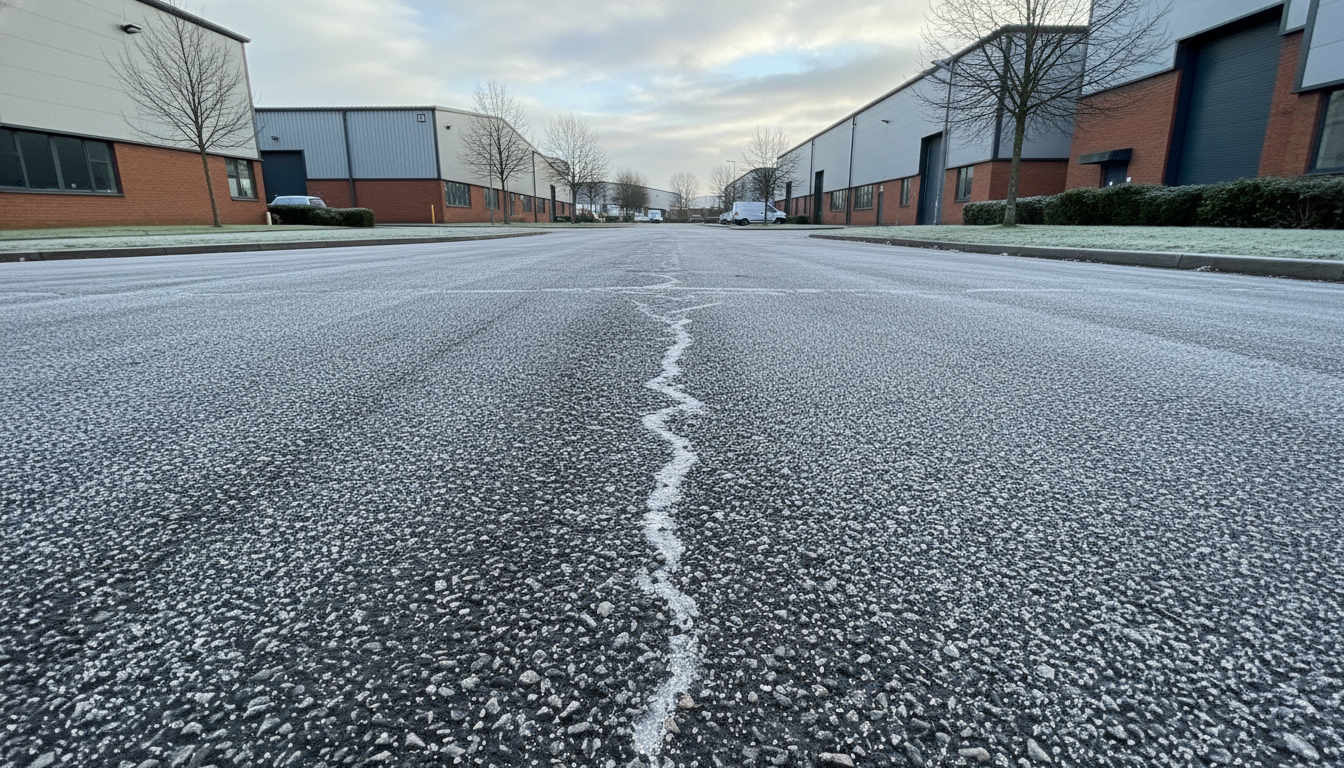
One of the clearest indicators of frost damage asphalt UK roads display is cracking that appears or worsens during winter. These cracks are often wider and more irregular than those caused by summer expansion and may follow wheel paths or spread across the surface in branching patterns.
Once cracks form, they allow additional water to enter the road structure, increasing vulnerability during the next cold spell. Without early intervention, these cracks often develop into more serious defects.
Potholes Forming During Thaw Periods
Potholes are commonly associated with winter damage, particularly during thaw periods following freezing conditions. When ice expansion has already weakened the asphalt layers, traffic loads can dislodge loose material, leaving cavities in the surface.
In many cases, these defects indicate deeper structural problems rather than isolated surface failure. Professional pothole repairs can address immediate safety concerns, but repeated winter potholes often suggest that more comprehensive remedial work is required.
Uneven Surfaces and Drainage Issues
Frost heave can also cause subtle surface deformation rather than obvious cracking or potholes. Roads may develop shallow dips or raised sections that disrupt surface water flow. Poor drainage allows water to pool on the surface, increasing the likelihood of further frost-related damage during subsequent cold periods.
Why Commercial and Access Roads Are More Susceptible
Higher Traffic Loads in Winter Months
Commercial access roads are subject to heavier loads than residential streets, particularly during winter when delivery schedules often increase. HGVs, service vehicles, and frequent turning movements place additional strain on road surfaces that may already be weakened by frost.
When the sub-base has been compromised by freezing moisture, even normal traffic levels can accelerate deterioration. This makes frost damage asphalt UK commercial sites experience more severe and more costly to resolve.
Legacy Drainage Design on Older Sites
Many industrial estates and commercial premises were built to older drainage standards. Inadequate falls, blocked drainage channels, or insufficient surface water management allow moisture to collect beneath the road structure. This trapped water significantly increases frost damage risk.
During planned commercial surfacing works, drainage improvements can often be integrated into the project, addressing the root cause of recurring winter damage rather than simply treating the symptoms.
Long-Term Risks of Ignoring Frost Damage
Progressive Structural Failure
One of the most serious consequences of untreated frost damage is hidden structural failure. While surface patches may temporarily improve appearance, the underlying layers can continue to degrade. Over time, this leads to widespread instability that cannot be resolved with minor repairs.
Once the sub-base has failed, full reconstruction may be required, causing greater disruption and expense than earlier intervention would have involved.
Increasing Maintenance Costs Over Time
Reactive maintenance often appears cost-effective in the short term, but repeated winter repairs quickly add up. Each new freeze–thaw cycle introduces further damage, leading to a cycle of patching that fails to provide lasting results.
Investing in properly planned repairs or resurfacing at the right time can significantly reduce long-term maintenance expenditure and improve surface reliability.
Preventing Frost Damage Asphalt UK Roads Commonly Suffer
Addressing Surface Defects Before Winter
Preventative maintenance carried out before winter is one of the most effective ways to reduce frost damage risk. Sealing cracks and repairing worn areas limits moisture ingress and helps preserve the integrity of the road structure during cold weather.
High-quality tarmac installation ensures correct compaction, layer thickness, and material selection suited to UK climatic conditions, improving long-term resistance to frost-related deterioration.
Improving Drainage Performance
Effective drainage is essential for frost damage prevention. Ensuring that surface water is directed away from the road structure reduces the amount of moisture available to freeze. Even modest drainage improvements can have a significant impact on winter performance.
On many sites, addressing drainage issues alongside surfacing works provides a more durable and cost-effective solution than surface repairs alone.
Choosing the Correct Post-Winter Repair Strategy
After winter, it is important to assess the true extent of damage before selecting a repair method. Isolated defects may be resolved with targeted repairs, but widespread cracking, deformation, or repeated pothole formation often indicates deeper structural issues.
A professional assessment helps determine whether resurfacing or more extensive works are required, preventing wasted expenditure on short-term fixes that will not withstand future winters.
Planning for Future Winters
Regular Inspections and Early Intervention
Routine inspections during and after winter allow emerging problems to be identified before they escalate. Early intervention helps maintain surface integrity and reduces the likelihood of sudden failures that disrupt access or create safety hazards.
This proactive approach is particularly important for sites with high traffic volumes or heavy vehicle movements.
Working With Experienced Surfacing Specialists
Understanding how UK winter conditions affect asphalt performance is essential when planning long-term maintenance strategies. Experienced contractors can recommend appropriate materials, construction methods, and repair techniques that reduce frost damage risk.
Property owners and site managers seeking reliable outcomes benefit from working with specialists such as East Herts Surfacing, who understand regional conditions and can deliver durable solutions tailored to specific site requirements.
Conclusion
Frost damage asphalt UK roads experience each winter is driven by moisture ingress, freezing temperatures, and traffic load acting together. While surface defects may appear minor at first, they often indicate deeper structural issues that worsen if left unaddressed.
By prioritising preventative maintenance, improving drainage, and selecting appropriate repair strategies, property owners and commercial site managers can significantly reduce winter-related damage. Taking a proactive, informed approach helps extend road lifespan, control maintenance costs, and maintain safe, reliable access throughout the year.