
- min min
- No Comments
- April 2, 2026
Planning Multi-Year Infrastructure Upgrades Without Overspending
For large commercial sites, industrial estates and multi-unit business parks, infrastructure upgrades are rarely one-off projects. Roads, yards and access routes age gradually, and attempting to address every issue in a single financial year can place unnecessary strain on budgets.
A multi-year upgrade strategy spreads investment sensibly while maintaining operational standards. Instead of reacting to surface failure, site owners can plan phased improvements that protect structural integrity and minimise disruption. The key is balancing long-term durability with financial control.
When approached strategically, infrastructure planning becomes a managed capital programme rather than a series of urgent repair bills.
Start With a Detailed Condition Assessment
Effective long-term planning begins with clarity. A structured condition survey across the entire road network identifies surface wear, structural fatigue, drainage weaknesses and high-risk zones.
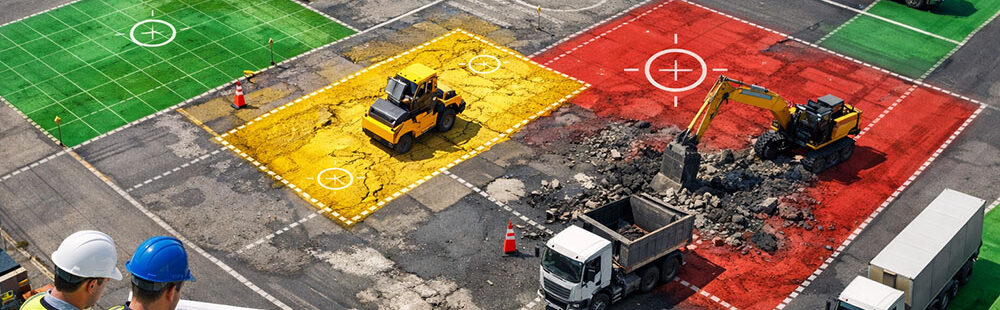
This assessment allows infrastructure to be categorised by urgency rather than appearance alone. Some areas may require immediate structural reinforcement, while others can be monitored and scheduled for later phases.
Professional evaluation through experienced providers of commercial surfacing ensures that both visible and hidden defects are considered before allocating budgets.
Separate Critical Works From Cosmetic Improvements
Overspending often occurs when structural priorities and cosmetic improvements are combined without distinction. While surface appearance is important, structural stability must come first.
High-traffic access roads, loading bays and emergency routes should take precedence over lightly used peripheral areas. Addressing load-bearing weaknesses early prevents accelerated deterioration and higher future costs.
By separating essential structural upgrades from lower-priority visual enhancements, site managers maintain safety while spreading investment logically.
Develop a Phased Upgrade Programme
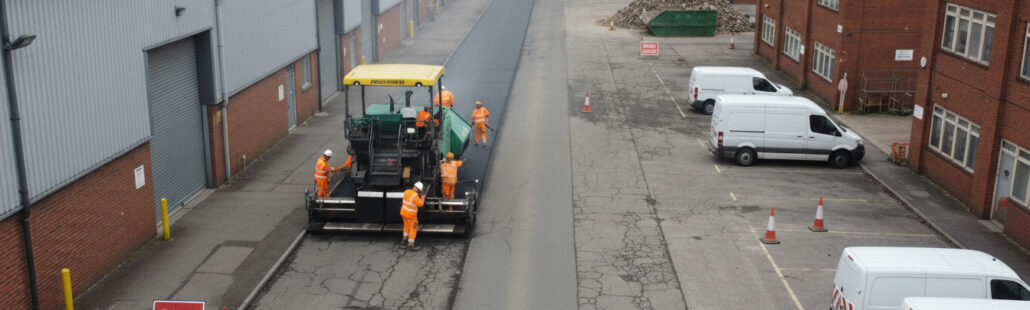
A multi-year strategy typically divides infrastructure into manageable phases. For example, year one may focus on primary access routes, year two on internal yard strengthening, and subsequent years on secondary roads and parking areas.
Phasing reduces immediate financial burden and allows works to be aligned with operational schedules. This approach avoids large-scale disruption and improves cash flow management.
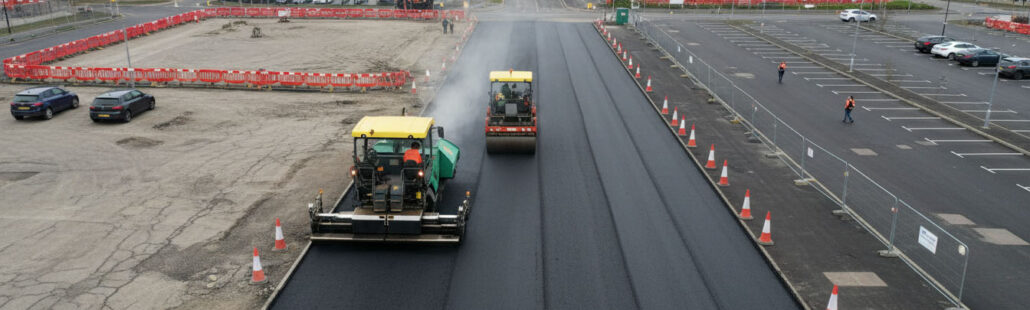
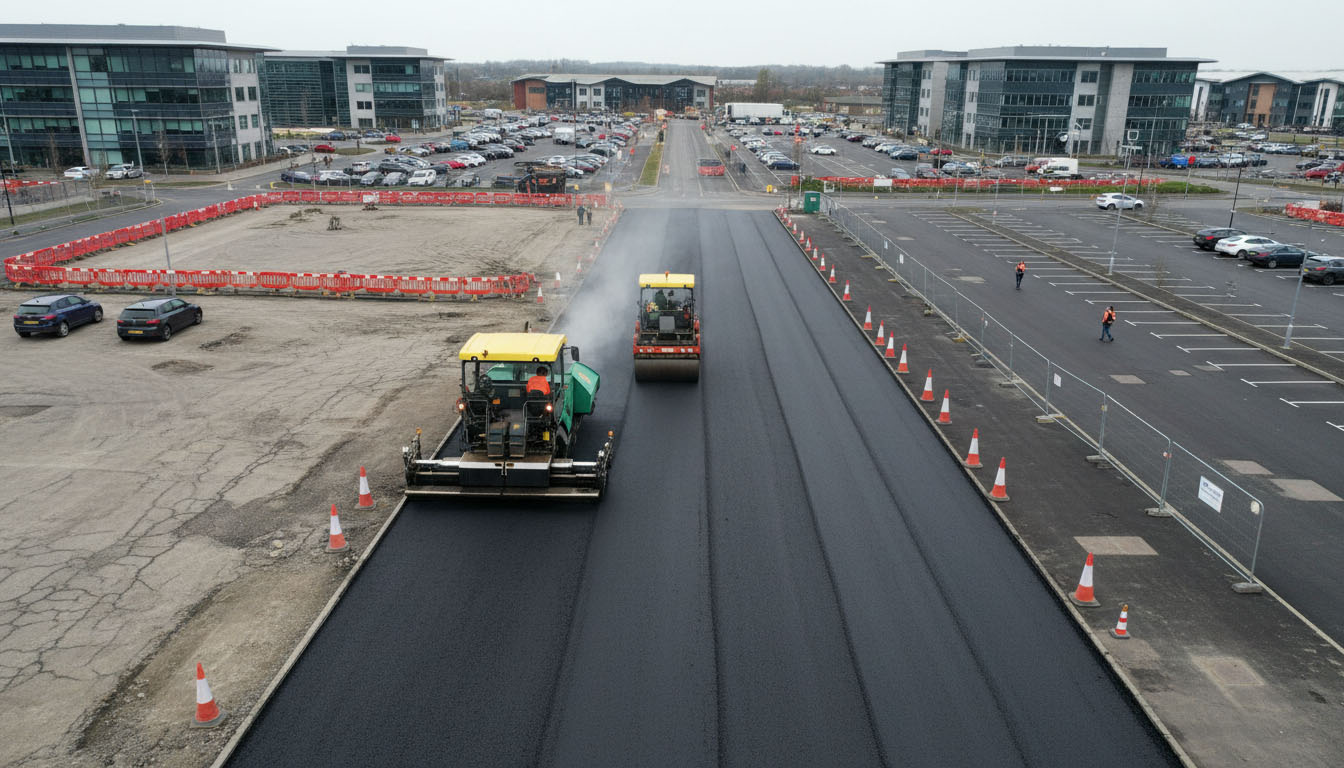
High-quality tarmac installation completed in phases can maintain structural consistency while spreading cost across financial periods.
Prioritise Drainage Improvements Early
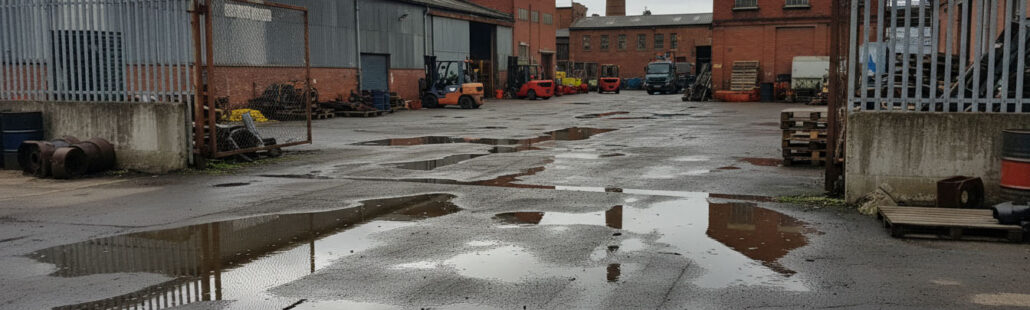
Drainage failures often accelerate road deterioration. Water ingress weakens sub-base layers and increases the risk of freeze-thaw damage during colder months. Upgrading drainage systems early in a multi-year plan protects both existing and newly resurfaced areas.
Correcting water flow issues before surface replacement prevents premature failure and avoids repeating works in subsequent years.
Align Infrastructure Planning With Business Growth
Commercial sites evolve. Increased delivery volumes, new tenants or operational expansion may increase traffic loads over time. Infrastructure planning should account for anticipated growth rather than current usage alone.
Strengthening critical routes in advance avoids emergency reconstruction when traffic patterns intensify. This forward-looking approach prevents overspending caused by reactive responses to increased demand.
Balance Reactive Repairs With Strategic Renewal
In multi-year programmes, some reactive repairs remain necessary. Localised defects may require interim attention to maintain safety. Professional pothole repairs can stabilise isolated damage while larger upgrades are scheduled.
However, reliance on repeated short-term fixes should be limited. Tracking repair frequency helps identify when a surface has reached the end of its economic lifespan and should be prioritised for full resurfacing.
Incorporate Lifecycle Cost Thinking
Focusing solely on upfront expenditure can lead to under-specification and higher long-term costs. Instead, lifecycle cost analysis considers installation cost, maintenance frequency and projected lifespan.
Investing in slightly thicker construction or improved materials may increase initial spending but reduce cumulative costs over a decade or more. Multi-year planning provides the flexibility to adopt this whole-life perspective.
Build Contingency Into Each Phase
Unexpected ground conditions or hidden structural weaknesses may emerge during works. Including contingency allowances within each phase prevents financial disruption and avoids compromising quality to stay within rigid budgets.
Controlled contingency planning supports smoother project delivery and protects overall programme stability.
Monitor and Review Annually
Infrastructure planning should remain dynamic. Annual reviews of surface condition allow adjustments to sequencing if deterioration accelerates in specific areas.
Regular inspection ensures that priority lists remain accurate and responsive to operational realities. This flexibility strengthens financial control while maintaining structural integrity.
Turning Infrastructure Into a Managed Asset
Planning multi-year infrastructure upgrades without overspending requires structure, prioritisation and strategic foresight. By phasing works logically, focusing on structural integrity and aligning upgrades with business growth, commercial sites can maintain high standards without sudden financial pressure.
Rather than responding to failure, proactive planning transforms road infrastructure into a managed asset. Over time, this approach delivers greater durability, operational continuity and predictable budgeting.