
- min min
- No Comments
- March 23, 2026
How Thermal Cracking Develops in UK Asphalt Surfaces
Thermal cracking is one of the most overlooked forms of asphalt deterioration in the UK. While heavy traffic and drainage failures are frequently discussed, temperature fluctuation alone can cause significant surface damage over time.
The UK climate, although moderate compared to extreme continental regions, still exposes asphalt to repeated cycles of cooling and warming throughout the year. Winter cold spells, followed by gradual spring warming, create expansion and contraction within the surface layers. Over time, this movement leads to visible cracking that compromises both durability and safety.
Understanding how thermal cracking develops allows property owners and commercial site managers to take preventative action before structural damage escalates.
What Is Thermal Cracking?
Thermal cracking occurs when asphalt contracts as temperatures drop and expands when temperatures rise. Asphalt is not a rigid material; it contains bitumen, which responds to temperature changes. When temperatures fall rapidly, the material contracts. If this contraction exceeds the material’s flexibility, cracks form.
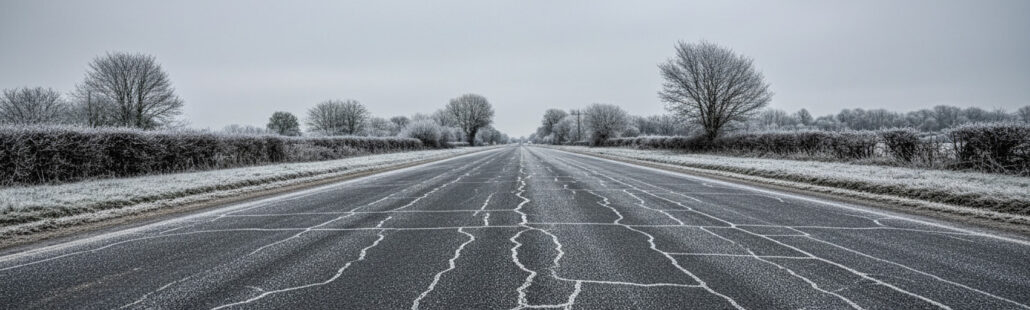
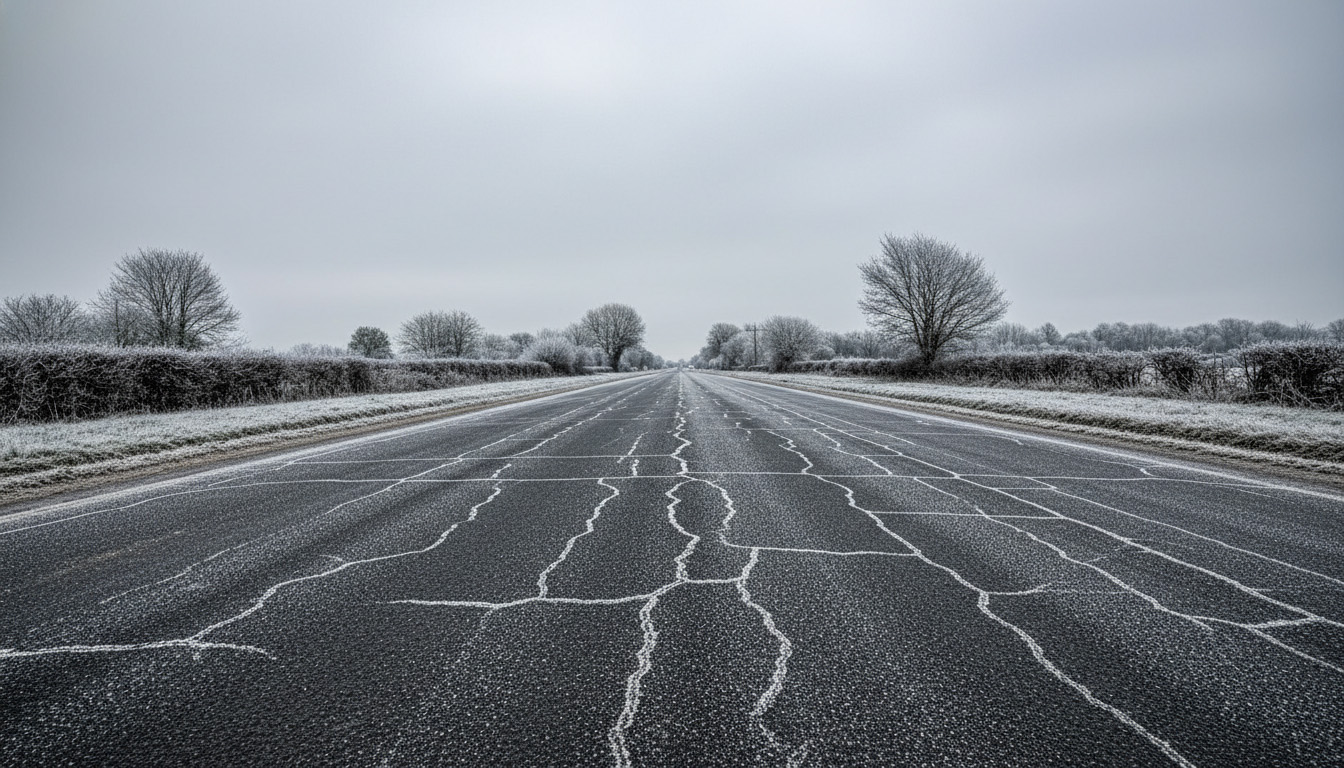
Unlike load-related cracking, which typically follows wheel paths, thermal cracks often run across the surface in relatively straight or slightly curved lines. They may appear evenly spaced and develop without heavy traffic influence.
In commercial environments, these cracks may initially appear minor but can worsen quickly if left untreated.
Why the UK Climate Contributes to the Problem
The UK experiences frequent temperature shifts, particularly during late autumn and winter. Night-time temperatures may fall close to or below freezing, while daytime temperatures rise several degrees above. This repeated expansion and contraction places stress on asphalt surfaces.
Prolonged cold spells are especially damaging. When asphalt becomes brittle in low temperatures, its ability to flex reduces. If the surface has already aged or lost elasticity, cracking becomes more likely.
Surface age also plays a role. Older asphalt loses some of its flexibility as the bitumen oxidises, making it more susceptible to temperature-induced stress.
The Role of Bitumen Ageing
Bitumen acts as the binding agent within asphalt. Over time, exposure to oxygen and ultraviolet light causes it to harden. As it becomes more brittle, its ability to accommodate thermal movement decreases.
A hardened surface is far more prone to cracking during cold weather. This is why older commercial access roads often show transverse cracking even if traffic levels are moderate.
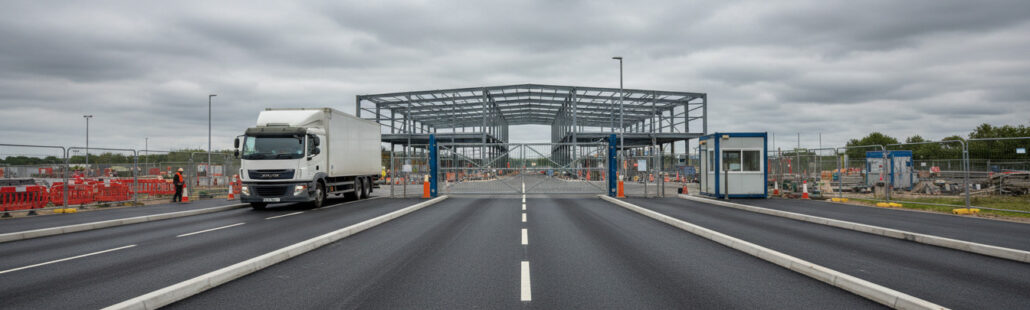
High-quality tarmac installation uses appropriate mix designs to balance strength and flexibility, reducing susceptibility to early thermal cracking.
How Water Makes Thermal Cracking Worse
Thermal cracks create pathways for water to enter the structure. Once moisture penetrates the surface, it can weaken the binder layer and sub-base. During freezing conditions, trapped water expands, widening cracks and accelerating deterioration.
This combination of temperature movement and water ingress often leads to pothole formation. What begins as fine thermal cracking can escalate into structural damage if drainage and maintenance are neglected.
Timely pothole repairs and crack sealing help prevent further water penetration and structural weakening.
The Difference Between Thermal and Load-Related Cracking
It is important to distinguish thermal cracking from fatigue cracking caused by traffic loads. Load-related cracking typically appears in wheel paths and forms interconnected patterns. Thermal cracking, by contrast, often appears at regular intervals across the carriageway.
Understanding the type of cracking present informs the appropriate repair strategy. Surface treatments may address minor thermal cracks, but widespread cracking in combination with base movement may indicate deeper structural fatigue.
Professional commercial surfacing assessments help determine whether surface-level treatment or more substantial intervention is required.
Preventing Thermal Cracking
While temperature changes cannot be controlled, several preventative measures reduce the likelihood of thermal cracking. Selecting asphalt mixes with appropriate flexibility for UK conditions is essential. Ensuring correct layer thickness also improves resistance to stress.
Routine inspection and early crack sealing prevent water ingress and slow crack progression. Maintaining effective drainage further protects the structure during freeze-thaw cycles.
Proactive maintenance is significantly more cost-effective than reactive repair once cracks widen and structural damage develops.
When Resurfacing Becomes Necessary
If thermal cracking becomes widespread and begins to interconnect, resurfacing may be the most practical solution. Overlaying a severely cracked surface without addressing underlying issues can result in reflective cracking, where cracks reappear through the new layer.
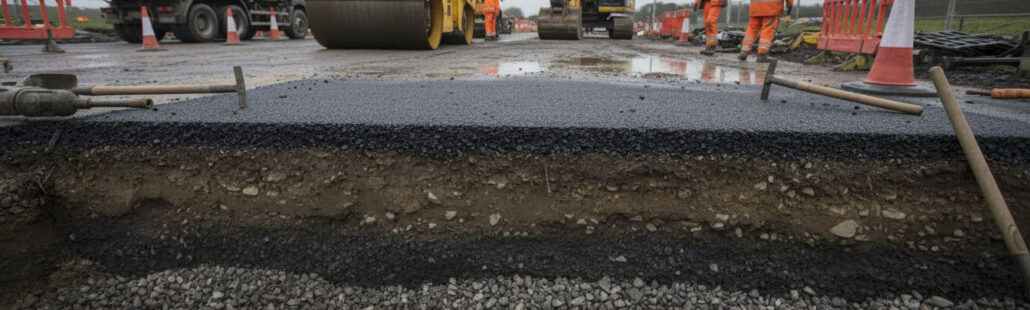
In such cases, planing and replacing the affected layers ensures long-term stability. Accurate assessment prevents temporary fixes that fail prematurely.
Long-Term Implications for Commercial Sites
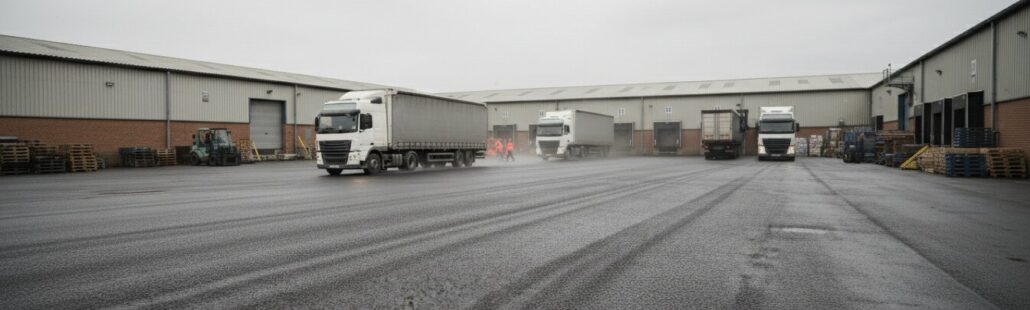
For commercial properties, thermal cracking affects more than appearance. Cracked surfaces reduce skid resistance, allow water accumulation and increase maintenance demands. If ignored, they can compromise safe vehicle access and increase liability risks.
Addressing thermal cracking early preserves surface integrity and extends service life. Incorporating temperature resilience into surfacing strategy supports long-term cost control and operational reliability.
Building Asphalt Surfaces That Withstand UK Conditions
Thermal cracking is a natural response to environmental stress, but it can be managed effectively through thoughtful design, appropriate materials and regular maintenance. Roads built with proper flexibility and drainage perform significantly better under seasonal temperature variation.
For property owners and site managers, recognising the signs of thermal cracking and acting promptly ensures that minor seasonal stress does not evolve into major structural failure.