
- min min
- No Comments
- January 3, 2026
Common Winter Road Damage Seen Across UK Estates
Winter places sustained pressure on road surfaces across residential and commercial estates throughout the UK. Lower temperatures, persistent rainfall, occasional frost, and reduced daylight all combine to expose weaknesses that may not be obvious during warmer months. Winter road damage UK property owners encounter is rarely the result of a single event. Instead, it develops gradually as environmental conditions interact with traffic loads, drainage performance, and the original quality of construction.
Moisture is the primary catalyst. Water enters small surface imperfections and joints, often unnoticed at first. When temperatures fall overnight, this moisture can freeze and expand, forcing cracks wider and loosening surface material. Repeated freeze-thaw cycles accelerate deterioration and allow water to reach deeper layers, where structural damage becomes more costly to resolve. Understanding how winter affects road construction helps estate managers recognise why early inspection and maintenance are essential.
Surface Cracking and Material Fatigue
Cracking is one of the earliest and most common signs of winter road damage UK estates experience. Fine surface cracks often develop as materials contract in cold weather, particularly where roads have reached the later stages of their service life. While these cracks may appear cosmetic, they provide direct pathways for water ingress, increasing the risk of more serious damage.
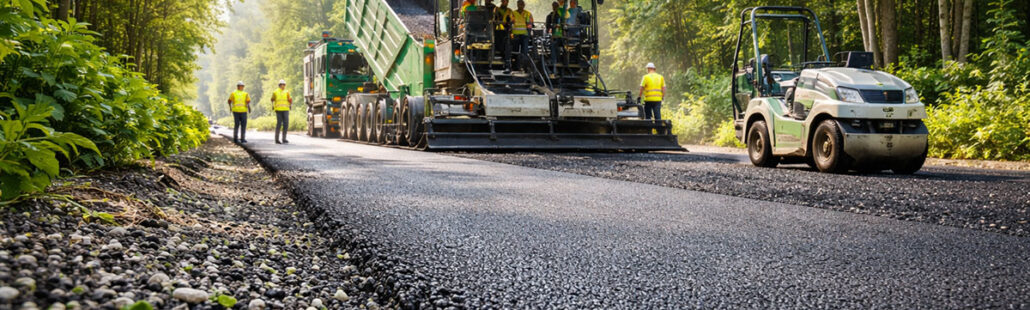
Wider or irregular cracks usually indicate movement within the sub-base or inadequate support beneath the surface. Temperature fluctuations exacerbate this movement, especially on access roads carrying delivery vehicles or refuse lorries. Without timely intervention, cracked surfaces deteriorate rapidly during winter. In many cases, professional tarmac installation or resurfacing is required to restore structural integrity rather than relying on repeated temporary repairs.
Pothole Formation During Cold Weather
Potholes are among the most disruptive forms of winter road damage UK estates face, particularly on busy commercial sites. They typically develop where cracks already exist, allowing water to weaken the underlying layers. As vehicles pass over these weakened areas, surface material breaks away, creating depressions that deepen quickly under traffic.
Cold weather complicates repairs, as traditional materials may not bond effectively in low temperatures. Temporary solutions are sometimes necessary to maintain safety and access, but these should not be viewed as permanent fixes. Proper pothole repairs carried out with appropriate preparation help stabilise affected areas until conditions allow for more comprehensive remedial works. Addressing potholes early reduces the risk of vehicle damage and liability issues across estates.
Drainage Problems and Standing Water
Drainage failure is a major contributor to winter road damage UK property owners often underestimate. During prolonged rainfall, poorly drained surfaces allow water to pool rather than disperse. Standing water increases surface wear and significantly raises the risk of frost damage when temperatures drop.
Blocked gullies, damaged channels, and insufficient gradients all become more problematic in winter. Water that cannot escape saturates the sub-base, reducing its load-bearing capacity and leading to deformation under traffic. Over time, this results in rutting, cracking, and edge breakdown. Integrating effective drainage solutions into road maintenance plans helps extend surface lifespan and prevents recurring winter-related failures.
Edge Deterioration and Loss of Support
Road edges are particularly vulnerable during winter months, especially where access roads border grass verges or soft landscaping. Saturated ground loses strength, allowing vehicle weight to cause edges to crumble or spread outward. Once edge support is compromised, cracking often progresses inward across the carriageway.
This form of winter road damage UK estates encounter frequently on industrial and residential access roads that were not designed for sustained heavy use. Without adequate edge restraints or kerbing, even well-constructed surfaces can fail prematurely. Strengthening edges as part of wider commercial surfacing works helps maintain structural stability and reduces long-term maintenance costs.
Surface Polishing and Reduced Grip
Winter conditions can also affect surface texture, particularly on older roads or high-traffic areas. Continuous moisture combined with vehicle movement gradually polishes aggregate, reducing skid resistance. This is especially concerning near junctions, slopes, pedestrian crossings, and loading areas where traction is critical.
Reduced grip may not be immediately obvious during routine inspections, but it increases safety risks during wet or icy conditions. Proactive assessment allows estate managers to identify areas where resurfacing or surface treatment is required to restore texture. Maintaining adequate grip is not only a safety consideration but also a key factor in meeting duty of care obligations on commercial sites.
Sub-Base Weakness Exposed by Winter Conditions
While surface defects are the most visible signs of winter road damage UK estates face, underlying sub-base weakness is often the root cause of recurring problems. Winter weather exposes these weaknesses as water penetrates and freezes within foundation layers, causing movement and loss of compaction.
Roads affected by sub-base failure often show repeated cracking, depressions, and uneven settlement despite surface repairs. In such cases, patching alone offers limited benefit. A more robust solution, such as reconstruction or machine lay tarmac installation, ensures correct compaction and thickness throughout the structure, delivering long-term performance.
Increased Traffic Pressure During Winter
Seasonal changes in traffic patterns also contribute to winter road damage UK property managers must consider. Increased delivery schedules around the festive period, combined with reduced daylight and wet conditions, place additional strain on access roads. Vehicles are more likely to use the same routes repeatedly, accelerating wear on already weakened surfaces.
Industrial estates and retail parks are particularly susceptible, as heavy vehicles continue operating regardless of weather conditions. Roads that perform adequately during summer may struggle under winter loads if they were not designed with sufficient strength. Reviewing traffic demands and surface specifications helps inform future maintenance and upgrade decisions.
The Importance of Early Inspection and Planning
Early identification of winter road damage UK estates experience allows property owners to take action before defects escalate. Minor cracks, drainage issues, and edge deterioration are far easier and more cost-effective to address than widespread structural failure. Winter inspections provide valuable insight into how surfaces are coping under stress and where intervention is most urgently required.
Planning remedial works during winter enables estate managers to schedule permanent solutions for spring, when weather conditions are more favourable. This approach avoids emergency repairs, minimises disruption, and ensures maintenance budgets are used effectively. In some cases, alternative surfacing options such as resin bound surfacing may be suitable for specific areas, offering improved drainage and durability.
Reducing Long-Term Repair Costs Through Proactive Maintenance
Winter road damage UK estates face does not have to result in escalating repair costs. Proactive maintenance strategies focus on addressing underlying causes rather than repeatedly treating symptoms. By combining regular inspections, effective drainage management, and timely resurfacing, property owners can significantly extend the service life of their roads.
Investing in professional assessment ensures that maintenance decisions are based on structural condition rather than surface appearance alone. Over time, this approach reduces unplanned expenditure, improves safety, and maintains reliable access across estates throughout the year.