
- admin
- No Comments
- March 7, 2026
Why Proper Compaction Is Critical in Road Construction
When discussing road construction, attention is often focused on materials such as asphalt, tarmac or aggregate quality. However, one of the most decisive factors in long-term performance is something less visible: compaction. Proper compaction ensures that each layer of a road structure is dense, stable and capable of supporting traffic loads without premature failure.
For UK property owners and commercial site managers investing in new access roads or resurfacing works, understanding the importance of compaction helps explain why preparation time and machinery matter just as much as surface finish.
What Is Compaction in Road Construction?
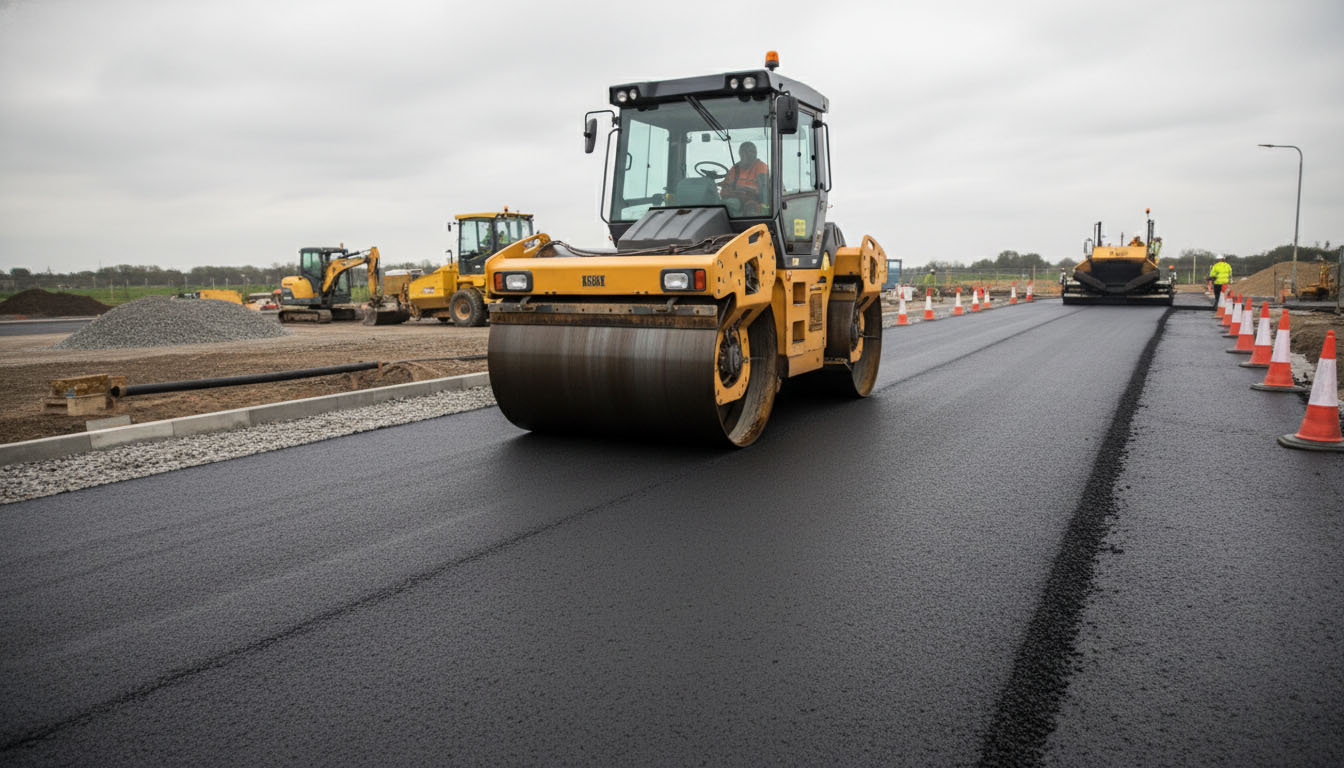
Compaction is the process of mechanically densifying soil, sub-base and asphalt layers to remove air voids and increase strength. This is achieved using rollers, vibrating plates or specialist compaction equipment designed for different materials and site conditions.
Each structural layer of a road must be compacted correctly before the next layer is installed. If compaction is insufficient at any stage, the entire structure becomes vulnerable to movement and settlement under load.
Why Poor Compaction Leads to Early Failure
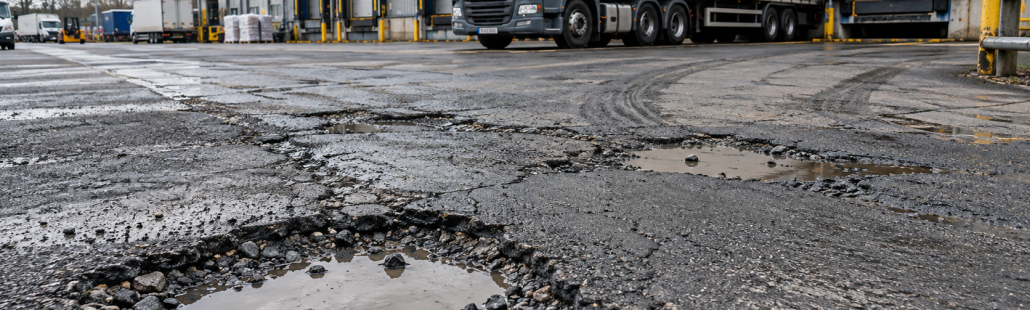
Inadequate compaction is a common cause of premature cracking, rutting and pothole formation. When air voids remain within the structure, the material is more likely to shift under pressure. Over time, traffic loading compresses weak areas unevenly, leading to surface deformation.
Water penetration also becomes more likely in poorly compacted surfaces. Moisture entering through microscopic gaps weakens the material further, accelerating deterioration. This combination of movement and water ingress often results in repeated maintenance issues.
Professional tarmac installation relies on precise temperature control and correct rolling techniques to achieve optimal compaction levels.
Compaction and Load-Bearing Capacity
A road’s ability to support vehicles depends heavily on how well each layer has been compacted. Properly compacted sub-base distributes load evenly across the ground, reducing stress on the subgrade. In contrast, loosely compacted layers concentrate stress in isolated areas, increasing the likelihood of failure.
Commercial environments are particularly sensitive to compaction quality. Access roads serving warehouses or industrial sites often experience frequent heavy vehicle movements. Without adequate compaction, these loads can quickly cause structural weakness.
Integrating strong compaction practices into commercial surfacing projects ensures roads are built to withstand operational demands.
The Role of Moisture in Compaction
Moisture content plays a crucial role in effective compaction. Soil and aggregate must contain the right level of moisture to achieve maximum density. Too little moisture prevents particles from binding properly, while too much reduces stability.
Experienced contractors assess site conditions carefully before compaction begins. Adjustments may be required to achieve optimal results, particularly during periods of heavy rainfall or prolonged dry weather.
Temperature Control in Asphalt Compaction
For asphalt and tarmac surfaces, temperature is critical. Material must be laid and compacted within a specific temperature range to achieve proper bonding. If compaction occurs too late, once the material has cooled, density levels may be insufficient.
Careful coordination between delivery, laying and rolling processes ensures that compaction is completed at the correct time. This attention to detail significantly influences surface lifespan and resistance to cracking.
Edge Compaction and Structural Stability
Edges are often the first areas to show signs of failure when compaction is inadequate. Proper edge rolling ensures that the full width of the road is stable and resistant to spreading. Weak edges allow lateral movement, leading to cracking and breakdown.
Consistent compaction across the entire surface, including joints and edges, prevents weak points from developing. This holistic approach improves long-term structural integrity.
Testing and Quality Assurance
Professional contractors may use density testing methods to confirm that compaction meets required standards. These tests provide measurable assurance that the structure is strong enough to support expected traffic loads.
Quality control procedures reduce the risk of hidden weaknesses that could emerge months or years later. For site managers, this provides confidence that the road has been built correctly from the ground up.
Long-Term Cost Benefits of Proper Compaction
Although achieving correct compaction requires time, equipment and expertise, it reduces long-term maintenance costs significantly. Roads built with insufficient density often require early repairs or resurfacing, increasing overall expenditure.
Preventative investment in proper compaction ensures greater durability and fewer interventions over time. Addressing defects later, such as through repeated pothole repairs, can become costly if the underlying issue is structural weakness caused by poor compaction.
Building Roads That Perform Under Pressure
Compaction is not visible once construction is complete, yet its impact is felt throughout the life of a road. From subgrade preparation to final surface rolling, every stage contributes to overall stability and strength.
For property owners planning new installations or resurfacing works, selecting contractors who prioritise proper compaction is essential. Durable roads are built from the ground up, and density control plays a central role in ensuring surfaces remain smooth, stable and reliable for years to come.