



- admin
- No Comments
- March 17, 2026
Why Entrance Roads Set the Standard for Your Entire Commercial Site
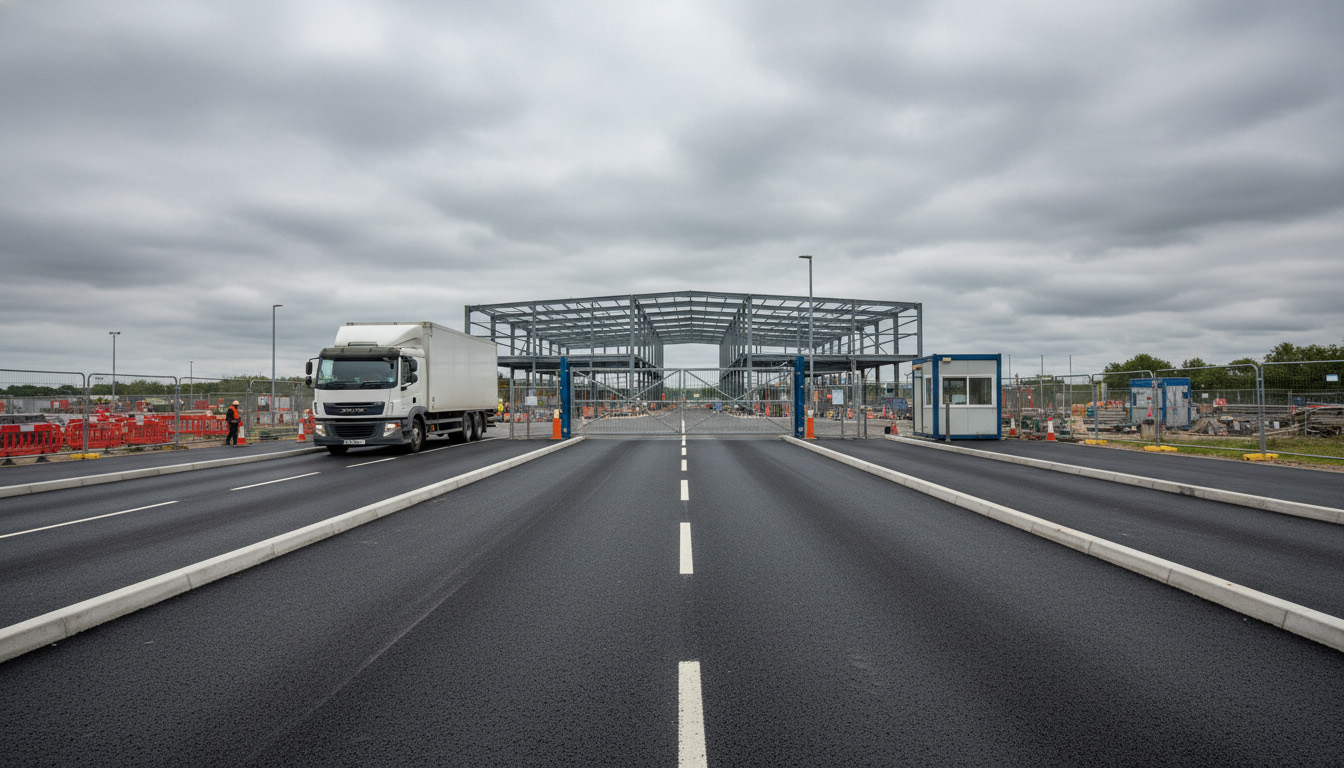
The entrance road is the first physical interaction visitors, clients and delivery drivers have with your commercial site. Long before they reach reception or step inside a building, they form an impression based on access quality, surface condition and overall organisation.
A smooth, well-maintained entrance road communicates professionalism, safety and attention to detail. By contrast, cracked surfaces, potholes or poorly marked layouts suggest neglect and reactive maintenance. For property owners and site managers, the entrance road is not simply functional infrastructure. It sets the operational and visual standard for the entire premises.
Entrance Roads Experience Disproportionate Stress
Entrance areas are among the most heavily used parts of any commercial site. Every vehicle entering or leaving passes over the same section repeatedly. This concentrated traffic loading increases surface wear significantly compared to internal roads.
In addition to straight-line traffic, entrance roads often accommodate turning, braking and queuing vehicles. These movements create lateral forces and concentrated pressure on the surface. Over time, this can lead to rutting, cracking and deformation if the structure beneath is not designed to cope.
Professional commercial surfacing solutions typically strengthen entrance zones to withstand higher stress levels.
The Impact of Heavy Vehicles at Site Entrances
Many commercial entrances must accommodate delivery vehicles, refuse trucks and articulated lorries. These vehicles often slow down, turn sharply or pause while waiting for gates or security checks. This combination of weight and manoeuvring places substantial strain on the road surface.
If the entrance was originally constructed to lighter specifications, it may deteriorate quickly under heavy vehicle use. Strengthening these areas during installation or resurfacing ensures that the structure distributes load effectively and resists premature failure.
High-quality tarmac installation takes anticipated traffic loads into account during design and construction.
Drainage and Water Management at Entrances
Entrance roads are particularly vulnerable to drainage problems. If falls and channels are poorly designed, water can accumulate near gates or barriers. Standing water not only affects safety but also weakens the surface over time.
Effective drainage protects the integrity of both surface and sub-base layers. Preventing water ingress reduces the likelihood of cracking, potholes and edge breakdown. Regular inspection of entrance drainage systems helps maintain long-term performance.
Where isolated damage has occurred, prompt pothole repairs prevent minor defects from escalating into structural issues.
Safety and Traffic Organisation
Entrance roads are key traffic control points. Clear road markings, defined lanes and appropriate signage improve flow and reduce confusion. This is particularly important on busy commercial sites where pedestrians and vehicles interact.
A well-organised entrance reduces the risk of accidents and enhances operational efficiency. Structured layouts support predictable movement patterns, especially during peak delivery periods.
Maintaining a high standard at the entrance encourages consistent traffic behaviour across the entire site.
Supporting Brand Image and Professionalism
The condition of an entrance road influences how a business is perceived. Clients, suppliers and prospective tenants form opinions quickly. A clean, smooth and well-marked entrance signals that the site is managed proactively.
Conversely, visible defects can undermine confidence. Even minor surface deterioration near the entrance may create the impression of broader neglect. Investing in entrance maintenance reinforces a professional image and supports long-term reputation.
Preventing Premature Edge Breakdown
Entrance areas often suffer from edge failure due to vehicles overrunning kerbs or manoeuvring tightly. Without adequate edge support, surfaces may begin to spread and crack.
Proper edge restraint and compaction during installation significantly improve durability. Reinforcing vulnerable zones at the entrance prevents gradual structural weakening and reduces future maintenance requirements.
Long-Term Financial Benefits of Maintaining Entrance Roads
Although resurfacing or strengthening entrance roads represents an upfront cost, it delivers measurable long-term value. Well-constructed entrances experience fewer defects, reducing reactive maintenance and emergency repair expenses.
Proactive investment also minimises operational disruption. Preventing deterioration avoids unexpected closures or restricted access that could affect deliveries and customer visits.
Integrating Entrance Roads Into Broader Site Strategy
Entrance roads should not be treated as isolated elements. Their design and maintenance should align with overall traffic management, drainage planning and surface durability strategies across the site.
By setting a high structural and visual standard at the entrance, property owners create a benchmark for the rest of the infrastructure. This integrated approach ensures consistent performance and reduces long-term costs.
Building a Strong Foundation for First Impressions
Entrance roads carry both physical traffic and reputational weight. They endure concentrated stress, shape visitor perceptions and influence operational efficiency. Investing in durable construction, effective drainage and proactive maintenance ensures they perform reliably.
For commercial sites across the UK, the entrance road is more than an access point. It sets the tone, standard and structural resilience for the entire property.


