



- admin
- No Comments
- May 6, 2026
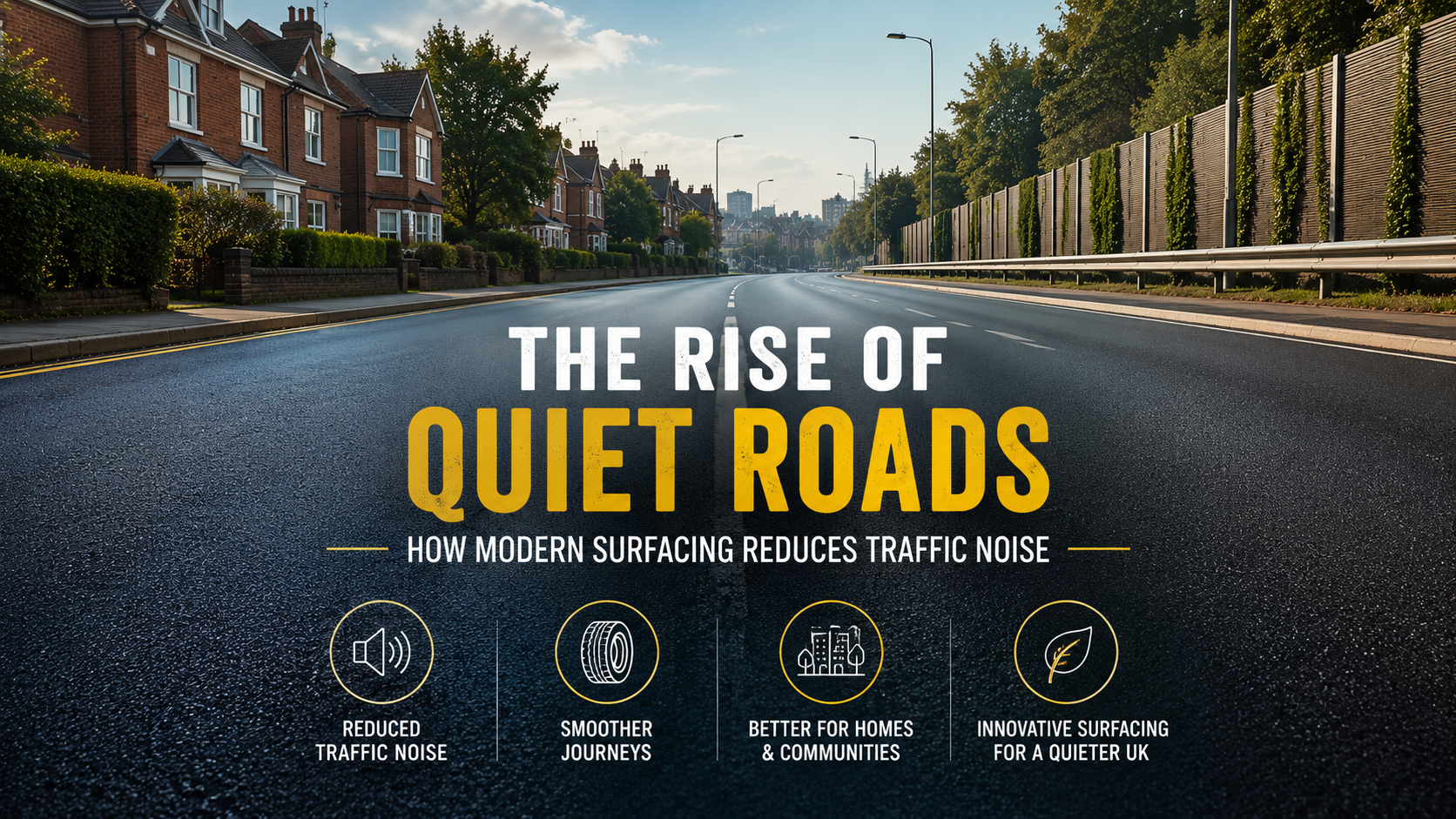
The Rise of Quiet Roads in the UK: How Modern Surfacing Reduces Traffic Noise
Across the UK, traffic noise has become an increasing concern for councils, developers and commercial property owners. As urban areas expand and traffic volumes rise, reducing environmental noise pollution is no longer just a residential issue. Industrial estates, retail parks and mixed-use developments are also under pressure to manage sound levels.
Modern quiet road surfacing UK solutions are helping address this challenge. Advances in asphalt design mean that roads can now be engineered not only for durability but also for acoustic performance.
For property owners and site managers, understanding how surfacing affects noise can influence both planning decisions and long-term site value.
How Road Surfaces Generate Noise
Traffic noise does not come solely from engines. At higher speeds, tyre interaction with the road surface becomes the dominant source of sound. As tyres roll across asphalt, air is compressed and released within surface voids, generating noise.
Traditional dense asphalt surfaces reflect more sound, while older or uneven surfaces can amplify vibration noise. Surface texture, aggregate size and porosity all influence acoustic output.
This is where modern commercial surfacing techniques play a role in managing sound levels.
What Makes a Road “Quiet”?
Quiet road surfacing typically uses thin surface course systems or porous asphalt mixes designed to absorb sound rather than reflect it. These materials reduce tyre noise by allowing air to escape more gradually and by minimising vibration.
Smaller aggregate sizes create a smoother surface, which reduces the impact noise caused by tyre tread patterns. In addition, porous layers can dampen sound waves rather than reflecting them outward.
The result is a measurable reduction in decibel levels, particularly at moderate to higher speeds.
Benefits for Commercial and Mixed-Use Developments
Lower traffic noise provides tangible benefits for commercial environments. Reduced sound levels improve working conditions in nearby offices and industrial units. For mixed-use developments combining retail, residential and commercial areas, quieter roads contribute to improved overall environment quality.
For property developers, incorporating modern surfacing systems can support planning approval where noise mitigation is a concern.
Professional tarmac installation allows appropriate low-noise surface systems to be specified based on site usage and traffic conditions.
Performance and Durability Considerations
While acoustic performance is important, durability remains essential. Quiet surfacing materials must still withstand heavy traffic loads, weather exposure and the UK’s freeze-thaw cycles.
Modern asphalt technologies are designed to balance noise reduction with structural resilience. When installed correctly on a stable sub-base, low-noise surfaces can deliver comparable lifespan to traditional surfacing systems.
Regular inspection and timely pothole repairs ensure that surface integrity is maintained, as damaged areas can increase vibration and noise.
The Role of Surface Condition in Noise Levels
Even the best acoustic surface will become noisier if it deteriorates. Cracking, rutting and uneven patches create additional tyre vibration, increasing sound output.
Maintaining a smooth, consistent surface is therefore critical to preserving noise reduction benefits. Proactive maintenance protects both structural performance and acoustic efficiency.
Are Quiet Roads Suitable Everywhere?
Quiet surfacing is particularly effective in:
- Urban access roads
- Retail parks
- Business estates near residential zones
- School and hospital environments
In very heavy industrial areas with slow-moving heavy goods vehicles, noise reduction benefits may be less noticeable, as engine noise dominates at lower speeds.
Environmental and Planning Advantages
Reducing road noise contributes to broader environmental objectives. Lower noise levels improve community wellbeing and can help developments meet planning conditions related to acoustic impact.
As sustainability and environmental standards become more prominent in UK construction, quiet surfacing represents a practical innovation that supports responsible development.
Cost Considerations
Quiet road surfacing may involve slightly higher upfront material costs compared to standard asphalt. However, when integrated into wider infrastructure planning, the long-term benefits can outweigh initial investment.
Reduced need for additional noise barriers, improved site attractiveness and enhanced compliance with planning regulations can provide financial advantages.
The Future of UK Road Surfacing
The rise of quiet roads in the UK reflects a broader shift toward smarter, more considerate infrastructure design. Roads are no longer viewed solely as functional transport routes; they are part of the surrounding environment.
Modern surfacing technology allows property owners and developers to reduce traffic noise without sacrificing structural performance. When properly designed, installed and maintained, quiet road surfacing delivers both durability and improved environmental quality.
For commercial sites looking to balance operational efficiency with environmental responsibility, quiet surfacing is an increasingly viable solution.


