
- Minisgreat
- No Comments
- September 28, 2026
The Hidden Causes of Cracks in Resin Driveways
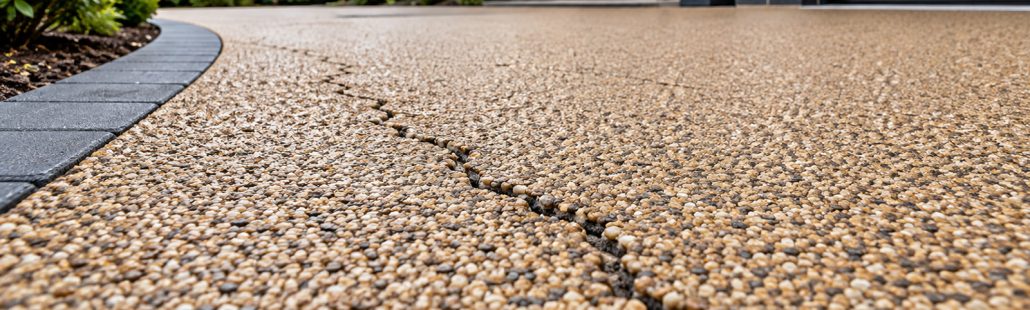
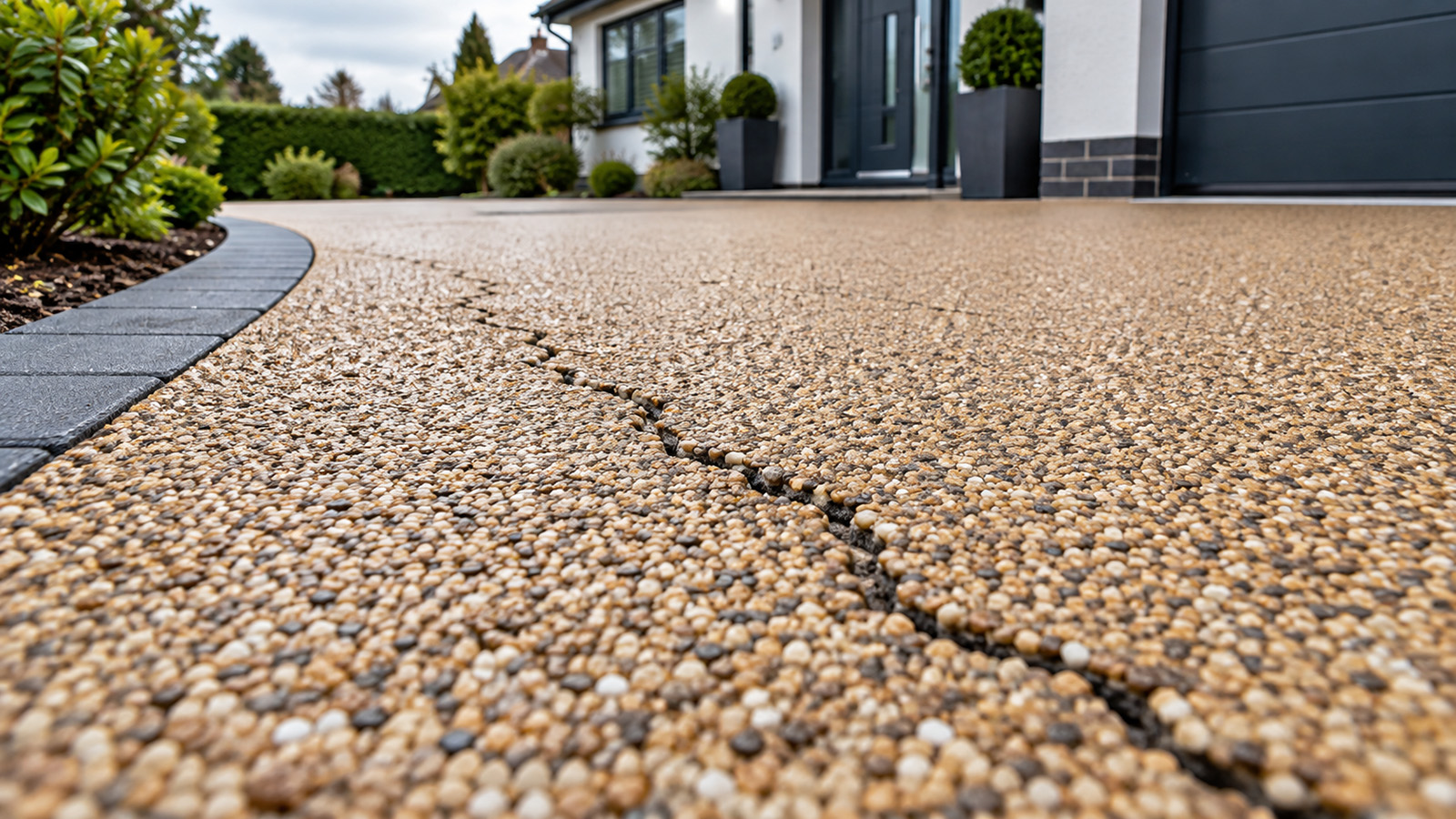
A resin-bound driveway is designed to create a smooth, attractive and durable surface, so finding a crack running through it can be frustrating.
What makes cracking particularly confusing is that the visible resin surface is not always where the problem started.
In many cases, cracks in resin driveways are symptoms of movement somewhere underneath. The resin and aggregate form the finished surface, but that surface depends on the stability of the construction supporting it.
Problems with an existing base, poorly compacted ground, drainage, tree roots, movement around utility trenches and excessive vehicle loading can all eventually become visible as cracks.
Understanding those hidden causes is important because simply filling a crack may improve its appearance without addressing the reason it developed.
The Resin Surface Is Only One Part of the Driveway
A properly constructed resin driveway is not simply a layer of resin and decorative stone placed directly onto soil.
The finished resin-bound layer needs a suitable, stable base beneath it. Depending on the installation and site conditions, this can involve several elements of construction below the decorative surface.
Each part needs to work together.
The finished resin bound surfacing may be what homeowners see every day, but the condition of the underlying construction has a major influence on how well that surface performs over time.
If the base moves, the resin layer above can be forced to move with it.
Base Movement Is One of the Most Important Hidden Causes
One of the first areas to consider when investigating resin driveway cracks is the base.
A surface can only remain stable when the material supporting it is sufficiently stable.
If part of the base settles, shifts or deforms, stresses are transferred into the resin surface. Once that movement exceeds what the finished system can accommodate, cracking can occur.
This is why a crack should not automatically be treated as an isolated defect in the resin itself.
Sometimes the crack is effectively showing you where movement is taking place deeper in the driveway.
Why Localised Settlement Creates Visible Cracks
Settlement does not always occur evenly across an entire driveway.
One small area may sink while the surrounding construction remains stable. That creates a difference in level and places stress on the surface bridging the two areas.
Initially, the movement may be difficult to see.
As vehicles repeatedly travel across the driveway and the ground experiences seasonal changes, the difference can become more pronounced. A crack may then appear along the boundary between stable and moving areas.
Filling that crack without stabilising the affected construction can allow it to return.
Poor Compaction Can Take Time to Reveal Itself
Problems caused by inadequate compaction are particularly troublesome because they may not become obvious immediately after installation.
A driveway can look excellent when newly completed.
If material underneath has not been adequately compacted, however, it may continue settling once vehicles begin using the surface.
Repeated wheel loading gradually compresses weaker areas.
This can produce shallow depressions before obvious cracking develops. In other cases, the first noticeable sign may be a narrow crack appearing across an otherwise attractive resin surface.
Proper ground preparation is therefore just as important for resin as it is for professional tarmac installation.
The decorative finish cannot compensate indefinitely for an unstable foundation.
Existing Cracks Can Reappear Through a New Resin Surface
Resin surfacing is sometimes installed over an existing suitable surface rather than following complete reconstruction.
This can be an effective approach where the existing base is stable and appropriately prepared.
Problems arise when the old surface already contains active cracks.
If those cracks are caused by continuing movement, placing a new surface over them does not necessarily stop that movement. Stress can transfer through the new layer and eventually produce cracking in a similar location.
This is sometimes referred to as reflective cracking.
The important question before resurfacing is therefore not simply whether an existing crack can be covered. It is why the crack developed in the first place.
Water Can Cause Problems Beneath the Driveway
Drainage is another frequently overlooked factor.
Resin-bound systems are often valued for their permeability when installed as part of a suitable permeable construction. Water can pass through the interconnected voids within the resin-bound surface rather than simply running across it.
However, permeability at the surface does not automatically guarantee that water is being managed correctly throughout the entire driveway construction.
The layers underneath still need to be suitable for the system.
If water becomes trapped or repeatedly affects vulnerable foundation material, movement can develop beneath the surface.
A Permeable Surface Still Needs Proper Drainage Design
This distinction is important.
Homeowners sometimes assume that because water can pass through resin-bound surfacing, drainage no longer requires consideration.
In reality, the complete build-up matters.
Water needs somewhere appropriate to go after it passes through the surface. Existing ground conditions, base materials, falls and surrounding drainage arrangements all influence what happens next.
If drainage has not been properly considered, moisture-related problems can affect the long-term stability of the driveway.
Tree Roots Can Move More Than You Might Expect
Trees and large shrubs near driveways can create another hidden source of movement.
Roots grow and change over time.
Where substantial roots extend beneath a driveway, they can affect surrounding soil or physically influence the construction above. The result may be lifting, localised deformation or cracking.
The visible damage may occur several metres from the trunk, making the connection less obvious.
Removing the surface crack alone will not stop continuing root-related movement.
Any repair needs to consider both the driveway and the implications of dealing with established roots safely and appropriately.
Utility Trenches Can Create Weak Lines Across a Driveway
Underground services are another common reason one section of a driveway behaves differently from another.
A trench may have been excavated in the past for water, electricity, gas, drainage or telecommunications infrastructure.
Once the service work is complete, the excavation is backfilled.
If that reinstated material does not achieve the same stability as the undisturbed ground around it, gradual settlement can occur along the trench.
Years later, a homeowner may notice a relatively straight crack crossing the driveway without realising that an old excavation exists underneath.
The resin surface is then displaying a problem that began much deeper below.
Heavy Vehicles Can Expose Weaknesses
A domestic driveway may regularly accommodate ordinary passenger cars without difficulty but respond very differently when subjected to significantly heavier vehicles.
Large vans, delivery vehicles, removal lorries or other heavy vehicles increase loading on the pavement construction.
An occasional heavy vehicle does not automatically cause damage to a correctly designed driveway, but repeated loading can expose existing weaknesses.
This is especially relevant where vehicles follow the same wheel paths or turn their steering while almost stationary.
The loads involved are one reason commercial surfacing needs to be specified according to expected traffic rather than appearance alone.
The same principle applies to residential driveways.
Turning Tyres Create Different Forces From Straight Driving
Vehicle weight is only part of the story.
How a vehicle moves across the driveway also matters.
When a car travels straight forwards, its tyres predominantly roll across the surface. During tight manoeuvring, particularly when the steering wheel is turned while the vehicle is moving very slowly, tyres can exert additional sideways forces.
These forces are concentrated in areas where vehicles repeatedly turn into parking positions.
A well-designed and properly installed resin surface should accommodate normal driveway use, but repeated stresses can contribute to deterioration where another weakness already exists underneath.
Cracking near regular turning areas should therefore be considered in the context of the complete driveway construction.
Driveway Edges Can Become Vulnerable
The centre of a driveway is usually surrounded by more surfacing.
Edges are different.
They represent the transition between the driveway and adjacent landscaping, paving, kerbs or other materials.
Effective edge restraint and correct detailing help keep the driveway construction contained and supported.
If an edge loses support or the ground beside it erodes, movement can begin around the perimeter.
Cracks may then form close to the boundary rather than through the centre of the driveway.
This can be particularly noticeable where vehicles regularly drive close to an inadequately supported edge.
Temperature Changes Can Add Stress
UK driveways experience repeated changes in temperature throughout the year.
Materials expand and contract as conditions change, while the ground underneath can also respond to seasonal moisture and temperature variations.
These movements are generally small, but driveway construction needs to accommodate normal environmental conditions.
Problems become more likely where the underlying base already contains weaknesses or where different materials meet without appropriate detailing.
A crack that becomes noticeable after winter may therefore have several contributing factors rather than one simple cause.
Cracks Around Drain Covers Need Particular Attention
Driveways frequently contain inspection chambers, drainage covers and other interruptions.
These locations create transitions within an otherwise continuous surface.
The surrounding construction needs to be properly supported and detailed so that the cover, frame and adjacent surfacing behave appropriately under traffic.
If the surrounding material settles or the frame moves independently, cracking can develop around its perimeter.
Repeated vehicle loading can then make the defect more pronounced.
Cracking around a cover should therefore prompt an assessment of the surrounding support rather than simply an application of resin over the visible line.
Not Every Crack Means the Entire Driveway Has Failed
Finding a crack does not necessarily mean complete replacement is required.
The extent and cause of the defect matter.
A localised problem associated with one small area may be repairable without reconstructing the entire driveway. More widespread cracking, repeated settlement or multiple areas of deformation can suggest a deeper issue.
The pattern also provides useful information.
A single straight crack, several interconnected cracks and a crack accompanied by a noticeable depression can point towards different types of movement.
A proper inspection should consider those clues before deciding on a repair.
Why Simply Filling Resin Cracks May Not Work
A cosmetic repair can make a crack less noticeable, but it cannot stabilise moving ground several layers underneath.
If movement is continuing, the repaired area remains under stress.
The crack may reopen or another crack may form nearby.
This is similar to repairing repeated defects in other paved surfaces. Even professional pothole repairs need to consider unstable material beneath the visible damage when deeper deterioration is responsible.
Effective repair starts with identifying the depth of the problem.
When Does a Resin Driveway Need More Extensive Repair?
More substantial intervention may be necessary when cracking is accompanied by movement.
Visible sinking, widespread unevenness, loose sections or recurring cracks can indicate that the problem extends below the resin layer.
In those circumstances, removing the affected surfacing provides an opportunity to inspect the underlying construction.
Weak or unstable material can then be addressed before the surface is reinstated.
Although this involves more work than filling a crack, repairing the actual source of movement gives the reinstated area a better chance of remaining stable.
Early Investigation Can Prevent a Small Defect Becoming Larger
A narrow crack can be easy to ignore, particularly when the rest of the driveway remains attractive.
Monitoring changes is sensible.
If the crack becomes wider, surrounding levels begin changing or water starts collecting nearby, those developments may indicate continuing movement.
Allowing water and repeated vehicle loading to act on an already weakened area can accelerate deterioration.
Early investigation can therefore help distinguish between a minor surface defect and a developing structural problem before significantly more of the driveway becomes affected.
The Cause of the Crack May Be Hidden From View
Resin driveway cracks UK homeowners discover are not always caused by a failure of the decorative surface itself.
The real explanation can be underneath it.
Weak foundations, inadequate compaction, movement in an existing base, old utility trenches, drainage problems, tree roots, unsupported edges and concentrated vehicle loads can all place stress on the resin layer above.
That is why diagnosing cracking should begin with the whole driveway rather than the crack alone.
A resin-bound surface performs best when it is supported by stable construction and appropriate drainage. When those hidden elements remain sound, the finished surface has the foundation it needs to provide durable everyday performance.