
- Minisgreat
- No Comments
- September 25, 2026
Choosing the Right Surface for a New Driveway
A new driveway is a substantial part of a property. It needs to support vehicles every day, cope with British weather and provide practical access without creating unnecessary maintenance problems.
Appearance matters too. A driveway occupies a large proportion of the frontage of many properties, so the chosen material can significantly change how the entire entrance looks.
The difficulty is that there is no single surface that is automatically right for every property.
Tarmac, resin bound surfacing and block paving all have different characteristics. Ground conditions, drainage, vehicle use, driveway size, maintenance expectations and the desired appearance should all influence the decision.
Choosing the best driveway surface UK properties can accommodate therefore starts with understanding how the driveway will actually be used rather than selecting a material purely from photographs.
Start With How the Driveway Will Be Used
Before comparing surface materials, consider the traffic the driveway needs to accommodate.
A small driveway used by one lightweight car has different requirements from a large entrance regularly carrying several vehicles, delivery vans or a motorhome.
Turning movements matter as well.
If vehicles need to make tight manoeuvres, the surface will experience tyre scrub. If cars are regularly parked in exactly the same positions, particular areas will receive concentrated static loads.
Access arrangements should also be considered. Narrow entrances, steep gradients and awkward turning areas can influence both material choice and construction.
The surface needs to work with the property rather than simply look attractive when newly installed.
The Foundation Matters Whatever Surface You Choose
One of the biggest mistakes when comparing driveway materials is concentrating exclusively on the visible finish.
The construction underneath is equally important.
A driveway relies on prepared ground and suitable supporting layers to distribute vehicle loads. If those layers are weak, poorly compacted or inadequately constructed, movement can eventually become visible at the surface.
Tarmac can crack or sink. Block paving can develop depressions. Resin bound surfacing can also be affected by movement in an unsuitable base.
No premium surface can permanently compensate for a failing foundation.
Preparation should therefore be considered part of the driveway rather than an invisible area where costs can simply be reduced.
Tarmac Remains a Practical Driveway Option
Tarmac is familiar because it is widely used across roads, car parks and private access areas throughout the UK.
For driveways, one of its main advantages is practicality.
A properly constructed tarmac installation provides a continuous surface without the individual joints found in block paving. It works particularly well across larger areas where a simple, functional finish is required.
Its dark appearance can suit both modern and traditional properties, although it provides fewer decorative options than some alternatives.
For homeowners primarily concerned with creating a robust vehicle surface, tarmac deserves serious consideration.
Why Tarmac Works Well for Larger Driveways
The size of a driveway can significantly influence which material feels appropriate.
Across a substantial area, individually laid paving units involve a different installation process from an asphalt surface.
Tarmac can be particularly practical for long entrances and larger parking areas.
It also creates a relatively understated finish, which can be useful where the driveway should complement the property rather than become its dominant visual feature.
Larger private roads and shared access areas can benefit from similar characteristics.
The important point is that the pavement construction still needs to reflect the vehicles expected to use it.
What Maintenance Does a Tarmac Driveway Need?
No driveway surface is completely maintenance free.
Tarmac should be monitored for cracking, edge deterioration, depressions and drainage problems.
Small defects can become more significant if they allow water into the pavement.
Edges are particularly important where the asphalt meets soft landscaping or gravel because inadequate support can contribute to deterioration.
Vehicle fluids should also be dealt with appropriately rather than being allowed to remain on the surface indefinitely.
With suitable construction and sensible maintenance, tarmac provides a straightforward surface without the need to maintain joints between individual paving units.
Resin Bound Surfacing Offers a Different Appearance
For homeowners who want a more decorative finish, resin bound surfacing is another option.
A resin bound surface is produced using aggregate mixed with resin before being installed as a continuous layer.
The exposed aggregate gives the driveway a very different appearance from conventional black tarmac.
There is also a range of aggregate colours and blends available, allowing the finished driveway to complement the surrounding property.
Professional resin bound surfacing can therefore be particularly attractive where appearance is a major part of the project brief.
Resin Bound and Resin Bonded Are Not the Same
The terminology surrounding resin driveways can be confusing.
Resin bound and resin bonded systems are different.
With resin bound surfacing, aggregate and resin are mixed together before installation. A resin bonded system typically involves aggregate being applied onto a resin-coated surface.
The finished characteristics are therefore different.
Anyone considering a resin driveway should establish exactly which system is being proposed rather than assuming all surfaces described as resin are constructed in the same way.
This is particularly important when comparing quotations.
Drainage Can Influence the Driveway Decision
Water management should be considered before any surface is selected.
A driveway needs somewhere appropriate for rainfall to go.
Simply creating a smooth surface is not enough if water subsequently runs towards the house, neighbouring property or an unsuitable part of the site.
Resin bound systems can be designed as part of a permeable construction, allowing water to pass through the surface into appropriately designed layers underneath.
However, permeability depends on the complete construction rather than the appearance of the resin layer alone.
Tarmac and block paving projects likewise need drainage considered as part of their design.
Don’t Choose a Surface Without Considering Existing Levels
Existing property levels can limit what is practical.
The driveway has to work with thresholds, garage entrances, paths, drainage channels and surrounding ground.
Simply placing a new surface over an existing driveway can raise levels.
That may create problems around doors, garages or drainage.
In some cases, the existing pavement can form part of a new construction after appropriate assessment and preparation. In others, excavation is necessary.
The decision should be based on the actual condition and levels of the site rather than assuming an overlay will always save time and money.
Block Paving Provides Considerable Design Flexibility
Block paving remains popular because individual paving units can be arranged in different colours, patterns and layouts.
This makes it particularly suitable for homeowners who want the driveway to form a strong part of the property’s overall design.
Borders can be incorporated, different colours can define parking areas and patterns can complement the style of the building.
Individual blocks can also be lifted when access beneath the driveway is required and then reinstated.
However, the fact that blocks can be lifted does not mean construction underneath them is less important.
The pavement still requires a stable, properly prepared foundation.
Why Block Paving Can Sink
When depressions appear in block paving, people sometimes assume the blocks themselves have failed.
Often, movement has occurred underneath.
Poorly compacted supporting material, weak ground or inadequate reinstatement after underground works can allow sections to settle.
The paving units then follow the movement below.
This can create dips where water collects and wheel paths become increasingly obvious.
Good block paving therefore depends on preparation just as much as careful placement of the visible blocks.
Jointing Sand Is an Important Part of Block Paving
The joints between paving blocks are not merely decorative gaps.
Jointing material contributes to the way the paved surface performs.
Over time, pressure washing, weather and other factors can reduce jointing sand.
If significant amounts are lost and not replaced, individual blocks can become less stable.
Weeds can also establish in joints where conditions allow.
Homeowners considering block paving should therefore be comfortable with the maintenance associated with a jointed surface.
Which Surface Handles Vehicle Turning Best?
Turning movements deserve particular consideration on smaller driveways.
Modern vehicles can be relatively large, while many properties have limited manoeuvring space.
Drivers may need to turn the steering wheel substantially while travelling at very low speed.
This creates tyre scrub.
Tarmac needs to be properly specified and supported to resist these forces. Resin bound surfacing needs an appropriate base and installation, while block paving relies on correct construction, restraint and interlock.
No surface should be chosen on the assumption that repeated aggressive steering has no effect.
What About Heavy Vehicles?
Think beyond the car currently parked outside the property.
Does a motorhome use the driveway? Are commercial vans regularly parked there? Will delivery vehicles need access? Could removal lorries or construction vehicles use the driveway in future?
Occasional heavy vehicles do not automatically determine the surface choice, but expected loading should influence the construction underneath it.
The same principle applies on a much larger scale with commercial surfacing, where pavement construction has to reflect the actual vehicles using a site.
A driveway designed around realistic loading is less likely to experience premature deformation.
Consider What Happens When Repairs Are Needed
Every surface will eventually require some form of maintenance or repair.
The resulting appearance varies by material.
A tarmac repair may initially appear darker than the surrounding aged asphalt. Block paving allows individual units to be lifted and reinstated, although replacement blocks may not perfectly match weathered originals.
Resin repairs can also remain visible if the original aggregate and aged surface cannot be matched precisely.
This matters particularly for homeowners who place a high priority on visual consistency.
A surface should be selected with its ageing and repair characteristics in mind, not simply its appearance on completion day.
Think About Underground Services
Driveways often contain more infrastructure than homeowners realise.
Water pipes, drainage, electrical supplies and telecommunications services may pass underneath them.
Future access can require excavation.
If there is a known likelihood of further underground work, consider how the chosen driveway could be reinstated afterwards.
Block paving has an advantage in that units can potentially be lifted and reused.
Continuous surfaces can also be repaired, but the reinstated area may remain visually noticeable, particularly until weathering reduces the contrast.
Which Surface Is Best for a Sloping Driveway?
Gradient adds another factor to the decision.
Water moves differently across a sloping driveway, and the surface needs to provide appropriate characteristics for vehicles and pedestrians.
Drainage at the bottom of the slope can become particularly important because runoff may be concentrated there.
The exact gradient, direction of water flow and surrounding property levels should all be assessed.
Rather than selecting a material purely because it is commonly used on slopes, the driveway should be considered as a complete system involving surface finish, drainage and supporting construction.
Appearance Should Be Considered in the Long Term
A new driveway will not retain its installation-day appearance forever.
Fresh tarmac gradually changes from deep black as it weathers.
Resin bound surfaces require appropriate cleaning and maintenance and may change visually with age and environmental exposure.
Block paving can accumulate dirt, lose jointing material and develop weeds if maintenance is neglected.
The best comparison is therefore not between photographs of three newly installed surfaces.
Consider what each material is likely to look like after years of normal use and how much maintenance you are prepared to undertake to preserve its appearance.
Budget Should Include the Whole Construction
Comparing driveway quotations purely by the price per square metre can be misleading.
One quotation may include substantial excavation and foundation work, while another assumes the existing construction can remain.
Drainage requirements can also affect cost.
Edge restraints, access difficulties, disposal of excavated material and the size and shape of the driveway all influence the project.
A lower initial price does not necessarily represent better value if important groundwork has been omitted.
The scope of the proposed construction needs to be compared alongside the final surface material.
When Tarmac May Be the Better Fit
Tarmac can make sense where practicality, durability and a straightforward appearance are priorities.
It can be particularly suitable for larger driveways, access roads and properties where a continuous dark surface complements the surroundings.
Homeowners who do not want joints throughout the driveway may also prefer it to block paving.
The deciding factor should still be the complete construction.
A well-specified tarmac driveway on a properly prepared foundation is very different from a thin layer applied over an unstable existing surface.
When Resin Bound Surfacing May Be the Better Fit
Resin bound surfacing is worth considering where a more decorative aggregate finish is desired.
It can work particularly well around modern homes and landscaped properties where the driveway forms an important part of the visual design.
Its potential drainage characteristics can also be relevant when incorporated into an appropriately designed permeable system.
The quality of the base remains critical.
Installing an attractive resin surface over a substrate that is moving or badly cracked can allow problems underneath to affect the finished driveway.
When Block Paving May Be the Better Fit
Block paving is particularly attractive when design flexibility is a priority.
Different block styles, colours, borders and laying patterns allow considerable customisation.
It can also be useful where future access to underground services is an important consideration.
In return, owners need to account for joint maintenance and the possibility of individual blocks moving if the supporting construction or edge restraints become inadequate.
As with every driveway material, good installation is more important than simply choosing a premium-looking product.
Don’t Ignore the Existing Driveway
If the property already has a driveway, its condition can provide useful information.
Cracks may indicate movement. Depressions can reveal settlement. Standing water highlights drainage or level problems.
Repeated defects in exactly the same location deserve particular attention.
Covering these symptoms with a new surface without investigating their cause can allow problems to return.
The existing driveway effectively provides a history of how the ground and pavement have behaved, so that information should be used when planning the replacement.
The Best Driveway Surface Depends on the Property
There is no universal winner when choosing the best driveway surface UK homeowners can install.
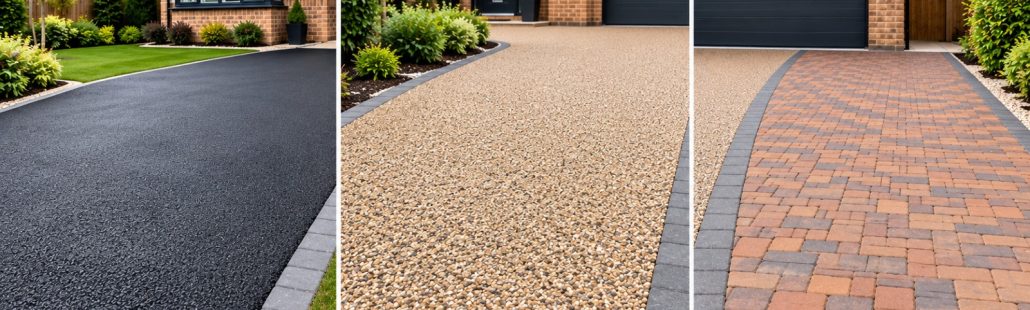
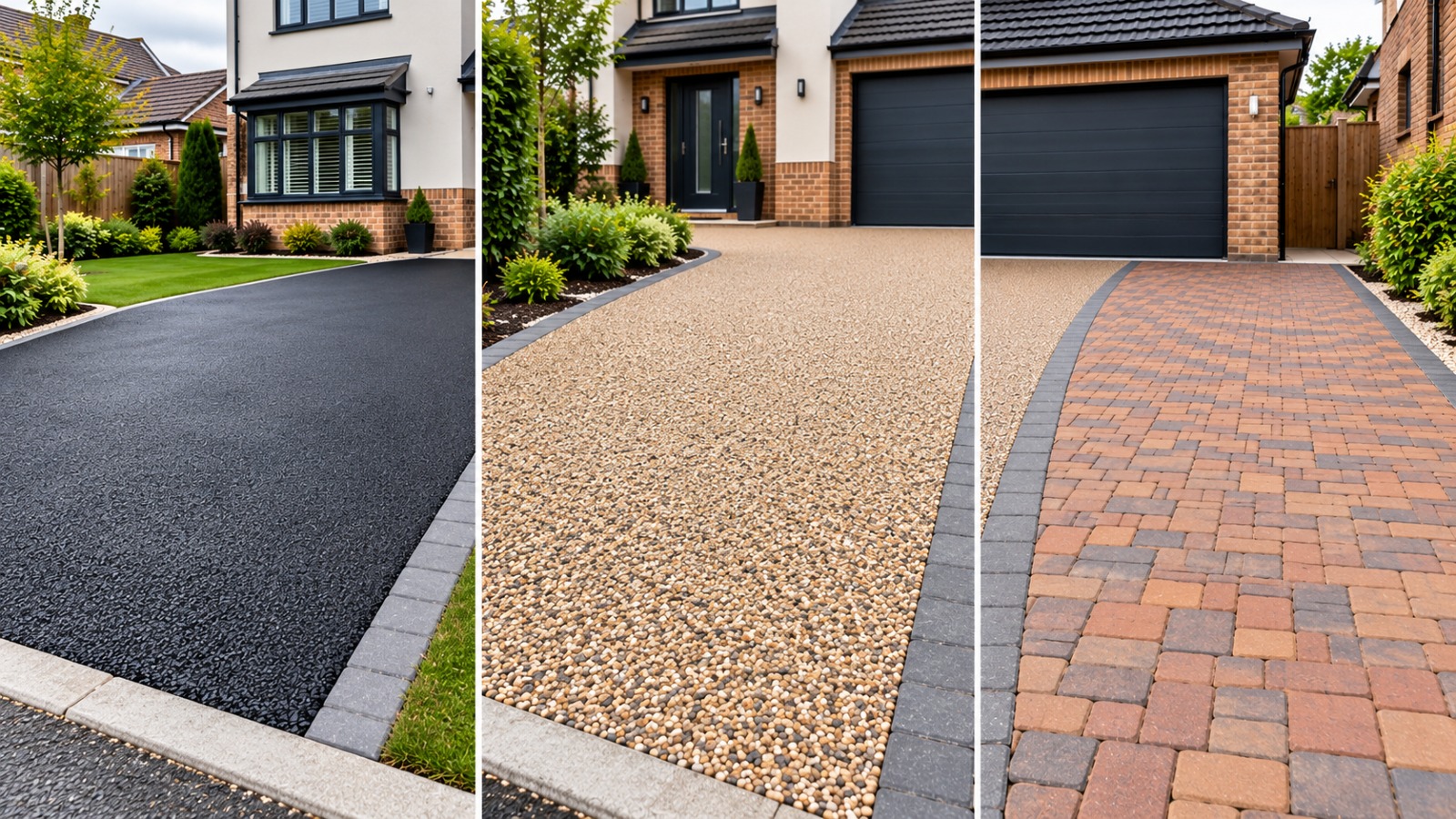
Tarmac offers a practical continuous finish and can work particularly well across larger areas. Resin bound surfacing provides a distinctive aggregate appearance and can form part of a permeable construction when correctly designed. Block paving provides extensive design flexibility and allows individual units to be lifted when necessary.
The more important question is which material suits the particular driveway.
Ground conditions, drainage, vehicle weight, turning movements, existing levels, future maintenance and appearance all need to be considered together.
Most importantly, the visible surface should not distract from what is underneath it. A carefully chosen premium finish installed over inadequate foundations can still fail, while a correctly designed pavement using an appropriate surface can provide years of dependable use.
Choosing a driveway therefore starts below the surface. Once the foundations, drainage and expected traffic have been properly considered, selecting between tarmac, resin bound surfacing and block paving becomes a much more informed decision.