
- Minisgreat
- No Comments
- September 30, 2026
Potholes Are Back: Why UK Roads Keep Breaking Apart Every Winter
The arrival of colder weather often brings a familiar sight to UK roads: potholes.
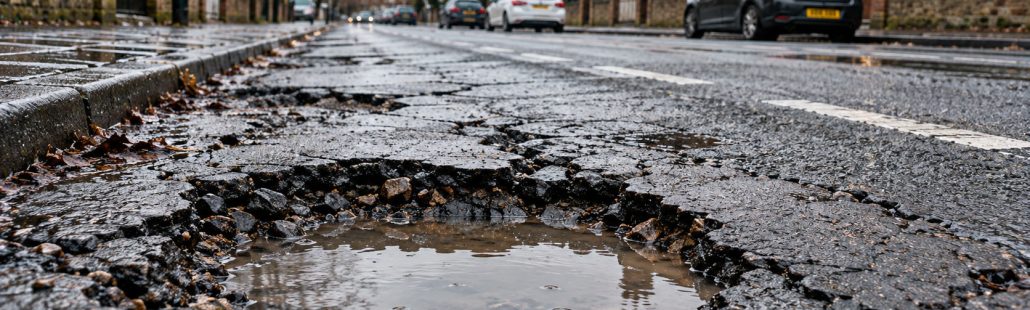
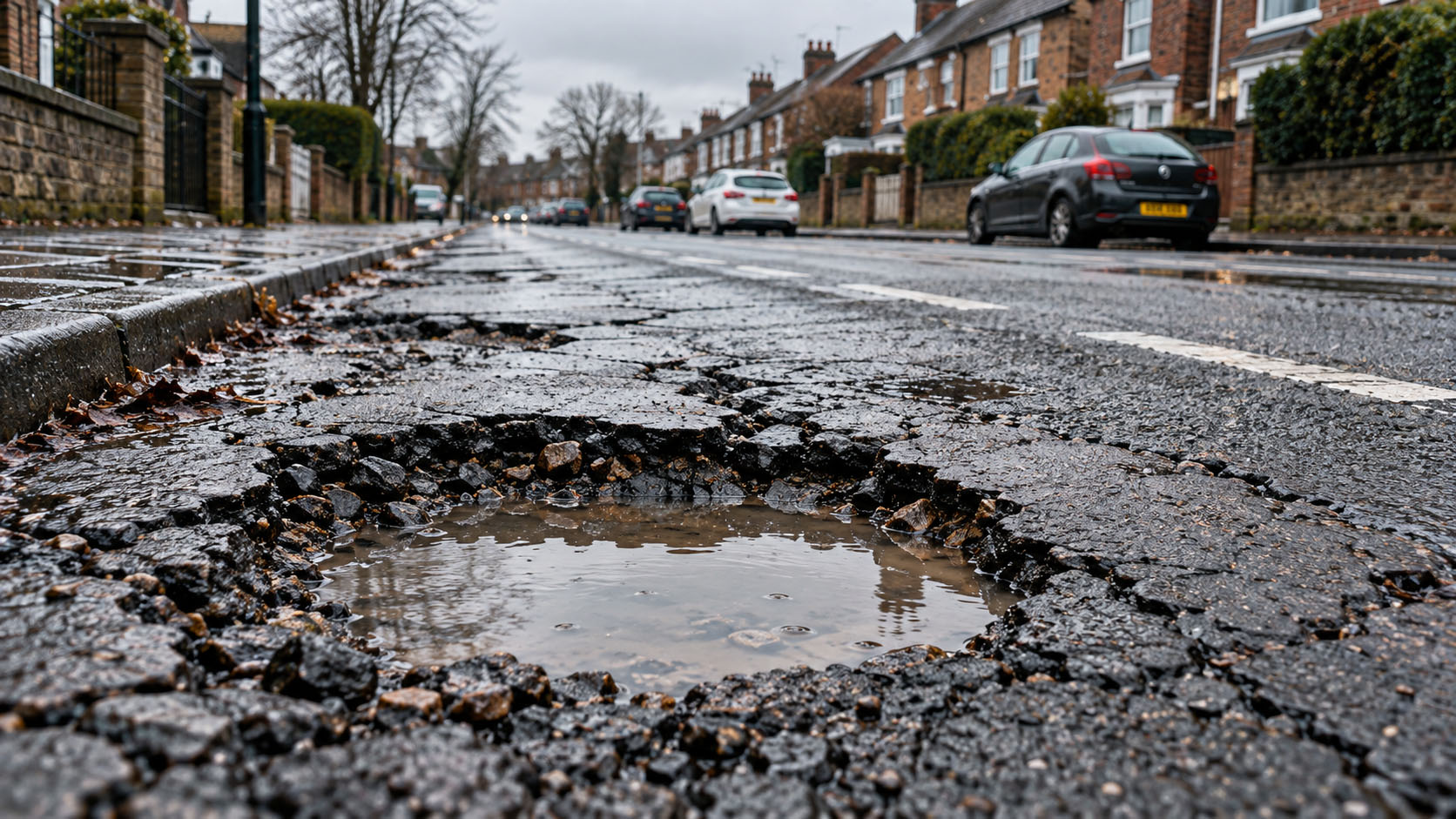
A road that appeared relatively sound during autumn can begin showing cracks, loose material and deep holes after periods of cold, wet winter weather. Some defects seem to develop almost overnight, while others return in exactly the same places year after year.
Winter does not usually create a pothole from a perfectly healthy road in one simple step.
Instead, colder and wetter conditions tend to expose weaknesses that are already present within the pavement. Small cracks allow water into the road, weakened materials begin moving under traffic and repeated vehicle loading gradually breaks the affected area apart.
Understanding why winter potholes UK roads experience keep returning requires looking below the visible surface.
Most Potholes Begin With a Much Smaller Defect
A pothole rarely starts as a large hole.
The process often begins with something much less dramatic, such as a small crack in the asphalt.
At first, that crack may have little obvious effect on traffic. Vehicles continue passing over it and the surrounding road may still feel completely stable.
However, the crack creates an opening.
Rainwater can enter through that opening and reach areas beneath the surface that were originally protected from direct exposure.
Once water begins entering the pavement, deterioration can accelerate.
This is one reason early pothole repairs and attention to surrounding defects can be more effective than waiting until a small weakness becomes a substantial road hazard.
Water Is One of the Biggest Threats to a Damaged Road
UK winters do not need to be exceptionally cold to create difficult conditions for roads.
Persistent rainfall alone can expose weaknesses.
A well-constructed road is designed to manage water, but cracks, failed joints, damaged edges and drainage problems can allow moisture to reach vulnerable areas.
Once underneath the surface, water can affect the supporting materials and reduce the stability of already weakened sections.
Traffic continues using the road throughout this process.
Every wheel passing over the affected area applies another load to pavement that may no longer be receiving uniform support from underneath.
Gradually, the surface begins to break.
What Does Freezing Weather Do to a Road?
Freezing conditions can make existing moisture-related problems more severe.
Where water has entered cracks and voids within a deteriorating pavement, freezing and thawing can contribute to further disruption of already vulnerable material.
The important point is that winter damage is often a combination of factors.
There may already be cracking. Water enters. Cold conditions add further stress. Vehicles continue travelling over the weakened section.
The road is therefore being attacked from above by traffic and affected from below by moisture and movement.
By the time a visible pothole appears, deterioration may already have been developing for some time.
Traffic Finishes the Job
Weather receives much of the blame for potholes, but traffic plays a critical role in turning weakened pavement into missing pavement.
Once an area has lost structural support, tyres repeatedly flex and load the surface.
Small pieces of asphalt can begin loosening.
Vehicles then pass over those weakened edges, causing further material to break away. The opening becomes larger, its edges become increasingly vulnerable and the defect develops into a recognisable pothole.
This process can happen particularly quickly on busy roads because there is little opportunity for the weakened area to remain undisturbed.
The greater the traffic loading, the faster an existing weakness can deteriorate.
Heavy Vehicles Put Additional Pressure on Weak Roads
Not all vehicles affect a road equally.
HGVs, buses, refuse vehicles and other heavy commercial traffic place much greater demands on pavement construction than ordinary passenger cars.
The effect becomes particularly important when the road is already weakened.
A compromised area that survives light traffic may deteriorate much more rapidly under repeated heavy axle loads.
Commercial and industrial routes therefore need pavement construction appropriate for the traffic they actually receive.
Professional commercial surfacing needs to consider vehicle types, traffic frequency and loading patterns rather than simply creating a surface that looks satisfactory when newly completed.
Why Do Potholes Often Reappear in the Same Place?
This is one of the most frustrating aspects of winter road damage.
A pothole is repaired, the road looks acceptable again and then months later a hole appears in approximately the same location.
One explanation is that the previous repair addressed the visible defect without fully resolving the weakness underneath.
If the supporting pavement remains unstable, the repaired material can still be subjected to movement.
Water may also continue entering through nearby cracks or defective joints.
Eventually, the same combination of moisture, traffic and movement causes the repaired area or its edges to deteriorate again.
The recurring pothole is therefore sometimes a symptom of a deeper structural problem.
Temporary Repairs and Permanent Repairs Serve Different Purposes
Not every pothole repair is intended to be a complete reconstruction of the affected road.
There are situations where a rapid repair is needed to make an area safer and restore usability quickly.
That can be valuable, particularly during difficult weather conditions.
However, a temporary repair should not be confused with solving every possible underlying pavement problem.
Where deterioration extends deeper into the road construction, a more substantial repair may involve removing failed material, assessing the underlying condition and rebuilding the affected section before reinstating the surface.
The correct approach depends on the extent and cause of the failure.
Poor Drainage Makes Winter Damage Worse
Water should not be allowed to remain on a road unnecessarily.
Road levels, falls, gullies and drainage systems are intended to direct rainfall away from the carriageway.
Problems arise when those systems stop working effectively.
Blocked gullies can contribute to standing water. Settlement can create depressions where puddles repeatedly form. Damaged edges may allow water to reach the pavement from the side.
When water remains around existing cracks for extended periods, there is greater opportunity for moisture to penetrate vulnerable areas.
Drainage problems can therefore turn what appears to be a small surface defect into a recurring maintenance issue.
Standing Water Can Be an Early Warning Sign
A puddle does not necessarily mean a road is about to develop a pothole.
Persistent standing water in the same location, however, deserves attention.
It may indicate that the road profile has changed.
Perhaps an area has begun settling. Wheel paths may have developed shallow ruts, or the surrounding drainage may no longer be functioning as intended.
If standing water is accompanied by cracking or loose material, the combination becomes more significant.
The water has both an opportunity and a route to enter the pavement.
Addressing the drainage problem without considering the surface damage, or repairing the surface while ignoring the drainage, may leave part of the underlying problem unresolved.
Road Edges Can Be Particularly Vulnerable
Not all potholes form in the middle of a carriageway.
Road edges can experience their own problems, especially where support is inadequate or water reaches the pavement construction from adjacent ground.
If vehicles repeatedly drive close to an unsupported edge, the asphalt can begin cracking.
Once pieces break away, the remaining edge becomes even less supported.
Winter rainfall can then accelerate deterioration around the damaged area.
Good tarmac installation therefore involves more than achieving a smooth finish across the centre of a road. Edge detailing, foundation preparation and drainage all contribute to long-term performance.
Previous Utility Works Can Create Weak Areas
Look carefully at many roads and you will see evidence of previous excavation.
Utility companies may need access beneath the road for drainage, water, electricity, gas or telecommunications infrastructure.
After the work is complete, the trench is reinstated.
If movement subsequently develops within the reinstated construction, cracking can appear around its boundaries.
These cracks provide routes for water.
The result can be a localised area of deterioration that becomes particularly noticeable after winter.
A pothole appearing beside an old utility trench may therefore be related to differences in movement between the original road and the reinstated section.
Why Does the Asphalt Start Breaking Away?
Asphalt performs well when it is properly supported.
Problems develop when support becomes inconsistent.
Imagine repeatedly pressing down on the centre of a rigid surface while the material underneath one section is moving. Eventually, stresses concentrate around the unsupported area.
Road pavement behaves in a more complex way, but the underlying principle helps explain why visible damage accelerates once support is compromised.
Cracks develop, edges become vulnerable and aggregate begins loosening.
Traffic then removes already weakened material.
What started as structural movement becomes visible as a hole in the road.
Older Roads Can Be More Vulnerable to Winter Conditions
Road surfaces do not remain unchanged forever.
Years of traffic and weather gradually affect the pavement.
Oxidation, repeated loading, previous repairs, utility excavations and small areas of movement can all contribute to an increasingly complicated road structure.
An older road may therefore contain numerous potential entry points for water before winter begins.
Cold and wet conditions expose those vulnerabilities.
This helps explain why two neighbouring roads can respond very differently to the same winter weather. One may remain relatively intact while another develops multiple potholes.
Their visible surfaces may appear similar, but their underlying condition can be very different.
Why New Tarmac Can Still Develop Potholes
A newly surfaced road is not automatically protected from deeper structural problems.
If fresh asphalt has been laid over an existing pavement containing substantial weaknesses, those problems may eventually affect the new surface.
Movement underneath can cause cracking. Once cracking develops, water gains another route into the pavement.
The cycle can begin again.
This is why resurfacing should be based on the condition of the road rather than appearance alone.
Where the existing pavement remains structurally suitable, resurfacing can provide an effective renewal. Where deeper layers have failed, additional reconstruction may be necessary.
Proper Compaction Makes a Significant Difference
Every structural layer within a road needs to provide consistent support.
Compaction is essential to achieving that stability.
If foundation materials or asphalt are inadequately compacted, later traffic can continue compressing them.
Localised settlement may then develop.
A shallow depression can begin holding water, while movement creates stresses in the surface above.
The problem may not become obvious during construction. It can take months or even years of loading and seasonal weather before the weakness becomes clearly visible.
Correct installation is therefore important even in parts of the road that nobody will ever see once the project is finished.
Why Machine-Laid Surfaces Can Help on Larger Areas
Consistent placement and compaction are particularly important when constructing larger roads, car parks and commercial access routes.
Professional machine lay tarmac can help achieve controlled material placement and a consistent finished profile across suitable projects.
That does not mean machinery alone guarantees a long-lasting road.
The underlying foundation still needs to be appropriate, drainage needs to work and the asphalt specification must suit the traffic.
A road is a complete system.
Its performance depends on all of those elements working together.
Small Cracks Before Winter Shouldn’t Be Ignored
The best time to think about winter potholes is often before the potholes exist.
Cracks provide an early indication that the pavement has changed.
Some may remain relatively stable, while others widen and allow increasing amounts of water into the road.
Areas showing cracking, settlement, loose material or recurring standing water deserve closer attention before prolonged wet and cold weather arrives.
Early maintenance cannot prevent every pothole, but addressing developing defects can interrupt the deterioration process before substantial quantities of material break away.
Car Parks and Private Roads Face the Same Winter Problems
Potholes are not exclusively a public highway issue.
Private roads, commercial estates, industrial yards and car parks experience the same basic combination of water, traffic and seasonal weather.
In some cases, conditions can be particularly demanding.
Delivery vehicles may repeatedly follow identical routes through a site. HGVs can turn tightly around loading areas. Cars may brake in the same locations every day.
If drainage is poor or pavement construction is already deteriorating, winter can expose those weaknesses quickly.
Site managers should therefore treat recurring potholes as information about pavement condition rather than simply isolated holes requiring repeated filling.
When Is Resurfacing Better Than Repeated Patching?
Individual repairs make sense when defects are genuinely localised and the surrounding pavement remains sound.
The calculation changes when potholes appear across a wider area or repaired sections repeatedly fail.
At that point, continued patching can become an inefficient way of maintaining a pavement that is approaching broader failure.
A detailed inspection can establish whether deterioration is primarily confined to the surface or extends into deeper structural layers.
If the underlying road remains stable, resurfacing may restore a continuous upper layer and remove numerous deteriorated patches.
Where the foundation itself has failed, deeper reconstruction may be required in affected areas.
The objective should be to match the repair depth to the actual depth of deterioration.
Winter Doesn’t Tell the Whole Story
It is easy to say that winter causes potholes.
The reality is more useful.
Winter often exposes problems that have been developing for much longer.
Cracks may already exist. Drainage may already be poor. An old utility trench may already be settling. The road may already be carrying traffic beyond what its deteriorating structure can comfortably support.
Wet and cold weather then accelerates the process.
That distinction matters because it changes how potholes should be approached. Instead of seeing each hole as a completely new winter problem, property owners and site managers can look for the underlying conditions that allow the same damage to develop repeatedly.
Breaking the Annual Pothole Cycle
Winter potholes UK roads develop are rarely the result of one factor acting alone.
Water enters existing weaknesses. Cold weather can add further stress. Traffic repeatedly loads damaged areas, and loose material gradually breaks away until a visible hole forms.
Repairing that hole restores the surface, but long-term performance depends on what is happening around and underneath it.
Where potholes continually return, the most useful question is not simply how quickly the hole can be filled.
It is why that particular section of road keeps failing.
Finding the answer may reveal drainage problems, unstable foundations, deteriorated asphalt, previous excavation or a pavement that is no longer suitable for its traffic.
Addressing those causes is what turns pothole maintenance from a recurring winter reaction into a more durable approach to road care.