
- min min
- No Comments
- March 5, 2026
How Line Marking Improves Safety and Traffic Flow on Commercial Sites
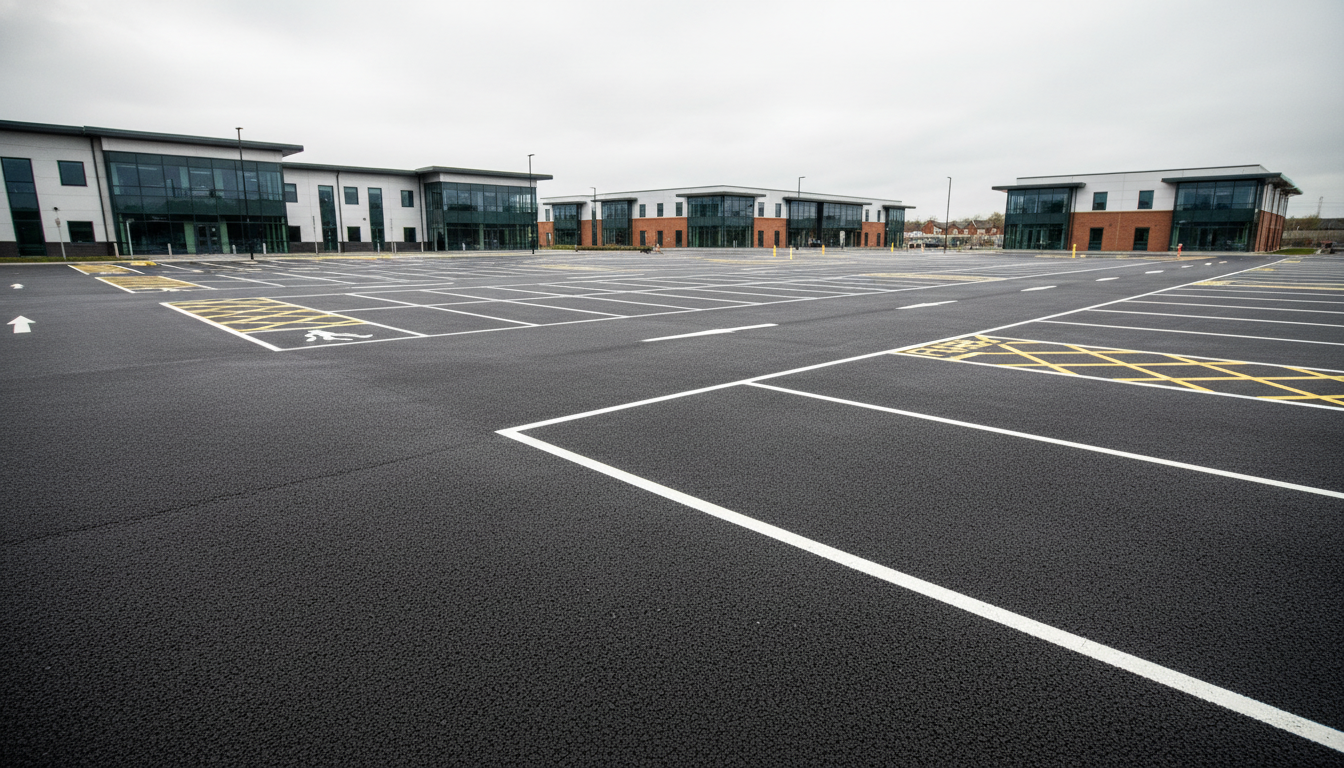
Line marking is often treated as a finishing touch once surfacing works are complete. In reality, it plays a vital operational role on commercial and industrial sites. Clear, well-planned markings improve safety, reduce confusion and help vehicles and pedestrians move efficiently through shared spaces.
For property owners and site managers, line marking should be viewed as part of overall traffic management strategy rather than a cosmetic addition. When designed properly, markings support compliance, reduce accident risk and enhance the professional appearance of a site.
The Link Between Line Marking and Site Safety
Safety is the primary reason commercial sites invest in professional line marking. Warehouses, business parks and distribution centres frequently combine heavy vehicle traffic with pedestrian movement. Without clearly defined routes and boundaries, the risk of collisions and near misses increases significantly.
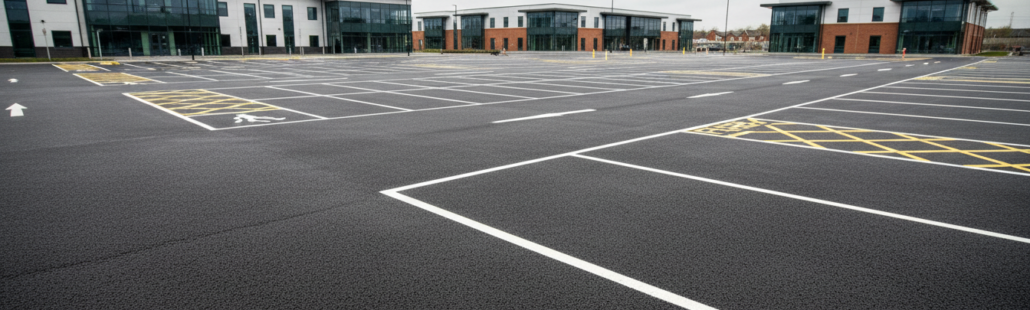
Markings such as directional arrows, pedestrian walkways and loading bay outlines provide visual guidance that reduces uncertainty. Drivers can anticipate vehicle flow, while pedestrians understand where it is safe to walk. This clarity lowers the likelihood of sudden manoeuvres or unsafe crossings.
Even on smaller commercial sites, clearly marked parking bays and access routes prevent congestion and improve overall organisation.
Improving Traffic Flow and Reducing Congestion
Efficient traffic flow is essential for commercial operations. Delivery schedules, waste collection and staff access all depend on smooth vehicle movement. Poorly marked or unmarked yards often suffer from bottlenecks, awkward turning and inconsistent parking patterns.
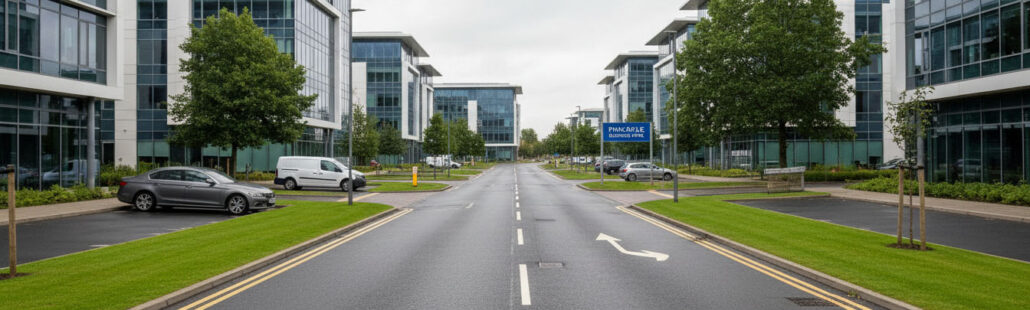
Strategic line marking organises movement into predictable routes. Clearly defined entry and exit lanes reduce confusion, while designated turning areas help prevent vehicles from encroaching on pedestrian zones or obstructing loading areas.
When combined with durable surfacing, professional line marking enhances both safety and operational efficiency. Sites that have recently invested in commercial surfacing often incorporate updated markings to maximise the benefit of their new layout.
Supporting Compliance With Health and Safety Responsibilities
UK employers and property managers have a duty to maintain safe premises. Clearly marked pedestrian routes, disabled bays and hazard zones demonstrate proactive risk management. Line marking helps sites meet health and safety obligations by making potential hazards visible and defining safe circulation patterns.
In high-risk areas such as loading bays or plant zones, bold markings and colour differentiation draw attention to restricted spaces. This visual reinforcement supports safe behaviour and reduces reliance solely on signage.
Clear demarcation also assists during inspections, providing visible evidence of structured traffic control measures.
Enhancing Accessibility and Inclusive Design
Accessibility is an important consideration on commercial premises. Clearly marked disabled parking bays, drop-off points and pedestrian crossings ensure that sites remain usable for all visitors. Faded or unclear markings can create confusion and limit accessibility.
Regular maintenance of line markings ensures continued visibility and compliance with current standards. As part of broader maintenance programmes, refreshing markings following resurfacing or repairs maintains site usability.
After professional tarmac installation, clear line marking ensures that the new surface is immediately functional and well organised.
The Importance of Durable Materials
Not all line marking materials perform equally under commercial conditions. Heavy vehicle movements, fuel spills and frequent braking place considerable stress on painted lines. Selecting durable thermoplastic or high-performance coatings ensures longevity and reduces the need for frequent reapplication.
Faded markings reduce clarity and may compromise safety. Regular inspection allows worn lines to be refreshed before they become ineffective. This is particularly important in high-traffic environments such as distribution centres and retail parks.
Integrating Line Marking With Surface Maintenance
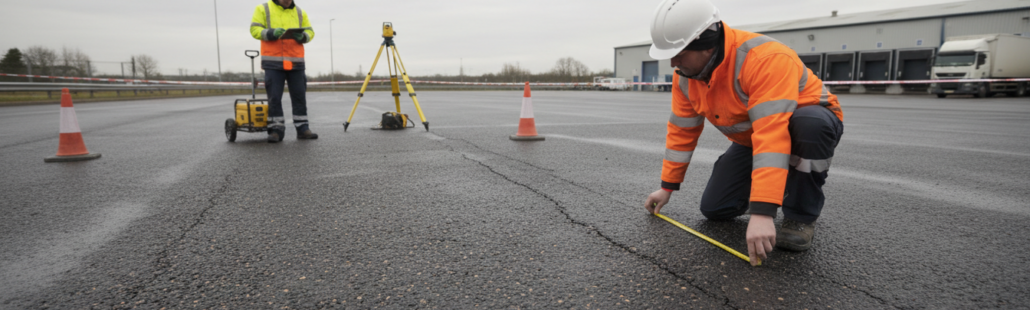
Line marking should not be considered in isolation from surface condition. Cracked or uneven surfaces can distort markings and reduce visibility. Addressing surface defects before remarking ensures a consistent, professional finish.
Where potholes or localised failures are present, completing necessary pothole repairs before applying new markings improves both durability and appearance. This integrated approach prevents premature wear and supports long-term maintenance planning.
Adapting Markings as Site Needs Change
Commercial sites evolve over time. Changes in tenancy, increased vehicle numbers or altered delivery patterns may require adjustments to traffic layout. Line marking provides a flexible way to update site organisation without major structural works.
Reconfiguring parking layouts, adding pedestrian walkways or redefining loading zones can significantly improve operational efficiency. Regular review of traffic patterns ensures that markings continue to support site activity effectively.
Professional Presentation and First Impressions
Beyond safety and efficiency, line marking contributes to the overall presentation of a site. Clear, well-maintained markings create an organised and professional impression for visitors, tenants and clients. Faded or inconsistent markings, by contrast, suggest neglect and can undermine confidence in site management.
Maintaining a clean, structured layout reflects positively on businesses operating from the premises. For many commercial properties, appearance and functionality go hand in hand.
Planning Line Marking as Part of Surfacing Projects
Incorporating line marking into broader surfacing projects ensures cohesive design. Planning layouts in advance allows contractors to consider vehicle movements, sight lines and operational requirements before the final surface is completed.
By integrating line marking with new or refurbished surfaces, property owners maximise the value of their investment. A well-surfaced road combined with clear markings delivers safer, more efficient and longer-lasting results.
Creating Safer, More Efficient Commercial Environments
Line marking may appear straightforward, but its impact on commercial sites is significant. Clear guidance reduces risk, improves traffic flow and supports compliance with safety standards. When maintained properly, it enhances both functionality and presentation.
For property owners and site managers seeking to improve operational performance, professional line marking should be viewed as an essential component of effective site management rather than a simple finishing detail.