
- min min
- No Comments
- March 3, 2026
The Impact of Poor Ground Conditions on New Road Installations
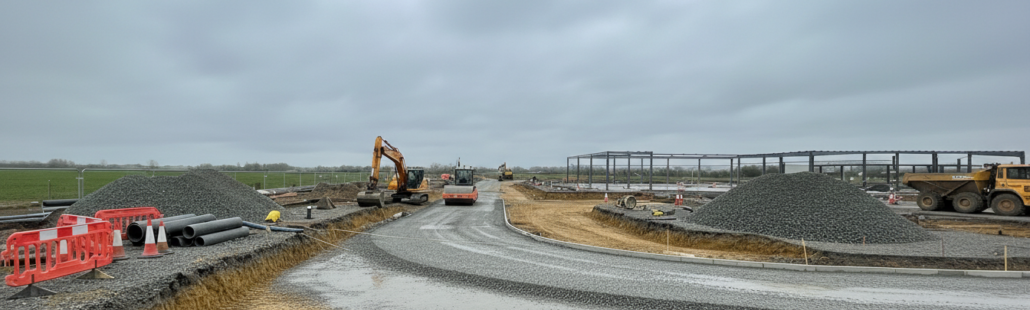
When planning a new road installation, much of the focus tends to fall on the finished surface. Clients often ask about tarmac thickness, surface appearance and projected lifespan. While these factors are important, they are secondary to one critical element: the condition of the ground beneath.
Poor ground conditions are one of the leading causes of premature road failure across the UK. No matter how well the surface is installed, if the underlying soil cannot adequately support the load, the road will eventually crack, sink or deform. For property owners and commercial site managers, understanding ground conditions before installation is essential to protecting long-term investment.
What Are Poor Ground Conditions?
Poor ground conditions typically refer to soil that lacks sufficient strength or stability to support road construction. This may include soft clay, waterlogged ground, loose fill material or made-up ground containing debris. In some cases, previously developed sites may have inconsistent subgrades due to historic works or buried services.
Ground that appears firm during dry weather can become unstable after prolonged rainfall. The UK’s climate, with frequent seasonal changes and heavy precipitation, makes soil variability a common issue. Without proper assessment and preparation, these conditions can significantly reduce the lifespan of a new road.
How Weak Subgrades Cause Structural Failure
The subgrade is the natural ground that sits beneath the constructed layers of a road. Its role is to support the weight distributed through the sub-base and surface layers above. If the subgrade is weak, the entire structure is compromised.
Under traffic loading, weak ground compresses unevenly. This leads to settlement, cracking and rutting in the surface. Over time, these defects worsen, particularly in areas subjected to heavy vehicles or turning movements. What begins as minor surface irregularities can quickly escalate into costly structural repairs.
Professional tarmac installation always considers subgrade strength as part of the preparation process. Skipping this assessment increases the risk of early failure.
The Role of Water in Ground Instability
Water is a major factor in poor ground performance. Saturated soil loses strength and becomes more prone to movement under load. Clay soils, which are common in many parts of the UK, expand when wet and shrink during dry periods. This movement places additional stress on the road structure.
Inadequate drainage compounds the problem. If water is allowed to collect beneath the surface, it softens the sub-base and subgrade layers. Over time, this leads to voids and uneven settlement. Incorporating effective drainage systems during construction is therefore critical to long-term durability.
Signs of Ground Problems Before Installation
Identifying poor ground conditions early can prevent significant complications. Warning signs include soft or spongy areas underfoot, visible pooling of water, previous settlement in adjacent surfaces and inconsistent ground levels. On redevelopment sites, the presence of made-up ground or unknown fill material should prompt further investigation.
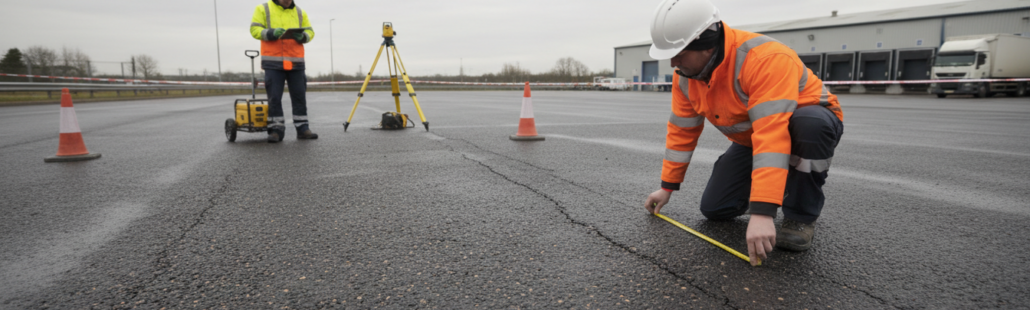
Professional contractors may carry out site investigations such as trial pits or soil testing to determine bearing capacity. This allows for informed decisions about whether ground improvement or reinforcement is necessary before surfacing begins.
Ground Improvement Techniques
When poor ground conditions are identified, several solutions may be implemented. Increasing sub-base thickness is one approach, as this helps distribute load more effectively. In more challenging situations, geotextile membranes or geogrids may be installed to reinforce the ground and prevent movement.
In some cases, unsuitable soil must be excavated and replaced with stable material. Although this increases upfront cost, it significantly reduces the likelihood of premature road failure. Attempting to build directly over unstable ground almost always results in higher long-term expenditure.
Professional commercial surfacing projects routinely include ground stabilisation measures where required, particularly on industrial or high-traffic sites.
The Cost Implications of Ignoring Ground Conditions
It can be tempting to minimise preparation work to reduce initial costs. However, ignoring poor ground conditions often leads to far greater expense later. Settlement-related cracking, repeated potholes and uneven surfaces require ongoing repairs that disrupt operations and increase maintenance budgets.
Targeted pothole repairs may address symptoms temporarily, but they rarely solve the root cause when ground instability is involved. Over time, repeated interventions can exceed the cost of proper initial ground preparation.
Heavy Traffic and Ground Performance
The impact of poor ground conditions becomes even more pronounced under heavy traffic. Commercial sites with frequent HGV movements or concentrated loading areas place significant stress on the underlying soil. Weak ground that might cope with light vehicle traffic can quickly fail under heavier loads.
Designing for anticipated traffic levels is essential. Roads serving warehouses, distribution centres or industrial yards require stronger construction standards than lightly used private roads. Ensuring that ground conditions are assessed alongside traffic demands reduces the risk of early deterioration.
Seasonal Effects on New Installations
Even after installation, ground conditions continue to influence performance. Seasonal moisture variation and freeze-thaw cycles can cause movement beneath the surface. If the initial preparation was insufficient, these natural changes may result in cracking or deformation within the first few years.
Planning installation during suitable weather conditions and ensuring proper compaction reduces these risks. Monitoring the site after completion also helps identify early signs of movement before they become severe.
Long-Term Benefits of Proper Ground Assessment
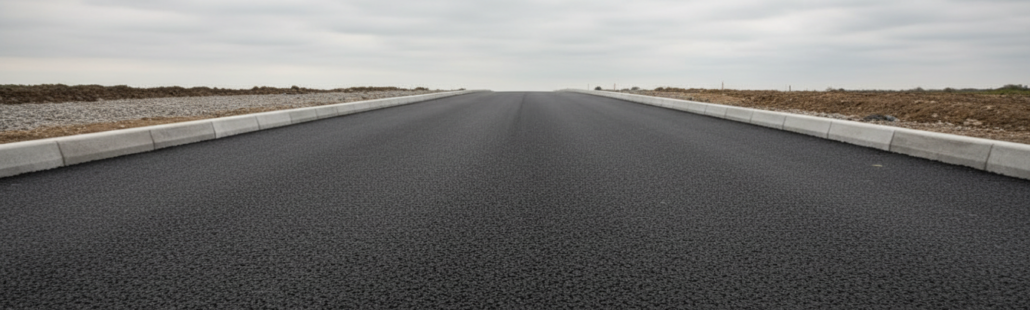
Investing time and resources in understanding ground conditions delivers significant long-term benefits. Roads built on stable, well-prepared foundations require fewer repairs, maintain a smoother surface and offer better load-bearing performance over time.
For property owners and site managers, this translates into reduced maintenance costs, improved safety and more reliable site access. The foundation of a road is invisible once construction is complete, but its influence on performance remains constant throughout the road’s lifespan.
Building Roads on Strong Foundations
A new road installation is only as strong as the ground beneath it. Poor ground conditions, if left unaddressed, undermine even the highest-quality surface materials. By prioritising site investigation, ground preparation and appropriate reinforcement, contractors can deliver durable roads that withstand both traffic and weather.
Understanding the impact of soil stability ensures informed decision-making and protects long-term investment. When foundations are strong, the finished surface can perform as intended for many years.