
- min min
- No Comments
- February 16, 2026
When Is Road Resurfacing More Cost-Effective Than Repairs?
For many UK property owners and commercial site managers, the first instinct when surface defects appear is to arrange localised repairs. Potholes are patched, cracks are sealed, and damaged sections are reinstated. In isolation, these repairs appear cost-effective.
However, the long-term picture often tells a different story. The real road resurfacing cost UK decision is not simply about immediate outlay. It is about lifecycle value. When defects become frequent, structural integrity declines, and disruption increases, resurfacing may offer better financial sense than ongoing reactive maintenance.
Understanding when that tipping point occurs is essential for protecting both budget and operational continuity.
The Difference Between Repairs and Resurfacing
What Repairs Typically Address
Repairs are usually targeted interventions. They deal with visible surface defects such as potholes, cracking, edge deterioration, or isolated subsidence. Professional pothole repairs can restore safety quickly and prevent further water ingress in early-stage damage.
In cases where the underlying structure remains sound, this approach is entirely appropriate. Timely intervention can extend surface lifespan and delay the need for more extensive work.
What Resurfacing Involves
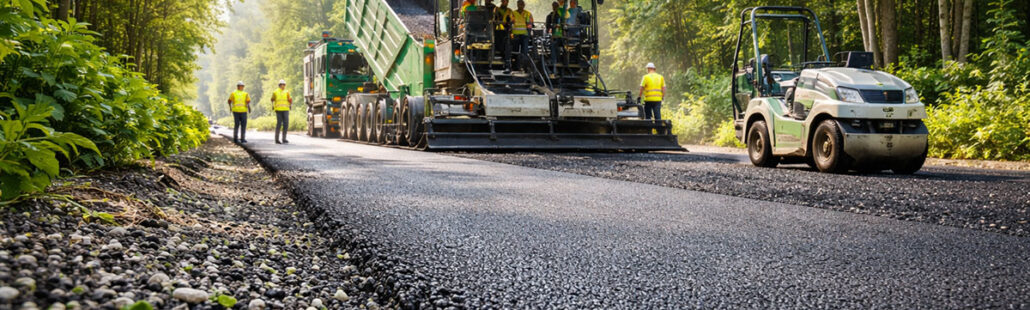
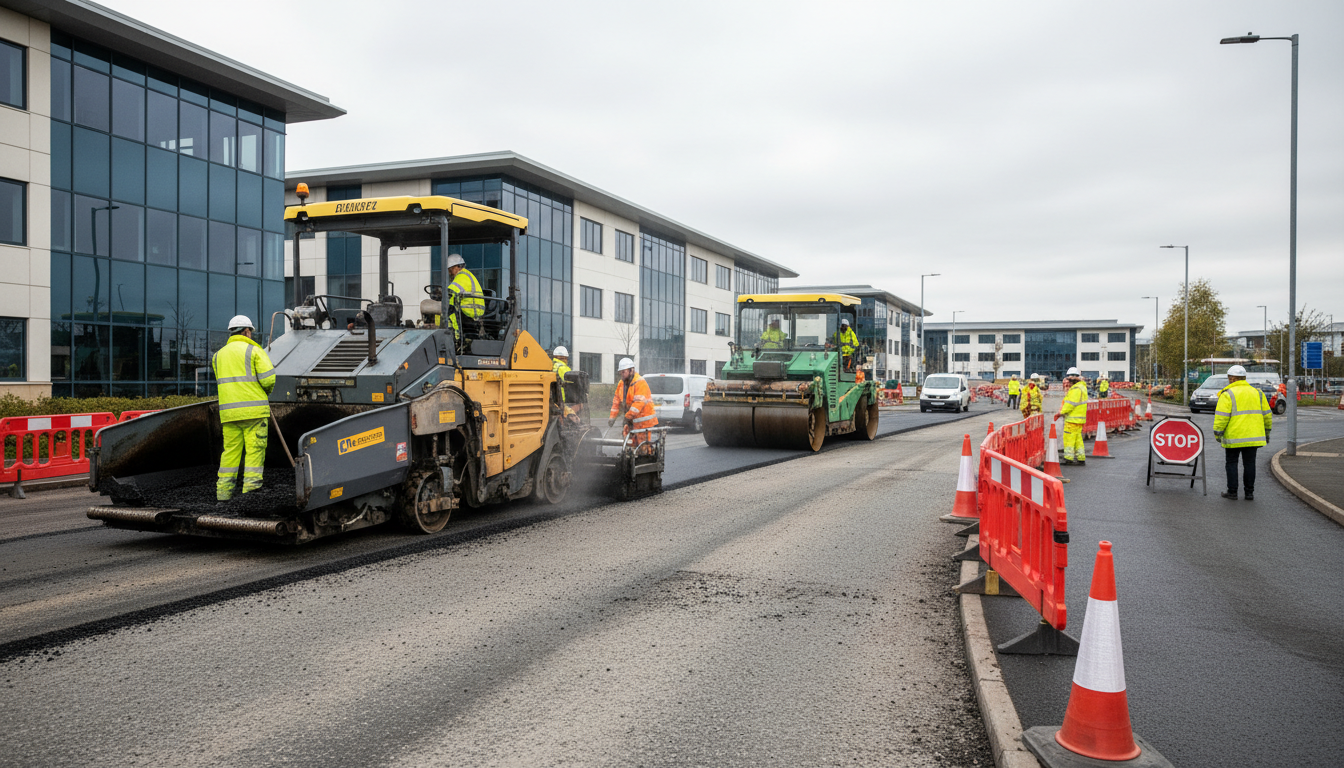
Resurfacing is more comprehensive. It involves removing the worn top layer and installing a new surface course, sometimes alongside structural strengthening. During professional tarmac installation, attention is also given to compaction, drainage correction, and edge stability.
Resurfacing addresses not only surface defects but also deeper fatigue within the pavement structure. This provides a renewed service life rather than a temporary fix.
Signs Repairs Are No Longer Enough
Increasing Frequency of Defects
If potholes reappear in the same locations despite repeated patching, it often indicates sub-base movement or structural weakness. Recurring defects increase maintenance frequency and labour costs.
Over time, the cumulative expense of repeated call-outs may exceed the road resurfacing cost UK property owners initially sought to avoid.
Widespread Cracking and Surface Fatigue
When cracking extends across large sections of the roadway, patch repairs become inefficient. Individual reinstatements may restore isolated areas, but they do not resolve systemic ageing of the surface layer.
Surface fatigue is particularly common on commercial estates experiencing heavy vehicle road damage UK operators frequently encounter. High axle loads accelerate structural breakdown.
Drainage-Related Deterioration
Poor drainage weakens pavement layers from below. Standing water seeps into cracks, leading to freeze-thaw damage during colder months. In these cases, patching addresses symptoms rather than root causes.
Resurfacing allows drainage gradients to be corrected and underlying weaknesses to be stabilised.
Comparing Short-Term and Long-Term Financial Impact
Immediate Cost Versus Lifecycle Cost
Repairs generally require lower upfront expenditure. This makes them attractive where budgets are tight or damage is limited.
However, lifecycle costing considers total spend over a defined period. If repairs are required multiple times within a few years, cumulative costs rise quickly. Operational disruption also adds indirect financial impact, particularly for commercial sites reliant on uninterrupted access.
Resurfacing involves a larger initial investment but delivers a renewed lifespan, often reducing maintenance requirements for many years.
Operational Disruption
Frequent reactive repairs can cause repeated access restrictions. Each visit requires temporary traffic management, staff coordination, and possible business interruption.
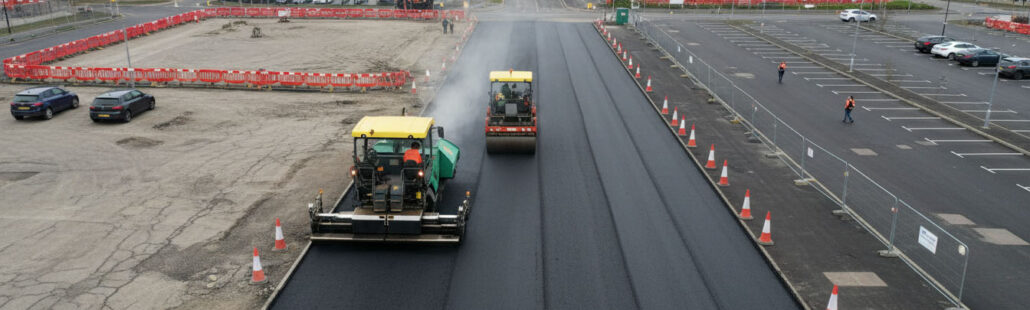
A planned resurfacing project, particularly when delivered through experienced commercial surfacing contractors, can be phased efficiently to minimise disruption while resolving the issue comprehensively.
Over time, reduced call-outs and fewer emergency interventions support smoother operations.
When Resurfacing Becomes the Smarter Choice
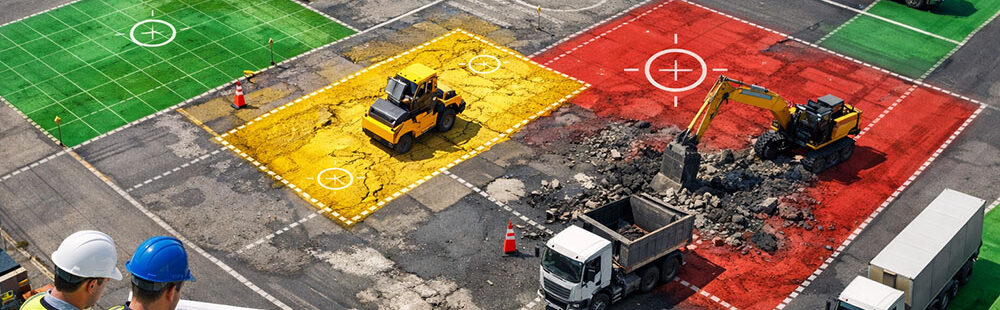
Resurfacing typically becomes more cost-effective when defects are widespread rather than isolated. If more than a small proportion of the surface requires patching, replacing the entire layer may provide better value.
It is also the smarter option when structural assessment reveals weakening beneath the surface. Continuing to repair a failing pavement often leads to escalating costs without long-term improvement.
For sites with consistent heavy usage, upgrading the surface specification during resurfacing can also improve durability. Projects using machine lay tarmac benefit from uniform compaction and consistent thickness, supporting long-term performance.
Strategic Planning Reduces Overall Cost
Waiting until failure becomes critical limits options. Emergency works often carry higher costs due to urgency and operational constraints.
Proactive inspection and condition assessment allow resurfacing to be scheduled at the optimal time. This ensures budgets can be planned in advance and work phased to suit operational requirements.
By addressing structural decline before widespread failure occurs, property owners can manage road resurfacing cost UK considerations more effectively.
The Role of Professional Assessment
Determining whether to repair or resurface requires technical evaluation. Surface appearance alone does not always reveal the condition of underlying layers.
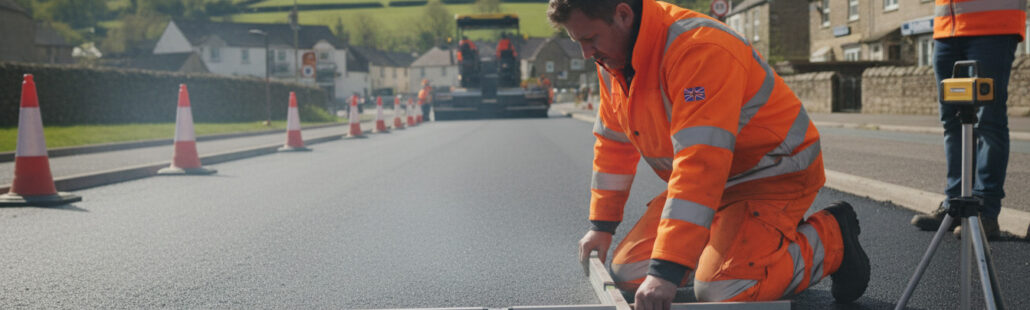
Experienced contractors assess cracking patterns, load history, drainage performance, and structural depth. This enables an informed recommendation based on evidence rather than assumption.
Professional guidance prevents unnecessary resurfacing where repairs would suffice, while also preventing prolonged patching where structural renewal is overdue.
Protecting Long-Term Asset Value
Access roads and car parks are long-term assets. Their condition affects safety, appearance, and usability. Persistent patchwork repairs can create uneven surfaces, inconsistent levels, and reduced visual appeal.
Resurfacing restores uniformity, improves skid resistance, and strengthens structural integrity. For commercial properties, this supports professional presentation as well as safety compliance.
In many cases, the question is not whether resurfacing will eventually be required, but when it should be carried out to minimise total expenditure.
Making the Financially Sound Decision
Road resurfacing cost UK considerations should always be evaluated against the broader financial picture. Repeated short-term repairs may appear economical but can accumulate into higher overall spend when structural fatigue is present.
Resurfacing becomes the more cost-effective solution when defects are widespread, maintenance frequency increases, or underlying layers begin to fail. By acting at the right time, property owners protect both budget and operational continuity.
A balanced, evidence-based approach ensures that investment is directed where it delivers genuine long-term value.