
- min min
- No Comments
- February 14, 2026
Choosing the Right Surface Finish for UK Roads
Selecting the correct road surface finishes UK property owners rely on is not simply a cosmetic decision. The finish of a road affects durability, skid resistance, noise levels, drainage performance, and long-term maintenance costs. For commercial site managers and private estate owners, the wrong choice can result in premature wear, frequent repairs, and avoidable operational disruption.
Surface finish should always reflect how the road will be used. A lightly trafficked residential access lane requires different performance characteristics compared to an industrial estate serving articulated lorries. By understanding the strengths and limitations of each option, site owners can make informed decisions that protect both safety and investment.
Key Factors That Influence Surface Finish Choice
Traffic Volume and Vehicle Type
One of the most important considerations when selecting road surface finishes UK sites require is traffic load. Roads that carry heavy goods vehicles or frequent delivery traffic must withstand greater stress. These surfaces typically need thicker construction layers and more durable finishing materials.
Where heavy vehicle road damage UK industrial sites often experience is a concern, robust surfacing such as dense asphalt or machine-laid tarmac is generally more suitable than decorative finishes.
Environmental Conditions
British weather presents unique challenges. Rainfall, frost cycles, and temperature fluctuations affect how different surfaces perform. Materials must provide adequate skid resistance in wet conditions while maintaining structural integrity during winter freeze-thaw cycles.
Drainage also plays a critical role. Poor water management can shorten surface lifespan regardless of the chosen finish. Ensuring appropriate falls and sub-base stability is as important as the visible top layer.
Aesthetic Requirements
In some settings, appearance carries significant weight. Residential developments, business parks, and public-facing commercial premises often require a more refined finish. In these environments, the choice of surface finish contributes to the overall presentation of the site.
Balancing aesthetics with structural performance ensures that visual appeal does not compromise durability.
Common Road Surface Finishes Used in the UK
Machine-Laid Tarmac
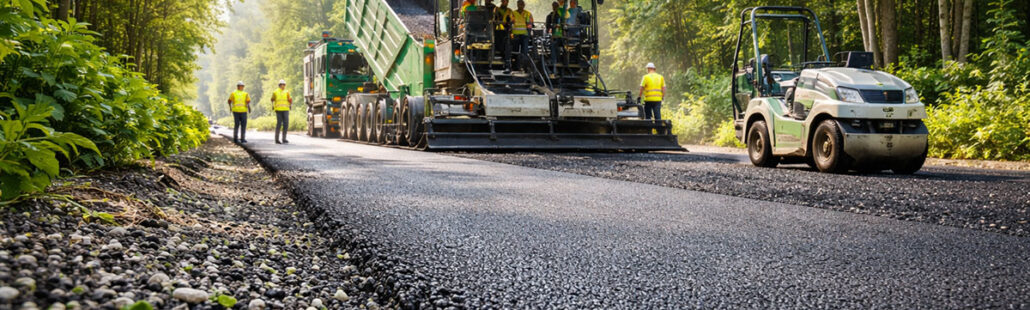
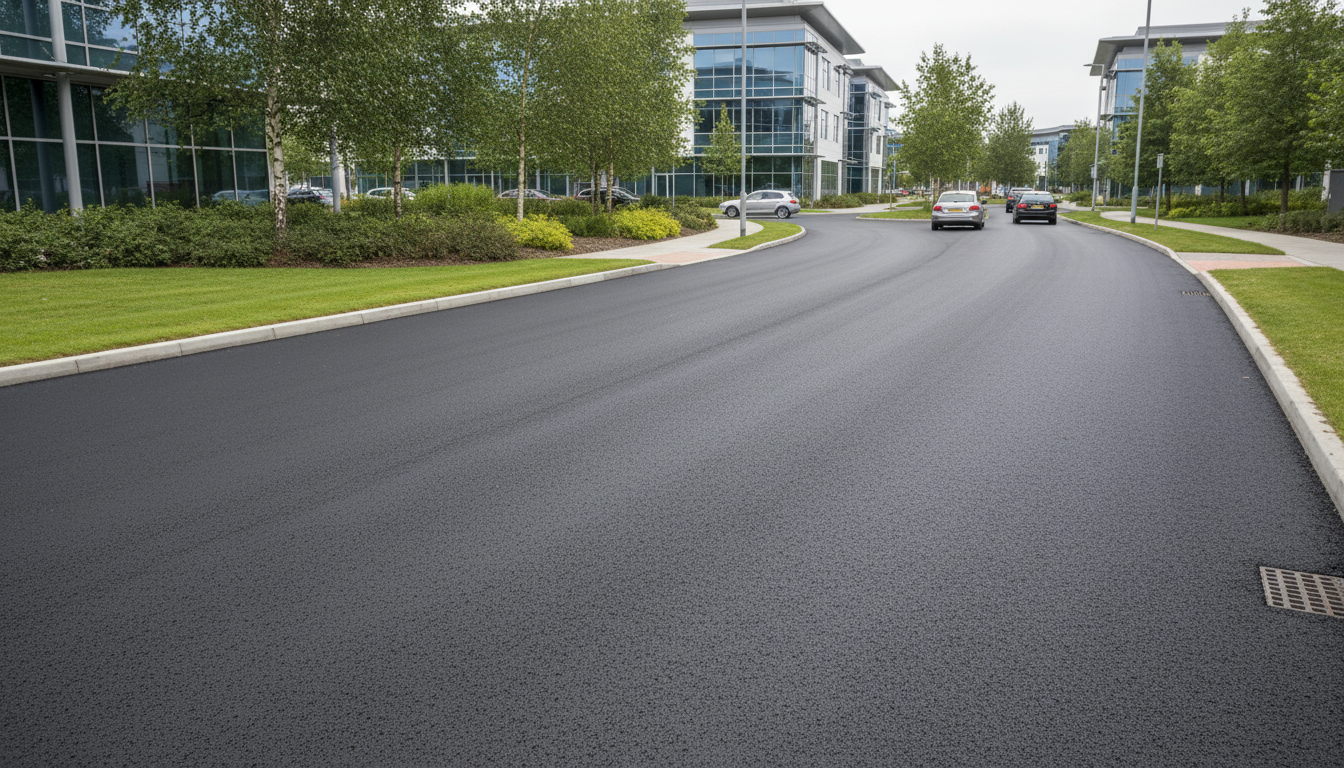
Machine-laid tarmac remains one of the most widely used finishes across the UK. It provides a smooth, durable, and cost-effective solution for roads experiencing moderate to heavy traffic.
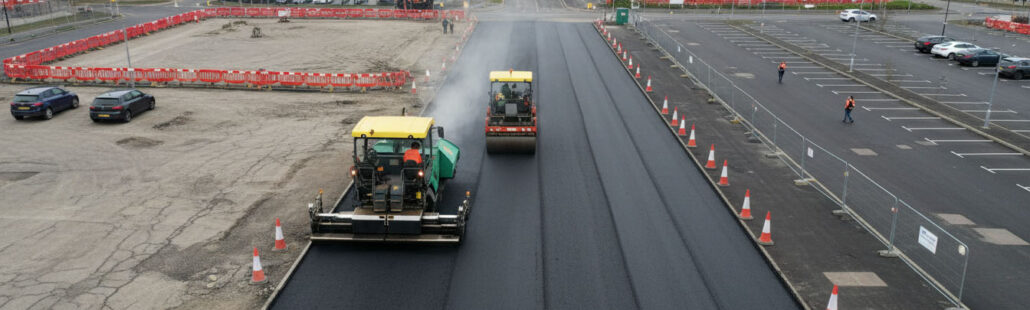
Projects involving machine lay tarmac benefit from consistent compaction and even thickness, which enhances long-term performance. This finish is particularly suitable for commercial access roads and car parks where reliability is essential.
Tarmac offers good skid resistance and can be installed efficiently, making it a practical choice for sites requiring minimal disruption.
Asphalt Concrete
Asphalt concrete is often used for higher-load roads and areas subject to sustained heavy vehicle use. It provides strong structural capacity and performs well under continuous traffic stress.
For larger commercial developments, professional commercial surfacing teams frequently recommend asphalt where durability is prioritised over decorative appearance.
Proper installation and compaction are critical to achieving optimal results. When installed correctly, asphalt surfaces can deliver many years of service with routine maintenance.
Resin Bound Surfacing
Resin bound surfacing combines natural aggregates with a clear resin binder to create a smooth, permeable finish. This option is often chosen for its visual appeal and drainage benefits.
In environments such as pathways, courtyards, or light-use access roads, resin bound surfacing can offer an attractive alternative to traditional blacktop finishes. However, it is generally less suited to areas carrying regular heavy goods traffic.
While aesthetically appealing, resin surfaces require careful sub-base preparation to maintain structural stability.
Surface Dressing
Surface dressing involves applying a layer of bitumen followed by aggregate chippings. It is typically used as a preventative maintenance treatment rather than a full structural solution.
This method can extend the lifespan of existing roads by sealing minor cracks and improving skid resistance. However, it is not a substitute for full resurfacing when structural failure is present.
Property owners should assess whether preventative treatment or complete reconstruction is required before selecting this option.
Matching Finish to Site Function
Industrial and Logistics Sites
Industrial estates and distribution hubs demand finishes capable of supporting high axle loads. In these settings, dense asphalt or high-quality tarmac installed by experienced contractors is generally the most appropriate choice.
Ensuring correct sub-base construction and compaction during tarmac installation helps prevent rutting and surface deformation caused by repetitive heavy vehicle movements.
Commercial Car Parks
Car parks require a balance between durability and visual presentation. Smooth finishes improve line marking clarity and overall appearance while maintaining safe traction levels.
Where potholes or localised deterioration occur, early intervention through professional pothole repairs can prevent further surface breakdown before larger resurfacing becomes necessary.
Residential Developments
In residential settings, quieter finishes with refined appearance may be preferred. Resin bound surfaces or fine-grade tarmac can create a more polished aesthetic while maintaining functional performance for light to moderate traffic.
Drainage considerations remain essential to prevent standing water and long-term degradation.
Long-Term Maintenance Considerations
Selecting the right road surface finishes UK property owners require should always include a realistic view of maintenance needs. All surfaces experience wear over time. The frequency and type of maintenance required will vary depending on traffic load, weather exposure, and installation quality.
Regular inspections help identify early signs of cracking, edge failure, or drainage problems. Addressing minor defects promptly reduces the likelihood of more extensive structural repairs later.
Preventative maintenance planning supports consistent surface performance and protects overall site safety.
Cost Versus Value
While initial installation cost is an important factor, it should not be the sole consideration. Cheaper finishes that fail prematurely often result in higher long-term expenditure due to repeated repairs and operational disruption.
Investing in a surface finish aligned with site usage ensures better value over the lifespan of the road. Durability, safety, and reduced downtime frequently outweigh modest upfront savings.
Experienced contractors assess site-specific conditions and recommend finishes that balance structural strength, visual requirements, and budget considerations.
Making an Informed Decision
Choosing the correct road surface finishes UK sites depend on requires careful assessment of traffic patterns, environmental exposure, aesthetic goals, and long-term maintenance strategy. No single finish suits every application.
By working with knowledgeable surfacing professionals and considering both immediate and future demands, property owners can ensure their chosen finish delivers lasting performance.
A well-specified surface enhances safety, improves appearance, and supports uninterrupted site operations. Careful selection at the outset ultimately protects both financial investment and day-to-day functionality.