
- min min
- No Comments
- February 12, 2026
Road Surfacing Safety Measures for Active Sites
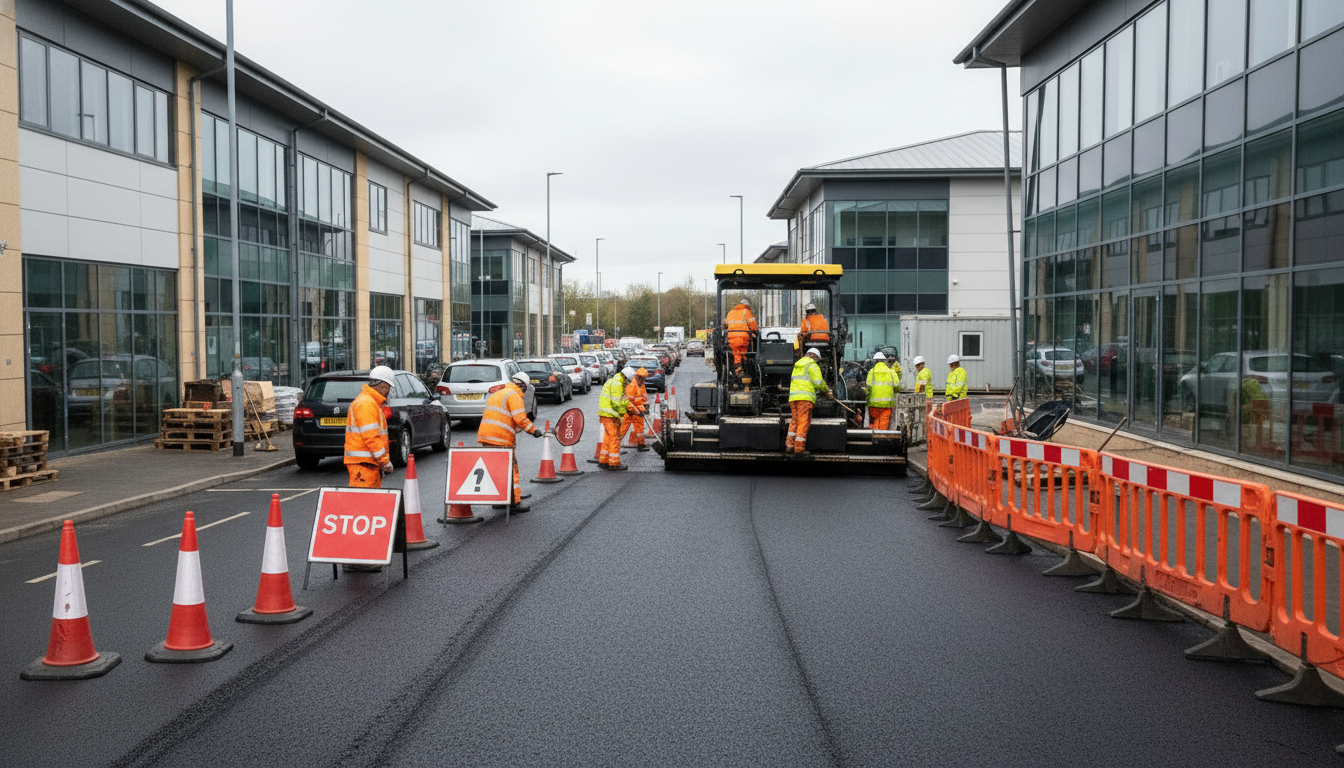
Road surfacing safety UK standards are particularly important when works take place on active commercial or residential sites. Unlike closed-road projects, live environments continue to operate while surfacing is underway. Delivery vehicles arrive, staff travel in and out, and pedestrians move between buildings. Without careful coordination, the risks increase significantly.
For property owners and site managers, safety is not simply about meeting legal obligations. It is about preventing disruption, protecting visitors, and safeguarding long-term surface performance. A well-managed project allows necessary upgrades or repairs to proceed without creating unnecessary hazards.
On industrial estates and logistics facilities especially, heavy vehicle road damage UK operators already face can worsen if resurfacing is not carefully controlled. This makes structured planning essential from the outset.
Identifying the Main Risks During Surfacing Works
Interaction Between Plant and Site Traffic
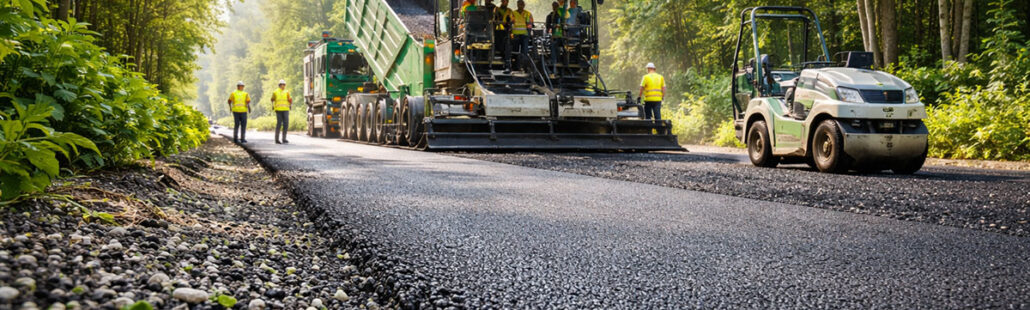
Surfacing projects involve heavy machinery including pavers, rollers, and tipper wagons. These vehicles operate in confined areas and often reverse frequently. On a live site, this activity may occur near employee parking zones, loading bays, or main access roads.
Without clear segregation and traffic management, vehicle interaction becomes one of the highest risk factors. Defined haul routes and controlled delivery times significantly reduce exposure.
During larger projects involving machine lay tarmac, traffic phasing becomes even more important. Sections must be isolated correctly to protect both the workforce and site users.
Pedestrian Safety Concerns
Many commercial premises receive regular foot traffic. Office staff, contractors, customers, and visitors may all be present while works are in progress. Temporary diversions must be clearly signed and physically separated from working zones.
Freshly planed surfaces, exposed ironwork, and uncured asphalt can create trip or slip hazards if pedestrians stray into restricted areas. Effective road surfacing safety UK planning always accounts for alternative footpaths and supervised crossing points where required.
Surface Stability During Works
Newly laid tarmac requires adequate cooling and compaction before it can safely support traffic loads. Premature access may deform the surface, compromise compaction, and shorten lifespan.
Professional teams carrying out tarmac installation will schedule phased openings, ensuring each section reaches the correct temperature and structural integrity before use.
The Role of Pre-Project Planning
Site Assessment and Risk Evaluation
Every active site presents different operational challenges. A school, for example, requires careful scheduling around pupil arrival and departure times. A logistics hub may require 24-hour access for articulated vehicles. A healthcare facility must maintain emergency vehicle access at all times.
A detailed site assessment identifies traffic volumes, turning circles, drainage layouts, and pedestrian routes. This assessment forms the foundation of the road surfacing safety UK strategy for the project.
Where necessary, contractors may coordinate directly with facilities managers to plan temporary closures or staged working areas. This reduces uncertainty and prevents last-minute disruption.
Traffic Management Strategy
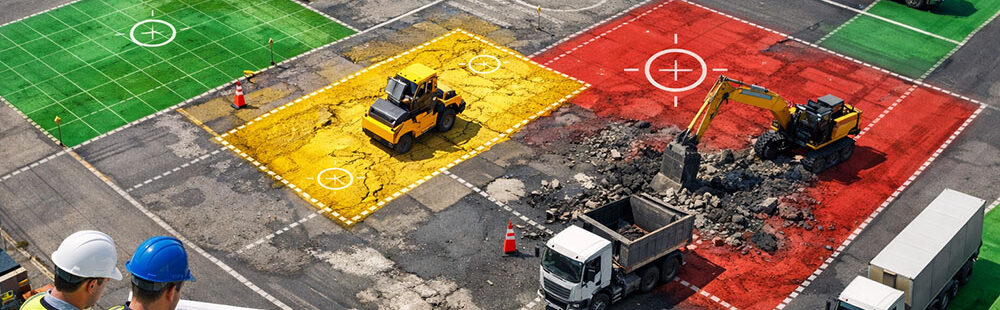
A structured traffic management plan outlines diversion routes, restricted access points, and temporary signage placement. It also considers how deliveries will be managed during each phase of the works.
Clear signage positioned well in advance of working areas allows drivers time to respond safely. On larger estates, banksmen may assist with manoeuvring heavy vehicles through altered layouts.
Where ongoing defects require urgent attention, such as deteriorating potholes, prompt intervention through professional pothole repairs can stabilise the area before more extensive resurfacing begins.
Protecting Workers on Active Sites
Personal Protective Equipment and Visibility
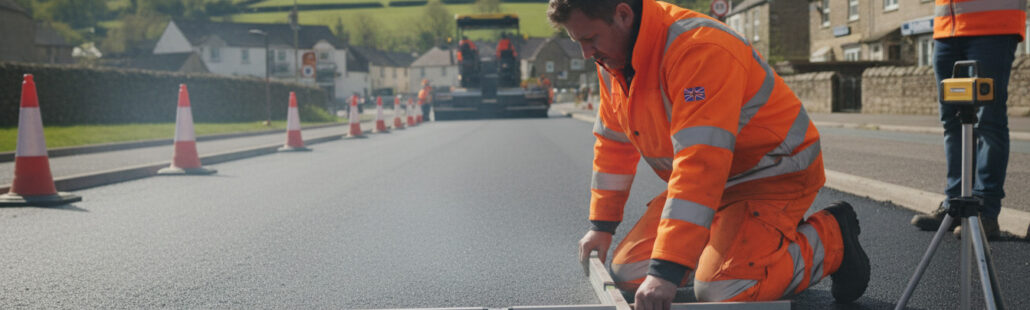
High-visibility clothing is essential when operating around moving vehicles. Surfacing operatives also require protective footwear, gloves, and hearing protection due to the nature of plant and equipment involved.
On live sites, visibility becomes even more important. Drivers unfamiliar with the temporary layout must be able to identify workers quickly and clearly.
Controlled Plant Operation
Only trained operatives should handle paving and rolling equipment. Controlled reversing procedures, clear signalling systems, and defined unloading zones reduce the risk of collisions.
Coordination between crews is particularly critical during larger commercial surfacing projects where multiple teams may operate simultaneously across different sections of the site.
Regular communication throughout the working day ensures that any changes in traffic flow or unexpected site activity are managed immediately.
Maintaining Access While Work Is Underway
One of the main concerns for property owners is how to keep operations running during resurfacing. Careful phasing is the key to achieving this balance.
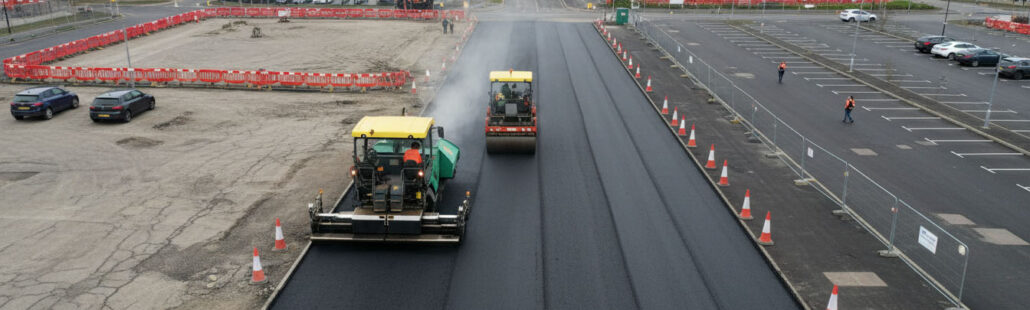
Car parks can be resurfaced in sections, allowing part of the area to remain open. Access roads may be completed in halves, maintaining one-way traffic under supervision. Loading bays can be scheduled individually to prevent disruption to core business activity.
Road surfacing safety UK procedures are not designed to halt operations unnecessarily. Instead, they focus on structured sequencing so that improvements are delivered with minimal interference.
Drainage and Long-Term Surface Performance
Safety and durability are closely linked. Poor drainage can lead to standing water, which increases slip risk for vehicles and pedestrians alike. Over time, trapped moisture weakens the sub-base and accelerates structural failure.
Addressing drainage issues during resurfacing prevents recurring hazards and reduces future maintenance requirements. Ensuring correct falls, gully positioning, and edge restraint stability supports both safety and longevity.
When sites ignore underlying drainage defects, recurring surface deterioration often follows. Early correction is far more cost-effective than repeated patching.
Legal and Compliance Considerations
Under UK health and safety legislation, both contractors and site operators share responsibility for maintaining a safe working environment. Risk assessments, method statements, and competent supervision are not optional; they are fundamental requirements.
Professional surfacing contractors will provide clear documentation outlining control measures, emergency procedures, and site coordination plans. For property owners, selecting an experienced provider ensures compliance obligations are met without unnecessary complication.
Working with a contractor familiar with local regulations and commercial environments adds reassurance that safety standards will be maintained throughout the project.
Why Structured Safety Planning Protects Investment
Road surfacing represents a significant capital investment for any commercial site. Protecting that investment means more than choosing quality materials. It requires correct installation, appropriate curing time, controlled access, and well-managed traffic movement during works.
Road surfacing safety UK strategies support this process by preventing early surface damage caused by premature loading or uncontrolled traffic. They also reduce the likelihood of accidents that could result in liability claims or operational shutdowns.
For site managers, the goal is straightforward: complete necessary improvements while maintaining safe, efficient daily operations. Achieving that balance depends on planning, communication, and professional execution.
When safety is embedded into every stage of the project, resurfacing works proceed smoothly, risks remain controlled, and the finished surface delivers the long-term durability expected.