
- admin
- No Comments
- July 12, 2026
Why Speed Bumps Can Damage Roads Faster Than Traffic
Speed bumps are one of the most effective ways to slow vehicles and improve safety in residential streets, schools, hospitals and commercial developments. By reducing vehicle speeds, they help lower the risk of accidents and create safer environments for pedestrians.
However, there is a lesser-known consequence of installing speed bumps. While they reduce speeding, they also create concentrated stresses that can cause roads to deteriorate more quickly than surrounding sections.
For commercial property owners and site managers, understanding why speed bump road damage UK occurs is essential for planning maintenance and extending the lifespan of access roads and car parks.
Vehicles Don’t Travel Smoothly Over Speed Bumps
On a straight road travelling at a constant speed, vehicle loads are distributed relatively evenly across the pavement.
A speed bump changes that completely.
Drivers brake before reaching the hump, climb over it, then accelerate immediately afterwards. Each of these actions applies different forces to the road surface, creating repeated stress in the same location throughout the day.
Unlike normal traffic flow, the pavement experiences continuous cycles of braking, impact and acceleration.
Braking Places Extra Stress on the Surface
As vehicles approach a speed bump, their tyres grip the road more aggressively while braking.
This creates horizontal shear forces that push against the asphalt surface. Over time, these repeated forces weaken the bond between the wearing course and the layers beneath.
Small cracks often begin to form before becoming visible, particularly where heavy vehicles use the route regularly.
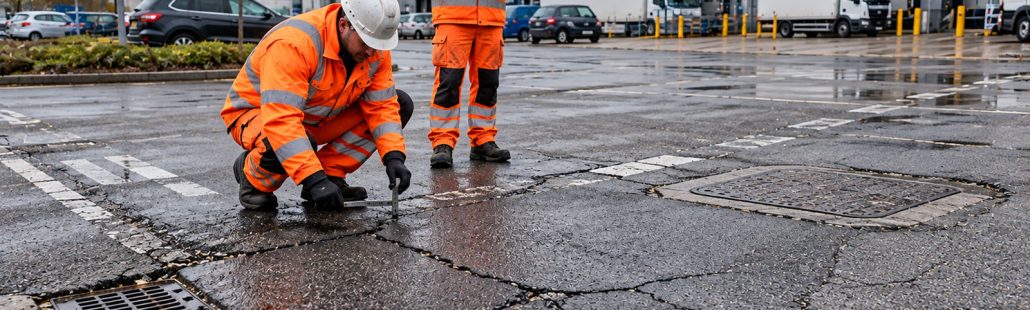
Professional commercial surfacing projects often strengthen these high-stress areas to improve long-term durability.
Acceleration Causes Additional Wear
The damage does not end once vehicles pass the speed bump.
As drivers accelerate away, tyres exert powerful traction forces on the road surface. These forces gradually pull against the asphalt, contributing to surface deformation and accelerating the ageing process.
Where buses, delivery vans or heavy goods vehicles frequently travel, the effect becomes even more pronounced.
Repeated acceleration can eventually lead to rutting, fretting and surface cracking.
Heavy Vehicles Multiply the Problem
The effects of speed bumps are magnified when commercial vehicles are involved.
Delivery vans, refuse collection vehicles and HGVs place much greater loads on the pavement than private cars. As these heavier vehicles climb and descend speed bumps, suspension movement transfers additional force directly into the road.
The repeated loading gradually weakens both the asphalt and the underlying foundation.
High-quality tarmac installation is essential in these locations to withstand the increased structural demands.
Water Quickly Exploits Weaknesses
Once small cracks appear around a speed bump, water begins to penetrate the pavement structure.
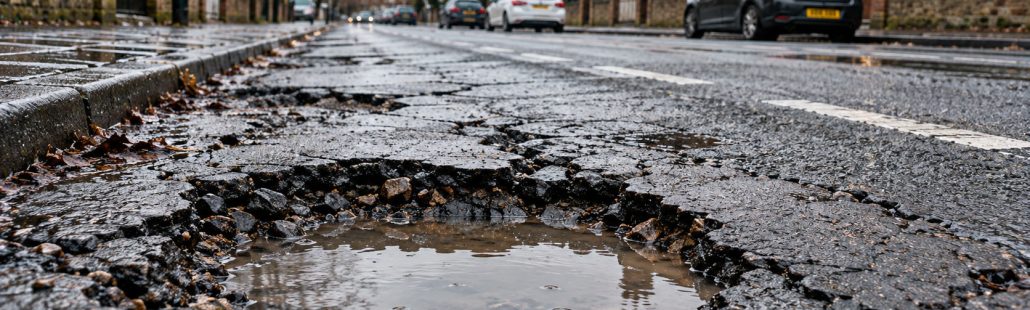
Rainwater enters the cracks and weakens the sub-base beneath the asphalt. During colder weather, freeze-thaw cycles expand these openings further, accelerating deterioration.
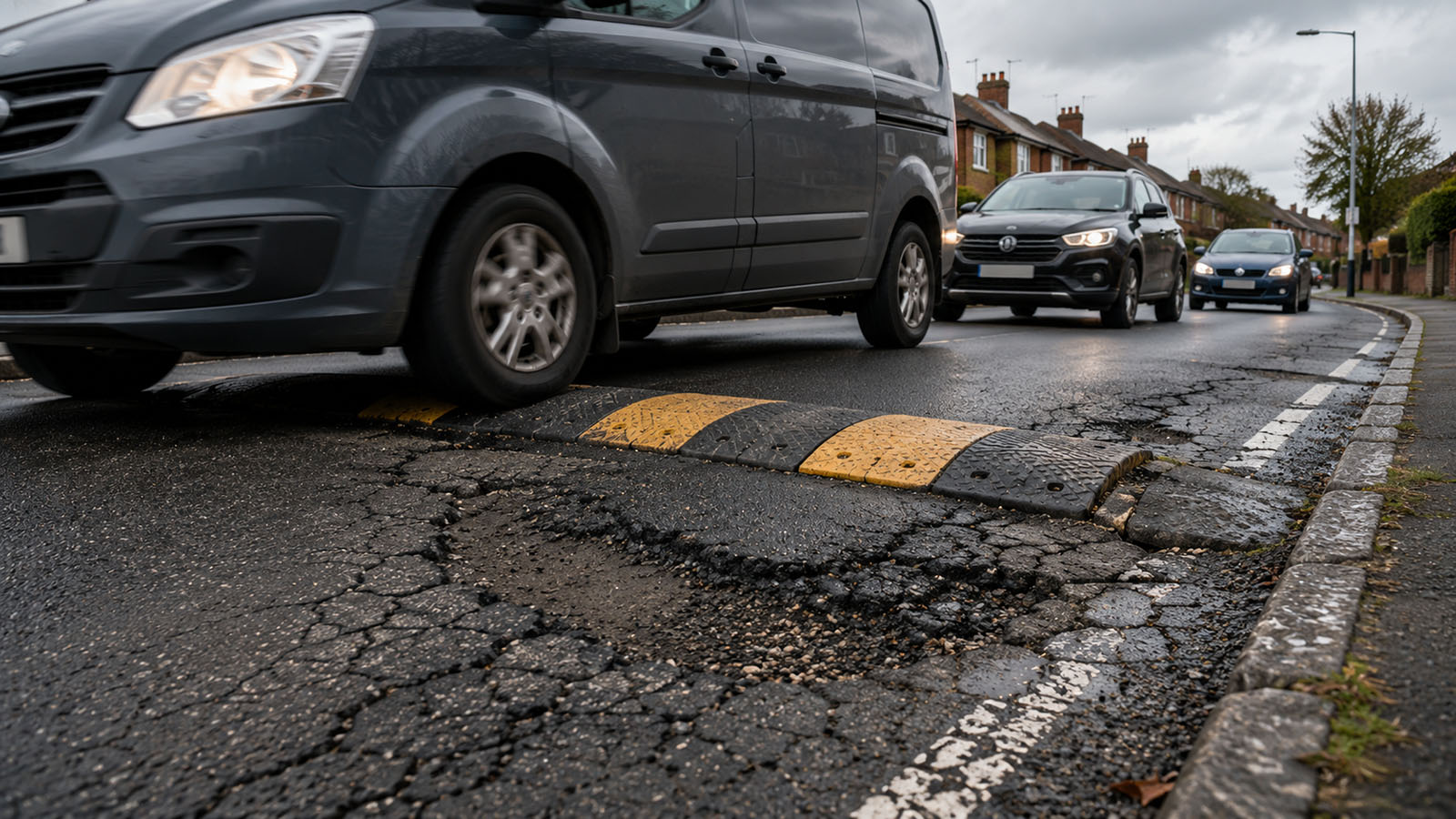
Because the area is already experiencing constant traffic stress, damage often progresses much faster than on neighbouring sections of road.
Why Damage Often Appears at the Edges
Many road users focus on the hump itself, but some of the worst deterioration occurs just before and after the speed bump.
These are the locations where braking and acceleration forces are greatest. Surface depressions, cracking and potholes frequently develop here before any visible damage appears on the hump itself.
Routine inspections should therefore include the surrounding pavement rather than concentrating solely on the traffic-calming feature.
Poor Installation Can Make Matters Worse
Not all speed bumps are constructed to the same standard.
If the surrounding asphalt is inadequately compacted or the hump is poorly integrated into the existing pavement, weak joints can develop. These joints become entry points for moisture and are often the first areas to fail.
Proper design and construction significantly reduce future maintenance requirements.
Preventative Maintenance Saves Money
Because speed bump locations experience concentrated stress, they benefit from more frequent inspections than standard road sections.
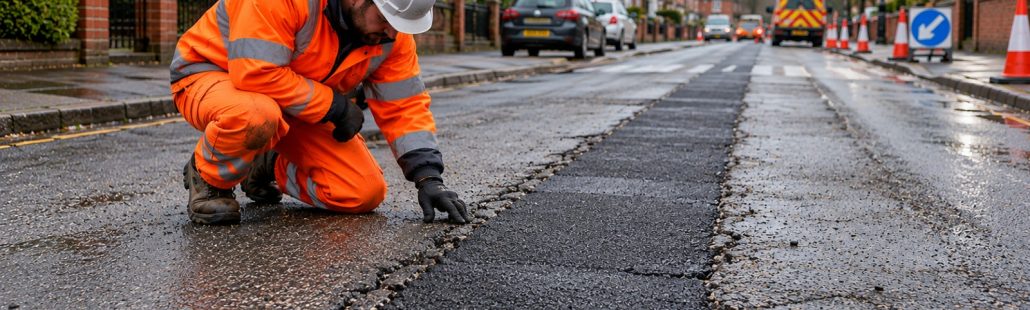
Small cracks should be repaired promptly before they allow water into the pavement structure. Early intervention prevents widespread deterioration and extends the life of both the speed bump and the surrounding road.
Timely pothole repairs are particularly important where heavy traffic regularly passes over traffic-calming measures.
Balancing Safety and Durability
Speed bumps remain an important safety feature and play a valuable role in reducing vehicle speeds. The solution is not to avoid installing them but to recognise the additional demands they place on the road structure.
By using stronger pavement designs, appropriate asphalt specifications and proactive maintenance programmes, property owners can enjoy the safety benefits of speed bumps without significantly shortening the lifespan of the surrounding road.
Conclusion
Speed bumps help protect people, but they also create unique stresses that accelerate road deterioration. Braking, acceleration, repeated impact and heavy vehicle loading all contribute to faster wear than is seen on straight sections of road.
With proper design, quality construction and regular maintenance, these effects can be effectively managed. Understanding how speed bump road damage UK develops allows property owners to plan maintenance proactively, reduce repair costs and ensure safer, longer-lasting road surfaces.