

- admin
- No Comments
- July 2, 2026
The 5-Minute Inspection That Could Save You Thousands
Most commercial road failures don’t happen overnight. They begin with small, almost invisible defects that gradually worsen as vehicles, weather and water take their toll. By the time a pothole appears or a section of road begins to sink, the underlying damage has often been developing for months or even years.
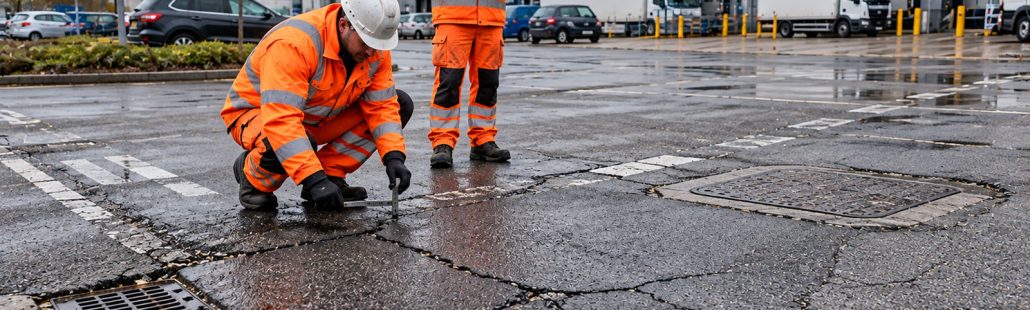
The good news is that many of these problems can be identified during a simple five-minute visual inspection. For property owners and site managers, spending just a few minutes checking the condition of access roads, car parks and loading areas can prevent repair bills running into thousands of pounds.
A regular inspection is one of the easiest and most cost-effective ways to protect your investment.
Start by Looking for Surface Cracks
Cracks are usually the first visible sign that something is changing beneath the surface. While they may appear minor, they provide a direct path for rainwater to penetrate the asphalt.
Once moisture reaches the lower layers, the road structure begins to weaken. Heavy traffic then accelerates deterioration, often leading to larger cracks, potholes and settlement.
Early detection allows problems to be addressed before they spread across larger areas.
Check for Standing Water
After rainfall, take a few moments to see whether water drains away naturally or remains on the surface.
Persistent puddles often indicate drainage problems or subtle depressions developing within the pavement. Standing water not only creates slip hazards but also allows moisture to penetrate the road structure, shortening its lifespan.
Professional commercial surfacing includes carefully designed drainage gradients, but even well-built surfaces should be monitored regularly.
Watch for Loose Material
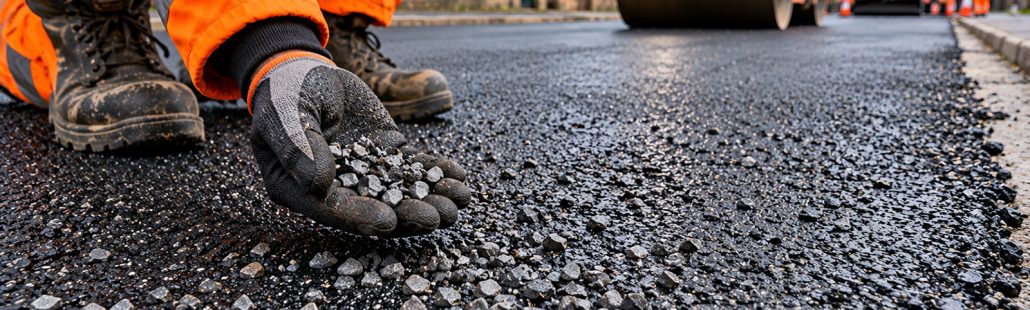
Small stones, loose chippings or crumbling asphalt around wheel paths often indicate that the surface is beginning to break down.
This process, known as fretting, gradually weakens the wearing course and exposes the underlying structure to weather damage.
Spotting fretting early allows maintenance to be scheduled before larger sections of asphalt require replacement.
Inspect High-Traffic Areas
Not every part of a road experiences the same level of stress. Pay particular attention to loading bays, entrances, junctions and turning areas where heavy vehicles regularly brake, accelerate or manoeuvre.
These locations often show signs of wear long before the rest of the road.
A quick inspection of these high-stress zones can reveal developing issues while repairs remain relatively straightforward.
Don’t Ignore Small Potholes
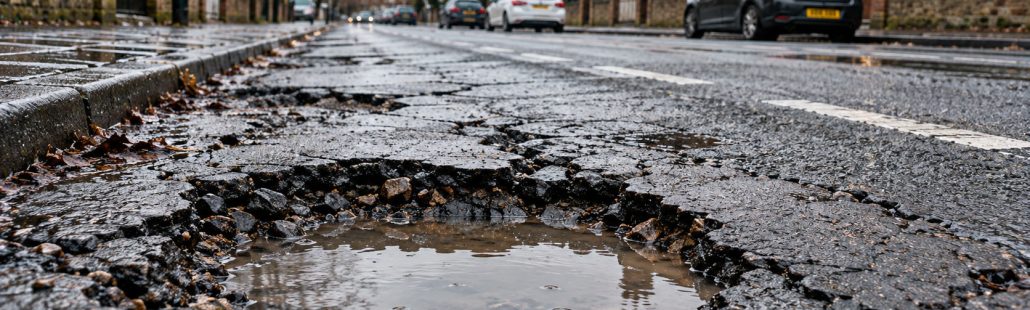
A small pothole rarely stays small for long. Every vehicle passing over it breaks away additional material, while rainwater weakens the surrounding structure.
Timely pothole repairs prevent further deterioration and help avoid more extensive resurfacing work later.
Treating a pothole early is almost always less expensive than rebuilding the surrounding pavement.
Look Along the Road Edges
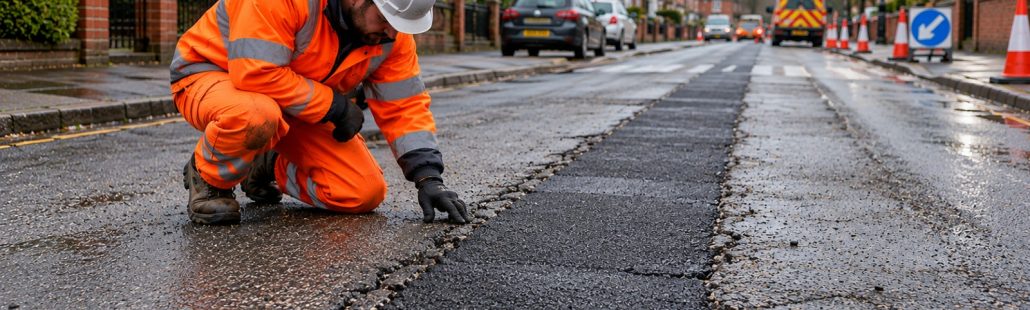
The edges of roads and car parks often receive less attention than the main traffic lanes, yet they are among the first areas to deteriorate.
Cracked edges, crumbling asphalt or areas where vegetation is beginning to grow through the surface may indicate poor drainage or inadequate edge support.
Addressing edge defects promptly helps prevent damage spreading into the main carriageway.
Monitor Line Markings and Surface Appearance
Although faded markings don’t usually indicate structural failure, they often highlight areas where the surface has experienced years of wear.
A dull, patchy appearance can also suggest that the asphalt binder is ageing and becoming more brittle.
When combined with other warning signs, this may indicate that resurfacing should be considered before structural failure develops.
Keep a Simple Inspection Record
One of the most effective maintenance tools is also one of the simplest. Recording observations during each inspection makes it easier to identify changes over time.
Photographs taken every few months help reveal whether cracks are widening, drainage is worsening or isolated defects are becoming more widespread.
This information allows maintenance decisions to be based on evidence rather than assumptions.
When to Call a Professional
A visual inspection is an excellent first step, but it cannot identify every structural issue.
If cracks continue to return, potholes repeatedly develop in the same location or sections of the surface begin to sink, it is time to seek professional advice.
Experienced contractors providing tarmac installation and resurfacing services can assess whether the issue is limited to the surface or whether deeper structural repairs are required.
Conclusion
A five-minute inspection may seem insignificant, but it can prevent some of the most expensive road repairs a commercial property owner will ever face.
Checking for cracks, standing water, loose material and early signs of wear allows maintenance to be planned before defects become structural failures. Combined with routine professional assessments and timely repairs, these simple inspections help extend road lifespan, improve safety and reduce long-term maintenance costs.
Sometimes the most valuable maintenance task isn’t a repair at all—it’s taking a few minutes to notice a problem before it becomes an expensive one.