
- Minisgreat
- No Comments
- October 6, 2026
What Are Those Tiny Stones You See on Freshly Surfaced Roads?
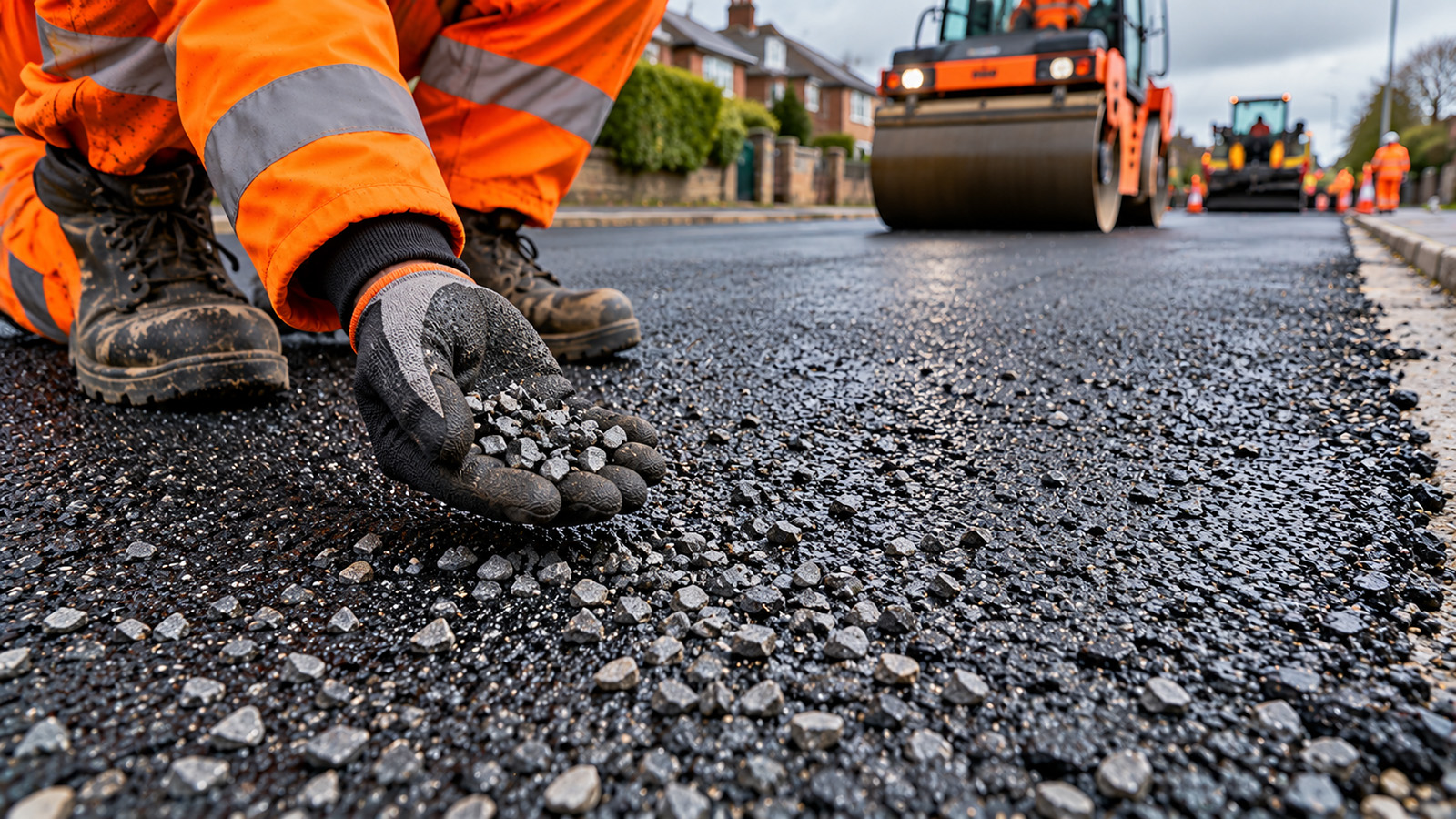
You drive along a road that appears to have just been resurfaced, but instead of seeing the smooth black finish you expected, the carriageway is covered with thousands of tiny stones.
You might hear them hitting the underside of the vehicle or notice temporary signs warning of loose chippings and reduced speeds.
At first glance, it can look as though the surfacing work has not been finished properly.
In many cases, however, those small stones are there deliberately.
They are commonly associated with a road maintenance technique known as surface dressing, where a bituminous binder is applied to the existing road and aggregate chippings are spread across it. The treatment can restore useful surface characteristics and help protect an existing carriageway without removing and replacing the entire road.
Understanding why loose stones appear on newly treated roads also helps explain why not every road that looks freshly surfaced has actually received a completely new layer of asphalt.
Those Tiny Stones Are Aggregate Chippings
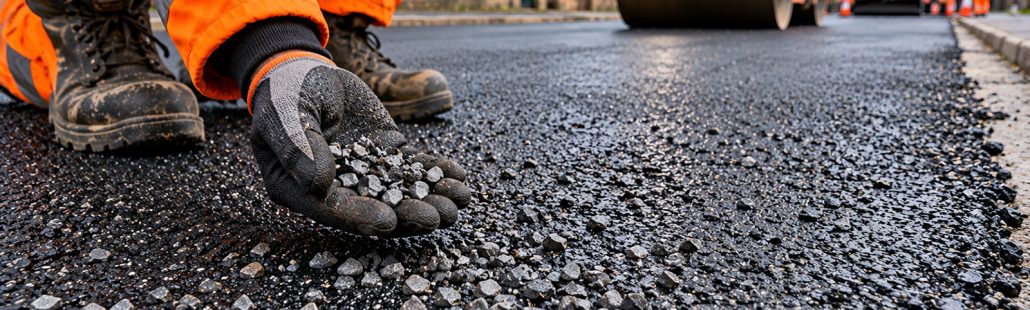
The small stones visible on the road are generally referred to as aggregate chippings.
Aggregate is an essential part of road construction.
Even conventional asphalt contains large quantities of carefully selected aggregate. The difference is that, within asphalt, the aggregate is mixed together with bituminous binder before the material is laid and compacted.
With surface dressing, the process is different.
Binder is applied to the existing road surface and stone chippings are then distributed across it. The chippings become embedded into the binder, creating a renewed running surface.
Immediately after application, there can be a noticeable amount of loose material on top.
That does not necessarily mean something has gone wrong.
What Is Surface Dressing?
Surface dressing is a road maintenance treatment rather than the same process as full resurfacing.
The existing carriageway remains largely in place.
A layer of bituminous binder is applied to the prepared road, followed by carefully selected aggregate chippings. The surface is then rolled to help seat the aggregate into the binder.
Traffic can also contribute to the bedding-in process as vehicles pass over the treated area.
The result is a comparatively thin treatment over the existing road rather than a substantial new asphalt pavement layer.
This distinction explains why a surface-dressed road looks very different immediately after the work compared with professional tarmac installation.
Why Would a Road Be Surface Dressed Instead of Fully Resurfaced?
Not every ageing road needs complete reconstruction.
A carriageway can lose surface texture or begin showing signs of ageing while its underlying pavement remains structurally serviceable.
In those circumstances, removing significant amounts of existing material and replacing them may not always be necessary.
Surface dressing can provide a way of treating the existing surface and extending its useful service life.
It can also be carried out comparatively quickly across substantial stretches of road, which is one reason drivers may see long sections of rural or local roads treated in this way.
However, it is not a substitute for structural reconstruction where deeper pavement failure already exists.
Why Are There Loose Stones Left on Top?
When aggregate chippings are spread across the binder, not every individual stone will immediately become securely embedded.
An appropriate quantity needs to be distributed across the surface to achieve the required coverage.
Some chippings will bond effectively into the binder, while excess material may remain loose during the early stages.
That is why newly treated roads can initially feel noisy under vehicle tyres.
The presence of loose chippings shortly after surface dressing can therefore be a normal part of the process.
Excess loose material should subsequently be managed as part of the surfacing operation rather than simply remaining indefinitely on the road.
Why Are Drivers Told to Slow Down?
Temporary loose-chipping signs are important.
Loose aggregate can be displaced by vehicle tyres, particularly at higher speeds. A stone thrown from beneath a tyre can strike another vehicle, while loose material can also affect how the road feels beneath the wheels.
Reducing speed lowers the forces acting on the chippings.
It also reduces the likelihood of stones being thrown aggressively from tyres while the new treatment settles.
This is why drivers should take temporary speed restrictions and loose-surface warnings seriously even when the road itself appears perfectly usable.
Vehicle Tyres Help the Surface Settle
Traffic plays an interesting role after some surface-dressing operations.
As vehicles travel over the road, their tyres apply pressure to the aggregate and can help seat chippings into the binder.
That does not mean uncontrolled traffic should be used as a substitute for proper installation and rolling.
Rather, normal traffic contributes to the early-life bedding-in of the treatment after the road has been appropriately constructed.
During this stage, drivers may notice that the surface gradually changes in appearance.
The quantity of obviously loose material reduces and the carriageway begins to look more settled.
Why Do the Stones Sometimes Collect at the Side of the Road?
Vehicle movement does not affect every chipping in the same way.
Material that has not become embedded can be moved by passing tyres.
Over time, loose stones may migrate towards the edges of the carriageway or collect in areas that receive less regular traffic.
This can make the centre of the wheel paths appear more established while the road edges still contain noticeable quantities of loose aggregate.
The effect can be particularly obvious shortly after treatment.
Eventually, excess material may need to be swept from the carriageway as part of completing the process.
Are the Stones Just Ordinary Gravel?
Road aggregate is not simply random gravel selected because it happens to be available.
The properties of the stone matter.
Aggregate used in road surfacing needs to meet the requirements of the particular system and specification. Factors such as stone size, durability and surface characteristics can influence performance.
The interaction between the binder and aggregate is also important.
The aim is to create a surface capable of withstanding vehicle loading and environmental exposure while providing suitable characteristics for traffic.
Road surfacing is therefore much more controlled than simply spreading loose stone over sticky material.
Why Does the Finished Road Become Darker?
A newly surface-dressed road can initially look predominantly like stone because the chippings dominate its appearance.
As traffic uses the carriageway, the visual character can change.
The aggregate becomes more firmly embedded, loose material disappears and the road begins to take on a more established appearance.
Depending on the aggregate selected, the finished colour may still differ noticeably from conventional dark asphalt.
This is one reason visual appearance alone is not a reliable way to determine exactly how a road has been constructed.
Surface Dressing and New Asphalt Are Not the Same Thing
A newly asphalted road is constructed differently.
Asphalt is manufactured as a mixture of aggregate and bituminous binder. It is delivered to the site, placed at the required thickness and compacted to form a continuous pavement layer.
On larger roads and commercial sites, machine lay tarmac can provide consistent placement and levels across substantial areas.
Surface dressing does not normally replace the existing pavement in this way.
Instead, it treats the top of the existing road.
That makes surface dressing suitable for certain maintenance situations, but not for every form of road deterioration.
Can Surface Dressing Fix Potholes?
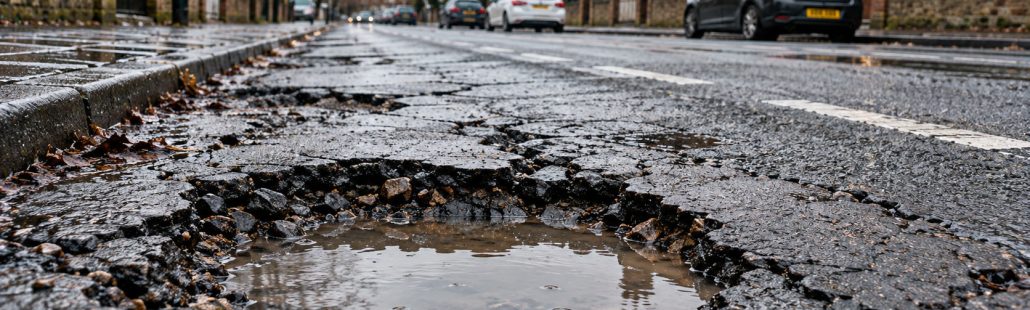
A pothole is more than a loss of colour or surface texture.
Material has physically broken away from the pavement, and there may be deterioration around or underneath the visible hole.
Simply spreading binder and aggregate across a significant pothole does not address unstable material beneath it.
Defects may therefore need to be repaired before a wider surface treatment is carried out.
Proper pothole repairs focus on restoring the damaged area so it can support traffic again, rather than relying on a thin surface treatment to conceal the defect.
What About Roads With Deep Ruts or Structural Cracks?
Surface dressing has limitations.
If a road is badly deformed, contains substantial wheel ruts or is moving because the foundation underneath has failed, treating only the upper surface cannot rebuild the structure below.
The existing road is still carrying the traffic loads.
If that pavement is structurally inadequate, deeper intervention may be required.
Depending on the condition of the road, this could involve removing failed material, repairing localised areas or carrying out more extensive resurfacing or reconstruction.
The appropriate solution depends on the cause and depth of the deterioration.
Why Preparation Still Matters
Even though surface dressing is thinner than conventional asphalt resurfacing, preparation remains important.
The existing carriageway needs to be suitable for the treatment.
Problems such as significant contamination, unstable areas or unresolved structural defects can affect the outcome if they are not dealt with appropriately.
The same principle applies throughout road construction.
Whether a contractor is working on a public road, industrial estate or private access route, the final treatment performs best when the surface and structure beneath it are properly assessed first.
This is particularly important for commercial surfacing, where frequent vans, HGVs and turning traffic can expose weaknesses quickly.
Does Surface Dressing Make a Road Waterproof?
Bituminous surface treatments can help seal the existing road surface and reduce the amount of water entering it from above.
That can be beneficial because water ingress is a major contributor to pavement deterioration.
However, no surface treatment removes the need for effective road drainage.
Rainwater still needs to leave the carriageway through suitable falls, channels, gullies or other drainage arrangements.
Standing water can create problems regardless of how the road surface was treated.
Drainage and surfacing therefore need to work together.
Why Can Freshly Treated Roads Feel Rough?
A freshly surface-dressed road can feel noticeably different from smooth asphalt.
The aggregate creates a pronounced texture at the surface.
Immediately after treatment, loose chippings can make that sensation even more noticeable.
As the road beds in and excess material is removed, the surface becomes more established, although it may still retain a distinctly textured appearance.
That texture is not necessarily evidence of poor workmanship.
Surface dressing is intended to produce a different type of finished surface from a smooth newly laid asphalt course.
Are Loose Chippings Always Normal?
Context matters.
Loose aggregate immediately following a surface-dressing operation is very different from stones suddenly appearing on an older road that has not recently been treated.
On an established surface, increasing amounts of loose aggregate can sometimes indicate deterioration.
The road may be losing material from its surface, particularly if other warning signs such as fretting, cracking or potholes are developing.
Similarly, excessive or persistent loose material following new work deserves attention if it is not behaving as expected.
The age of the treatment, quantity of loose stone and overall condition of the road all need to be considered.
Why Surface Treatments Need the Right Existing Road
Surface dressing works best when it is used for the type of problem it is designed to address.
If the underlying road remains fundamentally sound, treating the surface can help preserve the pavement and delay more extensive intervention.
If the road has already suffered structural failure, the same treatment cannot rebuild its foundations.
This difference is important for property owners and site managers considering maintenance options.
Choosing a road treatment based only on its cost or appearance can lead to poor long-term value if it does not address the actual condition of the pavement.
Those Tiny Stones Have a Practical Purpose
The tiny stones on a freshly treated road are not necessarily construction debris that somebody forgot to clear away.
On a surface-dressed road, aggregate chippings are a fundamental part of the treatment.
They are applied over a bituminous binder and become embedded to form the renewed running surface. Some loose chippings can remain during the early stages, which is why temporary warning signs and reduced speeds are commonly used.
The key is recognising the difference between a deliberately surface-dressed road and a road that has been completely resurfaced with new asphalt.
Both approaches can have a place in road maintenance, but they solve different problems.
So the next time you hear those unmistakable tiny stones beneath your tyres on a freshly treated UK road, you are probably experiencing part of the surfacing system itself rather than simply driving across leftover material.