
- admin
- No Comments
- July 6, 2026
How Tree Roots Quietly Destroy Roads and Pavements
Trees bring many benefits to commercial properties, residential developments and public spaces. They improve air quality, provide shade and enhance the appearance of streets and business parks. However, beneath the surface, tree roots can create serious problems for roads and pavements.
Unlike potholes or surface cracks, root-related damage develops slowly and often goes unnoticed until significant deterioration has already occurred. By the time the first signs appear, the underlying structure may already be under considerable stress.
Understanding how tree root road damage UK occurs helps property owners identify problems early and avoid expensive reconstruction.
Tree Roots Don’t Break Concrete – They Exploit Weaknesses
One of the biggest misconceptions is that tree roots are strong enough to force their way through solid asphalt or concrete.
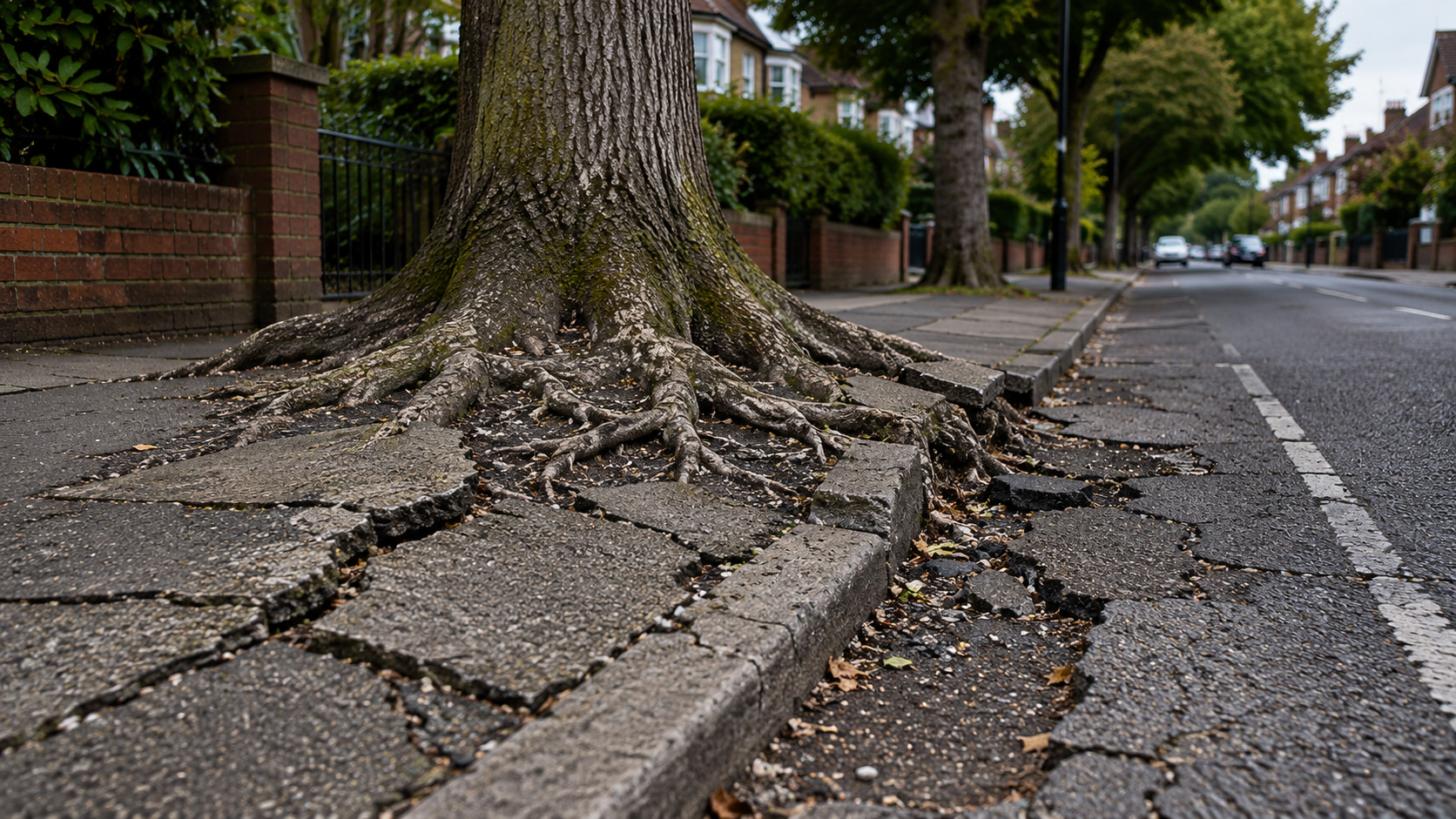
In reality, roots rarely break healthy pavement on their own. Instead, they naturally seek moisture and oxygen, growing into existing joints, tiny cracks and weak points within the road structure. As the roots expand over time, they gradually widen these openings, lifting the surface and creating uneven ground.
This slow process often continues for years before becoming visible.
Why Roads and Pavements Begin to Lift
As roots increase in diameter, they exert upward pressure on the pavement above. This movement creates raised sections, uneven surfaces and visible cracking.
The problem is particularly common where mature trees are located close to roads, footpaths, car parks or commercial entrances.
Even a small amount of vertical movement can create trip hazards for pedestrians and uncomfortable driving conditions for vehicles.
Professional commercial surfacing projects take nearby vegetation into account when designing new road layouts.
Water Makes the Problem Worse
Root damage rarely acts alone. Once the surface begins to crack, rainwater gains access to the lower layers of the pavement.
The combination of expanding roots and water ingress weakens the sub-base, reducing its ability to support traffic loads. During winter, freeze-thaw cycles further enlarge cracks, accelerating deterioration.
Eventually, what began as minor root movement can develop into widespread structural failure.
Pavements Are Often More Vulnerable
Footpaths usually have thinner construction than roads, making them especially susceptible to tree root movement.
As roots grow beneath paving slabs or asphalt footways, the surface begins to heave. This creates uneven walking surfaces that increase the risk of trips and falls.
For schools, business parks and public spaces, these hazards can become significant liability concerns if left unresolved.
Commercial Car Parks Are Not Immune
Car parks often include landscaped islands with mature trees to improve appearance. While visually attractive, these trees may eventually affect nearby parking bays, kerbs and access roads.
Repeated vehicle loading on already lifted asphalt accelerates cracking and surface fatigue.
Where damage becomes extensive, professional tarmac installation may be required after root management and structural repairs have been completed.
Signs to Look Out For
Tree root damage usually develops gradually, making routine inspections particularly important.
Warning signs include raised sections of pavement, cracks radiating away from nearby trees, uneven kerb lines, recurring surface defects and localised areas where water begins to collect after rainfall.
Identifying these issues early allows corrective action before more extensive reconstruction becomes necessary.
Can the Problem Be Prevented?
Preventing root damage begins long before the road is built. Careful tree selection, appropriate planting distances and root barrier systems all help reduce future risk.
When constructing new roads or car parks, contractors should consider the expected growth of nearby trees rather than simply their current size.
For existing sites, regular inspections allow early intervention before roots cause widespread structural damage.
Why Simple Repairs May Not Last
Repairing only the visible surface without addressing the underlying root problem often provides only temporary results.
If roots continue growing beneath the repaired area, new cracks and lifting are likely to reappear.
Similarly, repeated pothole repairs may restore safety in the short term, but they will not solve the underlying cause if tree roots remain active beneath the pavement.
A long-term solution requires both structural repair and appropriate tree management.
Protecting Roads While Preserving Trees
In many cases, removing a mature tree is neither desirable nor necessary. Modern engineering techniques allow roads and pavements to be repaired while minimising harm to valuable trees.
Solutions may include root pruning under specialist supervision, installing root barriers, redesigning drainage or reconstructing affected sections using stronger pavement designs.
Balancing infrastructure protection with environmental responsibility often produces the best long-term outcome.
Conclusion
Tree roots are one of the most overlooked causes of road and pavement deterioration in the UK. Rather than breaking through solid asphalt, they exploit small weaknesses, gradually lifting the surface and allowing water to penetrate the road structure.
By recognising the early warning signs and addressing problems before they become severe, property owners can avoid costly reconstruction while protecting both their infrastructure and the surrounding landscape.
Regular inspections, thoughtful planning and professional repairs remain the most effective way to manage tree root road damage and extend the lifespan of roads and pavements.