

- admin
- No Comments
- June 30, 2026
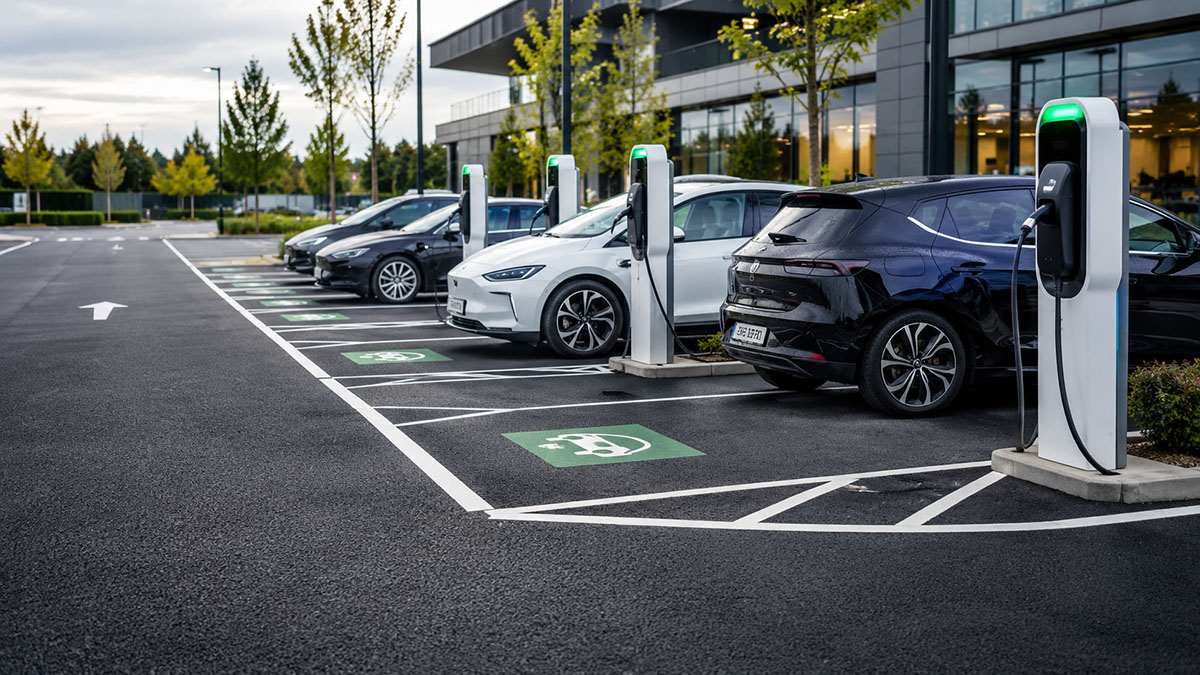
How EV Charging Areas Are Changing Commercial Car Park Design
Electric vehicles are no longer a niche choice in the UK. As businesses, retailers and commercial property owners invest in charging infrastructure, car parks are being redesigned to accommodate changing vehicle technology and customer expectations.
Installing EV charging points involves far more than simply adding charging units. The layout, surfacing, drainage and long-term durability of the entire car park must be considered. A design that worked perfectly a decade ago may no longer provide the flexibility needed for modern electric vehicle use.
Understanding how EV charging is influencing commercial car park design helps property owners make informed decisions that protect both their investment and the future usability of their sites.
Why EV Charging Changes More Than Parking Spaces
Traditional car parks were designed around vehicle access, circulation and parking capacity. Introducing EV charging adds another layer of infrastructure that includes electrical connections, protective barriers, cable routes and longer vehicle dwell times.
Drivers charging their vehicles often remain parked for much longer than those using standard parking bays. This changes traffic flow, parking turnover and how individual bays are used throughout the day.
Professional commercial surfacing projects increasingly consider these operational changes from the earliest design stages.
Heavier Vehicles Mean Greater Surface Demands
Electric vehicles generally weigh more than comparable petrol or diesel models because of their battery packs. While the additional weight varies between manufacturers, repeated loading from heavier vehicles places greater pressure on asphalt surfaces.
Charging bays also experience prolonged static loading as vehicles remain stationary for extended periods while charging.
To accommodate these demands, contractors may specify stronger pavement construction and greater structural depth than would traditionally be used in standard parking areas.
Planning for Underground Infrastructure
Every EV charging installation requires electrical infrastructure beneath the surface. Cable ducts, service trenches and connection chambers must all be carefully integrated into the construction process.
Poor reinstatement after trenching can create weak points that eventually crack or settle under traffic. Planning underground services before surfacing begins helps minimise future disruption and protects the long-term integrity of the car park.
High-quality tarmac installation ensures these service routes are reinstated correctly and compacted to the same standard as the surrounding pavement.
Drainage Becomes Even More Important
Water management has always been a key element of car park design, but it becomes even more important when electrical infrastructure is introduced.
Standing water around charging equipment can create maintenance issues and reduce user confidence. Proper gradients, drainage channels and surface falls help direct water safely away from charging bays and pedestrian areas.
Effective drainage also protects the underlying road structure by reducing moisture penetration and extending pavement life.
Accessibility Is Now a Bigger Priority
Modern EV charging bays are often designed with accessibility in mind. Wider parking spaces, level access routes and smooth surfacing improve usability for all drivers, including those with reduced mobility.
The quality of the surface plays an important role. Uneven or damaged asphalt can make charging equipment more difficult to access while also increasing the risk of trips and falls.
A well-maintained surface contributes to both safety and customer satisfaction.
Future Expansion Should Be Considered Today
Many commercial properties begin with only a handful of EV charging bays. However, as electric vehicle ownership continues to grow, additional charging points may be required in the future.
Planning future cable routes, spare electrical capacity and flexible parking layouts during the initial construction phase can significantly reduce future costs.
A car park designed with expansion in mind is less likely to require extensive excavation and resurfacing later.
Maintenance Remains Essential
Like any commercial surface, EV charging areas require ongoing maintenance to preserve their appearance and structural integrity.
Small cracks should be repaired quickly to prevent water entering around underground service routes. Damaged areas should never be ignored simply because the charging equipment remains operational.
Prompt pothole repairs and regular inspections help protect both the pavement and the valuable infrastructure installed beneath it.
Investing in a Future-Ready Car Park
The growth of electric vehicles is changing how commercial car parks are designed, constructed and maintained. Businesses that invest in future-ready infrastructure today are better positioned to meet customer expectations and adapt to changing transport trends.
By combining durable surfacing, effective drainage, thoughtful layouts and scalable electrical infrastructure, property owners can create car parks that remain functional for many years to come.
Conclusion
EV charging is transforming commercial car park design across the UK. Increased vehicle weights, underground infrastructure, accessibility requirements and future expansion all place new demands on surfacing and construction.
Planning these elements from the outset helps businesses avoid costly alterations, improve customer experience and protect the long-term value of their property. As electric vehicles become increasingly common, designing car parks with the future in mind is no longer optional—it is a smart investment.