
- admin
- No Comments
- June 26, 2026
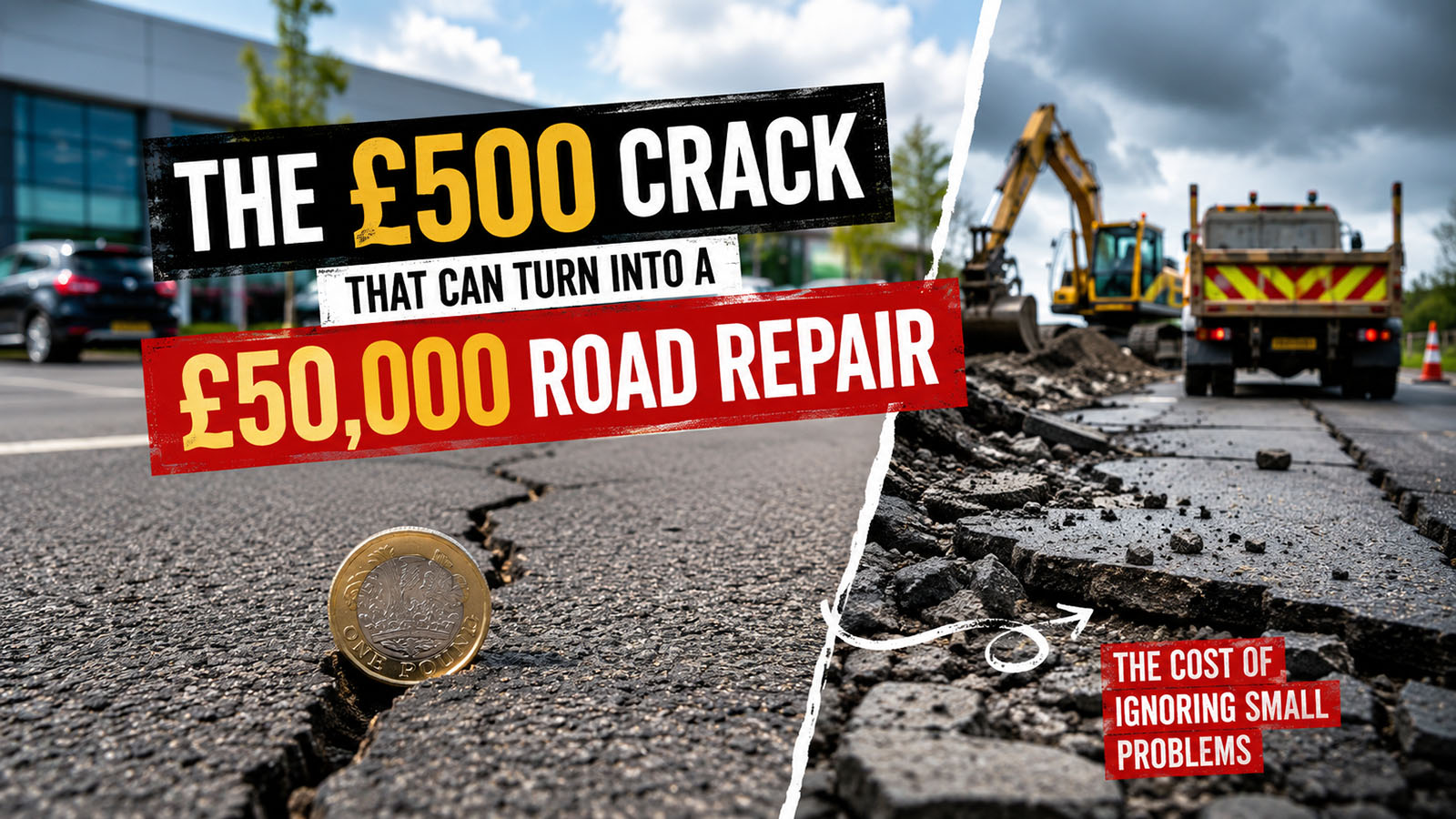
The £500 Crack That Can Turn Into a £50,000 Road Repair
A small crack in a commercial road or car park might seem insignificant. It doesn’t stop vehicles from passing, it doesn’t create an immediate hazard, and it may appear to be nothing more than cosmetic wear. Because of this, many property owners postpone repairs, believing the problem can wait until the next maintenance budget.
Unfortunately, road surfaces don’t deteriorate in a straight line. Once a crack appears, the condition of the road can decline surprisingly quickly. What might cost a few hundred pounds to repair today can eventually require tens of thousands of pounds in structural reconstruction.
Understanding why this happens is the key to protecting your investment.
A Crack Is an Opening Into the Road Structure
The asphalt surface is designed to act as a waterproof barrier. Its job is not only to carry traffic but also to protect the layers beneath from moisture.
Once a crack forms, that protective barrier is broken.
Rainwater begins to seep into the lower layers of the pavement. Because the UK experiences frequent rainfall throughout the year, roads often remain damp beneath the surface for extended periods. Every period of wet weather allows more moisture to penetrate the structure.
At first, this damage is invisible.
Water Is the Real Enemy
Contrary to popular belief, vehicles are not always the biggest cause of road failure. Water causes more long-term structural damage than almost any other factor.
As moisture reaches the binder course and sub-base, it reduces the strength of the foundation supporting the road. Heavy vehicles passing over weakened ground create movement within the structure, even if the surface still appears relatively intact.
During winter, freeze-thaw cycles make the situation even worse. Water trapped inside the pavement expands when frozen and contracts when temperatures rise. This repeated movement gradually widens cracks and weakens the surrounding asphalt.
Small Repairs Prevent Major Reconstruction
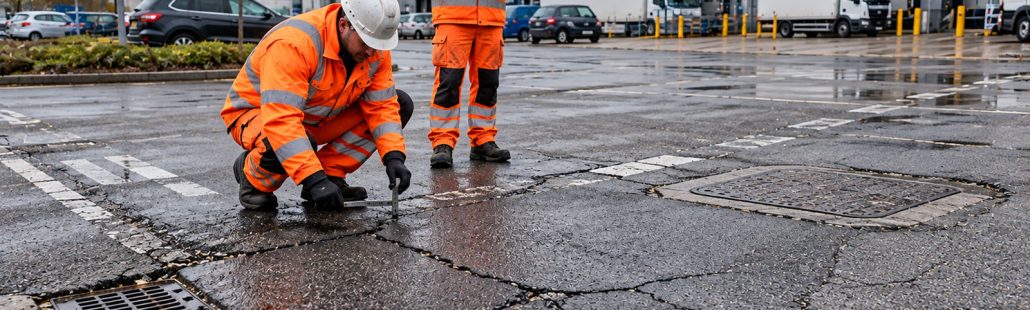
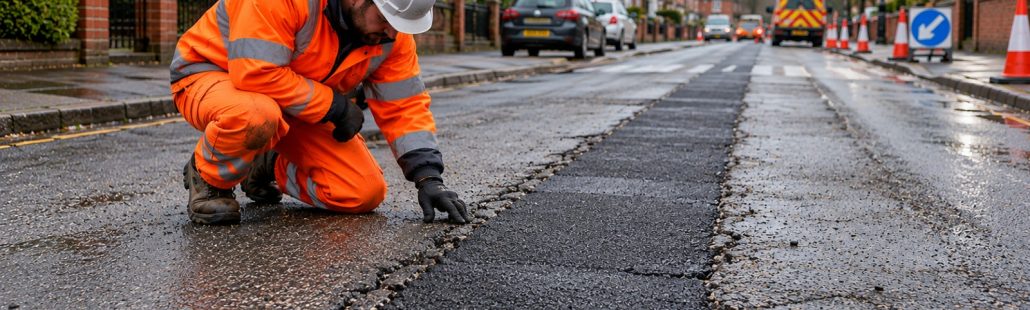
Repairing a single crack is usually straightforward. Sealing it early prevents further water ingress and preserves the strength of the underlying pavement.
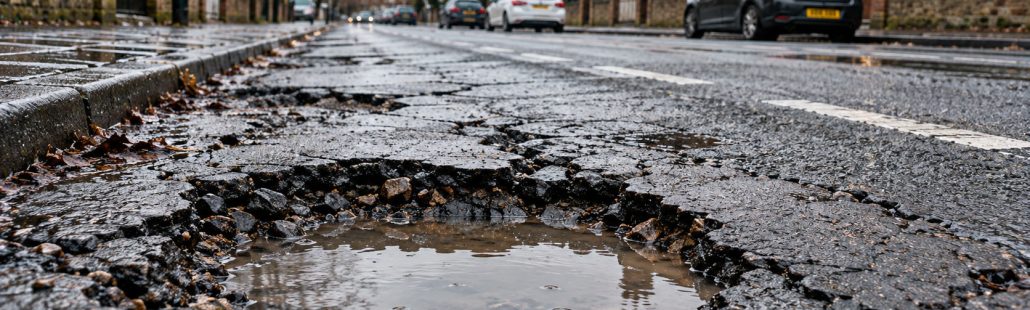
Ignoring the crack allows deterioration to spread beneath the surface. Eventually, multiple cracks appear, sections begin to sink, and potholes develop.
Routine inspections and timely pothole repairs are often enough to prevent widespread structural damage that requires extensive reconstruction.
Surface Damage Is Only Part of the Story
Many road failures begin beneath the asphalt long before obvious defects appear.
The surface may still look relatively acceptable while the sub-base is gradually losing strength. Once the foundation becomes unstable, resurfacing alone may no longer solve the problem.
This is why experienced contractors investigate the underlying structure rather than simply treating visible defects.
Professional commercial surfacing focuses on identifying the root cause of deterioration instead of repeatedly repairing the symptoms.
Why Costs Increase So Quickly
The financial difference between early maintenance and delayed intervention is considerable.
An isolated crack may require little more than localised repair work. However, once water has weakened the foundation, repairs become significantly more complex.
Instead of treating the surface, contractors may need to remove damaged asphalt, excavate unstable material, rebuild the sub-base and install entirely new surfacing layers.
The longer deterioration continues, the larger the repair area becomes.
Commercial Sites Face Greater Risks
Industrial estates, retail parks and commercial premises often experience heavy vehicle traffic throughout the day.
Delivery vehicles, refuse collection trucks and HGVs apply repeated loading to weakened pavement sections. Every vehicle passing over a compromised area increases movement within the structure.
Professional tarmac installation is designed to withstand these demands, but even the strongest road requires maintenance to remain fully protected.
The Cost of Delaying Maintenance
Many businesses postpone repairs to reduce short-term expenditure. Unfortunately, deferred maintenance rarely saves money.
Road defects continue to grow regardless of maintenance budgets. What begins as a relatively inexpensive preventative repair can eventually require complete reconstruction, traffic management, operational disruption and significant business downtime.
Preventative maintenance almost always delivers the lowest whole-life cost.
A Planned Maintenance Strategy Pays for Itself
The most cost-effective road maintenance programmes focus on early intervention.
Regular inspections identify developing defects before they become structural problems. Small repairs can then be scheduled during quieter operational periods, reducing disruption while extending the lifespan of the road.
This proactive approach allows property owners to budget with confidence instead of responding to emergency failures.
Conclusion
A small crack may seem harmless today, but it is often the first visible sign of a much larger problem developing beneath the surface. Once water enters the pavement structure, deterioration accelerates rapidly, particularly under heavy traffic and changing weather conditions.
By repairing defects early, maintaining effective drainage and carrying out regular inspections, commercial property owners can avoid unnecessary reconstruction costs and significantly extend the life of their roads.
When it comes to road maintenance, the smallest problems are often the ones that deserve the fastest response.