
- Minisgreat
- No Comments
- August 3, 2026
How Surface Texture Reduces Traffic Noise
Traffic noise is one of the most common complaints from businesses, homeowners and property managers located near busy roads. While engines, exhaust systems and vehicle speed all contribute to noise levels, many people are surprised to learn that the road surface itself plays an equally important role.
As tyres roll across asphalt, they generate vibrations and compress air trapped between the tyre tread and the road surface. The texture of the pavement directly affects how much noise is created during this process.
Understanding how low noise road surfacing UK solutions work can help property owners appreciate why modern road design focuses on more than just durability.
Where Road Noise Actually Comes From
At lower speeds, engine noise is often the dominant source of sound. However, as vehicle speeds increase, tyre-to-road interaction becomes the primary cause of traffic noise.
Every tyre tread block repeatedly contacts the road surface before lifting away again. This constant impact creates vibrations while also forcing air in and out of the tiny gaps between the tyre and the pavement.
The rougher or more irregular the surface texture, the greater the potential for noise generation.
Why Surface Texture Matters
Not all asphalt surfaces have the same texture.
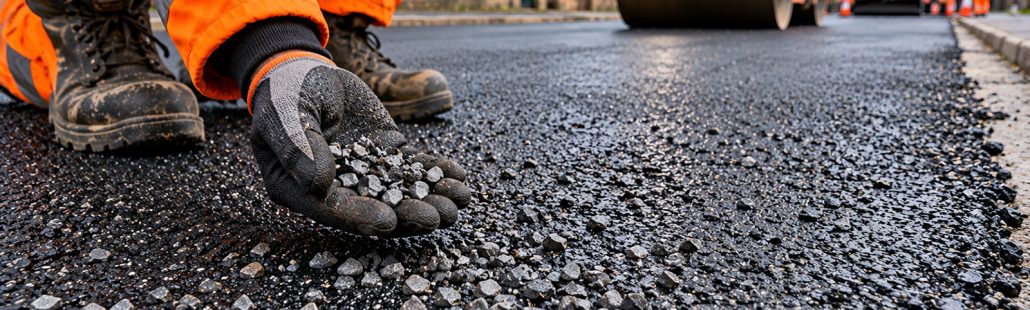
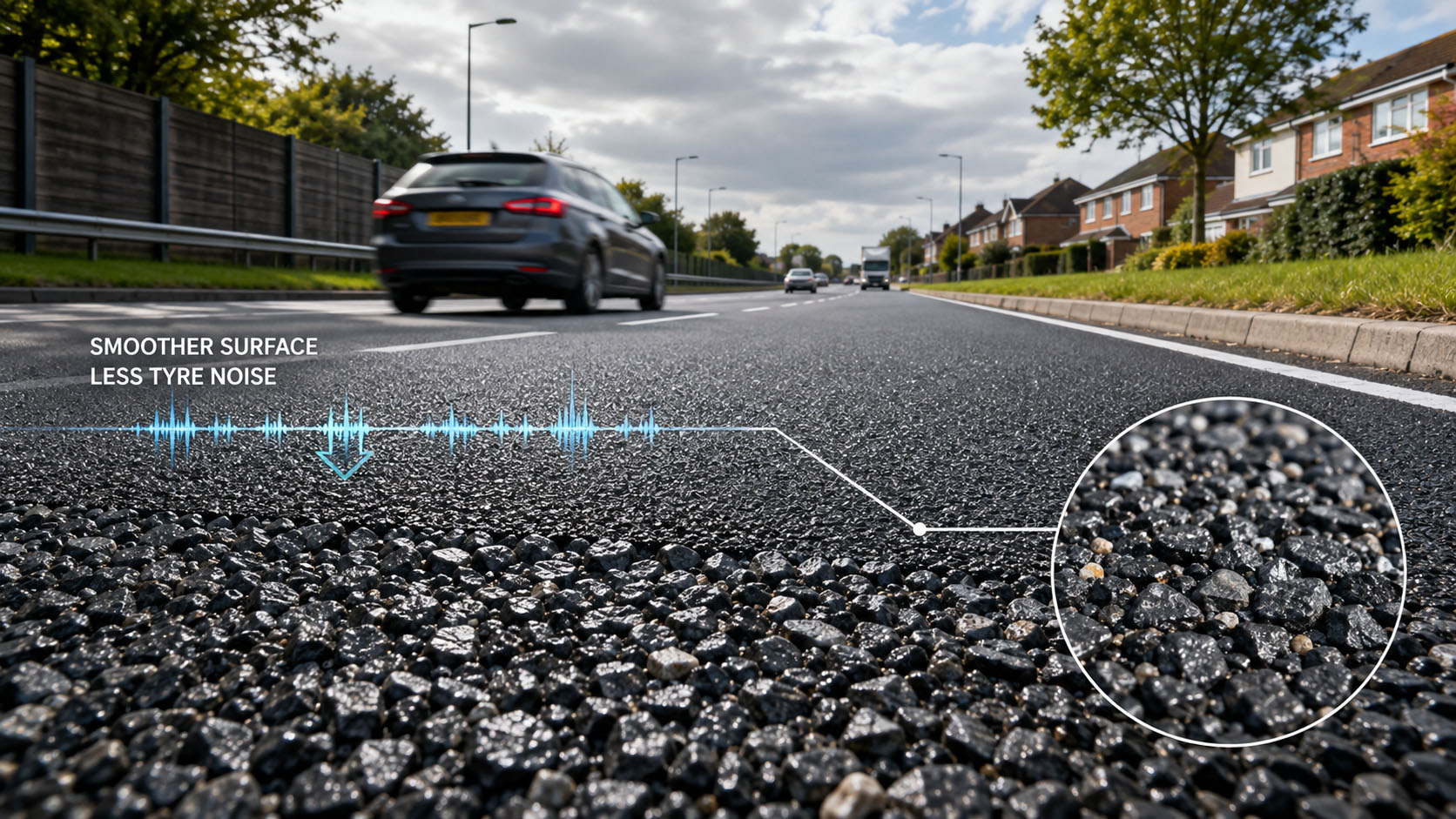
Some mixes contain larger aggregate particles that create a coarser finish, while others use smaller aggregates to produce a smoother, more uniform surface.
Carefully designed surface textures reduce vibration and allow air to escape more gradually from beneath vehicle tyres. This helps lower overall traffic noise without affecting the structural strength of the road.
Professional machine lay tarmac provides the consistent finish needed to achieve uniform surface texture across large areas.
The Role of Asphalt Mix Design
Reducing road noise is not simply a matter of making the surface smoother.
Engineers carefully balance aggregate size, bitumen content and surface voids to achieve the desired combination of durability, skid resistance and acoustic performance.
Open-textured asphalt, for example, contains interconnected air voids that absorb some of the sound generated by tyre contact while also allowing rainwater to drain more effectively.
Selecting the correct asphalt mix depends on the expected traffic levels and intended use of the road.
Smoother Surfaces Create Less Vibration
Vehicles travelling over uneven surfaces experience continuous small vibrations.
These vibrations travel through the tyres and suspension before being released as sound.
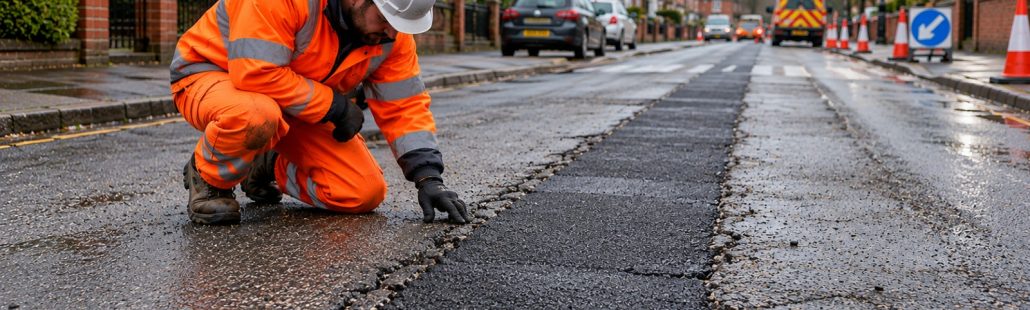
A well-laid, even surface allows tyres to roll more smoothly, reducing vibration and therefore reducing the amount of noise generated.
This is one reason why newly resurfaced roads often sound noticeably quieter than older roads with worn or uneven asphalt.
Road Maintenance Helps Keep Noise Levels Down
Noise reduction is not only about installing the correct surface—it also depends on keeping that surface in good condition.
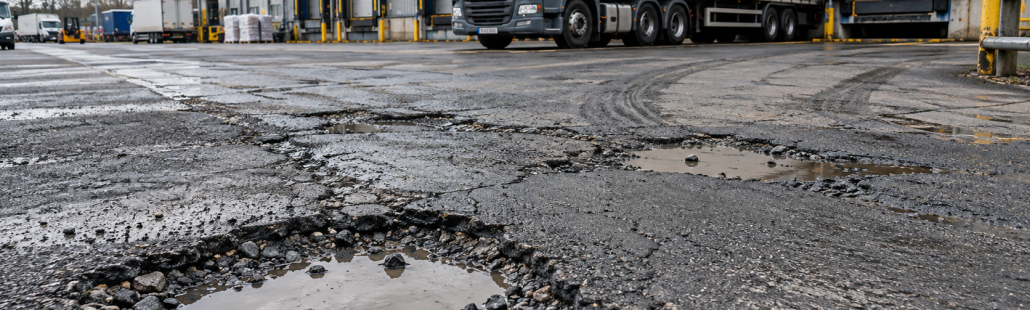
As asphalt ages, cracks, potholes and surface fretting create a rougher texture that increases tyre vibration.
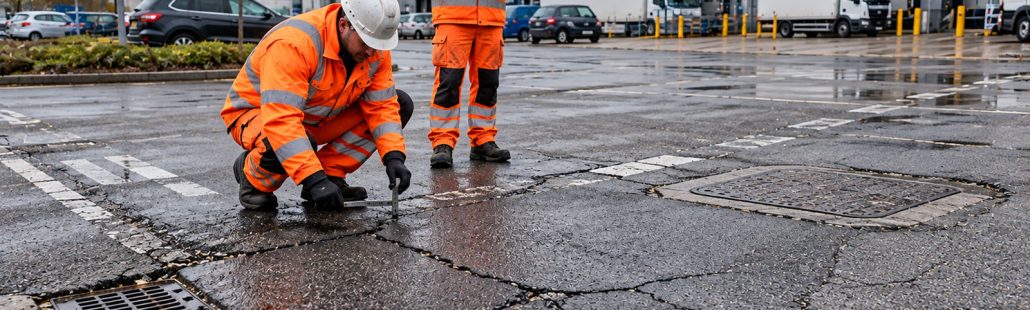
Timely pothole repairs help maintain a smoother running surface while preventing deterioration that could increase traffic noise.
Preventative maintenance benefits both road longevity and acoustic performance.
Wet Roads Can Sound Different
Many drivers notice that traffic often sounds louder during wet weather.
Water changes how tyres interact with the road surface by creating additional spray and increasing the movement of trapped air beneath the tyre tread.
Some modern low-noise asphalt mixes are specifically designed to drain water efficiently, helping reduce both spray and noise during rainfall.
Effective drainage therefore contributes to both safety and acoustic performance.
Commercial Sites Benefit Too
Noise reduction is not only important for public highways.
Industrial estates, business parks, distribution centres and retail developments all benefit from quieter road surfaces.
Reducing traffic noise creates a more comfortable working environment for employees while improving the experience for customers and nearby residents.
Professional commercial surfacing increasingly considers acoustic performance alongside durability, drainage and appearance during project design.
Balancing Noise Reduction with Safety
A perfectly smooth road is not necessarily the safest option.
Road surfaces still require sufficient texture to provide tyre grip, especially during wet weather.
Engineers therefore design asphalt mixes that achieve an effective balance between noise reduction, skid resistance, drainage and structural performance.
This careful balance ensures quieter roads without compromising vehicle safety.
The Future of Low-Noise Surfacing
As traffic volumes continue to increase, reducing environmental noise is becoming a greater priority across the UK.
Advances in asphalt technology continue to improve acoustic performance while maintaining durability and reducing maintenance requirements.
Future developments may include even more sophisticated aggregate designs, recycled materials and innovative surfacing technologies aimed at creating quieter, longer-lasting roads.
Conclusion
The texture of a road surface has a significant influence on how much traffic noise is generated. By reducing tyre vibration, improving airflow beneath tyres and maintaining a smoother running surface, low noise road surfacing UK solutions help create quieter environments for businesses, residents and road users alike.
Combined with quality installation and proactive maintenance, carefully designed surface textures improve comfort without compromising safety or durability. As road engineering continues to evolve, acoustic performance is becoming just as important as strength and longevity.