
- Minisgreat
- No Comments
- October 8, 2026
Why Are Delivery Areas More Prone to Potholes?
A commercial delivery area can experience more surface damage in a few years than some residential roads experience over a much longer period.
At first, this might seem surprising.
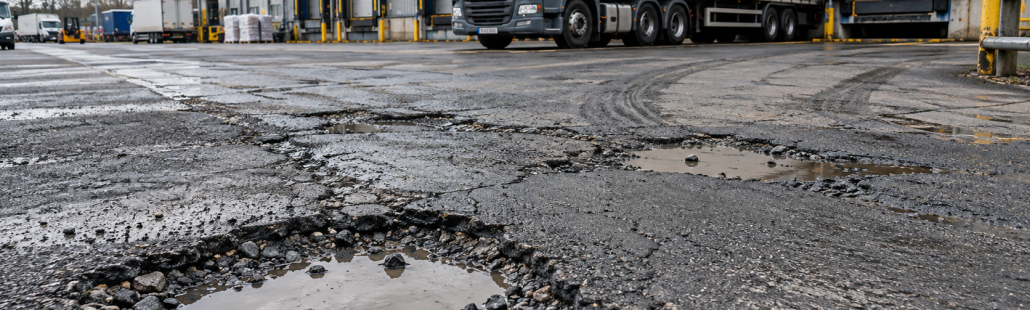
A delivery yard may have relatively little traffic compared with a busy public road. Yet the surface around loading bays, warehouse entrances and goods-in areas can deteriorate rapidly, developing cracks, depressions and recurring potholes.
The difference is not simply the number of vehicles using the road. It is the type of vehicles, how they move and where they repeatedly apply pressure.
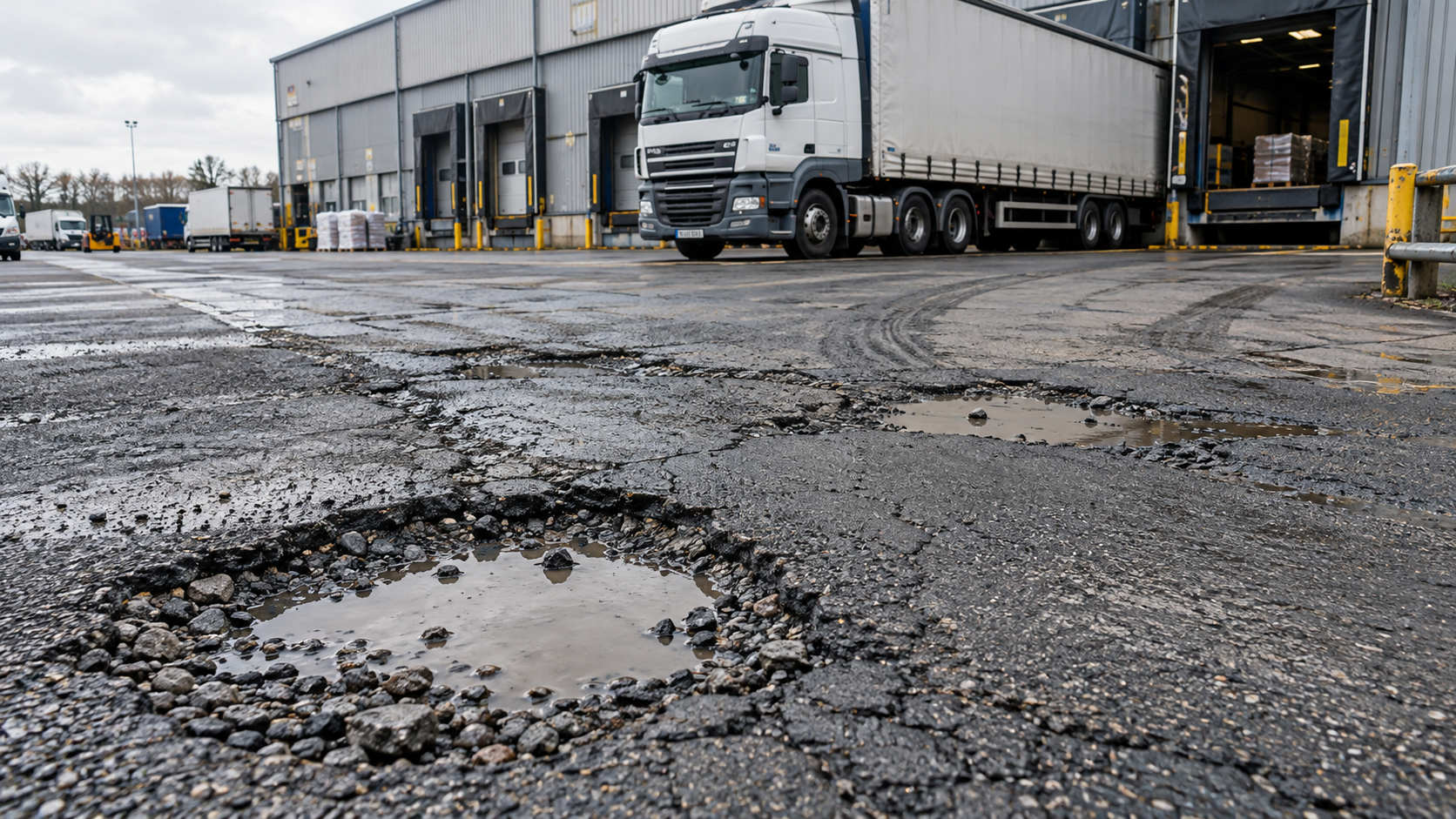
Delivery area potholes UK businesses encounter are often the result of several factors working together. Heavy vehicle loading, slow-speed turning, stationary loads, braking forces and drainage problems can all place considerable stress on a relatively small area of pavement.
Understanding these causes is essential for choosing repairs that last rather than repeatedly filling the same holes.
Delivery Vehicles Are Much Heavier Than Ordinary Cars
The most obvious difference between a domestic driveway and a commercial delivery area is the weight of the vehicles using it.
A typical passenger car places comparatively modest demands on a properly constructed road.
A fully loaded delivery lorry or heavy goods vehicle can impose substantially greater axle loads.
Those loads are transferred through the tyres into the road surface and then distributed through the pavement layers underneath.
If the pavement was originally designed for lighter vehicles, regular deliveries can place it under demands beyond its intended capacity.
Why Axle Loads Matter More Than Vehicle Size
Vehicle size alone does not determine how much damage a road experiences.
The way weight is distributed across axles and tyres is particularly important.
A heavily loaded vehicle concentrates substantial forces into relatively small tyre contact areas. The pavement must distribute these loads effectively through its asphalt layers, foundation and underlying ground.
When the construction is inadequate, repeated loading can cause deformation and cracking.
Once cracks develop, water can enter the pavement and contribute to further deterioration.
Eventually, the damaged area may begin breaking apart and form a pothole.
Delivery Areas Experience Repeated Loading in Exactly the Same Places
One of the biggest differences between a delivery yard and a normal road is the concentration of traffic.
On a public road, vehicles generally travel along a continuous route.
In a delivery yard, lorries frequently follow almost identical paths every day.
They enter through the same gate, approach the same loading bays, reverse into similar positions and leave along the same exit route.
This means particular sections of the pavement experience repeated loading while other areas receive very little traffic.
Why Repeated Wheel Paths Cause Damage
When heavy tyres repeatedly travel over the same section of asphalt, the pavement experiences cumulative stress.
If the material or supporting layers begin deforming, shallow wheel ruts may develop.
These depressions can collect water, increasing the risk of moisture entering existing cracks.
As deterioration continues, the affected asphalt can begin breaking apart.
The result is often a pothole positioned directly within a regular lorry wheel path.
This is why damage in delivery areas frequently appears in predictable locations rather than being distributed evenly across the entire yard.
Tight Turning Creates Additional Stress
Heavy vehicles do not simply drive straight into loading areas.
They frequently perform tight manoeuvres to reach loading bays, parking spaces and unloading positions.
These movements introduce forces that are different from those experienced during straightforward driving.
When a vehicle turns, its tyres exert sideways forces on the pavement.
The effect can be particularly significant with multi-axle vehicles because the wheels do not all follow exactly the same path through a tight turn.
How Tyre Scrubbing Damages Asphalt
Tyre scrubbing occurs when tyres experience sideways movement or friction against the road surface during manoeuvring.
In commercial yards, this commonly happens when lorries turn sharply at low speeds.
The forces can place substantial stress on the asphalt surface.
Over time, vulnerable areas may begin showing signs of deformation, cracking or surface material loss.
Once the pavement becomes damaged, repeated vehicle movements can accelerate deterioration.
Professional commercial surfacing should therefore consider vehicle turning movements when determining the appropriate pavement construction.
Stationary Lorries Can Also Damage the Surface
Road damage is often associated with moving traffic, but stationary vehicles can create problems too.
A loaded delivery vehicle may remain parked in the same position while goods are unloaded.
During this period, its weight continues acting on the pavement.
The effect becomes particularly relevant where the asphalt is insufficiently resistant to deformation or the supporting layers are weak.
Repeated stationary loading can contribute to depressions in vulnerable areas.
These depressions may eventually become locations where water accumulates and deterioration accelerates.
Loading Bays Experience Concentrated Stress
Loading bays are among the most demanding locations within many commercial sites.
Vehicles repeatedly approach the same position, brake, reverse and stop.
The pavement immediately outside a loading bay may therefore experience several types of loading within a relatively small area.
There is the vertical pressure from vehicle weight, the horizontal stress associated with braking and reversing, and the repeated loading of almost identical wheel positions.
If the area was not designed for these conditions, deterioration can develop more quickly than elsewhere on the site.
This explains why potholes often appear directly in front of warehouse loading doors while nearby sections of the yard remain comparatively sound.
Braking and Acceleration Increase Surface Wear
Delivery vehicles frequently brake heavily when approaching loading bays, security barriers and site junctions.
They then accelerate again when leaving.
These actions introduce additional forces into the road surface.
During braking, tyres transfer horizontal forces into the pavement. Acceleration produces forces in the opposite direction.
Repeated movements can contribute to surface deformation, particularly where the asphalt is already weakened.
Over time, the affected area may develop cracking, rippling or localised material loss.
The combination of heavy loading and repeated braking makes these locations particularly vulnerable.
Weak Foundations Are a Major Hidden Cause
Not every pothole begins with a problem in the asphalt itself.
In some delivery areas, the underlying pavement construction is the main weakness.
A road or yard surface relies on the layers beneath it to distribute vehicle loads into the ground.
If the foundation is inadequate, heavy vehicles can cause excessive movement.
The asphalt above may initially remain intact, but repeated flexing can eventually produce cracks.
Water can then enter the damaged area, making the situation worse.
Why Surface Repairs Cannot Fix Weak Ground
Imagine filling a pothole where the asphalt has broken away because the underlying foundation is moving.
The new repair material may initially restore the surface.
However, if the weak foundation remains unchanged, heavy vehicles continue applying stress to the same location.
The repaired area can eventually crack or deform again.
This is why effective pothole repairs sometimes require the removal of damaged material below the visible surface.
The depth of the repair should reflect the actual extent of deterioration.
Poor Drainage Makes Delivery Area Potholes Worse
Water is one of the most important contributors to pavement deterioration.
Commercial delivery yards often contain large areas of hard surfacing.
Rainwater needs to travel across these surfaces towards suitable drainage points.
If the falls are inadequate, drainage gullies become blocked or the pavement begins settling, standing water can develop.
Water collecting around cracks and depressions creates additional problems.
Why Puddles Often Appear Before Potholes
A shallow depression may initially seem harmless.
However, when rainwater repeatedly collects in the same location, it can indicate that the pavement has already started deforming.
If cracks are present, water may enter the pavement structure.
Combined with continued heavy vehicle loading, moisture can contribute to the weakening and breakdown of affected areas.
The depression may gradually deepen until material begins breaking away.
By the time a pothole becomes obvious, the deterioration may have been developing for months.
Why Potholes Often Form Near Drainage Gullies
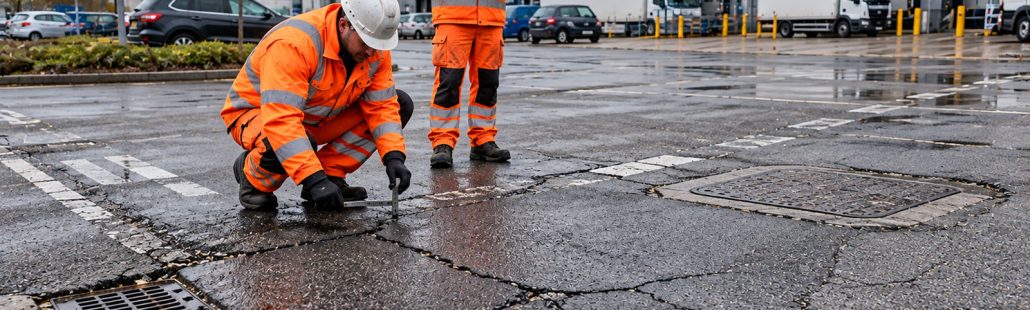
Drainage gullies are common features in commercial yards, but the surrounding pavement can be vulnerable if the construction is inadequate.
The area around a gully creates a transition between different materials and structures.
If the surrounding backfill settles, the gully frame moves or water enters gaps around the installation, cracking may develop.
Heavy delivery vehicles repeatedly travelling across the area can then accelerate the damage.
Potholes forming around drainage features should therefore prompt an assessment of the surrounding construction as well as the surface.
Simply filling the hole may not address the reason the pavement is moving.
Older Yards May Not Have Been Designed for Modern Deliveries
Commercial sites often change how they operate over time.
A yard originally designed for smaller vehicles may later begin accommodating larger delivery lorries.
A warehouse may increase its delivery frequency, extend its operating hours or introduce heavier vehicles.
The pavement, however, may remain exactly as it was when the site was first constructed.
This creates a mismatch between the original design and current usage.
A surface that performed adequately for years under lighter traffic may begin deteriorating once vehicle demands increase.
Reviewing the actual traffic using the site is therefore important when planning resurfacing or repairs.
Why New Tarmac Can Still Develop Potholes
A newly surfaced delivery yard should not automatically be expected to remain free from damage if the underlying pavement is unsuitable.
Placing fresh asphalt over an existing weak surface can improve its appearance, but it does not necessarily correct structural problems.
If the original foundation continues moving, cracking may eventually appear through the new layer.
This is why professional tarmac installation begins with assessing the condition and suitability of the supporting construction.
The appropriate thickness and specification depend on how the area will be used.
A lightly trafficked access road and a heavily used loading bay may require different pavement designs even when they are located on the same commercial site.
Why Potholes Return After Being Repaired
Recurring potholes are particularly common where repairs address only the visible defect.
The damaged material may be removed and replaced, leaving the surface smooth again.
However, the underlying cause may remain.
Heavy vehicle loading, inadequate foundations, poor drainage and repeated turning forces can continue acting on the same location.
If the repair does not account for these conditions, deterioration may return.
The fact that a pothole has reappeared does not necessarily mean the repair material itself was defective.
It may indicate that the original problem was more extensive than the visible hole suggested.
How to Identify High-Risk Areas in a Delivery Yard
The pattern of damage often provides valuable information.
Cracks and potholes appearing along regular wheel paths may indicate repeated loading or deformation.
Damage concentrated around loading bays can suggest braking, stationary loading or turning stress.
Potholes near drainage gullies may point towards settlement or water-related problems.
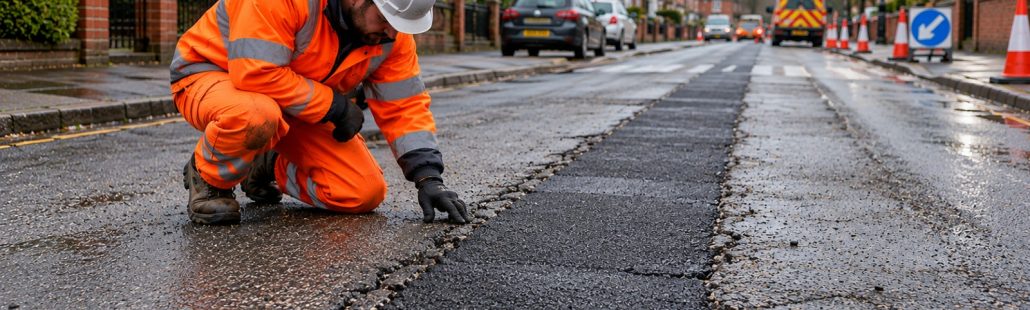
Repeated cracking along an old excavation line can indicate movement associated with a previous utility trench.
Understanding these patterns helps site managers decide where closer investigation is needed.
It also reduces the risk of treating every pothole as an unrelated maintenance issue.
When Is Full Resurfacing Better Than Patching?
Patching can be appropriate when damage is localised and the surrounding pavement remains structurally sound.
However, repeated repairs across a heavily trafficked delivery area can become increasingly disruptive.
If numerous sections are cracking, deforming or developing potholes, the problem may extend beyond isolated surface defects.
In those circumstances, more extensive resurfacing or reconstruction may provide better long-term performance.
Where the foundation remains sound, replacing deteriorated asphalt layers may be sufficient.
If the underlying construction has failed, deeper repairs may be required.
The correct approach depends on the condition of the pavement rather than the number of visible potholes alone.
Why Installation Quality Matters in Commercial Yards
Commercial delivery areas place significant demands on surfacing materials.
The asphalt needs to be suitable for the intended loading, and the supporting layers must provide adequate stability.
Correct installation also matters.
Poor compaction, inconsistent thickness and inadequate preparation can create weaknesses that become apparent under repeated heavy vehicle movements.
For larger commercial areas, professional machine lay tarmac can help achieve controlled placement and consistent surface levels.
However, machine laying alone does not guarantee long-term performance.
The materials, foundation, drainage and pavement specification all need to suit the site’s operational requirements.
The Operational Cost of Delivery Area Potholes
Potholes in a commercial delivery area are more than an appearance issue.
They can affect how vehicles move around the site and create hazards for staff, visitors and delivery drivers.
Uneven surfaces can also interfere with activities involving pallet trucks, forklifts and other materials-handling equipment, depending on the layout and operating arrangements.
Repeated repairs may require sections of the yard to be closed temporarily.
For busy businesses, that disruption can affect deliveries and loading schedules.
This is why preventive maintenance and timely investigation can be more practical than waiting until deterioration becomes widespread.
Preventing Potholes Starts Beneath the Surface
The most effective way to reduce recurring potholes is to understand what is causing the pavement to fail.
For some sites, the priority may be improving drainage.
For others, the issue may involve weak foundations, insufficient asphalt thickness or concentrated turning forces.
A delivery yard that accommodates heavy vehicles every day needs a pavement designed around those demands.
Surface condition should also be monitored so that cracks, settlement and drainage defects are identified before they develop into larger failures.
Why Delivery Areas Need a Different Approach to Road Maintenance
Delivery area potholes UK businesses experience are rarely caused by one factor alone.
Heavy axle loads, repeated wheel paths, sharp turning movements, braking forces and stationary loading all place unusual demands on the pavement.
When these forces combine with poor drainage or weak supporting layers, deterioration can accelerate quickly.
That explains why a relatively quiet loading yard may develop more serious potholes than a road carrying far more vehicles.
The important difference is how those vehicles use the surface.
Effective maintenance therefore requires more than replacing missing asphalt. It requires understanding the traffic, the construction underneath and the conditions that allowed the damage to develop.
When those factors are properly addressed, commercial delivery areas have a much better chance of providing reliable, long-term service.