
- admin
- No Comments
- July 22, 2026
The 10-Minute Road Inspection Every Property Owner Should Do
Roads, car parks and access routes are among the most valuable assets on any commercial property. They support daily operations, accommodate heavy traffic and create the first impression for customers and visitors. Yet they’re often overlooked until a pothole appears or a vehicle is damaged.
The reality is that most road failures begin as small defects that are easy to miss. A tiny crack, a blocked drain or a slight depression may not seem urgent, but these minor issues can quickly develop into major structural problems if ignored.
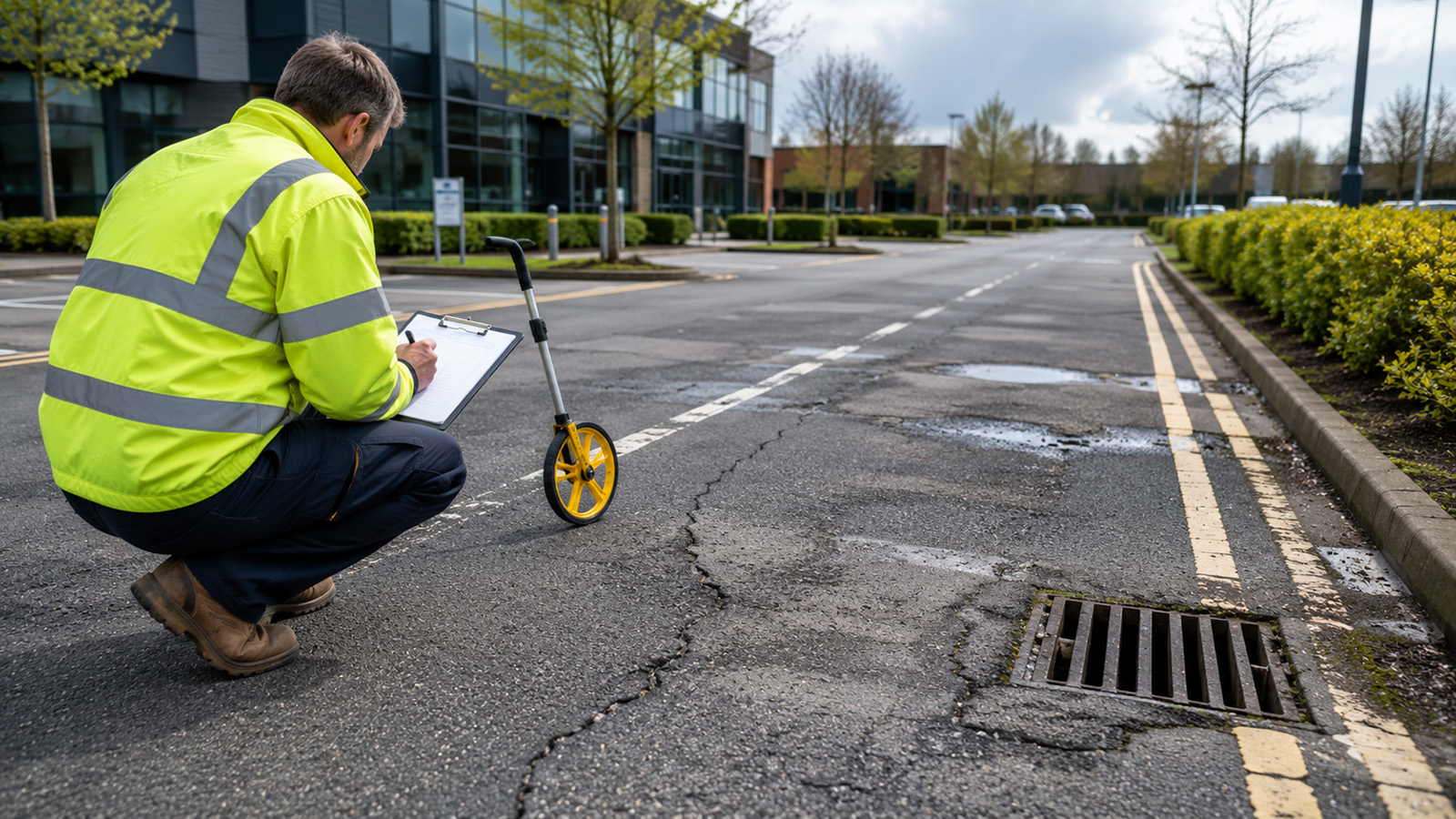
A commercial road inspection UK property owners can carry out in just ten minutes is often enough to identify early warning signs and schedule maintenance before repair costs escalate.
Start at the Entrance
The entrance road experiences some of the highest levels of stress on any commercial site. Vehicles slow down, turn into the property and often queue during busy periods.
Walk slowly along the entrance and look for visible cracks, surface depressions or areas where the asphalt has begun to crumble.
These defects often appear first because of repeated braking and turning movements.
If identified early, they can usually be repaired before affecting larger sections of the road.
Look for Standing Water
After rainfall, pay close attention to any areas where water remains on the surface.
Puddles that stay long after the rain has stopped usually indicate poor drainage, blocked gullies or slight settlement within the pavement.
Standing water gradually penetrates the asphalt and weakens the sub-base beneath, making the road more susceptible to cracking and potholes.
Professional tarmac installation incorporates carefully designed drainage, but even well-built roads should be checked regularly to ensure water continues to drain effectively.
Check for Surface Cracks
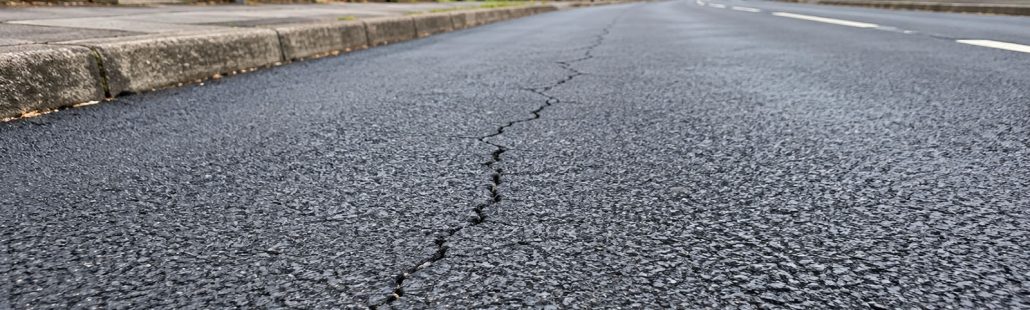
Small cracks are often the earliest indication that the pavement structure is under stress.
Even hairline cracks allow water to enter the road, particularly during the UK’s wetter months. Once moisture reaches the lower layers, deterioration accelerates rapidly.
Pay particular attention to cracks around drainage covers, utility access points and previous repair locations, as these areas are more vulnerable to movement.
Inspect High-Traffic Areas
Not every part of a road experiences the same level of wear.
Loading bays, delivery routes, junctions and turning circles are subjected to greater forces than straight road sections.
Inspect these areas carefully for rutting, loose material or slight depressions.
Professional commercial surfacing projects often reinforce these locations because they experience repeated heavy loading throughout the day.
Examine Road Edges
Road edges are frequently overlooked during routine inspections.
Look for crumbling asphalt, vegetation growing through cracks or signs that the edge is beginning to break away.
Edge deterioration often allows water to enter the pavement from the side, weakening the structure beneath the traffic lanes.
Early repairs prevent this damage spreading further into the road.
Look at Existing Repairs
Areas that have already been repaired deserve special attention.
Check whether previous patches remain level with the surrounding surface and whether new cracks have appeared around the repair edges.
Recurring defects in the same location often indicate that the underlying problem has not been fully resolved.
Repeated failures may require a more comprehensive structural assessment rather than another surface repair.
Check Drainage Features
Blocked gullies and drainage channels are one of the most common causes of premature road failure.
Leaves, dirt and debris prevent water from flowing away efficiently, increasing the amount of moisture entering the road structure.
Ensuring drainage systems remain clear is one of the simplest ways to extend pavement lifespan.
Watch for Loose Surface Material
Small stones or loose asphalt scattered across the road may indicate that the surface is beginning to break down.
This process, known as fretting, often develops before visible potholes appear.
If caught early, localised maintenance can restore the surface and prevent larger sections from deteriorating.
Prompt pothole repairs also help prevent loose material from developing into more significant defects.
Take Photos and Keep Records
A simple inspection becomes much more valuable when findings are recorded.
Taking photographs every few months allows property owners to compare changes over time and identify defects that are gradually worsening.
Maintaining a record also helps contractors assess deterioration and recommend the most appropriate maintenance strategy.
Don’t Wait for Failure
Many businesses only arrange road repairs once damage becomes impossible to ignore.
Unfortunately, by this stage the underlying structure may already require extensive work.
Scheduling inspections every few months allows maintenance to be planned proactively rather than reactively, reducing both costs and operational disruption.
Preventative maintenance almost always proves more economical than emergency reconstruction.
Conclusion
A commercial road inspection UK property owners can complete in just ten minutes may prevent thousands of pounds in future repair costs.
By checking entrances, drainage, cracks, high-traffic areas, road edges and previous repairs, businesses can identify developing problems before they become major structural failures.
Regular inspections, combined with prompt maintenance and professional advice, help protect commercial infrastructure, improve safety and maximise the lifespan of every road and car park.