
- admin
- No Comments
- May 26, 2026
How EV Charging Bays Are Changing Car Park Surfacing Needs
Electric vehicle adoption in the UK continues to grow rapidly. As more businesses, retail parks and commercial estates install EV charging points, car park design is evolving. What was once a straightforward tarmac layout is now a more technically demanding environment.
EV charging bays are not simply standard parking spaces with a charging post. They introduce new structural, electrical and usage considerations that directly affect surfacing requirements. For property owners and site managers, understanding EV charging bay surfacing UK needs is essential for long-term durability.
Heavier Vehicles and Increased Static Loads
Electric vehicles are generally heavier than their petrol or diesel equivalents due to battery weight. While the difference may seem modest per vehicle, repeated static loading in designated bays can accelerate surface stress.
Unlike traditional parking spaces where vehicles come and go frequently, EV charging bays often involve longer stationary periods. Prolonged static load increases pressure on specific areas of the surface, particularly near wheel paths.
Professional commercial surfacing ensures that car park construction accounts for concentrated loads rather than relying on standard residential specifications.
Cable Management and Surface Protection
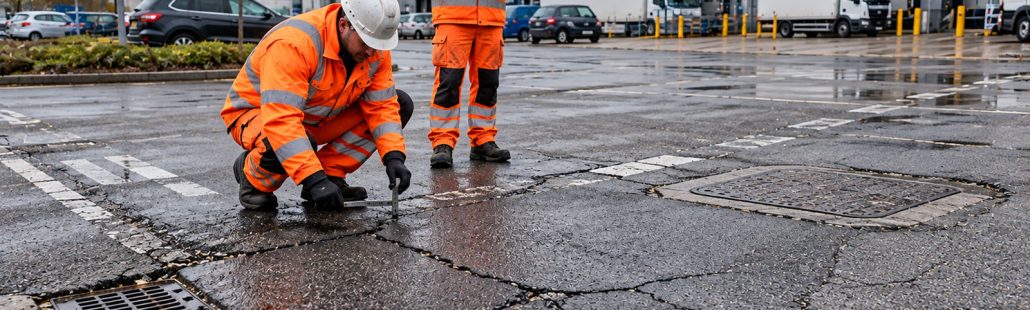
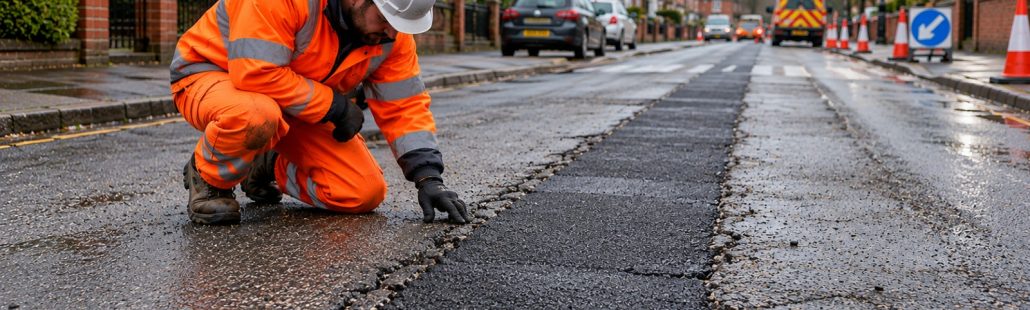
EV charging installations often include ground-mounted cables, protective ducting and in some cases surface trenching. Poor reinstatement around these installations can create weak points in the asphalt.
If trenches are not properly compacted and bonded, cracking can occur along joint lines. These cracks allow water ingress, which weakens the underlying layers over time.
High-quality tarmac installation includes proper joint sealing and compaction to prevent reflective cracking around charging infrastructure.
Drainage Considerations Around Charging Points
Drainage becomes even more critical when electrical infrastructure is present. Standing water near charging equipment is undesirable from both safety and longevity perspectives.
Proper camber and surface gradients ensure water flows away from charging posts and connection points. Permeable surfacing options may also be considered in certain layouts to improve water management.
Failing to adjust drainage design when installing EV bays can shorten the lifespan of the surrounding surface.
Markings and Surface Finishes
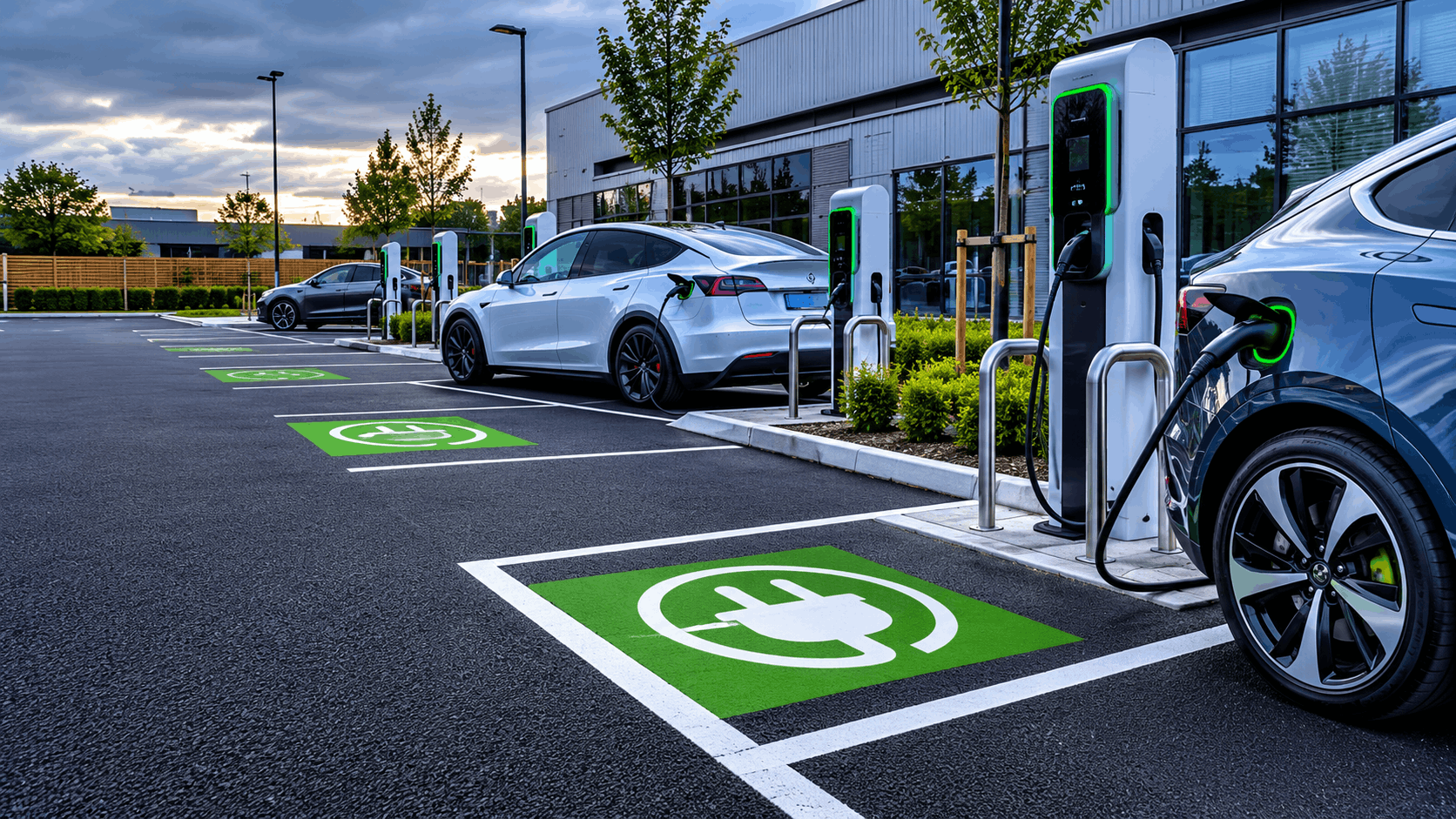
EV charging bays typically require clear line markings and often coloured surfacing to distinguish them from standard parking spaces. These finishes must be compatible with the underlying material.
Some decorative finishes may not withstand repeated vehicle movement if applied over weak foundations. Ensuring that markings bond correctly and remain visible over time requires proper surface preparation and material selection.
Increased Turning Movements
Charging bays are frequently positioned near entrances or high-visibility areas. This often leads to concentrated turning movements from vehicles manoeuvring into position.
Turning forces introduce lateral stress, which can cause surface shoving or rutting if structural depth is insufficient. Reinforced areas around bay entrances and turning zones help prevent premature deformation.
Planning for Future Expansion
Many commercial sites install a limited number of EV bays initially, with plans to expand as demand increases. Surfacing works should anticipate future trenching and electrical upgrades.
Planning sub-base strength and layout flexibility from the outset prevents repeated excavation and patching. Poorly planned expansion can result in multiple surface reinstatements, reducing overall durability.
Timely pothole repairs may address localised defects, but repeated trenching without structural reinforcement often leads to ongoing maintenance issues.
Regulatory and Accessibility Requirements
EV bays must comply with accessibility guidelines and building regulations. This can influence bay width, surface smoothness and edge detailing.
A stable, even surface is particularly important for wheelchair users and mobility access. Subtle surface irregularities that might be tolerated in general parking areas become more significant in designated accessible EV bays.
Ensuring consistent finish and long-term stability supports compliance and safety.
Long-Term Cost Implications
Installing EV charging infrastructure without adjusting surfacing specifications may reduce upfront costs, but it often increases long-term maintenance expenses.
Repeated settlement around charging posts, trench lines or high-load zones can require frequent intervention. Investing in robust surfacing from the outset improves durability and protects the overall asset.
For commercial sites, the goal should be integration, not retrofitting.
Designing Car Parks for the Future
EV charging bays are reshaping how car parks are designed and constructed. Heavier vehicles, longer dwell times, drainage adjustments and infrastructure integration all influence surfacing needs.
EV charging bay surfacing UK projects should prioritise structural strength, proper reinstatement and effective water management. When planned correctly, EV infrastructure enhances property value and future-proofs commercial sites.
When poorly executed, it can introduce recurring structural problems.
By adapting surfacing strategies to reflect evolving vehicle technology, property owners ensure that car parks remain durable, safe and operationally efficient for years to come.