
- min min
- No Comments
- April 17, 2026
Night vs Day Road Surfacing: Does Timing Affect Quality?
When planning resurfacing works on commercial sites or access roads, one of the most common questions is whether the time of day affects quality. Some assume night surfacing may compromise workmanship, while others believe daytime heat can cause installation issues.
In reality, both night and day road surfacing can deliver excellent results when properly managed. The difference lies not in the clock, but in temperature control, logistics and contractor expertise.
Understanding how timing influences working conditions helps property owners and site managers make informed decisions.
Temperature Control and Asphalt Performance
Asphalt must be laid and compacted within specific temperature ranges to achieve proper density and bonding. Excessive cooling can prevent adequate compaction, while excessive heat can make material overly workable.
In the UK climate, extreme heat is rarely a concern. However, colder night temperatures, particularly outside summer months, can accelerate cooling times. Experienced contractors adjust delivery schedules, material temperature and rolling sequences accordingly.
Professional tarmac installation ensures that asphalt is placed and compacted within optimal temperature windows, regardless of whether works occur during the day or night.
Traffic Management Considerations
One of the primary reasons for night surfacing is traffic reduction. On busy commercial estates, retail parks or logistics hubs, daytime closures may significantly disrupt operations. Night works allow contractors to operate with fewer vehicles and pedestrians present.
Reduced traffic pressure often allows smoother workflow, fewer interruptions and more consistent laying operations. This can actually improve efficiency without compromising quality.
For larger estates, professional commercial surfacing contractors plan works strategically to balance operational continuity with construction standards.
Lighting and Visibility
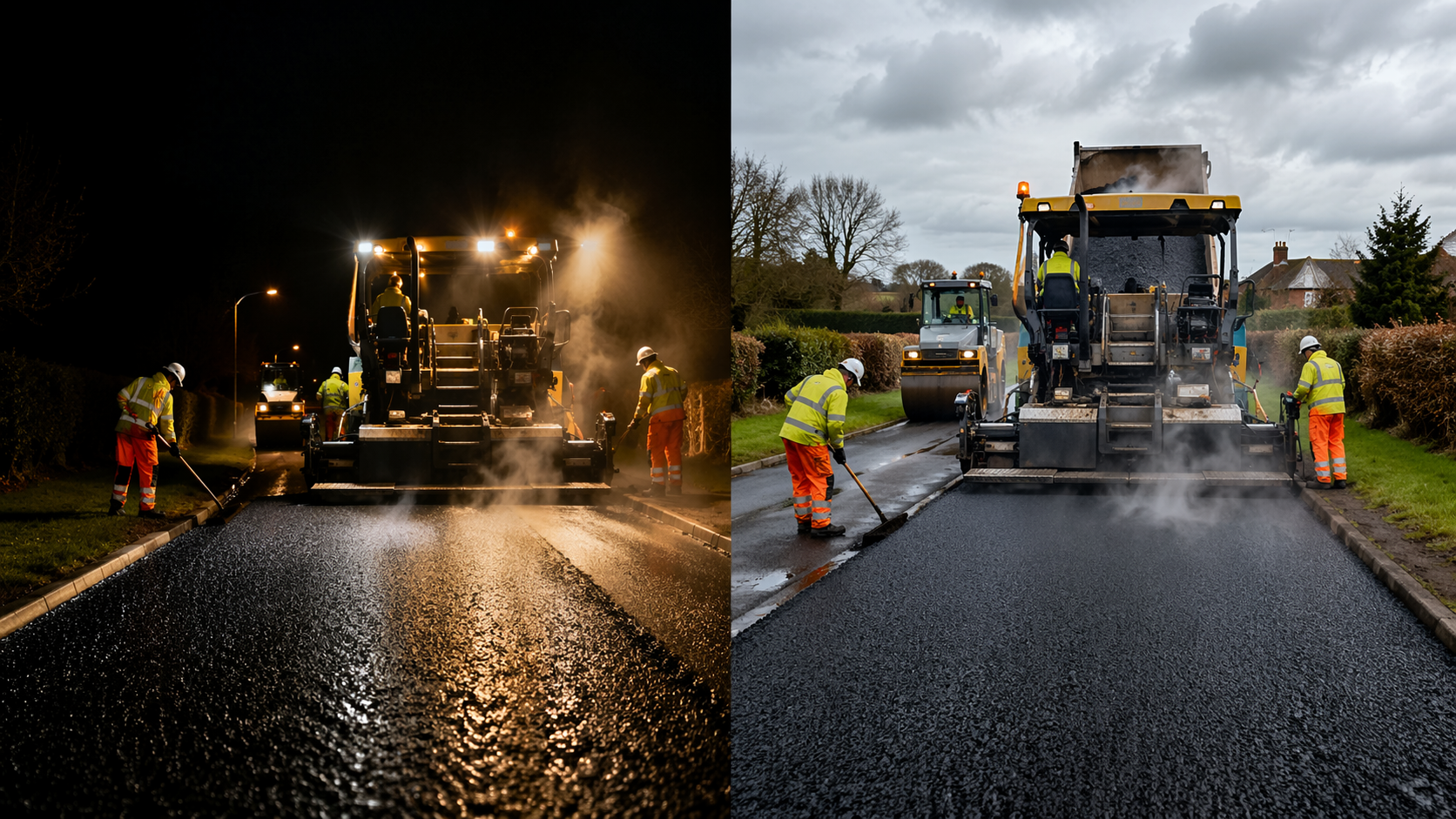
Modern construction lighting systems allow night works to be carried out safely and accurately. Proper illumination ensures levels, joints and edges are clearly visible.
While natural daylight provides optimal visibility, well-managed artificial lighting can deliver comparable working conditions. The key is ensuring that lighting coverage is sufficient across the entire working area.
Poor lighting setup, rather than night timing itself, is what creates risk.
Curing and Cooling Times
After asphalt is laid, it must cool before being opened to traffic. Night works often benefit from lower ambient temperatures, allowing surfaces to cool more steadily and reach traffic-ready condition by morning.
In summer months, daytime installations may take longer to cool before reopening. Contractors account for these differences when scheduling reopening times.
In both scenarios, curing success depends on correct compaction and layer thickness rather than time of day alone.
Noise and Community Considerations
Night works may raise concerns about noise, particularly near residential areas. For commercial and industrial sites, however, this is often less restrictive.
Where noise limitations apply, contractors may adjust equipment usage or limit certain operations to specific hours.
From a technical perspective, noise considerations do not directly affect surface quality, but they may influence scheduling decisions.
Weather Interaction
Weather plays a more significant role than time of day. Rainfall, high winds or freezing temperatures impact asphalt placement regardless of whether works occur at midday or midnight.
Road surfacing timing UK decisions are typically based on weather forecasts rather than daylight alone. Experienced contractors avoid laying asphalt during unsuitable conditions to protect long-term performance.
Quality Comes Down to Process
The long-term success of a resurfacing project depends on preparation, structural design and workmanship. Proper sub-base condition, correct material specification and thorough compaction matter far more than whether the work is completed under sunlight or floodlights.
Timely maintenance, including prompt pothole repairs, also plays a role in preserving surface quality long after installation.
When Night Surfacing Is Ideal
Night surfacing is often ideal for:
- Busy access roads
- Retail parks with daytime customer traffic
- Industrial sites operating on fixed delivery schedules
- Areas where daytime congestion would slow progress
When managed correctly, night works can reduce disruption without affecting structural integrity.
When Daytime Surfacing Makes Sense
Daytime surfacing may be preferable where:
- Traffic disruption is minimal
- Additional lighting setup is unnecessary
- Weather conditions favour daytime working windows
- Noise restrictions limit overnight operations
Ultimately, the decision should reflect operational priorities rather than assumptions about quality.
Conclusion
Night vs day road surfacing does not inherently determine quality. What matters most is temperature management, preparation, compaction and experienced execution.
For UK commercial sites, road surfacing timing UK strategies should focus on minimising disruption while maintaining strict installation standards. With proper planning and professional delivery, both night and day resurfacing can produce durable, long-lasting results.