
- admin
- No Comments
- June 5, 2026
Why Junctions Experience More Surface Damage Than Other Roads
Junctions are among the most vulnerable sections of any road network. Whether on commercial estates, industrial parks or public highways, junctions consistently deteriorate faster than straight road sections. For property owners and site managers, this pattern is not coincidental.
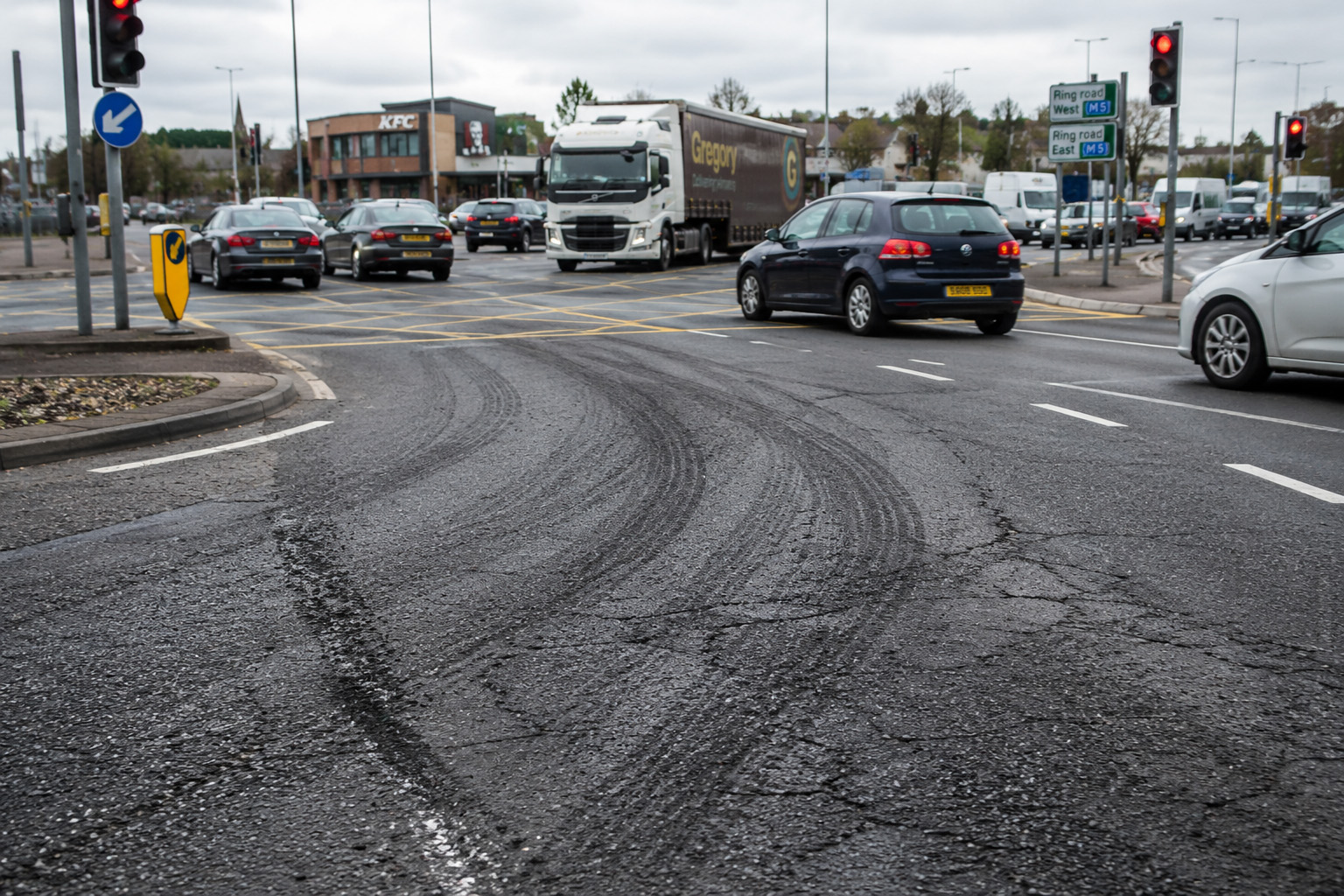
Road junction surface damage UK cases are typically linked to concentrated traffic forces, braking stress and turning movements. While straight roads distribute traffic loads evenly, junctions endure far more complex and intense pressure.
Understanding why this happens helps prevent premature failure and costly repairs.
Braking and Acceleration Forces
At junctions, vehicles rarely travel at constant speed. Drivers brake as they approach and accelerate as they exit. These repeated actions generate horizontal shear forces across the surface.
Braking causes forward stress that pushes against the asphalt, while acceleration pulls the surface in the opposite direction. Over time, these opposing forces weaken the bond between layers.
Professional commercial surfacing accounts for these stress patterns by ensuring adequate structural depth and proper material selection.
Turning Movements and Lateral Stress
Unlike straight roads where vehicles move in a linear path, junctions involve constant turning. Turning applies lateral pressure that can cause surface shoving or rutting, especially in areas where heavy vehicles frequently manoeuvre.
This is particularly evident in industrial estates and logistics hubs, where articulated lorries apply concentrated force at low speeds.
Correct tarmac installation ensures that asphalt layers are sufficiently compacted and thick enough to resist lateral movement.
Concentrated Traffic Loading
Traffic flow at junctions is rarely evenly distributed. Vehicles queue, idle and repeatedly pass over the same points. This concentrated loading increases structural fatigue.
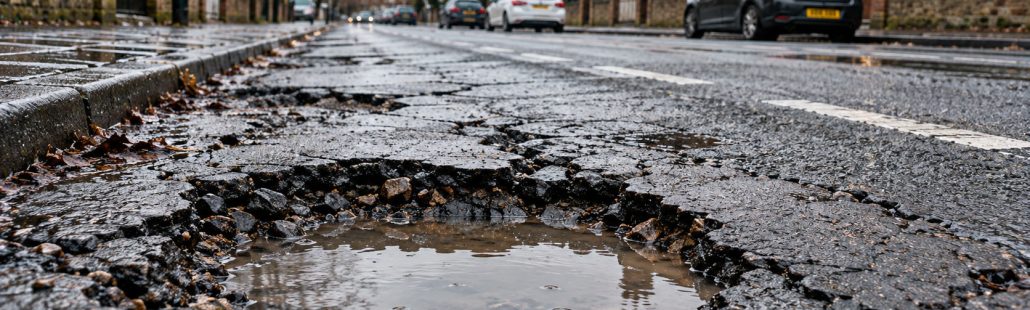
Wheel paths become worn faster, leading to depressions that collect water. Once water penetrates through small cracks, freeze-thaw cycles accelerate deterioration.
Junctions therefore face both mechanical and environmental stress at higher levels than other road sections.
Water Accumulation and Drainage Challenges
Junctions often sit at slight grade changes or transition points between roads. Poor drainage design can allow water to accumulate in low areas near stopping points.
Standing water weakens asphalt and sub-base layers over time. In colder months, trapped moisture expands during freezing conditions, widening cracks and accelerating surface breakdown.
Effective camber and drainage design are essential to prevent long-term water-related damage.
Heavy Vehicle Impact
Commercial junctions frequently experience heavier vehicle traffic than standard residential roads. Delivery vehicles, waste collection trucks and HGVs generate significantly higher axle loads.
Repeated stress from heavy vehicles increases the risk of rutting and surface fatigue. If the underlying structure is not designed to withstand these loads, premature failure becomes likely.
Timely pothole repairs restore safety, but without addressing structural causes, damage may reappear in the same location.
The Role of Sub-Base Strength
Surface deterioration at junctions often reflects deeper structural issues. A weak or insufficient sub-base cannot properly distribute concentrated loads from braking and turning vehicles.
Even if the wearing course appears intact initially, movement beneath the surface eventually leads to cracking and settlement.
Investing in proper foundation depth during construction significantly reduces the likelihood of early junction failure.
Why Repairs Are More Common at Junctions
Due to the combination of braking, turning, static loading and water accumulation, junctions require more frequent maintenance than straight road sections.
Reactive patching can temporarily restore surface appearance, but recurring issues often indicate structural fatigue.
A proactive maintenance strategy focused specifically on high-stress zones improves long-term performance and reduces disruption.
Designing Junctions for Durability
To reduce road junction surface damage UK issues, contractors must consider:
- Increased structural thickness
- Enhanced compaction
- Reinforced high-stress turning zones
- Improved drainage gradients
Planning for these stress factors from the outset significantly extends service life.
Conclusion
Junctions experience more surface damage than other roads because they endure higher mechanical and environmental stress. Braking, acceleration, turning movements, heavy vehicle loads and water accumulation all contribute to accelerated wear.
For commercial and industrial sites, recognising junctions as high-risk areas allows for smarter design and targeted maintenance. With correct structural preparation and professional installation, junctions can achieve durability comparable to straight road sections.
Understanding the forces at play ensures better long-term infrastructure performance and fewer unexpected repair costs.