

- admin
- No Comments
- April 26, 2026
What Most Contractors Won’t Tell You About Road Surfacing in the UK
Most discussions about road surfacing focus on the visible finish. A freshly laid surface looks smooth, dark and uniform. However, what many contractors fail to emphasise is that the surface layer is only a small part of the overall structure.
The real strength of any road lies beneath. Without proper groundwork, adequate thickness and correct compaction, even the highest-quality asphalt will deteriorate prematurely. Professional commercial surfacing always begins with structural preparation, not just surface appearance.
If a contractor focuses heavily on finish but avoids discussing foundations, that should raise questions.
Thickness Directly Affects Lifespan
One of the most common cost-cutting measures in road surfacing UK projects is reducing layer thickness. Thinner binder or wearing courses may lower initial costs, but they significantly reduce structural durability.
Roads designed for commercial traffic require sufficient depth to distribute loads properly. If the surface flexes under repeated vehicle movements, cracks and rutting will appear far sooner than expected.
Contractors should clearly explain the specification, including binder depth and sub-base thickness. If this information is vague or omitted, the long-term lifespan may be compromised.
Drainage Is Often Overlooked
Water is one of the primary causes of premature road failure in the UK. Poor drainage allows moisture to penetrate through small cracks and weaken the sub-base. Freeze-thaw cycles then accelerate deterioration.
Some contractors focus on resurfacing without addressing drainage problems. This can temporarily improve appearance while leaving the root cause unresolved.
High-quality tarmac installation includes careful attention to camber, falls and water management to protect the structure long term.
Not All Asphalt Is the Same
Another point rarely discussed openly is that asphalt mixes vary in quality and suitability. Different traffic loads require different specifications. A mix suitable for residential driveways may not withstand heavy commercial vehicles.
Selecting the correct material blend for the intended use is essential. Contractors should assess traffic patterns, turning movements and loading zones before finalising specification.
Failure to match materials to usage is a common reason roads fail within a few years.
Compaction Makes or Breaks the Job
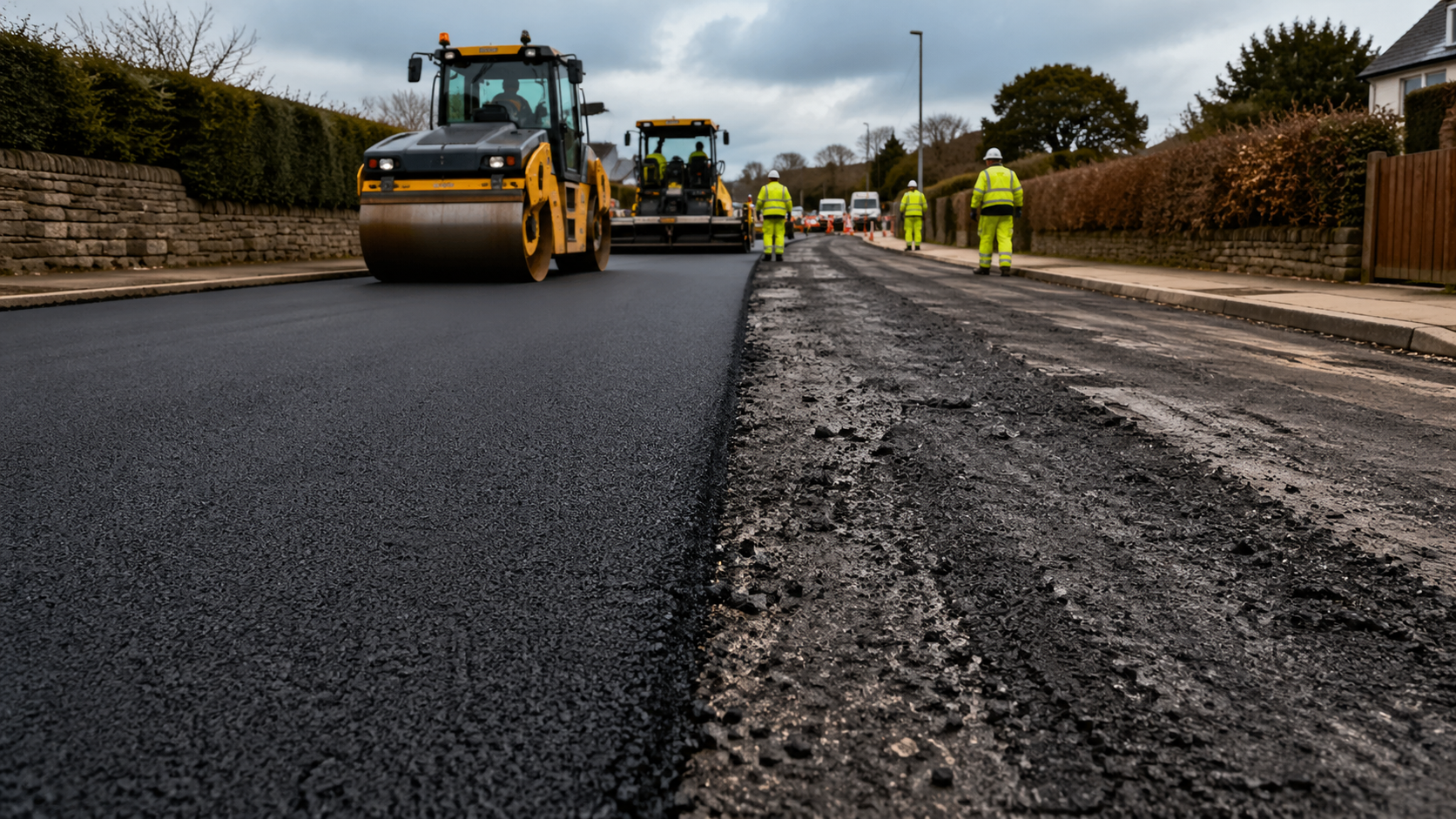
Even with correct materials and thickness, improper compaction can drastically reduce road lifespan. Asphalt must be laid and rolled at specific temperatures to achieve optimal density.
If compaction is rushed or carried out outside the correct temperature range, voids remain within the material. These voids allow water ingress and reduce structural integrity.
Experienced teams monitor temperature and rolling sequences carefully to ensure consistent compaction throughout the project.
Resurfacing Isn’t Always the Solution
Sometimes resurfacing is recommended when deeper structural issues exist. If the sub-base is unstable or drainage problems remain unresolved, laying a new surface may only provide temporary improvement.
Recurring defects, such as cracks appearing in the same location, often indicate foundation weakness. While prompt pothole repairs maintain safety, repeated patching without structural assessment can lead to escalating costs.
A reputable contractor will advise when reconstruction is more appropriate than simple overlay.
Low Quotes Can Mean Hidden Compromises
Significantly lower quotations often reflect compromises in depth, material quality or preparation. While competitive pricing is important, unusually low estimates should prompt careful review of specification details.
Key questions to ask include excavation depth, sub-base material type, compaction method and drainage adjustments. Transparent contractors will provide clear answers.
Guarantees Don’t Replace Good Construction
Some contractors rely heavily on warranty periods to reassure clients. While guarantees are valuable, they cannot compensate for inadequate construction standards.
A road built correctly should not require major repairs within a few years. The focus should always be on long-term structural integrity rather than short-term assurances.
Why Professional Standards Matter
Road surfacing UK projects vary widely in quality. The difference between a road lasting five years and one lasting twenty often lies in preparation, specification and workmanship.
Professional contractors take time to assess site conditions, calculate load requirements and ensure proper drainage before beginning surface works. Cutting corners at any stage increases the risk of premature failure.
Making an Informed Decision
Understanding what most contractors do not openly emphasise allows property owners and site managers to make informed decisions. Road surfacing is a long-term infrastructure investment, not a cosmetic upgrade.
By prioritising structural depth, drainage, correct materials and expert installation, commercial sites can achieve reliable performance and predictable maintenance costs.
Choosing quality over shortcuts ultimately delivers better value and protects your asset for years to come.