
- admin
- No Comments
- June 8, 2026
Why Roundabouts Often Require More Frequent Maintenance
Roundabouts play a critical role in traffic flow across the UK, particularly on commercial estates, retail parks and industrial access roads. However, they are also among the most maintenance-heavy areas of any road network.
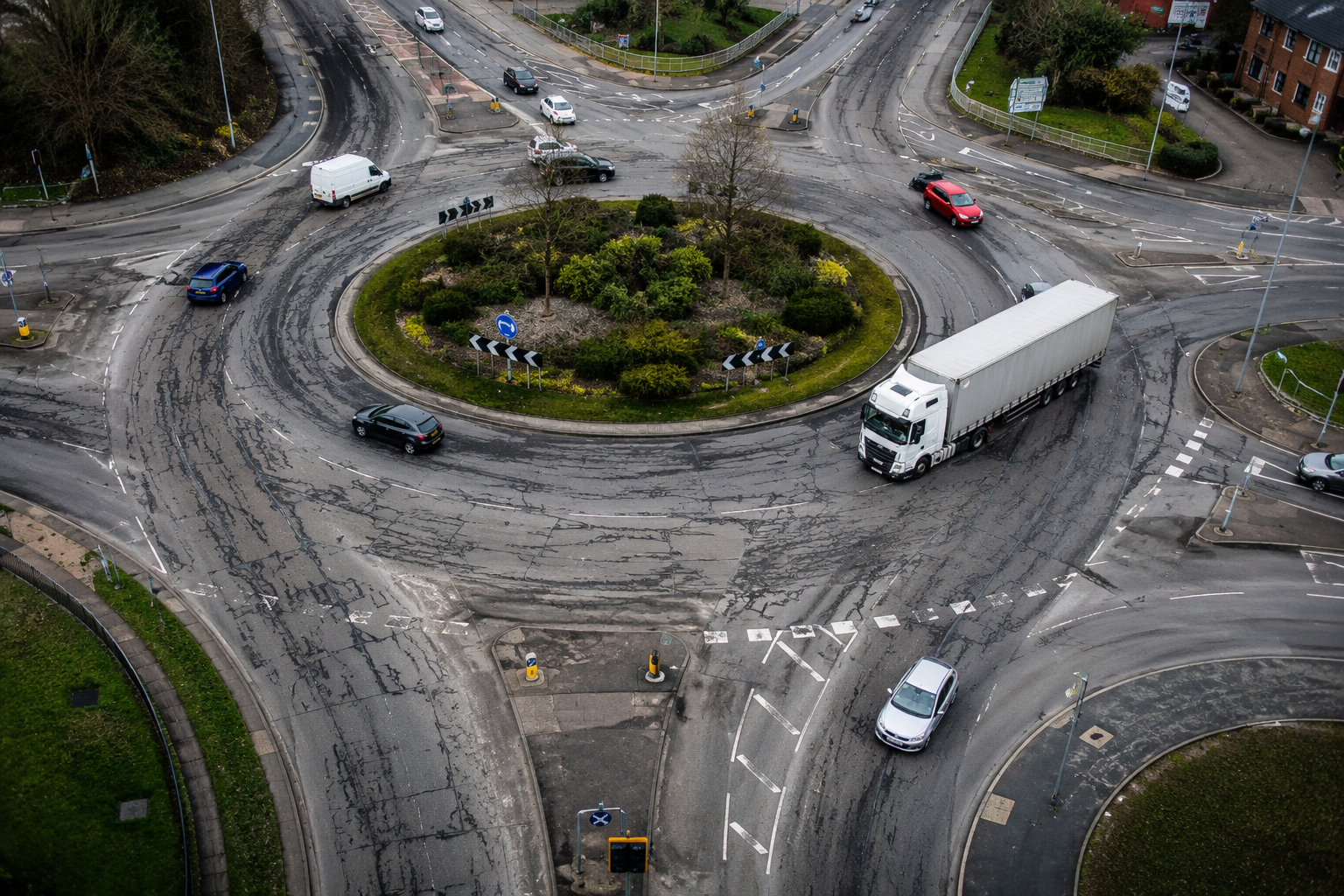
Roundabout road maintenance UK issues arise because these areas experience continuous turning, braking and acceleration. Unlike straight roads, which distribute forces more evenly, roundabouts concentrate mechanical stress in specific zones.
Understanding why this happens helps property owners plan for longer-lasting infrastructure.
Continuous Turning Movements
The most significant factor contributing to accelerated wear is constant lateral movement. Every vehicle entering a roundabout applies sideways pressure as it follows the circular path.
This repeated turning creates shear forces within the asphalt. Over time, these forces weaken the bond between layers, leading to surface shoving, rutting and cracking.
Professional commercial surfacing projects account for these stress patterns by increasing structural depth in high-turn zones.
Braking and Acceleration Zones
Drivers slow down before entering a roundabout and accelerate when exiting. These opposing forces repeatedly push and pull the surface material.
Braking generates forward stress, while acceleration introduces traction forces that can gradually displace asphalt. This combination makes roundabouts more vulnerable than straight sections of road.
Correct tarmac installation ensures adequate compaction and thickness to resist this repeated stress.
Concentrated Heavy Vehicle Loading
Commercial and industrial roundabouts frequently handle heavy goods vehicles, delivery trucks and service vehicles. These vehicles apply substantial weight while turning at low speeds, increasing surface strain.
The inner wheel path, particularly around the central island, experiences the highest load concentration. If structural layers are insufficient, rutting and settlement develop more quickly.
Heavy loading combined with turning movement is one of the primary reasons roundabouts deteriorate faster.
Water Accumulation and Drainage Complexity
Roundabouts often involve multiple gradient changes, entry points and exit lanes. Poor drainage design can allow water to collect in low areas, especially along wheel paths.
Standing water weakens the asphalt surface and underlying sub-base. During colder months, freeze-thaw cycles expand trapped moisture, widening cracks and accelerating deterioration.
Effective drainage is therefore essential to reducing long-term maintenance demands.
Edge Stress and Kerb Interaction
Vehicles, particularly large HGVs, often mount or closely track kerb lines when navigating tight roundabouts. This increases stress along edges and can lead to edge cracking or breakdown.
Kerb transitions must be properly supported to prevent differential settlement. Weak edges allow water ingress and compromise the integrity of the surrounding asphalt.
Frequent Minor Defects Escalate Quickly
Small cracks and surface distortions on roundabouts can escalate rapidly due to continuous traffic movement. Once a minor defect forms, vehicles repeatedly stress the same area, accelerating deterioration.
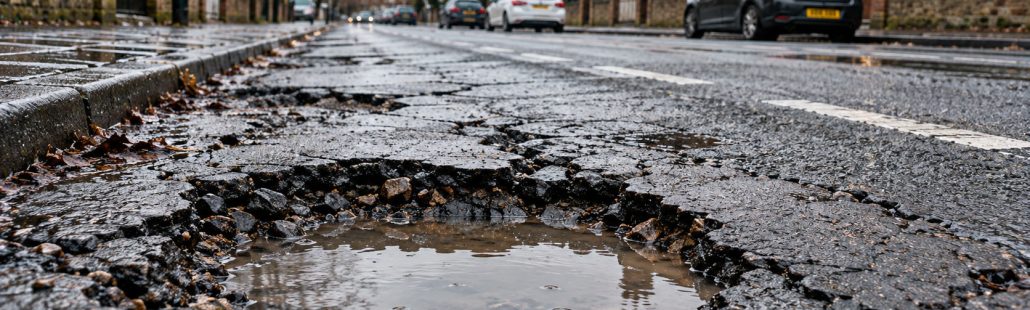
Prompt pothole repairs help prevent localised damage from expanding into widespread structural failure. However, recurring problems may indicate deeper foundational issues.
Structural Design Considerations
To reduce roundabout road maintenance UK demands, structural reinforcement is often required. This may include:
Increased sub-base thickness to distribute heavy loads more effectively.
Higher-performance asphalt mixes designed to resist rutting and lateral movement.
Enhanced compaction standards to minimise internal voids.
By anticipating stress concentrations at the design stage, long-term durability improves significantly.
Why Roundabouts Cannot Be Treated Like Straight Roads
Applying the same structural specification used for straight carriageways to roundabouts often leads to premature failure. The unique combination of turning, braking, heavy loading and water management challenges demands a tailored approach.
Roundabouts require targeted engineering solutions rather than standard resurfacing methods.
Conclusion
Roundabouts often require more frequent maintenance because they experience higher mechanical stress than other road sections. Continuous turning, braking, acceleration, heavy vehicle loading and drainage complexity all contribute to accelerated wear.
For commercial and industrial sites, understanding these factors allows for better planning, stronger structural design and proactive maintenance strategies.
Investing in reinforced construction and early intervention reduces disruption and extends the lifespan of critical traffic control points.