
- admin
- No Comments
- May 12, 2026
Can Bad Surfacing Damage Vehicles?
For many commercial property owners and site managers, road condition is often viewed from a maintenance or aesthetic perspective. However, poor surfacing can have direct consequences for the vehicles using it daily.
Bad road surfacing UK issues do more than create an uneven appearance. They can increase wear on tyres, suspension systems and steering components, particularly on high-traffic commercial estates and industrial yards.
Understanding the mechanical impact of deteriorating surfaces helps highlight why proactive maintenance is essential.
How Uneven Surfaces Affect Tyres
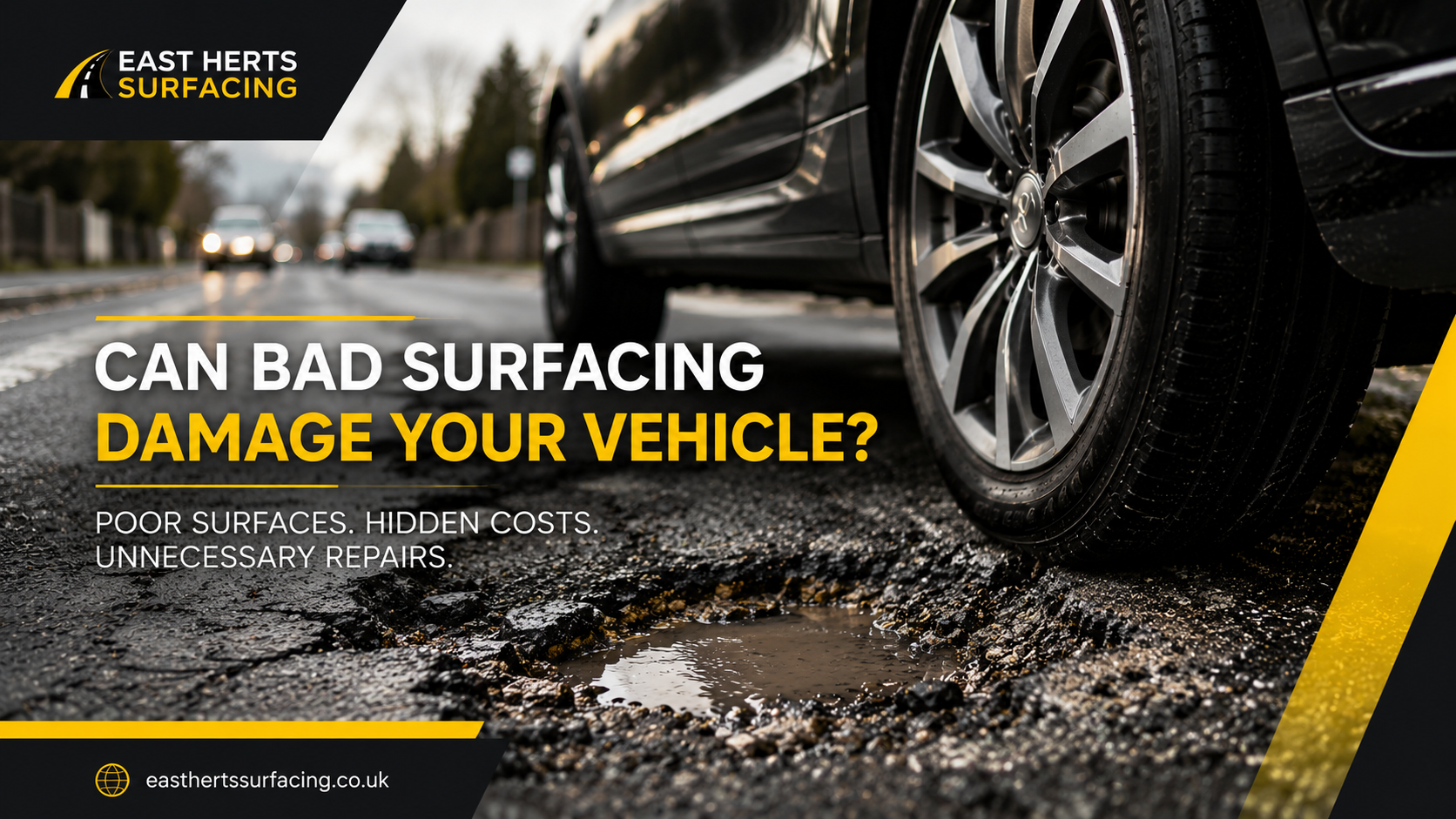
Tyres are the first point of contact between a vehicle and the road. When a surface is cracked, rutted or potholed, tyres experience irregular stress patterns.
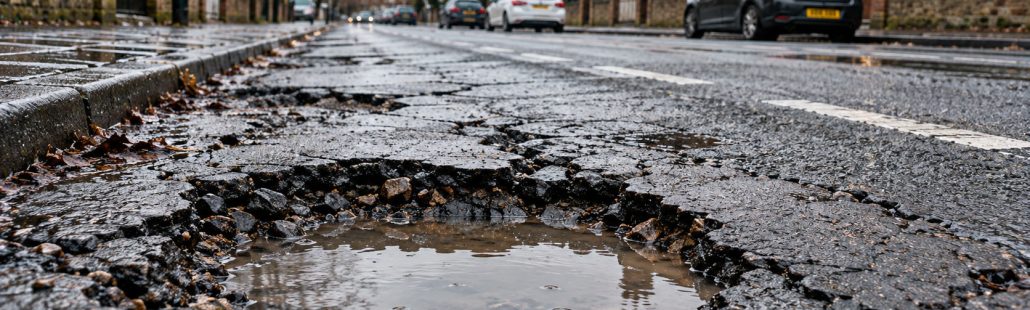
Repeated impact from sharp-edged potholes can cause sidewall damage, bulging or even punctures. Rough textures accelerate tread wear, reducing tyre lifespan and increasing replacement costs.
Prompt pothole repairs reduce the risk of impact damage and help maintain smoother driving conditions across commercial sites.
Suspension and Alignment Problems
Suspension systems are designed to absorb shocks, but constant exposure to uneven surfacing increases strain on components such as shock absorbers, springs and control arms.
Rutting and depressions in wheel paths can gradually affect wheel alignment. Misalignment leads to uneven tyre wear, steering issues and reduced fuel efficiency.
On industrial estates where heavy vehicles operate daily, these effects are amplified.
High-quality commercial surfacing reduces surface deformation and provides consistent support under load.
Damage from Standing Water
Poor drainage contributes significantly to vehicle damage risk. Standing water can conceal potholes, making them harder for drivers to avoid. Sudden impact with hidden defects increases the likelihood of wheel and suspension damage.
Water also accelerates surface deterioration, creating more frequent hazards.
Ensuring correct falls and drainage during professional tarmac installation helps prevent pooling and reduces long-term risks.
The Impact on Commercial Fleets
For businesses operating vehicle fleets, poor road conditions directly influence maintenance budgets. Repeated suspension repairs, tyre replacements and wheel alignment corrections increase operational costs.
Logistics hubs and distribution centres with uneven access roads may experience more frequent vehicle downtime, affecting productivity.
Maintaining smooth, stable surfaces protects both infrastructure and fleet performance.
Increased Liability Risks
Beyond vehicle damage, poor surfacing can increase liability exposure. If visitors, contractors or tenants experience vehicle damage due to neglected surface defects, disputes may arise.
Regular inspection and timely intervention demonstrate responsible site management and reduce risk.
Long-Term Structural Consequences
Vehicle damage is often a symptom of deeper structural problems within the road itself. Cracking, rutting and settlement indicate that the sub-base may be weakening.
Ignoring these warning signs allows deterioration to accelerate, resulting in more extensive reconstruction requirements later.
When to Take Action
Surface defects that repeatedly affect vehicle handling or cause noticeable jolts should not be ignored. Early intervention prevents further damage to both vehicles and infrastructure.
Routine inspections, particularly after winter or heavy rainfall, help identify emerging issues before they escalate.
Investing in Surface Quality
Investing in proper construction standards and proactive maintenance is more cost-effective than addressing repeated vehicle damage claims and emergency repairs.
Strong foundations, adequate thickness and effective drainage contribute to smoother performance and reduced strain on vehicles.
Conclusion
Bad road surfacing UK conditions can absolutely damage vehicles. Tyres, suspension systems and steering components are all vulnerable to repeated impact from uneven or deteriorating surfaces.
For commercial property owners and site managers, maintaining high-quality road infrastructure protects both operational efficiency and vehicle reliability. By addressing defects early and prioritising structural integrity, long-term costs and risks can be significantly reduced.