
- min min
- No Comments
- April 22, 2026
Is Resin Bound Surfacing Worth It in the UK Climate? Pros, Cons & Real Costs
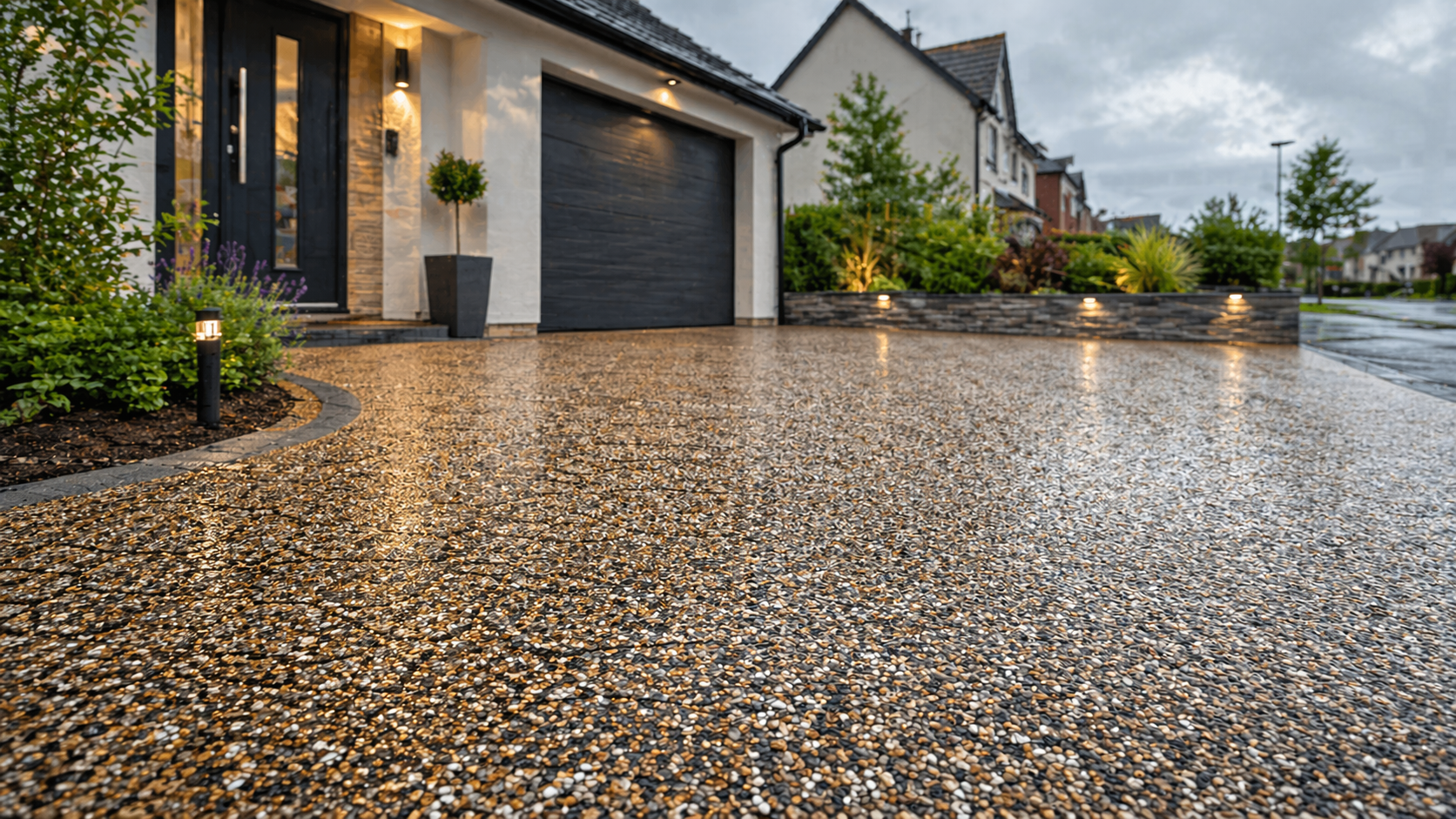
Resin bound surfacing has grown in popularity across the UK for driveways, pathways, courtyards and commercial forecourts. Its smooth finish, permeability and decorative appearance make it attractive for both residential and light commercial environments.
However, the UK climate presents unique challenges. Frequent rainfall, freeze-thaw cycles and fluctuating temperatures all influence how surfaces perform over time. Before investing, property owners should understand whether resin bound surfacing UK installations genuinely deliver long-term value.
How Resin Bound Surfacing Performs in the UK Climate
Resin bound systems are permeable, meaning water drains through the surface rather than pooling on top. This is particularly beneficial in the UK, where rainfall is consistent throughout the year.
The permeability reduces surface water, helps manage runoff and supports compliance with Sustainable Drainage Systems requirements. In theory, this makes resin bound surfacing well suited to British conditions.
However, durability depends heavily on correct installation and base preparation. Poor groundwork can lead to cracking or movement, especially during colder months when ground expansion occurs.
Professional installation through experienced contractors offering resin bound surfacing is essential to ensure structural integrity.
The Pros of Resin Bound Surfacing
Permeability and Drainage
One of the strongest advantages is effective drainage. Unlike traditional impermeable surfaces, resin bound systems allow water to pass through, reducing standing water and minimising flood risk.
Aesthetic Appeal
Resin bound surfaces provide a smooth, decorative finish available in a range of aggregate colours. For commercial properties seeking a polished appearance at entrances or pedestrian zones, this can enhance kerb appeal.
Low Maintenance Requirements
When installed properly, resin bound surfaces require relatively minimal maintenance. Occasional sweeping and power washing are usually sufficient to keep the surface clean.
Slip Resistance
The textured aggregate finish provides good slip resistance, particularly important in wet UK conditions.
The Cons of Resin Bound Surfacing
Sensitivity to Base Movement
Resin bound surfaces rely heavily on a stable base. If the underlying structure shifts or cracks, the resin layer can reflect this movement. This makes base preparation critical.
In many cases, a strong sub-base installed through professional tarmac installation or concrete works is required before applying the resin surface.
Not Ideal for Heavy Traffic
While resin bound is durable for pedestrian and light vehicle use, it is generally not suitable for heavy goods vehicles or high-stress industrial areas. For such environments, robust commercial surfacing solutions may provide better long-term performance.
Installation Conditions
Resin bound systems require dry conditions during installation. High moisture levels or unexpected rainfall can affect curing. In the UK’s unpredictable climate, scheduling must be carefully managed.
Higher Initial Costs
Resin bound surfacing can carry higher upfront costs compared to standard asphalt or concrete finishes. The decorative aggregates and resin materials contribute to the premium pricing.
Real Costs of Resin Bound Surfacing in the UK
Costs vary depending on area size, base preparation requirements and aggregate choice. Generally, resin bound surfacing is positioned as a mid-to-premium option within the surfacing market.
While initial investment may be higher than traditional asphalt, long-term maintenance costs are often lower in low-traffic settings. The absence of loose gravel and reduced weed growth contribute to long-term cleanliness and performance.
However, if base failure occurs, repairs can be more complex than straightforward pothole repairs on traditional asphalt.
When Is Resin Bound Worth It?
Resin bound surfacing is often worth the investment in the following situations:
- Residential driveways
- Pedestrian walkways
- Courtyards
- School grounds
- Commercial forecourts with light vehicle traffic
- Decorative entrance areas
It is less suitable for heavy industrial yards, logistics hubs or high-load access roads.
Long-Term Performance in British Weather
When properly installed on a stable base, resin bound surfacing performs well in the UK climate. Its permeability reduces water-related damage, and its flexibility allows it to accommodate minor temperature fluctuations.
However, the key to longevity lies in professional preparation and correct structural design. Cutting corners during groundwork significantly increases the risk of premature cracking.
Final Verdict: Is It Worth It?
Resin bound surfacing UK installations can absolutely be worth it when used in the right setting. For decorative and light-traffic areas, the combination of aesthetics, permeability and low maintenance makes it a strong contender.
However, it is not a universal solution. For heavy-duty commercial environments, alternative surfacing options may offer better structural performance and cost efficiency.
Ultimately, the decision should be based on traffic load, site conditions and long-term operational needs rather than appearance alone.