
- admin
- No Comments
- May 10, 2026
Why Line Markings Fade Faster on Certain Surfaces
Line markings are essential for safety, traffic control and site organisation. On commercial estates, industrial yards and access roads, they guide vehicle flow, designate parking and highlight pedestrian routes.
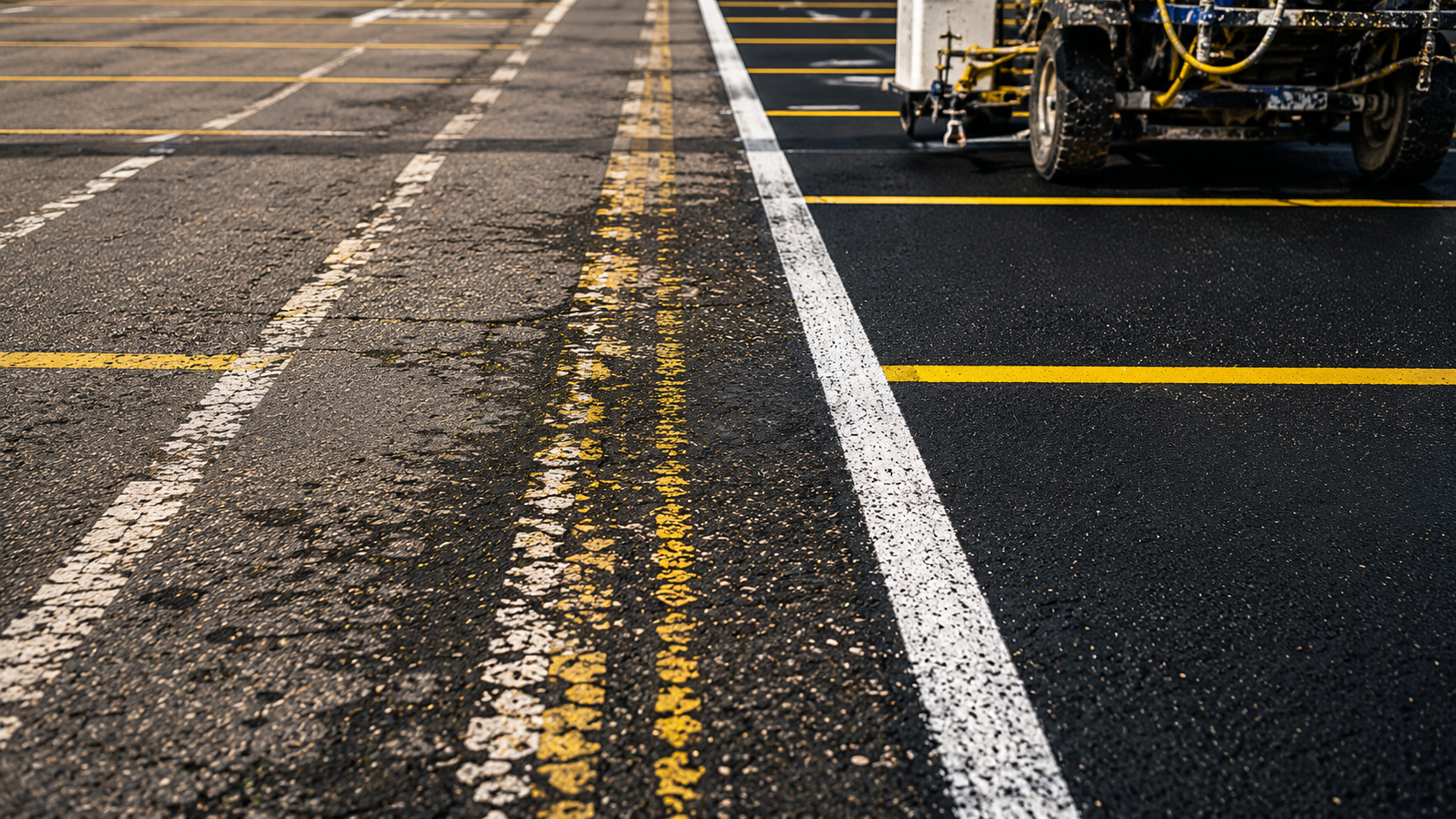
However, property owners often notice that markings fade unevenly. Some surfaces retain clear lines for years, while others require repainting far sooner. Road line marking durability UK performance is influenced heavily by the type and condition of the underlying surface.
Understanding why fading occurs helps extend marking lifespan and reduce maintenance costs.
Surface Texture and Porosity
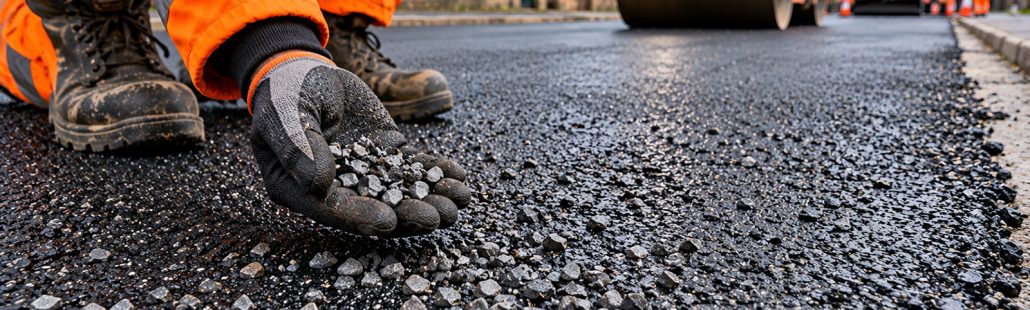
One of the most significant factors affecting line marking durability is surface texture. Rough or highly porous surfaces absorb more paint, which can reduce surface film thickness. While this may initially improve adhesion, it often leads to quicker visual fading because less material remains on the surface.
Conversely, extremely smooth or polished surfaces may struggle with adhesion, causing markings to wear away under traffic stress.
Professional tarmac installation ensures consistent surface texture that supports strong bonding between paint and asphalt.
The Age of the Surface
Newly laid asphalt contains oils that can temporarily reduce paint adhesion. If markings are applied too soon, they may not bond properly and can fade prematurely.
On older surfaces, oxidation and micro-cracking create irregular bonding conditions. If the road has already begun deteriorating, markings may wear faster in damaged areas.
Applying markings at the correct stage of surface maturity significantly improves longevity.
Traffic Volume and Turning Stress
High-traffic areas naturally experience faster marking wear. However, certain surface types exacerbate the issue. Coarse-textured surfaces increase tyre friction, accelerating abrasion of painted lines.
Turning areas, loading bays and junctions are particularly vulnerable because tyres apply lateral force rather than simply rolling forward. If the surface is uneven or slightly deformed, friction intensifies and markings degrade more quickly.
Durable commercial surfacing helps maintain even texture and reduces excessive friction.
Surface Cleanliness Before Application
Markings applied over dust, debris or oil contamination will not adhere properly. Even minor contamination prevents paint from bonding securely with the surface.
This is particularly relevant on industrial sites where vehicle fluids and heavy usage are common. Thorough preparation prior to marking is essential to maximise durability.
Weather Exposure in the UK Climate
The UK’s climate presents ongoing challenges. Frequent rainfall, freeze-thaw cycles and temperature fluctuations gradually break down paint layers.
Water infiltration into micro-cracks beneath markings can weaken adhesion. Over time, repeated expansion and contraction accelerate fading and flaking.
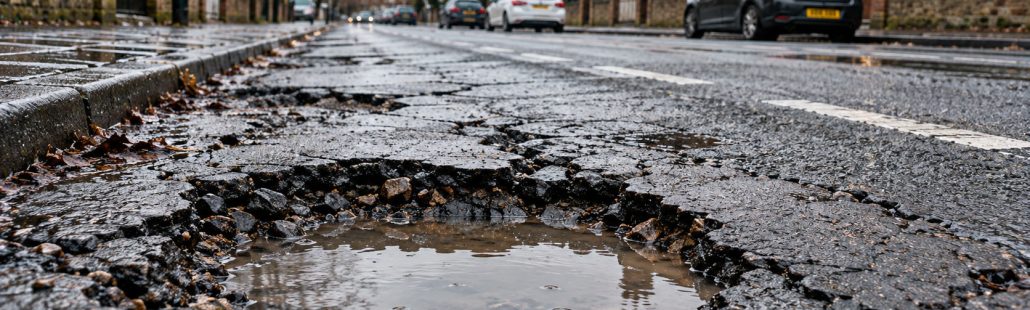
Maintaining the underlying surface through timely pothole repairs prevents moisture-related damage that indirectly affects marking longevity.
Type of Line Marking Material
Not all marking materials are equal. Standard traffic paint may be suitable for low-traffic environments, but thermoplastic markings offer greater thickness and wear resistance.
The suitability of marking type depends on surface condition, traffic load and environmental exposure. Selecting the correct system for the specific site reduces long-term repainting frequency.
Drainage and Standing Water
Poor drainage contributes significantly to marking degradation. Standing water softens paint layers and encourages gradual separation from the surface.
Repeated pooling in the same areas causes uneven fading patterns. Ensuring proper falls and effective water management extends both surface and marking lifespan.
Structural Movement Beneath the Surface
If the underlying road structure is unstable, micro-movements can crack paint layers. Settlement, rutting and minor deformation cause markings to fracture and fade more rapidly.
Structural stability is therefore just as important for marking durability as it is for surface longevity.
Reducing the Need for Frequent Repainting
To improve road line marking durability UK performance, property owners should focus on three key areas: surface condition, correct material choice and proper application timing.
Applying markings to a stable, clean and adequately cured surface significantly increases lifespan. Choosing more durable materials for high-stress areas further reduces wear.
Conclusion
Line markings fade faster on certain surfaces due to texture, age, traffic stress, drainage and structural stability. The condition of the underlying road plays a decisive role in how long markings remain visible.
By prioritising surface preparation, selecting appropriate marking materials and maintaining structural integrity, commercial property owners can extend marking lifespan and reduce ongoing maintenance costs.