
- Minisgreat
- No Comments
- September 15, 2026
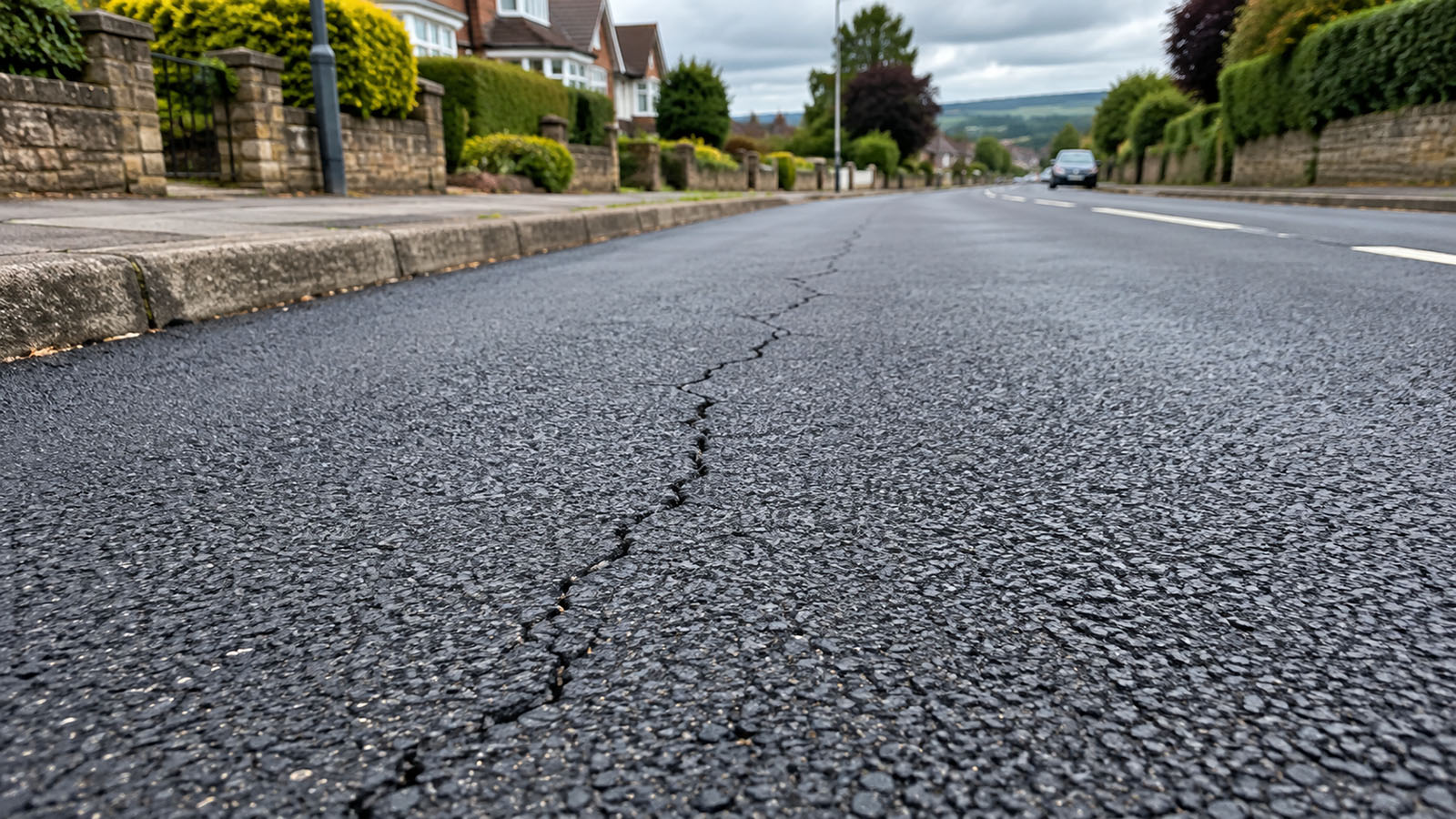
Why Cracks Often Reappear Through Newly Laid Tarmac
Few things are more frustrating than paying to have an old road, driveway or car park resurfaced only to see cracks appearing through the new tarmac months later.
The surface may have looked completely smooth when the work was completed. The old cracks disappeared beneath fresh asphalt and the entire area appeared renewed.
Then a familiar line starts becoming visible.
Sometimes it appears almost exactly where a crack existed before resurfacing.
This is not always because the newly laid material itself is defective. In many cases, the new surface is responding to movement that is still taking place within the older pavement underneath.
The phenomenon is commonly associated with reflective cracking, where existing cracks or joints beneath a new asphalt layer influence the material above.
For property owners experiencing cracks reappearing through new tarmac UK surfaces, understanding what is happening underneath is essential before deciding on the next repair.
New Tarmac Doesn’t Automatically Create a New Road
There is an important difference between resurfacing and reconstruction.
Resurfacing generally involves retaining much of the existing pavement and installing a new asphalt layer after appropriate preparation and repairs.
Reconstruction goes deeper.
Failed pavement materials may be removed so weaknesses within the road structure can be addressed before new layers are installed.
Both approaches have legitimate uses.
Problems arise when a road requiring deeper structural work receives only a surface treatment.
Professional tarmac installation should therefore begin with an assessment of what the existing pavement can realistically support.
What Is Reflective Cracking?
Imagine an old asphalt road containing a substantial crack.
A new layer is installed over the top, completely hiding the defect. Visually, the crack has disappeared.
Structurally, however, the old pavement underneath still contains a break.
Traffic loading and temperature changes can continue causing movement around that weakness. The new asphalt above is then repeatedly stressed in the same location.
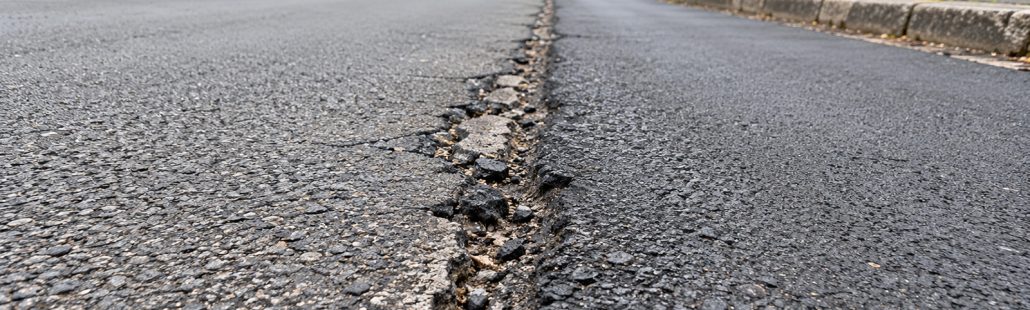
Eventually, a crack can propagate upwards until it becomes visible at the new surface.
The original defect has effectively been reflected through the overlay.
This explains why cracks in newly resurfaced roads can sometimes follow remarkably similar patterns to those visible before the work began.
Why Covering a Crack Doesn’t Stop Movement
Asphalt is flexible compared with many rigid construction materials, but it cannot accommodate unlimited movement.
If two sides of an old crack continue moving relative to each other, the new surface spanning the gap experiences repeated stress.
At first, there may be no visible evidence.
After enough loading and temperature cycles, however, the material can begin to fatigue.
A small surface crack appears and gradually becomes more noticeable.
Simply adding material above an active structural weakness does not necessarily remove the forces that created the original crack.
Temperature Changes Can Keep Old Cracks Moving
Road surfaces experience substantial temperature variation throughout the year.
Materials expand and contract as conditions change.
Existing cracks and joints within an older pavement can respond to these movements. When a fresh asphalt overlay spans those locations, stresses can transfer into the new material.
The effect is repeated season after season.
A road that looks perfect immediately after resurfacing may therefore begin revealing underlying crack patterns after it has experienced changing temperatures and traffic.
This is one reason short-term appearance should not be the only measure of resurfacing quality.
Weak Foundations Can Cause Cracks to Return
Not every recurring crack begins within the old asphalt.
Sometimes the real problem is deeper.
The supporting sub-base or underlying ground may have moved, settled or weakened. If that movement created the original cracking, covering the road with new tarmac does not stabilise the foundation.
The pavement continues moving.
Eventually, the new asphalt responds to the same forces and begins cracking too.
Where structural movement is responsible, repairing the affected foundation may be necessary before a lasting surface repair can be achieved.
Water Can Make Existing Weaknesses Worse
Water is particularly important when investigating repeated cracking.
An existing crack can provide a route for moisture to reach vulnerable areas within the pavement. If drainage is poor, the supporting construction may remain wet for extended periods.
The pavement then continues carrying traffic.
Weak support, repeated loading and water ingress can combine to accelerate deterioration.
Installing new asphalt may temporarily seal the visible surface, but if water is still entering from elsewhere or drainage problems remain unresolved, movement underneath can continue.
The new crack may then become another route for water to enter.
Poor Drainage Can Be the Hidden Cause
Sometimes a recurring crack is blamed on the asphalt when the real issue is water management.
A damaged drainage channel, blocked gully or incorrectly formed surface level can cause water to collect around a particular part of the road.
Water may also enter from adjacent ground or damaged infrastructure.
If the same section repeatedly cracks despite surface repairs, drainage conditions should be considered as part of the investigation.
Repairing the asphalt without correcting the water problem may simply restart the deterioration cycle.
Utility Trenches Are Common Locations for Recurring Cracks
Roads contain extensive underground infrastructure.
Water pipes, gas services, electricity cables, telecommunications and drainage installations may all require trenches to be excavated through existing pavement.
Once the work is completed, those trenches need to be backfilled and reinstated properly.
If the reinstated construction settles differently from the original road, movement can develop along the edges of the excavation.
Cracks may then appear in relatively straight lines.
Resurfacing the entire road can hide those lines temporarily, but if differential movement continues underneath, they can eventually become visible again.
Old Repair Edges Can Reflect Through Too
The same principle can apply around previous patches.
A road that has undergone years of maintenance may contain numerous repairs made from different materials at different times.
The boundaries between these sections can behave differently under traffic and temperature changes.
When the road is resurfaced, the new asphalt creates a uniform appearance above them.
Underneath, however, the old repair edges remain.
If movement occurs along those boundaries, cracking can eventually appear in the new surface.
Heavy Traffic Can Accelerate the Process
Traffic repeatedly flexes pavement structures.
On roads carrying cars, this loading occurs frequently but at relatively modest individual levels. Commercial sites can experience substantially greater stresses from HGVs and other heavy vehicles.
If an old crack remains active underneath a new surface, heavy wheel loads can accelerate the stress experienced by the overlay.
Professional commercial surfacing therefore needs to account for the type of traffic using the site, particularly where an existing pavement is being retained.
A resurfacing treatment appropriate for light traffic may not necessarily be suitable for an industrial access road.
Braking and Turning Can Make Certain Cracks Worse
Vehicle weight is only one consideration.
At junctions, loading bays, entrances and turning areas, tyres introduce horizontal forces as vehicles brake, accelerate and change direction.
These areas often experience much greater pavement stress than straight sections carrying free-flowing traffic.
If an existing weakness lies beneath one of these high-stress locations, cracks may return more quickly.
This explains why repeated cracking can be concentrated around junctions even when the newly surfaced road elsewhere remains in excellent condition.
A Thin Overlay Has Less Capacity to Tolerate Movement
Overlay thickness can influence how an existing pavement defect affects the new surface, although thickness alone does not determine whether cracking will occur.
An inadequately specified surface may have limited ability to accommodate the stresses being transferred from below.
However, simply applying a much thicker layer is not automatically the answer.
If the pavement underneath is experiencing substantial structural movement, additional asphalt can still crack.
The correct approach depends on the condition of the existing road, the cause of its defects and the traffic it needs to carry.
Preparation Before Resurfacing Is Critical
Good resurfacing involves considerably more than cleaning an old road and covering it with fresh asphalt.
Existing defects need to be assessed.
Loose or failed areas may require removal. Significant cracks may require appropriate treatment. Depressions, drainage problems and unstable sections need to be understood before the final surface is installed.
This preparation determines whether the existing road provides a suitable platform for the new material.
On larger areas, professional machine lay tarmac can create a consistent, controlled new surface, but even excellent paving equipment cannot stabilise a failing foundation underneath.
Why Filling the Old Cracks May Not Always Be Enough
Treating cracks before resurfacing can form an important part of preparation, but the cause still matters.
If a crack is relatively stable and confined to the upper pavement, appropriate treatment may reduce the risk of it affecting the new surface.
If the crack is being driven by ongoing settlement underneath, simply filling the opening does not stop that movement.
The repair material may move with the pavement, allowing stress to continue transferring upwards.
Successful crack treatment therefore depends on understanding whether the defect is superficial or structural.
Alligator Cracking Can Indicate a Deeper Problem
A network of interconnected cracks is more concerning than one isolated surface crack.
Sometimes described as fatigue or alligator cracking, this pattern can indicate that the pavement has been repeatedly flexing under traffic.
If extensive cracked areas are simply covered with new tarmac without addressing the failed construction, the overlay may inherit the underlying weakness.
Local reconstruction may be more appropriate in these circumstances.
Removing the failed material allows the condition of the supporting layers to be assessed and corrected before the surface is restored.
Why Potholes and Recurring Cracks Are Often Connected
Cracks can eventually contribute to more substantial surface failure.
Water enters through openings, traffic continues loading the weakened area and pieces of pavement begin breaking away.
Eventually, a pothole can form.
Professional pothole repairs should therefore consider the condition of the surrounding pavement rather than treating every hole as an isolated defect.
If cracking continues around the repair because the foundation remains unstable, further deterioration may follow.
New Cracks Don’t Always Follow Old Cracks
It is important not to assume every crack in recently laid tarmac is reflective cracking.
A new defect can have a different cause.
Poor compaction, inadequate pavement thickness, weak edges, unsuitable drainage or unexpected loading can all contribute to new deterioration.
The crack pattern provides useful information.
A line appearing directly above a known historic crack suggests a different mechanism from widespread cracking developing across an area that previously appeared sound.
Accurate diagnosis matters because different causes require different repairs.
Can Reflective Cracking Be Prevented Completely?
There is no single treatment that guarantees every existing pavement crack will remain invisible indefinitely beneath an overlay.
The risk can be managed by assessing the old pavement properly and selecting an appropriate repair or resurfacing strategy.
Some areas may require local excavation and reconstruction before resurfacing. Other defects may be suitable for specific preparation or crack-treatment techniques.
Where the entire pavement has reached the end of its structural life, retaining it underneath a new surface may simply postpone the need for more extensive work.
The objective should be to select a treatment appropriate for the condition of the road rather than automatically choosing the least disruptive option.
When Is Full Reconstruction More Appropriate?
A road showing widespread structural cracking, deep rutting, repeated settlement or extensive foundation failure may not be a good candidate for a straightforward overlay.
In these situations, reconstruction allows defective materials to be removed.
Weak supporting layers can be replaced or strengthened, levels can be corrected and drainage problems can be addressed before new asphalt is installed.
This requires more work initially, but it can provide much better long-term value than repeatedly resurfacing a pavement that continues moving underneath.
Why Repeatedly Resurfacing Can Become Expensive
An overlay can be economical when the existing pavement is suitable.
It becomes poor value when the same defects continually return.
A business may resurface an access road, repair recurring cracks a year later and then face additional potholes or settlement in subsequent years.
The individual treatments may each appear relatively inexpensive compared with reconstruction.
Added together, however, repeated repairs can become considerably more disruptive and costly.
Understanding the underlying condition before selecting a repair strategy helps avoid this cycle.
What Should Property Owners Look for Before Resurfacing?
The history of the pavement can provide valuable information.
Areas that have cracked repeatedly deserve particular attention. So do sections that collect standing water, sink under wheel paths or have undergone multiple previous repairs.
Cracks close to utility trenches, drainage features and heavy vehicle turning areas may also indicate specific underlying causes.
An older road does not automatically need complete reconstruction, but visible evidence should be assessed rather than simply covered.
The objective is to determine which parts remain structurally suitable and which require deeper work.
The Crack Is Often a Symptom, Not the Original Problem
When cracks reappear through newly laid tarmac, the instinctive reaction is often to focus on the new surface.
In reality, the most important clue may be underneath it.
Old cracks, unstable foundations, poorly reinstated trenches, water movement and repeated heavy traffic can continue influencing a pavement long after a fresh layer has hidden the original defects.
That is why cracks reappearing through new tarmac UK surfaces can sometimes follow exactly the same lines seen before resurfacing.
A new wearing surface can renew a sound road very effectively. What it cannot do is automatically stop structural movement deeper within the pavement.
The lasting solution begins with identifying why the old surface cracked in the first place.
If that cause is addressed before resurfacing, the new asphalt has a much stronger foundation on which to perform. If the cause remains active, the road may eventually reveal its old weaknesses all over again.