
- Minisgreat
- No Comments
- October 15, 2026
Why Do Asphalt Roads Develop Shiny, Slippery Patches?
Most asphalt roads have a slightly rough, textured appearance.
This texture is important because it helps vehicle tyres interact with the road surface, particularly during braking, cornering and wet weather.
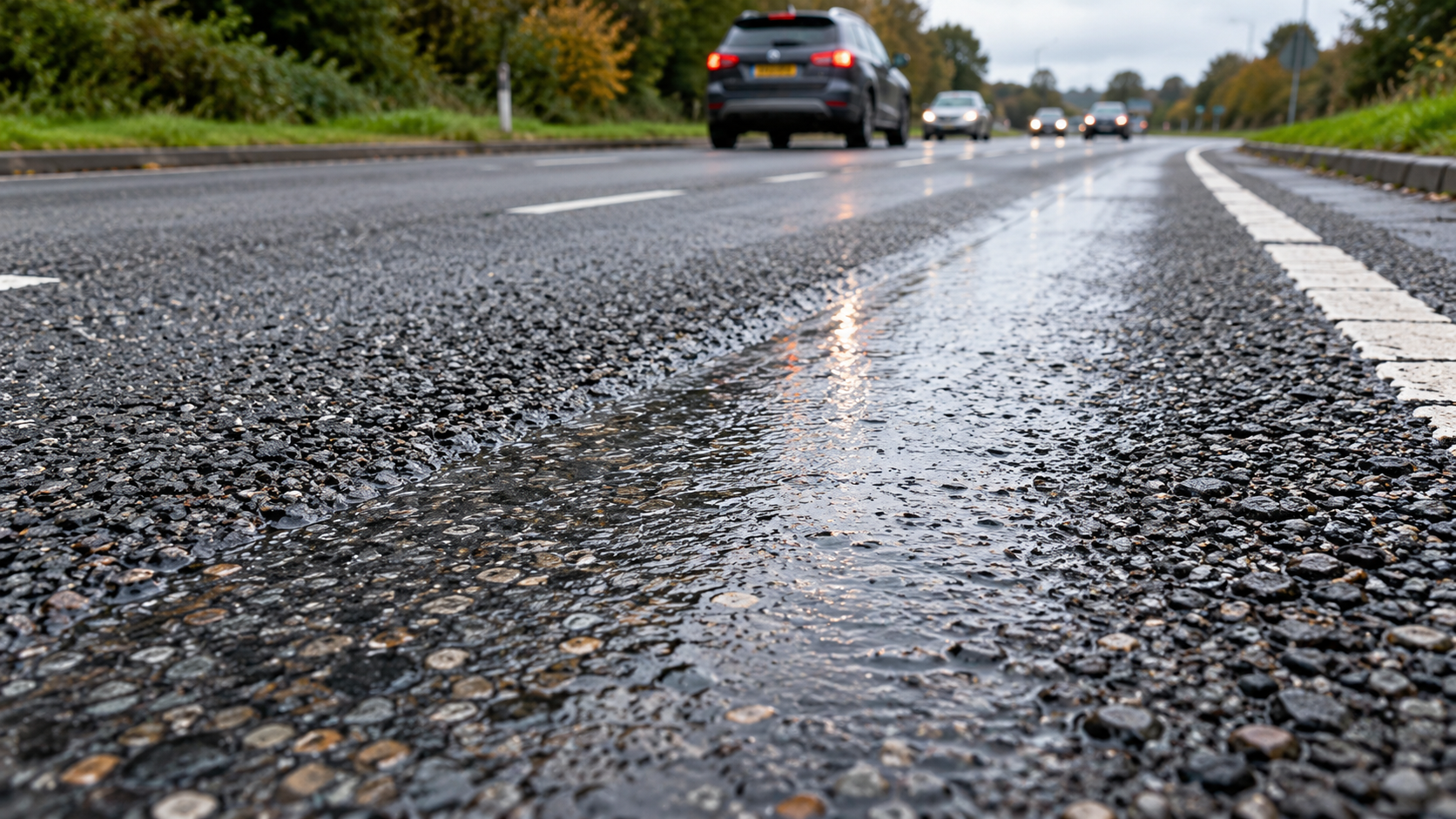
However, some roads develop unusually dark, glossy or polished-looking patches over time.
These areas are often most noticeable around junctions, roundabouts, bus stops, industrial entrances and other locations where vehicles repeatedly brake, accelerate or turn.
At first glance, a shiny patch may appear to be nothing more than a cosmetic difference.
In reality, certain types of surface polishing or excessive bitumen can affect the friction available between tyres and the road.
Understanding why shiny slippery asphalt roads UK motorists encounter develop is important for road safety, maintenance planning and long-term pavement performance.
The appearance alone does not always reveal the cause. A shiny area might result from excess bitumen, polished aggregate, contamination or a combination of factors.
Each requires a different approach.
What Gives Asphalt Its Normal Surface Texture?
Modern asphalt is made from mineral aggregate combined with a bituminous binder.
The aggregate forms much of the structure of the material, while the bitumen holds the particles together.
When asphalt is properly designed and installed, the finished surface has characteristics suited to its intended use.
These include the appropriate surface texture and resistance to the forces created by traffic.
Road texture is commonly considered at two different scales.
Microtexture: The Roughness of Individual Stones
Microtexture describes the fine-scale roughness of the aggregate particles themselves.
Although individual stones may appear smooth from a distance, their surfaces contain tiny irregularities.
These irregularities contribute to the friction generated between tyres and the road, particularly where water is present.
The properties of the aggregate are therefore important.
If the exposed stone becomes excessively polished, the available friction can reduce even when the overall road surface still appears structurally sound.
Macrotexture: The Spaces Between Aggregate Particles
Macrotexture describes the larger-scale texture created by the arrangement of aggregate particles at the road surface.
These spaces and irregularities help water escape from beneath moving tyres.
Macrotexture is particularly important at higher speeds, where effective water displacement becomes increasingly significant.
A road can lose useful surface characteristics when either its aggregate becomes polished or its larger-scale texture is reduced.
This is why surface condition cannot be judged purely by whether the asphalt contains visible cracks or potholes.
Bitumen Bleeding Is a Common Cause of Shiny Asphalt
One explanation for unusually glossy asphalt is a condition known as bitumen bleeding.
Bleeding occurs when excess bituminous binder becomes present at the road surface.
Instead of the aggregate providing the intended exposed texture, a film of binder can partially cover the stone.
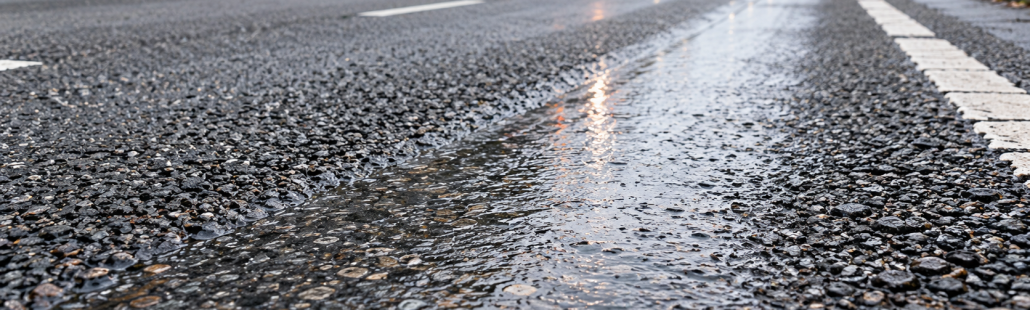
The affected area may look darker, smoother and shinier than the surrounding carriageway.
In some cases, the surface can also become tacky during warm weather.
This is particularly concerning where the binder reduces the effective texture available for tyre grip.
Why Does Bitumen Rise to the Surface?
Several factors can contribute to bitumen bleeding.
An asphalt mixture may contain more binder than is appropriate for its intended application.
The mixture may also have insufficient air voids to accommodate the binder under traffic and temperature changes.
Repeated heavy vehicle loading can further compact susceptible asphalt, reducing available void space and encouraging binder towards the surface.
High pavement temperatures can make the binder less viscous, increasing the likelihood of movement in an already vulnerable mixture.
The result may be a glossy black patch that becomes more noticeable during warm weather.
However, it is important to distinguish genuine bleeding from the normal dark appearance of newly laid asphalt.
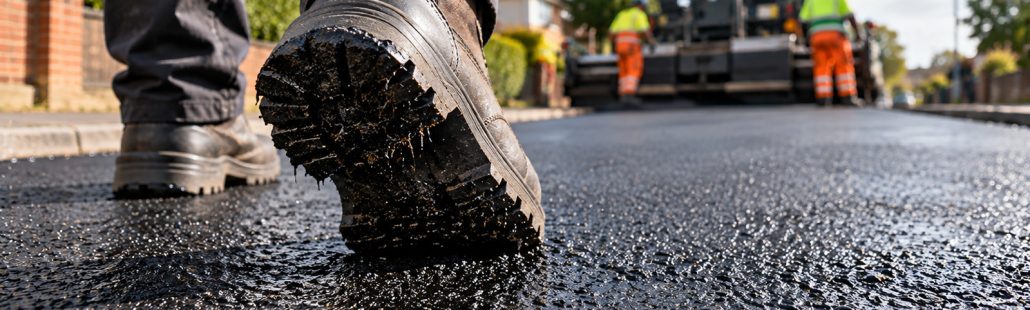
A new surface is not automatically defective simply because it looks black or slightly reflective.
Why Warm Weather Can Make Shiny Patches Worse
Asphalt temperatures can become considerably higher than the surrounding air temperature.
Dark surfaces absorb solar radiation, particularly when exposed to direct sunlight.
During warm conditions, the bituminous binder becomes less stiff.
If an asphalt mixture is already susceptible to bleeding, elevated surface temperatures can make the condition more apparent.
A glossy patch that looks relatively ordinary during cooler weather may become noticeably darker or tackier during a warm spell.
This does not mean that correctly specified asphalt should become slippery whenever the weather is hot.
The concern is excessive binder at the surface or other conditions that reduce the intended surface texture.
Polished Aggregate Is Another Important Cause
Not every shiny road patch is caused by bitumen.
Sometimes the aggregate itself becomes polished by repeated traffic.
Vehicle tyres continually contact the exposed stones within the asphalt.
Over time, this action can wear down the fine irregularities on aggregate surfaces.
The process is known as aggregate polishing.
When the aggregate loses sufficient microtexture, the road may provide less friction, particularly in wet conditions.
Why Aggregate Selection Matters
Different aggregates have different resistance to polishing.
For roads where high levels of skid resistance are required, the properties of the aggregate must be considered carefully during material selection.
A road carrying frequent braking or turning traffic may require aggregate with appropriate polishing resistance.
This is particularly important at locations where vehicles need dependable friction.
Professional tarmac installation involves selecting materials suitable for the intended application rather than treating every asphalt mixture as interchangeable.
The surface specification should reflect how the road will actually be used.
Why Junctions Often Develop Shiny Areas
Junctions experience a different pattern of vehicle movement from straight roads.
Drivers regularly slow down, brake, stop and accelerate.
These actions concentrate tyre forces in particular areas.
The same wheel paths may experience thousands of repeated braking movements.
Over time, this can contribute to aggregate polishing and other forms of surface wear.
If the asphalt is also susceptible to bleeding, repeated traffic loading can make the problem more noticeable.
This explains why a shiny patch may develop near a give-way line while the road several metres away retains a normal textured appearance.
Why Roundabouts Can Be Particularly Vulnerable
Roundabouts combine several demanding traffic movements.
Vehicles brake on approach, turn through the roundabout and accelerate as they leave.
Unlike a straight road, the pavement experiences sustained lateral forces from tyres changing direction.
Heavy vehicles can create particularly demanding conditions because their tyres experience substantial scrubbing forces during tight turns.
These movements can accelerate wear in specific wheel paths.
Over time, some areas may become polished or otherwise lose surface texture.
The issue is especially relevant where the road layout concentrates heavy traffic into relatively narrow paths.
Bus Stops and Loading Areas Experience Repeated Stress
Bus stops, delivery yards and industrial entrances are other locations where surface polishing and deformation can develop.
Buses and heavy goods vehicles repeatedly follow similar wheel paths.
They also brake, remain stationary and accelerate from predictable positions.
The pavement therefore experiences concentrated loading rather than evenly distributed traffic.
This is one reason professional commercial surfacing needs to account for vehicle weight, turning movements and repeated loading.
A surface suitable for ordinary car traffic may not provide the same long-term performance in a heavily used loading area.
Are Shiny Asphalt Patches Always Slippery?
No.
A shiny appearance does not automatically prove that a road has inadequate skid resistance.
Some surfaces naturally appear darker or more reflective because of their materials, age or lighting conditions.
A wet road can also look shiny simply because water reflects light.
Similarly, a newly installed asphalt surface may initially appear darker than the surrounding pavement without having a performance problem.
The concern arises when the surface has lost important texture or developed a film of material that reduces tyre friction.
The appropriate way to determine whether skid resistance is inadequate is through suitable assessment and, where necessary, testing.
Appearance can identify a potential problem, but it cannot reliably quantify the available grip.
Why Shiny Patches Can Become More Dangerous in Rain
Wet conditions can make deficiencies in road texture more significant.
When rain falls, a layer of water develops between the tyre and the road surface.
The tyre needs to displace that water while maintaining sufficient contact with the pavement.
Surface texture plays an important role in this process.
If aggregate has become excessively polished, the available microtexture may be reduced.
If excess bitumen has covered the aggregate, the effective surface texture may also be compromised.
These conditions can reduce wet-road friction.
The effect is particularly important where drivers need to brake or change direction.
The Difference Between Polishing and Surface Wear
Road surfaces gradually change as traffic passes over them.
However, not every form of wear produces the same problem.
Polishing primarily affects the texture of exposed aggregate.
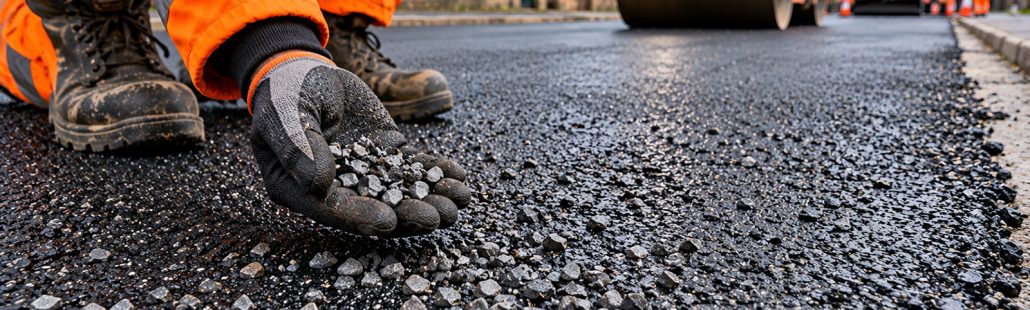
Ravelling or fretting involves the loss of aggregate particles from the asphalt surface.
Rutting involves deformation that creates depressions in regular wheel paths.
Bleeding involves excess binder appearing at the surface.
These defects can sometimes occur together, but they have different underlying causes.
A road that appears shiny because of polishing may require a different maintenance approach from one that is breaking apart because of inadequate binder adhesion or structural deterioration.
Correct identification is essential before repairs are planned.
Can Oil and Other Contaminants Create Slippery Patches?
Not every glossy patch originates within the asphalt itself.
Vehicle oil, diesel and other contaminants can sometimes create dark or shiny areas on the road.
These substances may affect surface friction, particularly where spills are concentrated.
Industrial yards, vehicle servicing areas and delivery locations can be more exposed to certain forms of contamination.
A patch caused by spilled material should not automatically be treated as bitumen bleeding.
The distinction matters because contamination may require cleaning or another appropriate response, while bleeding or polishing may require specialist pavement treatment.
Why Drainage Matters Even When the Surface Looks Intact
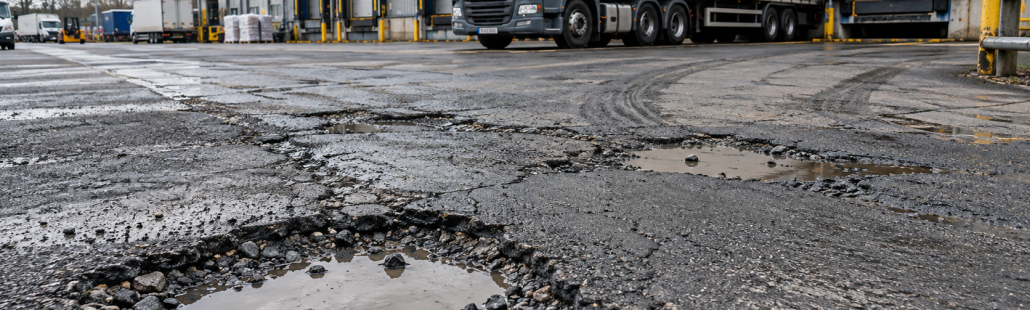
A road does not need visible potholes to present a wet-weather friction concern.
Poor drainage can allow water to remain on the carriageway.
If standing water develops over a polished or otherwise low-texture area, the conditions may become more problematic.
Drainage defects can also contribute to longer-term pavement deterioration.
Surface levels, gullies and drainage channels therefore need to be considered alongside the condition of the asphalt itself.
A road with adequate texture but persistent standing water may still require attention.
Similarly, restoring surface texture without addressing significant drainage problems may leave an important part of the issue unresolved.
Can New Asphalt Develop Shiny Patches?
Yes, although the reason depends on the circumstances.
Fresh asphalt commonly looks dark because the aggregate is coated with relatively new bituminous binder.
This appearance alone is not evidence of bleeding.
However, an unsuitable mixture or installation-related issue can contribute to excessive binder at the surface.
A new road may also show variations in appearance because of differences in texture, compaction or material characteristics.
The important question is whether the surface meets the required performance specification.
For larger projects, professional machine lay tarmac can help achieve consistent placement and levels.
However, correct material selection and compaction remain essential regardless of the installation method.
How Are Shiny or Slippery Road Patches Repaired?
The appropriate treatment depends on the cause and severity of the problem.
Where aggregate polishing has reduced skid resistance, a specialist surface treatment or replacement of the affected surface course may be considered.
Where bitumen bleeding is present, the response depends on the extent of excess binder and the condition of the pavement.
In some situations, a suitable surface treatment may restore the required characteristics.
More extensive deterioration may require removal and replacement of affected asphalt.
Contamination, meanwhile, may need to be addressed through an appropriate cleaning or remediation process.
The important point is that a shiny patch should not automatically be covered with new material before its cause has been established.
Why Surface Repairs Must Address the Actual Problem
Applying a cosmetic treatment without understanding the underlying defect can lead to repeated maintenance.
For example, if an asphalt mixture is unsuitable for the traffic loading, restoring its appearance alone may not prevent further deterioration.
Similarly, replacing a small section of polished surface without considering the aggregate specification may allow the same problem to develop again.
Where cracking or potholes accompany the shiny areas, deeper pavement problems may also be present.
Professional pothole repairs address a different type of defect from surface polishing, although both can form part of a wider maintenance programme.
The correct repair should reflect the actual condition of the road.
Why Regular Surface Inspections Matter
Road maintenance is often associated with obvious damage such as potholes, cracks and broken edges.
However, changes in surface texture can be less dramatic.
A road may remain relatively smooth and structurally intact while gradually losing friction-related characteristics.
For commercial site managers, this makes regular visual inspections useful.
Areas around junctions, loading bays, turning points and pedestrian crossings deserve particular attention because of the traffic movements they experience.
Unusual glossy patches, repeated standing water and changes in surface texture should be recorded and investigated where appropriate.
Visual inspections cannot replace formal skid-resistance testing, but they can help identify locations that warrant closer assessment.
Why Surface Texture Should Be Considered During Road Design
The best opportunity to reduce the risk of premature polishing is often during the original pavement design.
The surface course should be specified according to expected traffic and the characteristics required at the location.
Aggregate selection, mixture design, installation quality and drainage all influence performance.
A quiet private access road may have different requirements from a busy industrial entrance or heavily trafficked junction.
Selecting the correct materials from the beginning can help reduce premature deterioration and avoid unnecessary maintenance.
This is particularly important where heavy vehicles repeatedly brake or turn in the same locations.
A Shiny Road Surface Can Reveal More Than Its Appearance
Shiny slippery asphalt roads UK property owners and motorists notice can develop for several reasons.
Bitumen bleeding may create a glossy film over the aggregate, while repeated traffic can polish exposed stones and reduce their fine-scale texture.
Heavy braking, turning movements, warm weather and concentrated vehicle loading can all influence how these conditions develop.
Contamination and standing water may also contribute to slippery conditions.
The key is recognising that a road does not need to contain potholes or obvious cracks before its surface performance deserves attention.
Texture is an important part of how asphalt interacts with vehicle tyres, particularly during wet weather.
Where unusual shiny patches develop, identifying whether the cause is bleeding, polishing, contamination or another defect allows the appropriate maintenance response to be selected.
A road surface should not simply look sound. It needs to provide the characteristics required for the vehicles and conditions it was designed to accommodate.