
- Minisgreat
- No Comments
- October 18, 2026
The Common Causes of Asphalt Joint Separation
A newly surfaced road or car park should appear smooth, consistent and structurally sound.
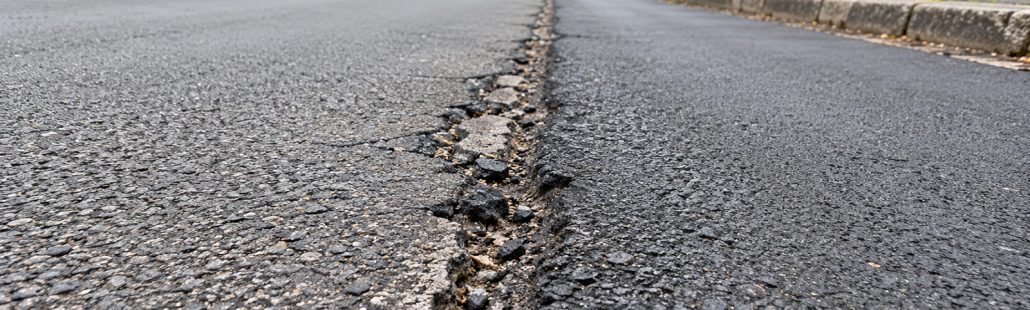
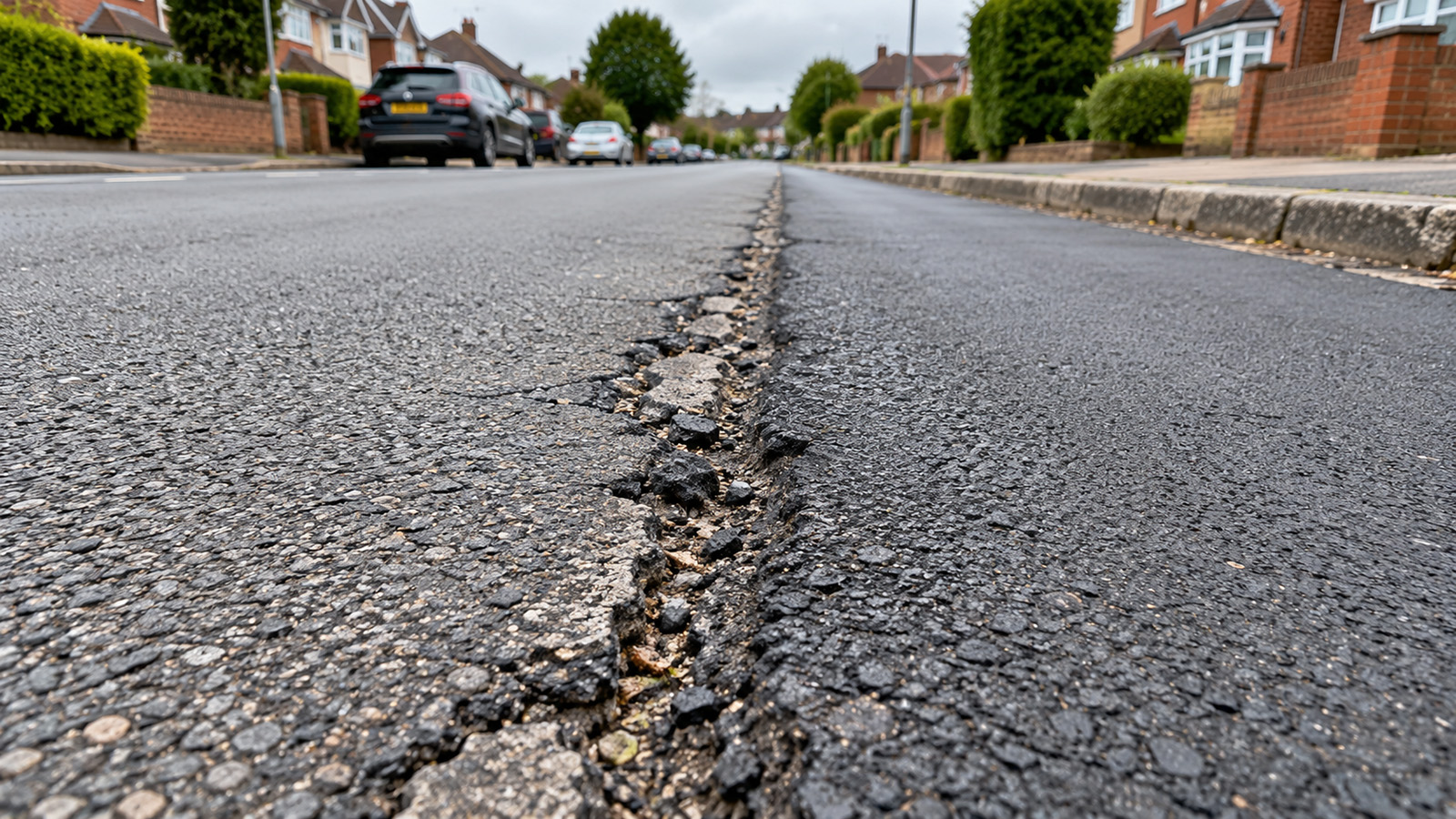
However, after months or years of use, some asphalt surfaces begin developing narrow cracks along straight lines. These cracks often follow the boundaries between sections of asphalt laid at different times.
At first, the separation may appear insignificant.
A thin line develops along the surface, sometimes extending for several metres. Over time, the gap may widen, loose aggregate may appear and water can begin entering the pavement.
Eventually, the affected area may develop more serious defects, including edge deterioration, cracking and potholes.
This problem is commonly associated with asphalt joint separation.
Understanding the causes of asphalt joint separation UK roads and commercial surfaces experience is important because the visible crack is often the result of installation conditions, material behaviour or movement within the pavement.
Identifying the underlying cause helps determine whether a straightforward joint repair is appropriate or whether more extensive work is necessary.
What Is an Asphalt Joint?
An asphalt joint is the location where two sections of asphalt meet.
Joints are a normal part of road construction.
They occur because asphalt cannot always be laid across an entire area in one continuous operation.
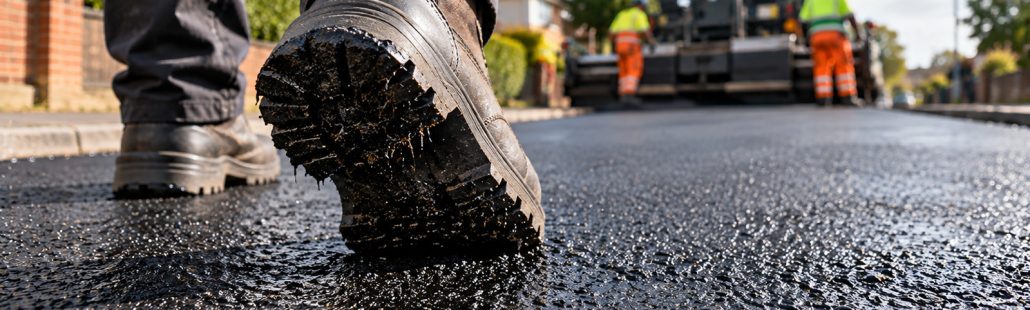
A large car park, industrial yard or access road may need to be surfaced in separate passes. Each pass creates a boundary where the newly placed material meets another section.
These boundaries must be constructed carefully to create a durable connection.
Longitudinal Asphalt Joints
Longitudinal joints run in the same general direction as traffic.
They commonly form where adjacent paving passes meet.
For example, a road may be surfaced one lane at a time. The boundary between the two lanes creates a longitudinal joint.
These joints can experience repeated vehicle loading, particularly where they fall within or close to regular wheel paths.
If the joint is inadequately constructed, it may become a vulnerable part of the pavement.
Transverse Asphalt Joints
Transverse joints run across the direction of travel.
They may form where paving operations stop and restart.
This can happen at the end of a working day, when equipment needs repositioning or when asphalt deliveries interrupt the laying process.
The joint connects material placed during separate stages of construction.
Correct preparation, placement and compaction are important to achieving a durable connection between the sections.
Why Are Asphalt Joints More Vulnerable Than Continuous Surfacing?
A continuous section of properly compacted asphalt has relatively uniform material characteristics.
A joint introduces a construction boundary.
At this location, differences in temperature, compaction and material condition can affect how effectively the two sections connect.
If the joint contains excessive air voids or lacks adequate bonding, it may allow water to enter more easily than the surrounding pavement.
Repeated traffic loading can then accelerate deterioration.
This does not mean asphalt joints are inherently defective.
Properly designed and constructed joints are a normal feature of durable asphalt pavements.
Problems arise when the joint does not achieve the required density, support or continuity.
Poor Compaction Is a Leading Cause of Joint Separation
One of the most important factors affecting asphalt joint performance is compaction.
Asphalt needs to be compacted while it remains sufficiently workable.
Rolling reduces excessive air voids and helps the material achieve the density required for long-term performance.
Joints can be more difficult to compact consistently than the main body of the pavement.
This is particularly true at the unsupported edge of a paving pass.
Why Joint Density Matters
If the asphalt close to a joint contains more air voids than the surrounding material, it can become more vulnerable to moisture and deterioration.
Water and air may enter the pavement more readily.
Over time, this can contribute to weakening of the asphalt and loss of aggregate.
As traffic continues passing over the area, the joint may begin opening.
The initial defect can appear as a narrow crack before developing into a wider separation.
Professional tarmac installation therefore requires attention to compaction throughout the pavement, including construction joints and edges.
Temperature Differences Between Asphalt Sections
Temperature plays an important role in asphalt installation.
Hot-mix asphalt needs to remain sufficiently warm during laying and compaction.
As it cools, the bituminous binder becomes stiffer and the material becomes more difficult to compact effectively.
When two adjacent sections are laid at different times, they may have different temperatures.
This can influence how well the joint is formed.
Hot Joints and Cold Joints
A hot joint is generally formed when adjacent asphalt sections are placed while the adjoining material remains sufficiently hot and workable.
A cold joint occurs when fresh asphalt is placed against material that has already cooled.
Cold joints are common in practical road construction and can perform satisfactorily when properly prepared and constructed.
However, they require particular attention because the cooled material cannot be compacted together with the fresh asphalt in exactly the same way as two hot sections.
Poor preparation or inadequate compaction can leave a vulnerable boundary.
Weak Bonding Between Adjacent Asphalt Sections
Another cause of joint separation is inadequate bonding.
The two sections of asphalt need to form an effective connection.
If the existing edge is contaminated, loose or poorly prepared, the new material may not bond adequately.
Dust, dirt and loose aggregate can interfere with the joint.
The condition of the existing asphalt edge also matters.
A damaged or irregular edge may make it difficult to create a consistent connection.
Where specified, suitable bituminous joint treatments can help improve bonding and reduce the risk of water entering the boundary.
However, a joint treatment cannot compensate for every form of poor construction.
The surrounding asphalt must still be properly placed and compacted.
Why Poor Joint Preparation Creates Long-Term Problems
Before fresh asphalt is placed against an existing section, the condition of the joint face needs consideration.
An uneven or deteriorated edge can create areas where the new material is inadequately supported.
If loose material remains, the joint may contain weak points from the beginning.
These weaknesses can remain hidden immediately after surfacing.
The finished road may look smooth, with no obvious indication that the boundary is vulnerable.
After repeated traffic loading and exposure to rainfall, the joint may begin opening.
This is why preparation is particularly important when extending existing roads, resurfacing car parks or joining new asphalt to older pavement.
Water Ingress Can Turn a Small Joint Crack Into a Major Defect
Water is one of the most damaging factors affecting open asphalt joints.
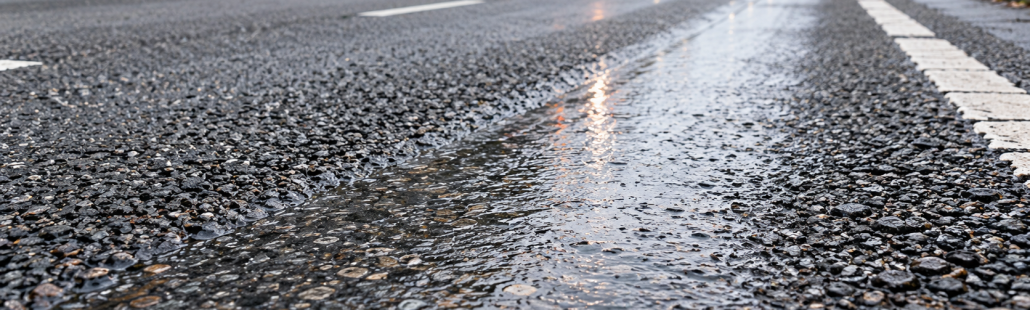
A narrow separation provides a route for rainfall to enter the pavement.
Once water reaches vulnerable layers, it can contribute to deterioration of the asphalt and its supporting construction.
Repeated vehicle loading then places additional stress on the weakened area.
The joint may widen, surrounding material may break away and the surface can become increasingly uneven.
Why Winter Conditions Can Make Separation Worse
UK roads experience frequent wet weather and periodic freezing conditions.
When water enters an open joint, freezing and thawing can contribute to further deterioration.
However, freeze-thaw action is not the only concern.
Repeated saturation, traffic loading and loss of support can also accelerate damage.
A joint that begins as a narrow crack in autumn may therefore become more noticeable after a wet winter.
Early attention can help reduce the risk of moisture reaching deeper pavement layers.
Heavy Vehicles Put Additional Stress on Asphalt Joints
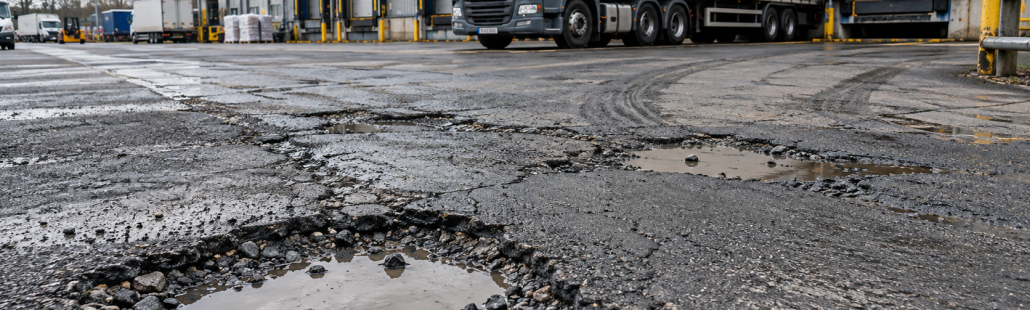
Commercial roads and industrial yards experience loading conditions that differ considerably from lightly trafficked residential surfaces.
Heavy goods vehicles apply substantial loads through their tyres.
When these loads repeatedly cross or travel alongside an asphalt joint, they can expose weaknesses in the construction.
If the joint is poorly compacted or inadequately supported, movement may develop between the adjacent sections.
The result can be cracking, edge deterioration or separation.
Professional commercial surfacing should therefore account for expected vehicle loads and movement patterns when planning pavement construction.
Why Joints in Wheel Paths Are Particularly Vulnerable
The location of a joint can influence how much stress it experiences.
A longitudinal joint positioned directly within a regular wheel path may receive repeated loading from passing vehicles.
This is particularly significant on narrow commercial access roads where vehicles follow similar routes every day.
A joint located away from concentrated wheel loading may experience less direct stress.
Where practical, joint positioning should therefore be considered during the planning of paving operations.
The objective is to create a durable pavement while avoiding unnecessary exposure of vulnerable construction boundaries to repeated heavy loading.
Turning and Braking Forces Can Accelerate Separation
Vehicle weight is only one part of the loading experienced by asphalt.
Braking, acceleration and turning introduce horizontal forces.
These forces can be particularly demanding around loading bays, junctions, warehouse entrances and tight turning areas.
When heavy vehicles turn slowly, their tyres can scrub against the asphalt.
If a construction joint is located within the affected area, repeated movement can contribute to deterioration.
This is one reason joint condition deserves attention in commercial yards where lorries regularly reverse and manoeuvre.
The pavement needs to withstand both vertical loads and the forces associated with vehicle movement.
Weak Foundations Can Cause Joints to Open
Not every separated joint is caused by a problem within the asphalt itself.
Movement in the underlying pavement can also create cracking along construction boundaries.
A road relies on its foundation layers to distribute vehicle loads into the ground.
If part of the foundation settles or loses support, the asphalt above may begin moving.
The joint can become a location where this movement is expressed as a visible crack.
Differential Settlement Between Pavement Sections
Differential settlement occurs when adjacent areas move by different amounts.
For example, one section of a road may have been constructed over well-compacted material while the neighbouring section contains weaker ground.
As traffic loads the pavement, the weaker area may gradually settle.
A crack can then develop along the boundary between the two sections.
In this situation, sealing the visible joint may reduce water entry but will not necessarily stop the underlying movement.
The supporting construction may need further investigation.
Utility Trenches Can Create Vulnerable Joints
Roads and commercial yards often contain underground services.
Water pipes, drainage systems, electricity cables and telecommunications infrastructure may require excavation through existing asphalt.
Once the work is completed, the trench is backfilled and the surface reinstated.
This creates boundaries between the original pavement and the reinstated section.
If the backfill is inadequately compacted or the reinstatement is poorly connected to the surrounding asphalt, cracks can develop along the trench edges.
These defects often appear as relatively straight lines following the route of the excavation.
The visible separation may therefore reflect movement in the reinstated construction rather than a failure of the original road.
Why New Asphalt Can Separate From Older Surfacing
Commercial sites frequently undergo extensions and alterations.
A new parking area may be connected to an existing access road, or a loading yard may be enlarged to accommodate additional vehicles.
These projects create joints between new and older pavement.
The existing asphalt may have different material properties, levels of compaction or structural support.
If the old edge is damaged or the two sections move differently, separation can develop.
Correct preparation and appropriate construction detailing are therefore essential when connecting new asphalt to an established surface.
Can Poor Machine Laying Cause Joint Problems?
Machine laying can help achieve consistent asphalt placement across larger areas.
However, the performance of the finished pavement still depends on correct operating procedures.
Paving speed, material temperature, joint formation and rolling all influence the result.
A poorly formed joint can remain vulnerable even when the surrounding asphalt has been laid using modern equipment.
Professional machine lay tarmac should therefore involve suitable joint construction and compaction procedures as part of the overall installation.
The equipment provides control and consistency, but the quality of the finished pavement still depends on how the work is carried out.
What Are the Early Signs of Asphalt Joint Separation?
Joint separation often begins with relatively subtle changes.
A narrow straight crack may appear along the boundary between two asphalt sections.
Over time, the line may become more pronounced.
Small pieces of aggregate can begin breaking away from the edges, leaving the joint wider or rougher.
Water may collect within the opening, particularly where the pavement has developed minor settlement.
In more advanced cases, the adjacent surfaces may begin sitting at slightly different levels.
These changes can indicate that the joint is no longer performing as intended.
Why Joint Separation Can Lead to Potholes
An open asphalt joint creates a vulnerable point within the pavement.
As water enters and traffic repeatedly loads the surrounding material, deterioration can spread beyond the original crack.
The asphalt edges may begin breaking away.
Once enough material has been lost, a localised depression or pothole can develop.
At that stage, the problem is no longer limited to a narrow construction joint.
Professional pothole repairs may be necessary to restore the damaged area, particularly where unstable material extends beneath the surface.
Addressing the original joint defect before substantial material loss occurs can help reduce the extent of future repairs.
Can Asphalt Joint Separation Be Repaired?
Yes, but the appropriate repair depends on the cause and severity of the separation.
Where a joint has opened slightly and the surrounding pavement remains structurally sound, a suitable sealing treatment may help limit water ingress.
The joint must be assessed and prepared appropriately before treatment.
If the asphalt edges have deteriorated significantly, more extensive repair may be required.
Damaged material may need to be removed so that a sound joint and surrounding pavement can be reinstated.
Where separation results from foundation movement, repairing only the upper asphalt may provide limited long-term benefit.
The underlying cause needs to be addressed.
When Is Resurfacing Better Than Joint Sealing?
Joint sealing can be useful for certain localised defects, but it is not suitable for every situation.
If numerous joints are opening across a road or car park, the wider pavement condition should be assessed.
Repeated separation may indicate inadequate construction, structural movement or deterioration affecting substantial areas.
Where the existing pavement remains stable, resurfacing may be appropriate after necessary preparation and repairs.
If the foundation is failing, deeper reconstruction may be required.
The decision should be based on the actual condition of the pavement rather than the appearance of the cracks alone.
How Can Asphalt Joint Separation Be Prevented?
Preventing premature separation begins during pavement design and construction.
Suitable material selection, careful joint positioning, correct preparation and adequate compaction all contribute to long-term performance.
The temperature of the asphalt during installation also matters.
Cold joints need to be constructed using appropriate methods, while the surrounding pavement must provide adequate support.
Effective drainage helps reduce the risk of water entering vulnerable areas.
For commercial sites, the pavement should also be designed around expected vehicle loads and turning movements.
Regular inspections can then help identify developing joint defects before they become more extensive.
Why Asphalt Joints Deserve Attention During Maintenance
Asphalt joint separation UK property owners and site managers encounter can begin as a narrow crack but develop into a much larger maintenance problem.
Poor compaction, temperature differences during laying, inadequate bonding, water ingress and heavy traffic can all contribute to joint deterioration.
Movement in the underlying foundation can also cause adjacent sections to separate.
The important distinction is whether the defect is confined to the joint itself or reflects a deeper structural problem.
A stable pavement with a minor open joint may need a relatively limited repair. A joint that repeatedly opens because the supporting construction is moving requires a different approach.
Recognising that difference helps avoid unnecessary repairs and reduces the risk of recurring damage.
Well-constructed asphalt joints are designed to function as part of the complete pavement. When preparation, compaction, drainage and structural support are properly addressed, they can provide durable connections between adjoining sections of road surfacing.