
- Minisgreat
- No Comments
- September 21, 2026
Why Tarmac Becomes Soft and Sticky in Hot Weather
A warm summer day can produce some surprising changes in a tarmac surface.
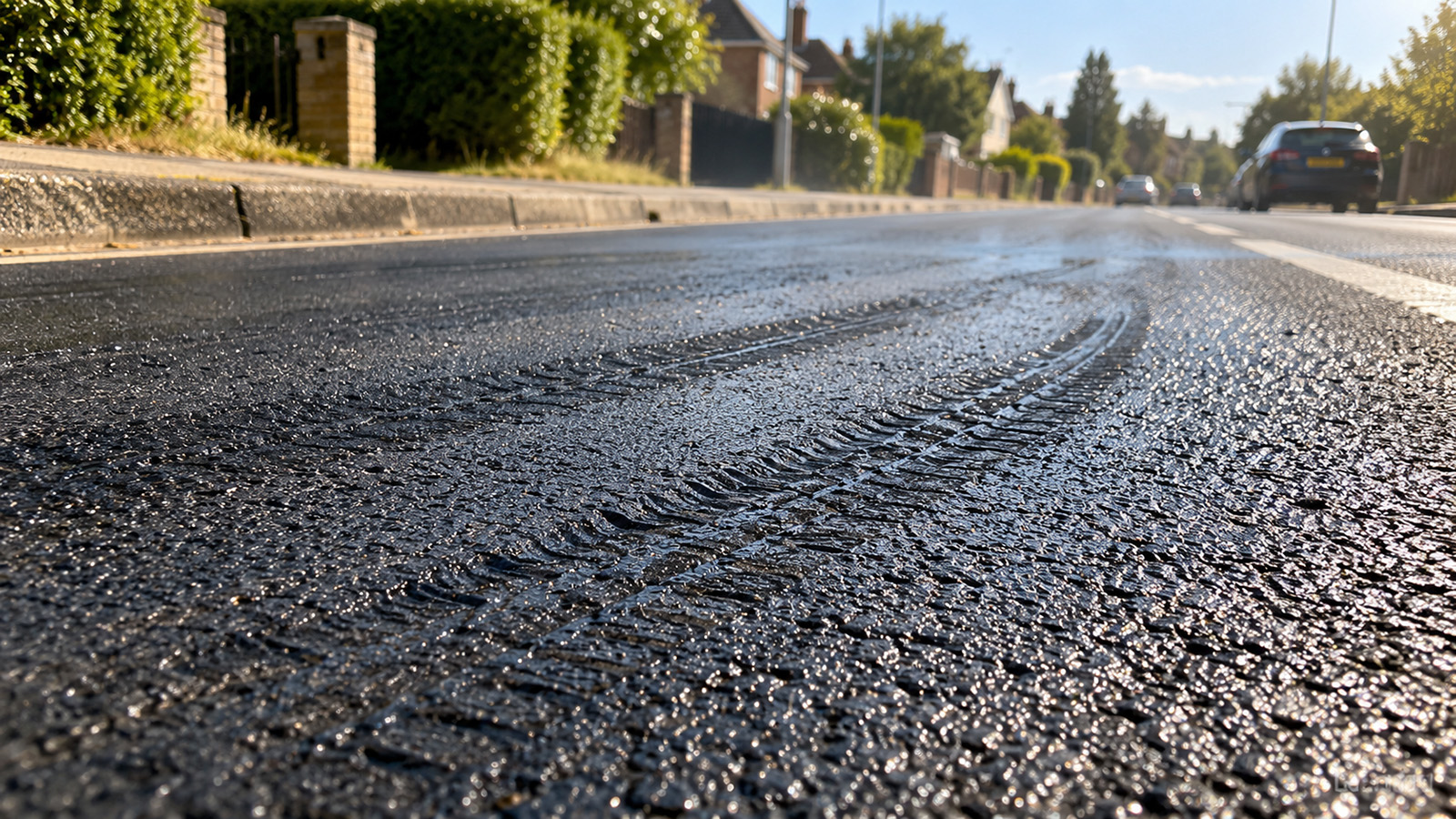
Areas that normally feel hard can become slightly soft underfoot. Tyres may leave darker marks, parked vehicles can create impressions and the surface may feel tacky in particularly exposed locations.
During periods of unusually high temperatures, the effect can become much more noticeable.
This happens because asphalt is a temperature-sensitive material.
The bituminous binder holding the aggregate together becomes softer as its temperature increases. That does not mean a road simply melts whenever Britain experiences a sunny day, but sufficiently high pavement temperatures can make the material more susceptible to deformation and surface marking.
For anyone noticing tarmac soft in hot weather UK conditions can be an important part of the explanation. However, severe softening can also reveal weaknesses in the material, construction or pavement design that were less obvious during cooler weather.
Road Surface Temperature Can Be Much Higher Than Air Temperature
When a weather forecast gives an air temperature, it does not tell you exactly how hot the road itself has become.
Dark asphalt absorbs solar energy extremely effectively.
On a bright summer day, the pavement surface can therefore become considerably hotter than the surrounding air. Direct sunlight, limited shade and prolonged exposure all contribute.
This explains why a road can feel extremely hot even when the reported air temperature seems relatively moderate.
The upper part of the asphalt experiences this heat most directly, so changes in surface behaviour can become noticeable before anything appears wrong deeper within the pavement.
Bitumen Changes With Temperature
To understand why tarmac softens, it helps to understand what holds an asphalt surface together.
Aggregate provides much of the physical structure, while bituminous binder binds those particles into a cohesive material.
The binder is temperature sensitive.
In cold conditions it becomes stiffer. As temperatures rise, it becomes less stiff and more flexible.
This characteristic is part of what makes asphalt such a useful road-building material, but the pavement still needs to be designed and installed so that it remains sufficiently stable across the conditions it is expected to experience.
Professional tarmac installation therefore involves considerably more than spreading a layer of black material over the ground.
Does Hot Tarmac Actually Melt?
People often describe hot roads as melting, but that is usually an oversimplification.
Asphalt does not suddenly change from a solid road into a liquid surface in the way ice turns into water.
Instead, increasing temperature can soften the bituminous binder and make the asphalt more susceptible to movement under pressure.
A lightly trafficked road may show very little visible change.
Put a heavy vehicle on the same hot surface, particularly in a location where it turns or remains stationary, and the softened pavement may experience considerably greater stress.
The combination of heat and loading is often more important than heat alone.
Why Tyres Can Leave Dark Marks
One of the first things people notice during hot weather is dark tyre marking.
This can be particularly visible on newer tarmac.
As the upper surface becomes warmer, tyres passing over it can interact more noticeably with the binder and surface texture.
Turning movements can make the marks more obvious because tyres scrub across the pavement rather than simply rolling forwards.
A few dark marks do not automatically indicate that the road is structurally failing.
The important question is whether the surface has physically changed shape or lost material, rather than simply changed appearance.
New Tarmac Can Be More Noticeably Affected
Recently laid asphalt can sometimes show heat-related marking more obviously than an older, weathered road.
Fresh surfaces still have a very dark appearance, and changes caused by tyres can be easy to see.
This can be alarming for property owners who have only recently had a driveway or access road surfaced.
Visual tyre marks alone do not necessarily mean the installation has failed.
However, deep impressions, displaced material or significant surface movement deserve closer attention, particularly if they occur under ordinary vehicle use.
Parked Vehicles Create Concentrated Loads
A moving vehicle applies load to different parts of the pavement as it travels.
A parked vehicle behaves differently.
Its weight remains concentrated through the same tyre contact areas for hours at a time.
During very hot weather, a softened surface may therefore be more vulnerable to impressions beneath stationary vehicles.
Heavier vehicles increase the demand further.
Commercial vans, motorhomes, trailers and HGVs can place substantial concentrated loads onto a pavement.
Whether this results in permanent deformation depends on the asphalt specification, pavement construction, temperature and vehicle loading.
HGVs Can Expose Heat-Related Weaknesses Quickly
Commercial roads have to perform under much greater loads than typical domestic driveways.
An industrial access road may carry fully loaded HGVs throughout the working day, including during the hottest part of the afternoon.
As asphalt temperature rises, resistance to deformation becomes especially important.
This is why commercial surfacing needs to be specified around the traffic expected to use the site.
A surface suitable for occasional cars should not automatically be expected to perform identically under repeated heavy commercial traffic.
Turning Tyres Can Disturb a Hot Surface
Tight manoeuvring creates another problem.
When a vehicle turns sharply at low speed, its tyres do not simply roll smoothly over the pavement. They can scrub across the surface.
On a cool, stable road, the asphalt is generally capable of resisting these forces when appropriately designed.
When the surface is very warm and softer, the same turning movement can place greater strain on it.
This is why marks and deformation may appear around turning heads, driveways, loading areas and tight commercial entrances before they appear on straight sections.
Power Steering Can Make Driveway Marks More Noticeable
Domestic driveways can experience a similar effect when drivers turn the steering wheel while the vehicle is stationary.
The tyres twist against one small area of tarmac.
This produces considerable localised scrubbing.
On a hot surface, the action can leave visible tyre marks or disturb the upper texture more easily.
Allowing the vehicle to move slightly while steering reduces the amount of twisting force concentrated on one spot.
This can be particularly useful on recently installed asphalt during very warm weather.
Braking and Acceleration Add Horizontal Forces
Road surfaces do not experience only downward loads.
Vehicles also apply horizontal forces when braking and accelerating.
At junctions, security gates and loading bays, these forces repeatedly occur in predictable locations.
When the asphalt is hot, the material may be more susceptible to deformation under these repeated stresses.
This helps explain why ripples, pushing and other surface distortions are often associated with places where vehicles regularly stop and start.
Rutting Can Become More Noticeable During Heat
Rutting describes longitudinal depressions that develop along regular wheel paths.
There are several possible causes, and high pavement temperature can be one contributing factor where asphalt is susceptible to permanent deformation.
Repeated heavy traffic travels over the same strips of road while the material is warm.
Over time, the wheel paths can become lower than the surrounding surface.
This is more serious than temporary tyre marking because the physical profile of the road has changed.
Once ruts form, they can also interfere with drainage.
Hot Weather Can Reveal an Unsuitable Asphalt Specification
Asphalt materials can be designed for different applications.
The surface of a lightly used private driveway and a heavily trafficked industrial road do not necessarily need identical performance characteristics.
If the selected material is unsuitable for the loading it receives, very warm weather can make the mismatch more obvious.
The surface may perform acceptably through cooler months but become vulnerable when pavement temperatures rise.
This is one reason material selection needs to reflect traffic type, location and expected operating conditions rather than appearance alone.
Thickness Still Matters
Heat-related performance cannot be considered separately from the rest of the pavement construction.
If the asphalt construction is inadequate for the loads being carried, high temperatures can contribute to visible deterioration.
The foundation underneath also matters.
A strong surface over weak supporting layers can still deform if the pavement below moves under traffic.
Correct thickness, appropriate materials, effective compaction and stable foundations all work together.
There is no single surface characteristic that can compensate for weaknesses everywhere else.
Compaction Influences Long-Term Performance
Asphalt needs to be properly compacted during installation.
Compaction helps the material achieve the characteristics intended by its specification.
Poorly compacted asphalt can be more vulnerable to several forms of deterioration over its service life.
This is why controlled installation matters on larger road and commercial projects.
Professional machine lay tarmac can help achieve consistent placement across substantial areas, while appropriate rolling and attention to joints and edges remain important parts of the process.
Why Some Areas Soften More Than Others
A road does not always heat evenly.
One section may receive direct sunlight throughout the day while another is shaded by buildings or trees.
Dark, sheltered areas can also retain heat differently depending on their surroundings.
Traffic patterns vary too.
A section exposed to intense sunlight and repeated HGV braking faces different conditions from a shaded section carrying free-flowing cars.
As a result, heat-related marking or deformation may be highly localised even though the entire road was constructed at the same time.
Oil and Contamination Can Sometimes Look Like Heat Damage
A sticky or unusually dark road surface is not always caused solely by hot weather.
Vehicle fluids and other contaminants can affect asphalt.
Commercial parking areas and loading bays are particularly worth checking because vehicles may remain stationary there for extended periods.
An irregular sticky patch beneath a regular parking position may have a different cause from widespread softening across an exposed road during a heatwave.
The location and pattern of the problem provide useful clues.
Excess Binder Can Affect Surface Appearance
In some circumstances, bituminous material can become particularly noticeable at the road surface.
A surface may appear unusually dark, smooth or shiny.
High temperatures can make these characteristics more apparent.
This should not automatically be confused with normal darkening caused by tyre traffic.
Where a surface becomes excessively smooth, tacky or visibly rich in binder, a professional assessment can help establish whether the behaviour is within expectations or indicates a material-related problem.
Why Shaded Tarmac May Remain Firm
Shade can make a significant difference to pavement temperature.
An asphalt area beneath trees or beside a building may remain noticeably cooler than a section exposed to direct sun for most of the day.
This creates a useful comparison.
If softening appears almost exclusively in the sunniest areas during unusually warm conditions and reduces as temperatures fall, heat is likely to be an important factor.
If a sticky patch remains unchanged regardless of weather, another cause may need to be investigated.
Can Hot Tarmac Damage Tyres?
Ordinary warm asphalt is part of normal summer driving and does not mean vehicles should automatically avoid the road.
The more relevant concern for property owners is often the effect vehicles can have on a softened pavement.
Stationary steering, tight turning and heavy static loads can mark vulnerable surfaces.
Recently completed driveways and lightly trafficked areas can therefore benefit from sensible use during periods of exceptional heat, particularly if the surface is visibly soft.
What Happens When the Weather Cools Down?
As pavement temperature decreases, the bituminous binder becomes stiffer again.
A surface that felt slightly softer during a very hot afternoon may therefore feel completely firm the following morning.
Minor temporary changes do not necessarily leave permanent damage.
However, deformation is different.
If a heavy vehicle has physically displaced the asphalt and created a rut, depression or ridge, cooler weather will not necessarily restore the original road profile.
Once material has moved permanently, repair may be required.
How Can You Tell Normal Softening From Damage?
Appearance provides only part of the answer.
Temporary dark tyre marks on an otherwise level and intact surface are different from deep wheel impressions, ripples or displaced asphalt.
Permanent changes in level are more significant.
So are areas where material is being picked up, pushed sideways or torn by vehicle tyres.
If the surface returns to normal as conditions cool and no physical deformation remains, the issue may be limited.
If the pavement profile has changed, further assessment is sensible.
Why Water Can Make Heat Deformation More Problematic
Hot weather itself does not necessarily involve water, but deformation caused during warm conditions can create drainage problems later.
Suppose repeated traffic creates shallow wheel ruts.
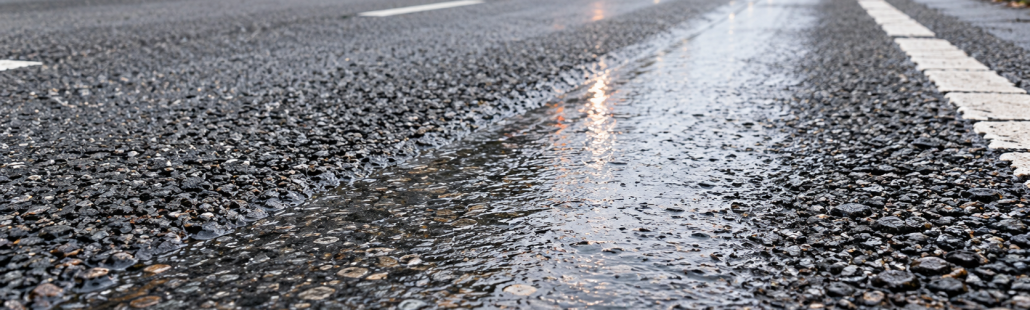
The next time it rains, those depressions can collect water.
Standing water then increases the pavement’s exposure to moisture and can highlight weaknesses in drainage.
A problem that began as heat-related deformation can therefore create consequences that remain long after summer has ended.
Surface Movement Can Eventually Lead to Cracking
If asphalt becomes permanently deformed, stresses within the pavement can change.
Raised areas, depressions and distorted wheel paths may begin developing cracks.
Once cracks form, water can enter the construction.
Traffic continues loading the weakened area, potentially leading to more substantial deterioration.
In advanced cases, material can eventually break away and form potholes.
Professional pothole repairs should consider the condition around the defect rather than simply replacing the material that has disappeared.
Older Tarmac Can Behave Differently
Asphalt changes throughout its service life.
An older pavement that has undergone years of weathering may behave differently from a newly installed surface during hot conditions.
Ageing can make asphalt stiffer and can contribute to cracking, while a newer surface may show tyre marking more readily.
This means there is no single visual response that every road will display during warm weather.
Age, material specification, traffic and pavement condition all influence what happens.
Commercial Sites Should Pay Attention to High-Stress Areas
Site managers can learn a great deal by checking predictable stress points during hot weather.
Loading bays, HGV turning areas, security gates and heavily used entrances are particularly informative.
If these areas begin developing permanent wheel depressions, pushing or ripples while lower-stress parts of the site remain stable, vehicle loading and pavement temperature may be interacting.
Identifying these changes early can help prevent a local defect from developing into a larger maintenance problem.
Soft Tarmac Does Not Automatically Mean Poor Workmanship
It is important to separate normal material behaviour from genuine failure.
Asphalt is temperature sensitive, so some change in its characteristics as temperatures rise is expected.
A surface becoming warmer and slightly more susceptible to marking does not automatically prove that it was installed incorrectly.
Concern becomes more justified when ordinary traffic produces substantial permanent deformation, when material is visibly moving or when the problem repeatedly affects the same locations.
In those circumstances, the asphalt specification, construction and traffic loading may all need consideration.
Good Road Construction Accounts for More Than Winter Weather
British road maintenance discussions often focus on rain, frost and cold conditions.
Hot weather deserves attention too.
A pavement needs to cope with seasonal temperature changes while carrying its intended traffic.
That requires appropriate materials, adequate pavement construction, good compaction and a stable foundation.
Commercial roads also need to account for braking, turning and stationary heavy vehicles because these forces can become particularly demanding when asphalt temperatures are high.
Why Hot Weather Reveals How a Surface Is Really Performing
Tarmac soft in hot weather UK conditions is largely explained by the temperature-sensitive nature of its bituminous binder.
As the road absorbs solar heat, the asphalt becomes less stiff. Tyre marks may become more noticeable and the surface can become more susceptible to deformation under concentrated loads.
The important distinction is between temporary temperature-related behaviour and permanent pavement damage.
A few marks on a hot afternoon are very different from deep ruts, displaced material or ripples that remain after the road has cooled.
Where permanent deformation develops, heat may only be part of the explanation. Traffic loading, material selection, pavement thickness, compaction and the supporting foundation all need to be considered.
A well-designed tarmac surface is built to operate through changing British conditions. Understanding how heat affects it makes it easier to recognise which summer changes are temporary and which may be warning signs of a pavement that needs closer attention.