
- Minisgreat
- No Comments
- August 21, 2026
What Causes Dips to Appear in Block Paving?
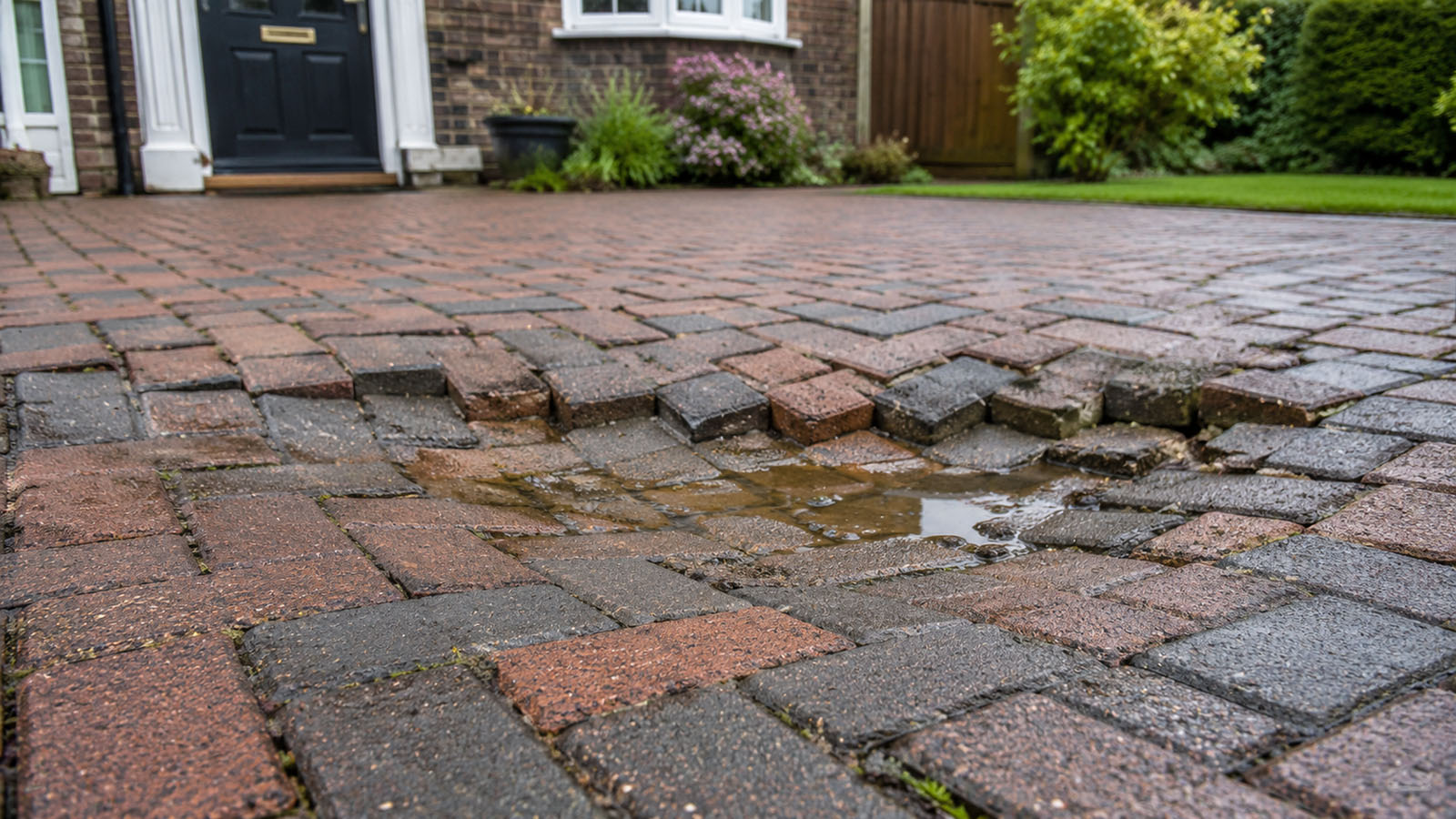
A newly installed block-paved driveway or commercial area should have a consistent surface with carefully designed falls that allow rainwater to drain effectively. Yet after several years, some property owners begin noticing individual areas becoming lower than the surrounding paving.
At first, the change can be subtle. A shallow depression might only become noticeable because a puddle appears after rainfall. Eventually, however, the dip may deepen, blocks can move and the surrounding surface may become noticeably uneven.
The important point is that the blocks themselves are rarely the main cause.
When block paving starts sinking, something has usually changed within the construction underneath it. Understanding what causes block paving sinking UK properties experience can help identify whether a simple local repair is appropriate or whether a deeper structural problem needs attention.
The Problem Usually Starts Below the Blocks
Block paving is a layered pavement system.
The visible paving blocks sit on a laying course, which in turn relies on a properly prepared and compacted sub-base. The entire construction depends on those supporting layers remaining stable.
If material beneath the blocks settles, washes away or moves under vehicle loading, the paving above follows that movement.
This is why simply lifting a sunken block and adding a small amount of sand underneath it may not provide a lasting solution. If the deeper cause remains, the repaired area can sink again.
Poor Sub-Base Compaction Is a Common Cause
One of the most significant causes of dips is inadequate preparation during installation.
The sub-base needs to be installed at an appropriate depth and compacted correctly. If this process is rushed or material is not compacted consistently, small voids can remain within the structure.
Initially, the driveway may look perfectly level.
Once cars begin travelling over it, repeated loading gradually compresses the weaker areas. The surface then starts settling into the space created underneath.
The result is often a localised depression that becomes progressively more noticeable.
This is also why groundwork is so important with other surfacing systems. Professional tarmac installation similarly depends on a stable foundation rather than relying on the visible surface alone to provide structural strength.
Water Can Wash Supporting Material Away
Drainage is another major factor behind sinking block paving.
Water naturally finds routes through joints and around pavement edges. A correctly constructed system should manage this without losing structural stability.
Problems develop when large volumes of water repeatedly travel through inappropriate areas or when damaged drainage directs water beneath the paving.
Fine supporting material can gradually migrate, leaving voids underneath the blocks.
Once support is lost, traffic pushes the surface downwards.
This process can happen slowly, meaning the property owner may notice the dip long after the original drainage problem began.
A Puddle Can Be the First Warning Sign
One of the earliest indicators of settlement is standing water.
A driveway that previously drained correctly may suddenly develop a puddle in one particular location. This often means the original surface profile has changed.
The depression does not need to be dramatic. Even relatively small changes in level can prevent rainwater reaching its intended drainage route.
Unfortunately, once water begins collecting in a depression, it can contribute to further deterioration if it penetrates vulnerable areas beneath the paving.
A small dip can therefore become progressively deeper if its cause is ignored.
Vehicle Wheel Paths Are Particularly Vulnerable
Look carefully at a sinking block-paved driveway and the depressions may correspond with where vehicles regularly travel or park.
Repeated tyre loading concentrates pressure along predictable routes. If the pavement construction beneath those routes is insufficient, gradual settlement can occur.
The effect is particularly noticeable where vehicles repeatedly follow exactly the same path into a garage or parking space.
Over time, two parallel depressions may develop beneath the wheel tracks while paving between them remains relatively level.
This is not necessarily a problem with the blocks. It may indicate that the pavement beneath them was not designed or constructed adequately for repeated vehicle loading.
Heavy Vehicles Can Accelerate Settlement
A domestic driveway intended for cars can experience very different loads when larger vehicles arrive.
Removal lorries, building-material deliveries, skips and heavy maintenance vehicles can place significantly more pressure on the pavement.
A single heavy vehicle does not automatically damage correctly constructed paving, but repeated loading beyond the original design assumptions can expose weak areas.
Commercial environments face even greater demands. Where delivery vehicles and heavier traffic are expected regularly, the complete pavement structure needs to be designed accordingly.
Professional commercial surfacing considers anticipated vehicle movements and loading before determining the appropriate construction.
Utility Trenches Can Create Straight-Line Dips
Sometimes the shape of the depression provides an immediate clue.
If a sunken area follows a relatively straight line across a driveway, an old utility trench may exist underneath.
Gas, water, electricity or telecommunications work often requires sections of ground to be excavated. Once the service has been installed, the trench needs to be carefully backfilled and compacted.
If reinstatement is inadequate, the fill material can settle gradually over time.
The paving above then sinks along the original excavation, producing a distinctive strip of settlement.
In these situations, repeatedly adjusting the blocks may not solve the problem because movement originates much deeper underground.
Tree Roots Can Cause Uneven Movement
Trees can create the opposite problem as well as contribute to uneven paving.
Growing roots may lift one section of pavement while nearby areas remain at their original level. The resulting difference can make surrounding paving appear to have sunk.
Root activity can also affect soil conditions and drainage around the pavement.
Simply cutting roots should not be treated as an automatic solution because inappropriate root removal can damage or destabilise a tree. Where significant trees are involved, suitable professional advice may be necessary before undertaking structural repairs.
Poor Edge Restraints Can Allow Blocks to Move
Block paving relies on secure edge restraints to keep the pavement locked together.
If an edge becomes damaged or was inadequately constructed, blocks can gradually spread sideways under traffic. Joints widen, laying material moves and the surface can begin losing its original alignment.
This movement may eventually contribute to localised settlement.
Areas next to poorly supported edges can be particularly vulnerable because the pavement no longer has the same confinement it was designed to rely upon.
Repairing the edge may therefore be just as important as resetting the affected blocks.
Leaking Drainage Can Create Hidden Voids
A more serious possibility is a damaged underground drain or water pipe.
A leak beneath paving can gradually remove or soften supporting material without producing an obvious surface warning at first.
Eventually, the pavement above begins to sink.
If a depression develops quickly, continues getting deeper or appears close to drainage infrastructure, the underlying cause deserves investigation before the paving is simply reinstated.
Filling the depression without addressing an active leak can result in repeated settlement and potentially more extensive damage.
Why Adding Sand Isn’t Always the Answer
One of the attractions of block paving is that individual sections can be lifted and reinstated.
For genuinely minor settlement within the laying course, this can be an effective repair method. The blocks can be removed, levels corrected and the original units replaced.
The mistake is assuming every dip is superficial.
If the sub-base has collapsed, water has washed material away or an underground trench is settling, adding more laying material only compensates for the visible level difference.
The underlying weakness remains.
Before repairing a substantial or recurring depression, it is therefore important to establish how deep the movement extends.
Why Dips Can Become a Safety Problem
Uneven block paving is not only unattractive.
Changes in level can create trip hazards on pedestrian routes, particularly around entrances, pathways and customer-facing commercial areas.
Depressions also collect water, which can become slippery during wet weather and potentially icy during colder conditions.
For vehicle areas, increasingly uneven paving can make manoeuvring uncomfortable and place additional stresses on surrounding blocks.
Correcting settlement early can therefore improve both appearance and safety.
Can Sunken Block Paving Be Repaired?
In many cases, yes.
One of the practical advantages of block paving is that affected units can often be lifted without destroying them. This allows the construction underneath to be inspected and corrected before the blocks are reinstated.
The extent of the repair depends on what is found.
A shallow problem may require adjustment to the laying course. Deeper settlement may require part of the sub-base to be excavated, reconstructed and properly compacted.
Where water is responsible, drainage should be corrected at the same time. Otherwise, the repaired paving may simply sink again.
When Replacement May Make More Sense
Local repairs are appropriate when deterioration is genuinely confined to a small area.
If dips appear throughout a driveway, multiple wheel paths are sinking or the entire surface has substantial movement, repeatedly lifting individual sections may become inefficient.
Widespread settlement can indicate more fundamental problems with the original foundation.
At that point, reconstructing a larger area may provide better long-term value than continually correcting isolated depressions.
Depending on how the area is used, property owners may also consider alternative surfaces. For vehicle access areas where strength and straightforward maintenance are priorities, professionally installed asphalt can provide a practical option.
Good Drainage Helps Prevent the Problem Returning
Whatever surface is selected, water management remains essential.
Rainfall needs a controlled route away from the pavement. Drainage channels should remain clear, surrounding ground should not direct excessive runoff onto the area and surface levels need to encourage water towards appropriate outlets.
Regularly checking a paved area after rainfall can reveal developing problems surprisingly early.
If a new puddle starts appearing somewhere that previously remained dry, it is worth investigating why the surface level has changed.
The Surface Is Showing You What’s Happening Underneath
Dips in block paving should be viewed as a symptom rather than the problem itself.
Poor compaction, sub-base settlement, water movement, heavy vehicle loading, utility trenches, failed edges and leaking underground services can all cause the supporting construction to change.
The paving blocks simply follow that movement.
For property owners experiencing block paving sinking UK problems, identifying the underlying cause is therefore far more important than repeatedly levelling the visible surface.
When the foundation and drainage are sound, block paving can provide an attractive and durable surface for many years. When dips repeatedly return, however, the answer is usually underneath your feet rather than in the blocks themselves.