
- Minisgreat
- No Comments
- August 11, 2026
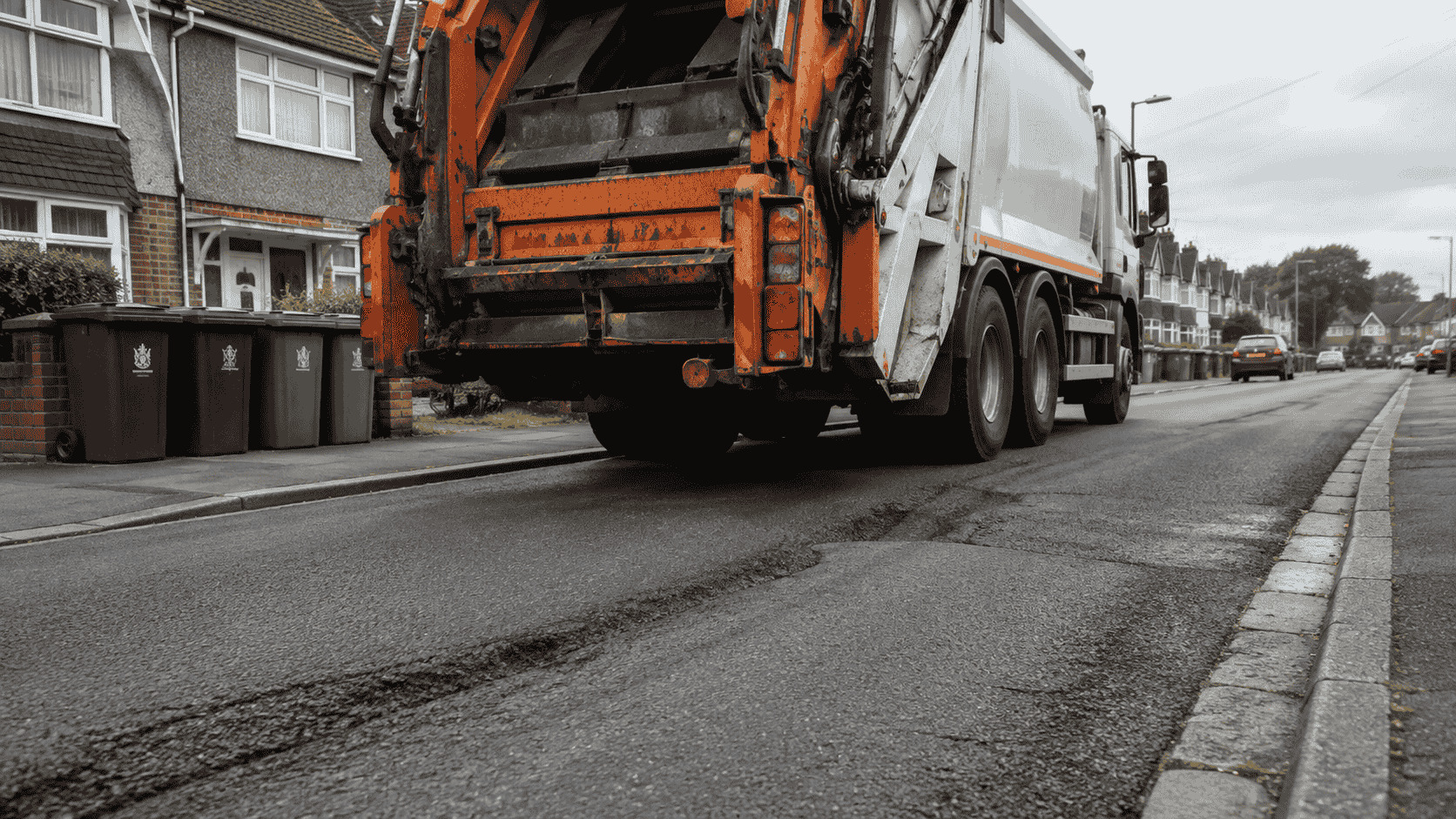
How Refuse Trucks Damage Residential Roads
Most residential roads spend much of their working life carrying relatively light vehicles. Cars, small vans and occasional delivery vehicles create repeated traffic loads, but these are generally within the conditions residential streets are expected to handle.
Then the refuse truck arrives.
A refuse collection vehicle is considerably heavier than an ordinary car, and its operating pattern creates a particularly demanding combination of forces. Instead of simply travelling through a street at a steady speed, it repeatedly stops, starts, turns and remains stationary while bins are collected.
Week after week, those movements can place substantial stress on the same sections of road. For private estates, residential developments and managed properties, understanding refuse truck road damage UK can help explain why certain areas deteriorate much faster than the rest of the surface.
Vehicle Weight Makes a Significant Difference
Road deterioration is not determined simply by how many vehicles use a surface. The weight and loading of those vehicles matter enormously.
A residential car is relatively light compared with a fully operating refuse collection vehicle. As the truck becomes loaded during its route, the pressure transmitted through its tyres and axles places greater demands on the pavement structure.
If the road was constructed with insufficient structural capacity, repeated heavy loading can gradually deform the asphalt and weaken the layers beneath it.
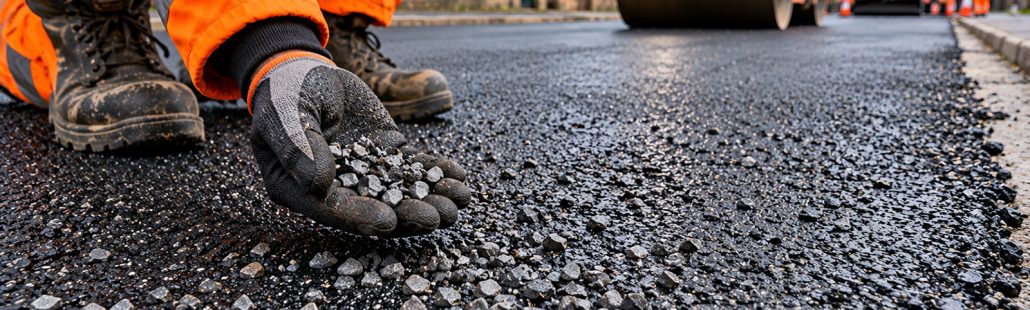
This is one reason proper tarmac installation needs to consider the vehicles that will actually use a site rather than focusing solely on everyday car traffic.
Refuse Trucks Stop Constantly
Weight alone does not explain the problem.
A lorry travelling continuously along a well-constructed road distributes its loading across a large area. Refuse trucks operate very differently because they may stop repeatedly within a relatively short distance.
Every stop creates concentrated loading in a particular location. The vehicle then moves forward only a short distance before stopping again.
This repeated cycle places considerably more stress on particular wheel paths than ordinary residential traffic.
Over time, the effects may become visible as depressions, cracking or deformation.
Braking Creates Additional Surface Stress
Before every collection stop, the driver has to slow a heavy vehicle.
Braking does not only apply vertical weight to the road. It also creates horizontal forces between the tyres and the asphalt.
Those forces can contribute to movement within the surface, particularly where the asphalt is already ageing or where the underlying pavement is beginning to weaken.
The problem can become particularly noticeable on sloping streets, where additional braking may be required as the vehicle moves between properties.
Acceleration Adds Another Force
Once collection is complete, the refuse truck moves forward towards the next group of bins.
That acceleration creates another form of stress.
As the tyres transfer power to the road, they apply horizontal forces to the surface. Repeating this process dozens of times along the same street means the asphalt is subjected to constant braking and acceleration rather than straightforward rolling traffic.
A well-designed pavement can accommodate these forces, but weak areas are likely to reveal themselves much sooner.
Turning Areas Can Suffer Even Faster
Cul-de-sacs and residential turning heads are particularly vulnerable.
A large refuse truck needs considerable space to change direction. As its wheels turn while the vehicle is moving slowly, the tyres generate lateral forces across the road surface.
Instead of simply rolling forwards, the tyres can effectively scrub across the asphalt.
Repeated manoeuvring in the same location can contribute to surface deformation, fretting and cracking. Where residential developments have tight layouts, the problem may be concentrated within a surprisingly small area.
For larger developments that regularly accommodate heavy service vehicles, appropriately designed commercial surfacing principles can help ensure high-stress areas have sufficient structural strength.
Kerbs and Road Edges Are Vulnerable Too
Residential roads are often relatively narrow, particularly where vehicles are parked on both sides.
Refuse trucks may therefore travel close to kerbs or occasionally place wheels near the edge of the carriageway when passing parked vehicles.
Road edges can be more vulnerable than central sections because they may have less lateral support. Repeated heavy loading close to an inadequately supported edge can cause cracking and eventual breakup.
Once the edge begins deteriorating, rainwater can enter the pavement structure and accelerate the damage.
Water Turns Minor Damage Into a Larger Problem
Heavy vehicles can initiate cracks, but water often determines how quickly those cracks become serious.
Once a small opening develops in the asphalt, rainfall can penetrate into the layers beneath. If the sub-base becomes saturated or weakened, it becomes less capable of supporting vehicle loads.
The next time a refuse truck passes over the area, the weakened foundation moves slightly. That movement enlarges the surface defect, allowing even more water to enter.
A damaging cycle can then develop in which traffic and moisture continuously worsen the same weak area.
Why Potholes Can Develop in the Same Places
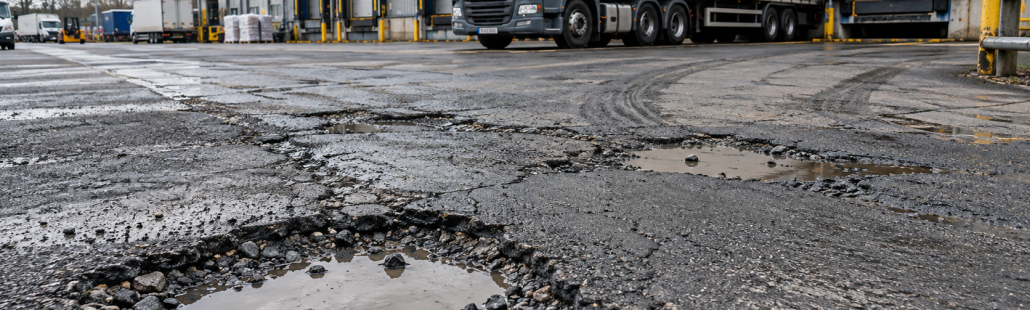
Property managers sometimes notice that potholes repeatedly appear in exactly the same locations even after repairs have been completed.
Heavy vehicle routes can be one explanation.
If a refuse truck repeatedly stops or turns at the same point, a superficial repair may continue to experience the underlying stresses that caused the original failure.
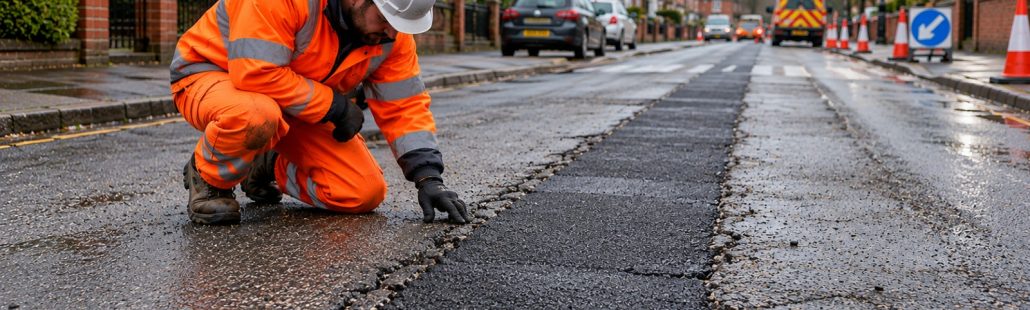
Professional pothole repairs should therefore consider the condition around the defect and not simply replace the missing surface material.
Where recurring failures indicate deeper movement, more extensive reconstruction may be required.
New Residential Developments Need to Consider Service Vehicles
Road design should reflect more than the vehicles owned by residents.
Modern developments regularly receive refuse trucks, supermarket delivery vans, parcel vehicles, removal lorries, maintenance vehicles and emergency services. During construction, even heavier vehicles may also use the roads.
Ignoring these occasional but demanding loads can result in a surface that appears perfectly adequate when new but deteriorates prematurely once the development is fully occupied.
High-stress areas such as entrances, junctions and turning heads deserve particular attention during pavement design.
The Sub-Base Is Critical
When rutting or cracking appears beneath the path of heavy vehicles, resurfacing alone is not always sufficient.
The asphalt surface depends on the layers beneath it for support. If those layers are too thin, poorly compacted or weakened by moisture, the pavement may move whenever a heavy vehicle passes over it.
Installing fresh asphalt over an unstable foundation can improve appearance temporarily without eliminating the underlying problem.
A proper assessment should establish whether deterioration is confined to the surface or extends into the structural layers.
Regular Inspections Can Catch Damage Earlier
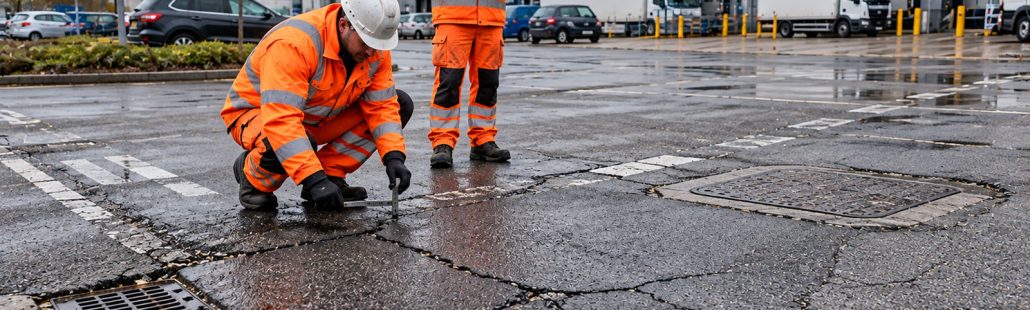
Roads used by refuse vehicles benefit from routine inspection, particularly around stopping points and turning areas.
Early cracking, slight depressions and edge deterioration may not initially interfere with normal use, but they provide valuable warning signs.
Addressing these defects before water penetrates deeper into the pavement can substantially reduce the scale of future repairs.
Waiting until potholes or severe rutting develop usually means a larger area of the road structure has already been affected.
Refuse Trucks Are Necessary, but Damage Is Not Inevitable
The answer is obviously not to prevent refuse vehicles from accessing residential streets. They provide an essential service, and roads should be capable of accommodating them.
The important issue is designing and maintaining surfaces according to real-world use.
Appropriate pavement thickness, strong foundations, effective drainage and additional consideration around turning and stopping areas can substantially improve durability.
Existing roads can also benefit from targeted strengthening where repeated failures reveal particularly vulnerable sections.
Planning Maintenance Around the Areas Under Greatest Stress
Treating every square metre of a residential road identically is not always the most economical maintenance strategy.
A straight section used primarily by cars may remain serviceable for years while a turning head used by a refuse truck deteriorates much faster.
Recognising these different stress levels allows property managers to prioritise maintenance expenditure. High-load areas can receive attention earlier while sections that remain structurally sound are left undisturbed.
This targeted approach can provide better long-term value than waiting until deterioration spreads throughout the entire road.
Protecting Residential Roads for the Long Term
Refuse trucks expose an important reality about road construction: occasional heavy vehicles can have a disproportionate effect on surfaces primarily used by cars.
Their weight is only part of the story. Repeated stopping, acceleration, braking and tight turning movements concentrate stress in specific areas, while poor drainage can magnify the resulting damage.
For private developments and managed residential estates, the best response is preventative rather than reactive. Roads should be inspected regularly, drainage kept effective and early defects repaired before structural deterioration develops.
Understanding refuse truck road damage UK also allows future surfacing projects to be designed around how a road is genuinely used. With appropriate construction and timely maintenance, residential streets can accommodate essential service vehicles without suffering unnecessarily early failure.