
- Minisgreat
- No Comments
- July 28, 2026
Machine-Laid vs Hand-Laid Tarmac: Which Is Better?
When planning a new driveway, commercial access road or car park, one of the questions property owners often ask is whether machine-laid or hand-laid tarmac is the better option. While both methods use the same core materials, the way the tarmac is placed and compacted can have a significant impact on the finished appearance, efficiency and long-term performance of the surface.
There is no single answer that suits every project. The best installation method depends on the size of the area, the type of traffic it will carry, site access and the level of precision required. Understanding the strengths and limitations of each approach helps property owners choose the most suitable solution for their specific project.
What Is Machine-Laid Tarmac?
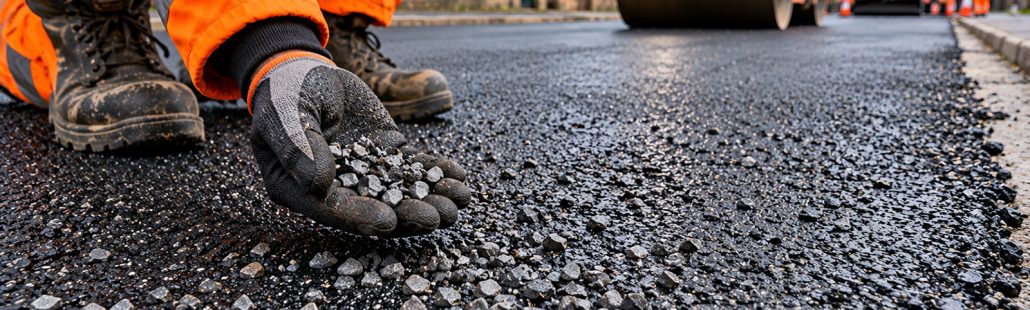
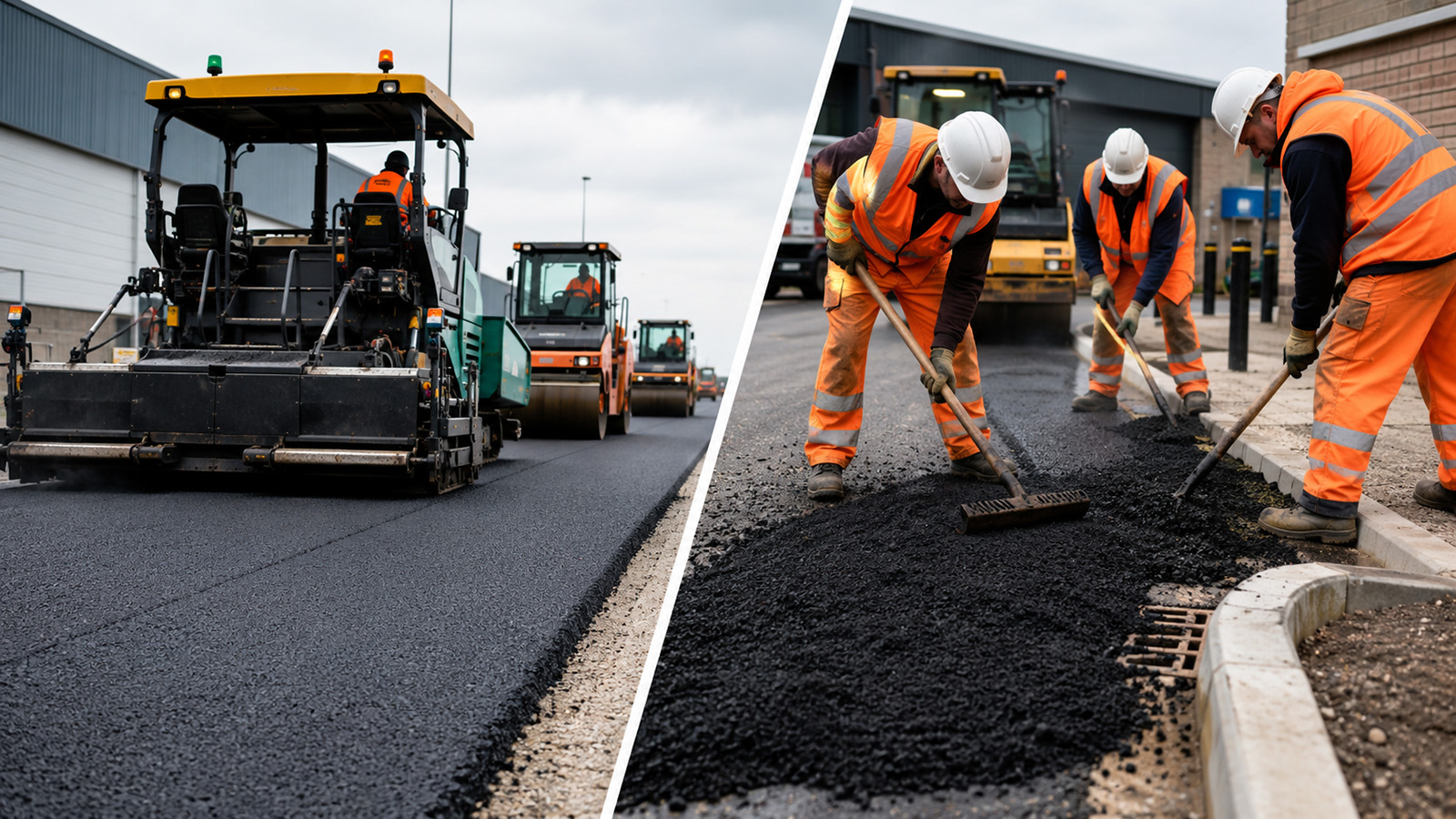
Machine-laid tarmac is installed using a paving machine that spreads the asphalt evenly across the prepared base before it is compacted with rollers.
The paving machine controls the depth and width of the material with a high level of consistency, producing a smooth, uniform surface over large areas. Because the material is laid continuously, joints are minimised and the finished surface tends to be more consistent in both appearance and thickness.
Professional contractors offering machine lay tarmac typically use this method for roads, commercial yards, industrial estates and large car parks where efficiency and accuracy are essential.
What Is Hand-Laid Tarmac?
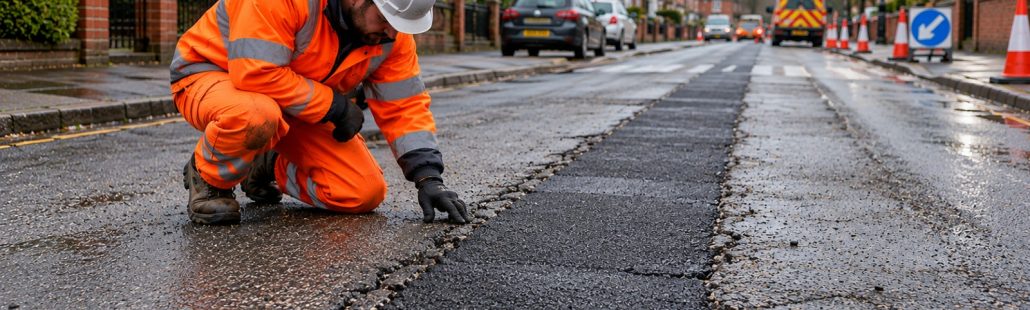
Hand-laid tarmac is installed manually using rakes, lutes and other specialist tools before being compacted with rollers or vibrating plate compactors.
This method gives installers greater flexibility in confined or irregular spaces where paving machines cannot easily operate. It is commonly used for smaller driveways, footpaths, repairs and areas with restricted access.
A skilled team can achieve an excellent finish using hand-laying techniques, particularly where careful shaping around existing features is required.
Which Method Produces the Better Finish?
For large, open areas, machine-laid tarmac generally delivers the most consistent finish.
The paving machine maintains a uniform depth while producing smooth transitions and reducing visible joints. This consistency contributes to both appearance and structural performance.
Hand-laid tarmac can also produce an attractive finish, but achieving complete uniformity depends heavily on the experience of the installation team. On smaller projects, this difference is often barely noticeable.
Accuracy and Surface Levels
One of the greatest advantages of machine laying is precision.
Modern paving equipment accurately controls layer thickness and crossfall, helping to create consistent drainage across the finished surface. This reduces the likelihood of standing water and improves long-term durability.
Hand laying relies more on the skill of individual operatives. Experienced contractors can produce excellent results, but maintaining perfect levels over larger areas is naturally more challenging.
Speed of Installation
Machine-laid tarmac is considerably faster for large-scale projects.
Because the paving machine continuously places material, extensive commercial roads and car parks can often be completed more efficiently than would be possible using manual methods.
Faster installation also helps maintain consistent asphalt temperatures, allowing the material to be compacted before excessive cooling occurs.
Hand laying remains practical for smaller projects where setting up heavy paving equipment would not be economical.
Suitability for Different Project Sizes
Large commercial developments generally benefit from machine laying because of the speed, consistency and quality it offers.
Industrial estates, warehouse access roads, distribution centres and retail parks frequently use machine-laid asphalt to achieve durable, high-quality finishes across extensive areas.
By contrast, residential driveways, small access roads and localised resurfacing projects often lend themselves to hand laying, particularly where access is limited or intricate detailing is required.
Cost Considerations
Many property owners assume machine laying is always more expensive because it requires specialist equipment.
In reality, the opposite is often true on larger projects.
The increased efficiency, reduced labour requirements and faster installation times can make machine laying highly cost-effective for substantial surfacing works.
For small areas, however, transporting and operating a paving machine may not be economically justified, making hand laying the more practical option.
Durability Depends on More Than the Method
Although installation method is important, long-term durability depends on several other factors.
Proper ground preparation, a well-designed sub-base, effective drainage, suitable asphalt specification and correct compaction all have a greater influence on pavement lifespan than whether the material was laid by machine or by hand.
Professional tarmac installation always begins with thorough preparation, ensuring the finished surface has a strong structural foundation.
When Hand Laying Is the Better Choice
Despite the advantages of machine laying, there are many situations where hand laying remains the preferred solution.
Driveways with narrow entrances, curved pathways, awkward corners and small repair areas often require the flexibility that manual installation provides.
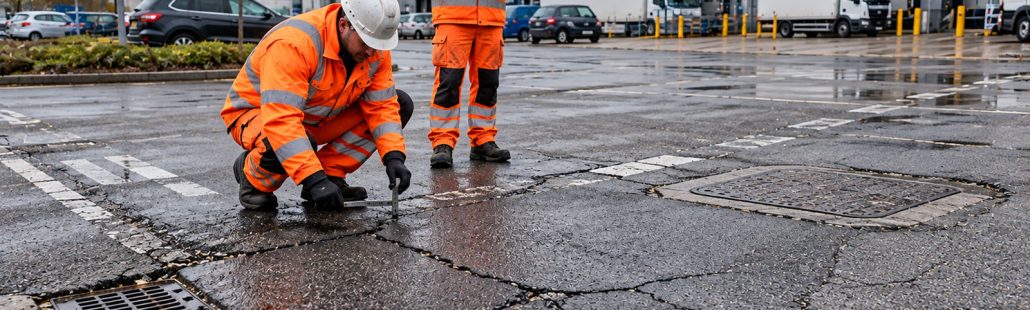
Experienced surfacing teams can carefully shape the material around drainage channels, kerbs, utility covers and existing landscaping to produce a neat, professional result.
Choosing the Right Contractor Matters Most
Whether a project uses machine-laid or hand-laid tarmac, the experience of the contractor plays a decisive role in the final outcome.
A reputable contractor will assess the site, consider traffic volumes, drainage requirements and access restrictions before recommending the most appropriate installation method.
Specialists in commercial surfacing understand that every project has unique requirements, ensuring the chosen method delivers the best combination of quality, durability and value.
Conclusion
When comparing machine laid vs hand laid tarmac UK installations, neither method is universally better than the other. Machine laying offers exceptional consistency, efficiency and quality for large commercial projects, while hand laying provides the flexibility needed for smaller or more complex areas.
The most important factor is selecting the installation method that matches the size, layout and intended use of the project. Combined with quality materials, proper preparation and experienced workmanship, both techniques are capable of producing durable, attractive tarmac surfaces that provide many years of reliable service.